Rabbit Hunting Indiana Fencerows
The biting wind of an Indiana winter can make many hunters pull up a chair by the fire, but for those who know the secret, it heralds prime time for chasing cottontails in the state's ubiquitous fencerows. These tangled lines of cover are often overlooked, yet they offer incredible opportunities for fast-paced, action-packed small game hunting, providing a much-needed outlet when deer season winds down.
Understanding Indiana Fencerows as Rabbit Habitat
Fencerows in Indiana are far more than just property lines; they are linear ecosystems, critical corridors of cover and food for an array of wildlife, especially the ever-popular cottontail rabbit. These often-overgrown strips of brush, briar, and timber provide essential protection from predators and harsh weather, making them irresistible to rabbits looking for a safe haven close to food sources.
What Makes a Prime Fencerow Habitat
A truly prime fencerow isn't just a line of trees. It's a dense, diverse, and often impenetrable mix of brush, thorny plants like multiflora rose and blackberry, honeysuckle, small saplings, and mature trees. The key is the density of the cover. Rabbits are masters of concealment, and they thrive in spots where they can quickly disappear from sight. A fencerow bordering a cornfield, soybean field, or even a hayfield offers direct access to food while providing immediate escape cover. The older the fencerow, the more established and robust this cover tends to be. Look for areas with a thick understory, downed logs, and old brush piles – these are rabbit magnets.
Imagine an old farm in Posey County where a stone wall from generations past has been swallowed by thorny locusts and wild grapes, bordering a standing cornfield. That thick, almost unpassable strip is not just an aesthetic feature; it's a superhighway and fortress for cottontails. They'll burrow into the deepest tangles, safe from aerial predators and even most ground-based threats. A fencerow running between two woodlots can also serve as a critical travel corridor, linking larger blocks of habitat and concentrating rabbits in a narrow strip, making them easier to target. These linear cover strips are especially important in agricultural landscapes where larger blocks of dense habitat might be scarce, acting as vital lifelines for small game.
Rabbit Preferences and Hiding Spots
Cottontails are creatures of habit and comfort. They love to be warm and dry, especially during cold snaps or after a rain. Their preferred hiding spots within a fencerow are usually the thickest, driest, and most sheltered sections. This means looking for dense briar patches, honeysuckle thickets, and brush piles that have accumulated over years. Don't underestimate the power of an old farm implement slowly rusting away in the weeds, or a pile of discarded lumber; these offer excellent, often overlooked, nooks and crannies for a rabbit to hunker down.
In the late season, when snow blankets the ground, rabbits will often seek refuge deeper within these fencerows, utilizing abandoned groundhog burrows, hollow logs, or even just tunneling under deep snow drifts to stay insulated. When you're walking an Indiana fencerow, always be observant of changes in cover density. A sudden shift from sparse weeds to a dense tangle of multiflora rose is a sign to slow down and be ready. Remember, a rabbit will usually sit tight until the very last second, often exploding from cover right at your feet, so anticipation is key. They often have a network of small tunnels and runways within these thickets, allowing them to zip through what seems like impenetrable cover to us.
Key Times and Conditions for Fencerow Rabbits
Timing and weather play a huge role in the success of any rabbit hunt, and fencerows are no exception. Knowing when rabbits are most active, or when they're likely to be hunkered down in predictable spots, can dramatically increase your chances.
Early Season vs. Late Season Opportunities
Indiana's rabbit season typically opens in early November and runs well into January, offering distinct hunting experiences depending on the time of year. Early season, when leaves are still on the trees and brush is thick, can be challenging. Rabbits have abundant cover everywhere, making them harder to pinpoint, and visibility is often poor. However, the mild weather means they are more likely to be out feeding, so focusing on fencerows directly adjacent to food sources like cut cornfields or soybean fields can be productive. The key here is to move slowly and deliberately, kicking every possible brush pile.
As the season progresses into late December and January, the game changes entirely. Leaves drop, weeds die back, and snow often covers the ground. This is arguably the best time to hunt fencerows. The cover shrinks dramatically, concentrating rabbits into the remaining thick, protective strips. A fresh blanket of snow makes tracking easier and reveals exactly where rabbits are entering and exiting the fencerow. On a cold, clear day, rabbits will often be burrowed deep in the heaviest cover, but on milder, sunny days, they might be found on the sunny side of a fencerow, soaking up warmth. For more late-season insights, check out tips on Hunting the Late-Season January Lull.
Weather's Impact on Rabbit Activity
Weather profoundly influences rabbit behavior. On mild, overcast days, rabbits might be more prone to venturing out of the deepest cover, possibly sitting closer to the edge of the fencerow or in slightly thinner brush. These are great days for still-hunting, as rabbits might flush a bit farther out, giving you more time to react. However, on truly brutal, cold, windy, or snowy days, cottontails will burrow deep into the thickest, most sheltered cover they can find. These are the days when working fencerows with a good beagle can be exceptionally rewarding, as the dog can root them out of seemingly impossible spots.
Rain can make rabbits hunker down, but a light, misty rain or a day after heavy rain can sometimes be good, as the moisture dampens sound and can make rabbits feel more secure. Heavy snow, especially several inches, can make rabbits incredibly predictable. They'll often create tunnels under the snow or use existing burrows, and tracking them becomes much simpler. A crisp, cold, clear morning after a fresh snowfall is often considered prime rabbit hunting weather in Indiana. The key is to adapt your tactics to the conditions. If it's bitter cold, hit the densest cover. If it's mild, expand your search to slightly thinner spots.
Essential Gear and Setups for Fencerow Hunting
Having the right gear makes all the difference when you're busting briars and pushing through thick fencerows. From your choice of firearm to your footwear, every piece of equipment plays a role in safety, comfort, and success.
Shotguns and Ammunition Choices
For rabbit hunting in Indiana fencerows, a fast-handling shotgun is your best friend. Most hunters opt for a 12-gauge or 20-gauge, but a nimble 28-gauge can also be incredibly effective. The 20-gauge is often considered ideal due to its lighter weight and softer recoil, while still delivering plenty of punch for cottontails. A modified or improved cylinder choke is generally preferred, as shots tend to be close and quick, often within 10-25 yards. A more open choke allows for a wider pattern to hit those fast-moving targets. For a deeper dive into shotgun choices for small game, you might want to look at Shotguns for Indiana Pheasant and Small Game.
When it comes to ammunition, lead shot is still permissible for small game in Indiana. Most hunters will use 6-shot or 7 ½-shot. Both provide a dense pattern for small targets like rabbits. Number 6 shot offers a bit more knockdown power, which can be useful in thick cover where a rabbit might take some convincing to stay down. However, 7 ½ shot often produces a denser pattern, increasing your chances of connecting with a rapidly flushing rabbit. Always carry enough shells, as you might get more opportunities than you expect, and be sure to check the specific regulations in any area you hunt, especially if it's a special management area.
Clothing and Footwear for Briar Patches
This isn't a fashion show; it's about protection and functionality. When you're pushing through Indiana fencerows, you're going to encounter thorns, briars, sticky burrs, and tangled vines. Tough, brush-resistant clothing is non-negotiable. Look for briar-proof chaps or pants made from heavy canvas, Cordura, or similar durable material. Brands like Dan's Hunting Gear or Filson are popular among serious upland hunters for a reason – they hold up to abuse. A sturdy, thorn-resistant jacket or vest is also critical. Don't forget a good pair of gloves to protect your hands when reaching into brush piles or helping a dog out of a jam.
For footwear, a comfortable, waterproof, and supportive boot is essential. You'll be covering ground, often uneven and potentially muddy or snowy. Rubber boots are excellent for wet conditions and keeping scent down if you're also concerned with deer sign, but quality leather hiking boots or upland hunting boots can also work, especially if they are well-broken in and waterproofed. The terrain can be rough, so ankle support is paramount. Remember your blaze orange! While not strictly required for small game everywhere in Indiana, it's highly recommended for safety, especially if you're hunting with a group or dogs, or in an area with other hunters. Check out specific recommendations for Brush Pants for Indiana Fencerows and Boots for Walking Indiana Farm Country.
The Role of Dogs in Fencerow Hunting
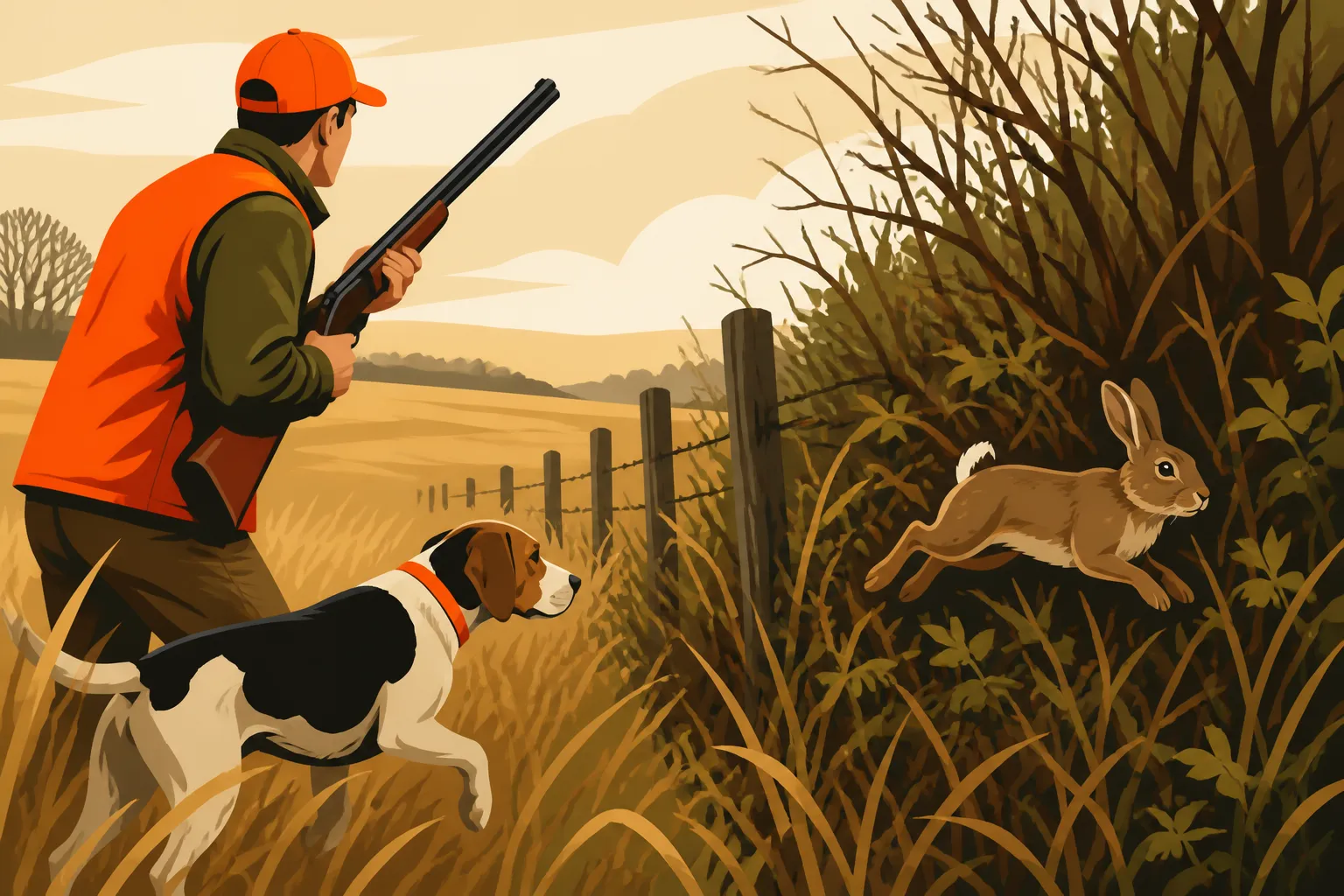
For many, rabbit hunting isn't complete without a good dog. Beagles, Basset Hounds, and other small hounds are perfectly suited for this type of hunting. Their keen sense of smell, persistence, and ability to navigate dense cover make them invaluable. A well-trained beagle will pick up a rabbit's scent, push it out of cover, and then follow the track, often in a circular pattern, bringing the rabbit back toward the hunter. This makes for exciting, vocal chases and often provides shooting opportunities as the rabbit circles.
Even a flushing dog like a Labrador or a Springer Spaniel can be effective, though they might not "circle" the rabbit in the same way. Their job is to simply get the rabbit moving. However, when working with dogs, it's vital to have them properly trained and under control. An e-collar can be a useful tool for communication and command reinforcement, particularly if you're hunting near roads or other hazards. If you plan to hunt with dogs, understanding E-Collar Use on Public Ground can be very beneficial. A dog adds a whole new dimension to rabbit hunting, turning a quiet walk into a lively, collaborative pursuit. When using an app like GoHunt, you can often identify prime habitat to focus your dog's efforts.
Effective Hunting Tactics in Indiana Fencerows
Hunting rabbits in fencerows requires a blend of stealth, aggression, and sometimes, a bit of teamwork. The tactics you employ will often depend on whether you're hunting solo, with a partner, or with dogs.
Still-Hunting and Kicking Brush
For the solo hunter or a pair without dogs, still-hunting and actively kicking brush are the primary methods. "Still-hunting" for rabbits isn't about being silent and slow like deer hunting; it's about being observant and ready. Walk slowly along the fencerow, pausing frequently to scan ahead and listen. Pay close attention to any small changes in the brush, a twitch, or a slight movement. When you come across a particularly dense brush pile, a downed tree, or a thick patch of briars, get ready. Kick it, stomp it, or even poke it with a stick if it's safe to do so.
Rabbits will often hold incredibly tight, waiting until you're practically on top of them before bursting out. Be prepared for a quick, close-range shot. If you're hunting with a partner, one person can walk one side of the fencerow, and the other on the opposite side, or one can walk inside the fencerow, and the other can walk parallel, 10-20 yards out, ready for a rabbit that breaks cover and tries to escape into an open field. This method can be tiring, but it's incredibly rewarding when a cottontail explodes from cover and you connect.
Working with Beagles and Other Hounds
Hunting with beagles transforms the experience into a truly immersive and traditional pursuit. The dogs do the heavy lifting of finding the scent and routing the rabbit. Your role as the hunter is to position yourself strategically and listen to the dogs. Once a beagle strikes a scent and begins to "open up" (bark), you know a rabbit is on the move. Listen to the changes in their barking; a faster, more excited bark often means the rabbit is close or moving quickly.
Rabbits, when pursued by hounds, tend to run in circles, especially if they are pushed out of their home cover. The trick is to anticipate where the rabbit will reappear. Often, they will circle back through or near the very patch of cover they were jumped from. Position yourself quietly in a good shooting lane, usually at an intersection of the fencerow or where it thins out, and wait for the rabbit to come into view. This requires patience and a good ear, but the sound of a beagle chase is one of the most exciting experiences in small game hunting. For those dedicated to this method, exploring Running Beagles on Indiana Cottontails can provide invaluable specific advice. Using scouting tools like GoHunt can help you identify dense fencerows near open fields where rabbits are likely to run in a loop.
Driving and Flushing Strategies
When working with a larger group, or in particularly long, dense fencerows, driving and flushing can be very effective. This involves several hunters walking abreast, or in a line, pushing through the fencerow from one end to the other. One or more "blockers" are positioned at the far end, waiting for rabbits that are driven out. The drivers move slowly and systematically, making noise and kicking every bit of cover to encourage rabbits to move.
This method can be especially productive in wide fencerows or those bordering large fields. Communication among the group is crucial for safety and effectiveness. Make sure everyone knows where others are, and that shot lanes are clear. This strategy is physically demanding but can yield a good number of rabbits, especially in areas with high rabbit populations. It's a classic group hunt and a great way to enjoy the camaraderie of small game season in Indiana. Remember, even on private land, understanding Indiana Trespass and Permission Law is crucial, especially when retrieving game that might run onto adjacent property.
Regulations and Ethical Considerations for Rabbit Hunters
As with any hunting activity in Indiana, knowing and adhering to the regulations is not just about staying legal; it's about ethical hunting and respecting the resource, landowners, and fellow outdoorsmen.
Indiana Rabbit Season Dates and Bag Limits
Indiana's rabbit season typically opens on the first Friday of November and runs through January 31st. These dates can shift slightly year to year, so always confirm the current regulations with the Indiana Department of Natural Resources (DNR) before heading afield. There's usually a daily bag limit, often around 5 rabbits per hunter, and a possession limit. These limits are in place to ensure a sustainable rabbit population for future hunting seasons.
You'll need a valid Indiana hunting license and, if you're a non-resident, the appropriate non-resident license. Keep your license and any necessary permits (like the HIP registration for migratory bird hunters, though not required for rabbits) readily accessible. It's good practice to have proof of your license, whether a physical copy or an electronic version on your phone via the Access Indiana portal or the DNR's Go Outdoors Indiana app. Keeping up-to-date with Indiana Small Game Season Rules is paramount for a legal and enjoyable hunt.
Respecting Landowner Rights and Private Property
A significant portion of prime fencerow habitat exists on private agricultural land in Indiana. Gaining access to these areas is often key to a successful rabbit hunt. This means exercising extreme respect for landowners and their property. Always, always obtain permission before stepping foot on private land. This isn't just common courtesy; it's the law. Indiana Trespass and Permission Law is clear on this: you need permission to hunt private property.
When asking for permission, be polite, respectful, and prepared. Offer to share your harvest, clean up any trash, and be mindful of crops, livestock, and fences. It's always best to ask in person. For more detailed advice, consider tips on Asking an Indiana Farmer for Permission. If permission is denied, accept it gracefully and move on. Never hunt without explicit permission. This not only keeps you legal but also builds trust and ensures that landowners remain open to future hunting opportunities for others. Remember, a good hunter leaves no trace and often improves the relationship with the landowner. While public lands offer opportunities, many of the best fencerows are on private tracts, and nurturing those relationships is vital for small game hunters in the Hoosier State. Even when scouting with GoHunt to find likely looking fencerows, always verify land ownership and obtain permission before entering.
Table of Shotgun and Ammunition Recommendations for Indiana Rabbits
| Gauge | Choke Recommendation | Shot Size (Lead) | Typical Range (Yards) | Pros | Cons |
|---|---|---|---|---|---|
| 12 Gauge | Modified / Imp. Cyl. | 6 or 7.5 | 10-35 | Most versatile, widespread ammo | Can be heavy, more recoil than 20ga |
| 20 Gauge | Modified / Imp. Cyl. | 6 or 7.5 | 10-30 | Lighter, less recoil, good patterns | Slightly less pellets than 12ga |
| 28 Gauge | Imp. Cyl. / Skeet | 7.5 | 10-25 | Very light, low recoil, fast handling | Ammo less common, tighter patterns |
| .410 Bore | Full / Modified | 6 or 7.5 | 5-20 | Extremely light, minimal recoil | Very limited range, sparse patterns |
Note: Always pattern your shotgun with your chosen ammunition to understand its true performance at various distances.
Conclusion
Rabbit hunting in Indiana's fencerows offers a fantastic way to extend your hunting season, get some much-needed exercise, and put delicious wild game on the table. Whether you're still-hunting solo, driving with friends, or enjoying the music of a beagle pack on a cold winter morning, the thrill of a cottontail bursting from the briars is an experience that connects us to generations of Hoosier hunters. By understanding rabbit behavior, equipping yourself properly, and respecting the land, you'll find that these unassuming fencerows hold a wealth of opportunity for anyone willing to brave the briars. As you plan your hunt, don't forget to utilize resources like the GoHunt app for aerial scouting to pinpoint those promising stretches of cover.
Disclaimer
Hunting involves inherent risks, including injury or death. Always prioritize safety, follow all local and state regulations, and ensure you have proper training and equipment. The information provided here is for general guidance and entertainment purposes only and should not replace official regulations or professional instruction. Always double-check current Indiana hunting regulations with the DNR before heading into the field.