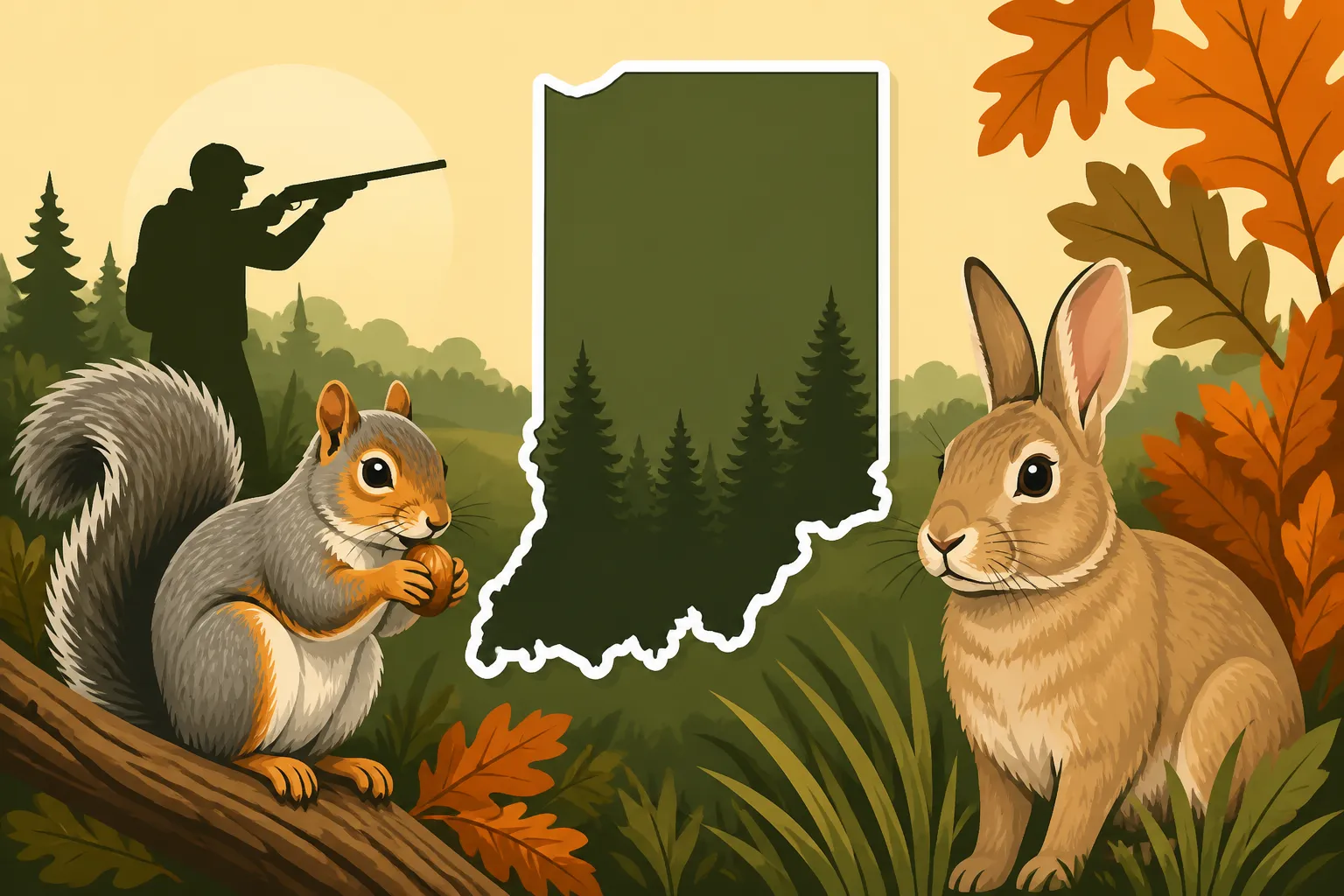
Indiana Squirrel and Rabbit Populations
For many of us who grew up in Indiana, small game hunting, particularly for squirrels and rabbits, wasn't just a pastime; it was often our first real taste of the outdoors, a rite of passage into the world of hunting. But if you've been out in the woods or along the fencerows lately, you might have noticed that finding consistent populations of these critters can sometimes feel like searching for a needle in a haystack, especially compared to the stories our grandfathers tell. This guide is here to shed some light on the current state of Indiana's squirrel and rabbit populations, what factors are influencing them, and how you can still find success chasing these classic game animals.
The Enduring Appeal of Indiana's Small Game Hunting
There’s something wonderfully nostalgic and genuinely challenging about hunting small game. Before the big deer boom, pursuing squirrels and rabbits was the bread and butter for many Hoosier hunters. It taught us patience, observation skills, and how to navigate the woods quietly. Even today, for many, it’s a way to get out in nature without the intense pressure or investment often associated with deer hunting. It’s accessible, often doesn’t require specialized gear beyond a trusty .22 or a shotgun, and it offers a fantastic way to introduce new hunters to the sport. The beauty of it is that it sharpens your senses, making you a better hunter overall, no matter what you're eventually pursuing.
Why Small Game Matters Beyond the Table
Beyond the delicious fried squirrel or rabbit stew, these small game species play a vital role in Indiana's ecosystems. They're key prey species for a wide array of predators, from coyotes and foxes to hawks and owls. Their presence or absence can be an indicator of overall habitat health. A robust squirrel population, for instance, suggests a healthy mast crop and mature timber, while thriving rabbit numbers point to good ground cover and brushy areas. When we talk about healthy small game populations, we're really talking about a balanced and thriving natural world right here in Indiana. Plus, the sheer joy of a crisp fall morning spent quietly stalking a squirrel or flushing a cottontail from a briar patch is an experience that connects us directly to generations of hunters before us. It's not just about the harvest; it's about the connection to the land and the tradition.
The Changing Landscape of Small Game Hunting
Let's be honest, the hunting landscape in Indiana has changed dramatically over the decades. What used to be common occurrences for small game hunters – fields teeming with rabbits or every oak stand dripping with squirrels – can now feel like rare gems. This shift can be frustrating for seasoned hunters and confusing for newcomers. It’s not necessarily that the animals are gone, but rather that their distribution and densities have changed, often reflecting broader environmental shifts. Understanding these changes, from altered agricultural practices to urban sprawl and habitat fragmentation, is crucial for adapting our hunting strategies and maintaining realistic expectations. We’re not hunting in our grandfathers’ Indiana anymore, but that doesn’t mean the opportunities aren't there; they just require a bit more intentionality and knowledge.
Unpacking Indiana Squirrel Populations
Indiana is home to two primary huntable squirrel species: the gray squirrel and the fox squirrel. While they share some similarities, their preferred habitats and behaviors often dictate where you'll find them, and thus, how you'll hunt them. Understanding their distinct characteristics is key to successful squirrel hunting in Indiana.
Gray Squirrel Strongholds
Gray squirrels, as their name suggests, are predominantly gray with a lighter belly. They are creatures of the deep woods, preferring large tracts of mature deciduous forest, especially those dominated by oaks, hickories, and beeches that provide abundant mast crops. You'll find them most reliably in the vast timber blocks of southern Indiana, particularly within areas like the Hoosier National Forest or larger state forests. These areas offer the canopy cover they crave, the interconnected branches they use as aerial highways, and the consistent food sources they need to thrive.
In these dense woodlands, gray squirrels are often more social than their fox squirrel cousins, and you might see several working the same mast-heavy ridge. They tend to be a bit smaller and more agile, making them fantastic, albeit challenging, targets. When you're Squirrel Hunting Indiana Hickory Groves, for example, you're likely in prime gray squirrel territory. Hunters often find success by sitting still and waiting for the woods to come alive, or by slowly still-hunting through creek bottoms and along ridge lines, always scanning the tree trunks and branches for that telltale flick of a tail. Their reliance on deep woods means their populations are generally more stable in these large, undisturbed habitats.
Fox Squirrel Preferences
Fox squirrels are noticeably larger than gray squirrels, often sporting a reddish-orange hue on their belly and flanks, contrasting with a grizzled gray back. Unlike the deep-woods-loving gray squirrel, fox squirrels are more adaptable and often prefer open woodlands, woodlot edges, riparian areas, and even suburban parks. They are comfortable closer to agricultural fields and fragmented habitats, utilizing fencerows, small woodlots, and isolated pockets of timber that might be overlooked by gray squirrels.
You'll encounter fox squirrels more frequently across central and northern Indiana farmland, where scattered woodlots, river bottoms, and the edges of corn or soybean fields provide both cover and food. They're known for spending more time on the ground, foraging for nuts, seeds, and even corn, making them a bit more predictable for hunters who prefer walking and spotting. Their adaptability allows them to persist in areas where habitat might be less contiguous, truly thriving in what we often call "edge habitat." When you're contemplating Squirrel Hunting Indiana Bottomland Hardwoods, particularly those near open fields, you're likely to find a mix of both, but fox squirrels will often be dominant due to the proximity of diverse food sources and more open understory.
Factors Influencing Squirrel Abundance
The health of Indiana's squirrel populations, both gray and fox, is heavily tied to two main factors: mast crop production and suitable habitat.
- Mast Crop Cycles: Oak, hickory, and beech trees produce nuts (mast) in cyclical patterns. A boom year for acorns and hickory nuts often leads to a boom in squirrel numbers the following year, as more food means higher survival rates and more successful breeding. Conversely, a poor mast crop can lead to lower squirrel populations, as animals struggle to find enough food to survive winter and reproduce. This natural fluctuation means that some years will simply be better for squirrel hunting than others, regardless of hunter effort. Scouting before the season, perhaps using an app like GoHunt to mark potential mast-producing trees, can give you a significant advantage in finding productive areas.
- Habitat Quality and Quantity: For gray squirrels, large, mature forests are non-negotiable. Fragmentation of these forests, through development or intensive logging, directly impacts their numbers. For fox squirrels, while more adaptable, they still need pockets of timber, fencerows, and brushy cover. Loss of these smaller habitats due to agricultural expansion or urban sprawl reduces their available territory. Both species suffer from a lack of den trees (older trees with cavities) which are crucial for nesting and winter survival. Preserving these mature trees and managing timber with squirrel habitat in mind is vital for maintaining healthy populations.
Understanding Indiana Rabbit Populations
Ah, the cottontail rabbit. For many, the quintessential small game animal. They're quick, elusive, and provide some incredibly exciting hunting. However, anyone who's chased them for a few seasons knows that finding consistent numbers can be a real challenge these days.
Cottontail Strongholds
The Eastern Cottontail is the rabbit species most commonly hunted in Indiana. These little dynamos thrive in dense, brushy cover, making them masters of concealment. Their ideal habitat consists of thickets, briar patches, brush piles, fencerows, abandoned farmsteads, and the edges of crop fields. They need areas where they can quickly dive for cover from predators, but also access open areas for feeding on grasses, clover, and young shoots.
You'll typically find the best rabbit hunting in rural agricultural areas, especially where there's a good mix of fields and unkempt edges. Think about areas where farmers might have left some brush grow up along a creek bank, or where old outbuildings have created natural debris piles. Southern Indiana's hill country, with its more varied terrain and less intensive farming in some areas, can also hold good numbers of rabbits, particularly in old fields reverting to brush or along power line cuts. When it comes to Rabbit Hunting Indiana Fencerows, you're hitting one of their most preferred habitats. These linear strips of cover act like superhighways and safe havens for rabbits moving between food sources and heavier cover.
The Challenge of Habitat Loss
This is where the rubber meets the road for Indiana's rabbit populations. Over the past several decades, cottontails have faced significant pressure from habitat loss and degradation.
- Clean Farming Practices: Modern agriculture, while incredibly efficient, often leaves very little "waste" habitat. Fencerows are trimmed or removed to maximize tillable acreage, brush piles are cleared, and field edges are sprayed. This reduces the dense, interconnected cover that rabbits rely on for survival, forcing them into smaller, more isolated pockets.
- Urban and Suburban Sprawl: As Indiana's towns and cities expand, more wild areas are converted into residential and commercial developments. This completely eliminates rabbit habitat or fragments it to the point where populations become unsustainable. Even small patches of woods or brush can be cut off from larger tracts, isolating rabbit groups.
- Reduced CRP Acreage: Conservation Reserve Program (CRP) lands, which pay farmers to set aside marginal land for conservation practices, historically provided excellent grassland and brushy cover for rabbits. Fluctuations in CRP enrollment and program incentives can impact the amount of this valuable habitat available.
The result is that rabbit numbers, particularly across much of central and northern Indiana's intensive agricultural regions, are generally lower than in generations past. It makes finding a good rabbit hunting spot feel like a true victory, and it requires more deliberate scouting and often, permission to hunt private lands that still retain good cover.
Factors Affecting Indiana Small Game Populations
While we've touched on habitat and food for each species, there are broader ecological and human-influenced factors that play a significant role in the overall health and distribution of Indiana's squirrel and rabbit populations. Understanding these helps us as hunters appreciate the challenges and inform our strategies.
Predation Pressure
Both squirrels and rabbits are fundamental prey animals in virtually every ecosystem they inhabit. This means they are constantly under pressure from a wide array of predators.
- Avian Predators: Hawks and owls are highly effective hunters of both species. Red-tailed hawks are a common sight circling over fields, ever watchful for a scurrying rabbit, while great horned owls patrol the night, picking off unsuspecting squirrels and rabbits.
- Mammalian Predators: Coyotes, foxes, bobcats, raccoons, and even domestic cats and dogs can take a heavy toll on small game. The rebound of predator populations, particularly coyotes, in many parts of Indiana means that small game animals face a continuous threat. While predators are a natural part of the ecosystem, heavy predator loads in fragmented habitat can significantly limit small game numbers. Learning about predator calling in Indiana farm country can even be a way to manage some of this pressure, if done responsibly and legally.
It's a constant balancing act in nature, but when habitat is scarce, rabbits and squirrels become easier targets, and the impact of predation becomes more pronounced.
Disease and Weather Impacts
Nature can be harsh, and disease and severe weather events can quickly decimate local small game populations.
- Disease Outbreaks: While less frequently discussed than deer diseases, various illnesses can impact squirrels and rabbits. For instance, tularemia can affect rabbits and other small mammals. Though typically not widespread enough to decimate entire populations, localized outbreaks can occur. Likewise, internal parasites can weaken animals, making them more susceptible to predation or harsh weather.
- Severe Weather: Harsh winters with prolonged periods of deep snow and ice can be particularly devastating for both species. Deep snow makes foraging difficult for squirrels and rabbits, and ice can seal off food sources. Coupled with extreme cold, this can lead to high mortality rates, especially among younger or weaker animals. Conversely, unusually wet spring weather during nesting season can reduce fawn (for rabbits) and pup (for squirrels) survival rates, impacting the recruitment of new animals into the population. Droughts in summer can also impact food availability, particularly for rabbits relying on green forage.
These natural cycles mean that population numbers can fluctuate from year to year, adding another layer of challenge for hunters seeking consistency.
Strategies for Hunting Indiana Small Game Successfully
Despite the challenges, Indiana still offers fantastic opportunities for squirrel and rabbit hunting. Success often comes down to understanding current conditions, adapting your tactics, and putting in the effort to scout and locate productive habitat.
Locating Productive Habitat
This is the most critical step. Don't just blindly wander into any woods or field edge. Do your homework!
- For Squirrels: Focus on mature hardwood forests with a strong component of oak, hickory, and beech trees. Look for areas with heavy mast on the ground – you’ll see scattered shells and cuttings. Creek bottoms and draws often funnel squirrel movement and provide consistent food. Use satellite imagery, perhaps with a mapping app like GoHunt, to identify large timber blocks and pinpoint specific groves of mast trees. Pay attention to stands of mature black walnut or pecan trees, which are squirrel magnets when their nuts are falling. You can even find clues by scouting for Scouting Indiana Public Land Before Season for deer, as good deer habitat often overlaps with good squirrel habitat.
- For Rabbits: Concentrate on dense, brushy cover. Think briar patches, honeysuckle thickets, multiflora rose hedges, brush piles, overgrown fencerows, and the edges of old fields that have grown up in saplings and weeds. Areas where agricultural fields meet dense woods, especially with a transition zone of brush, are prime. Look for areas with tangled undergrowth that would make a human struggle to walk through easily – that’s ideal rabbit escape cover. Drainage ditches that have grown wild can also be great rabbit hideouts.
Optimal Times and Methods for Hunting
Timing and technique are everything when chasing small game.
- Squirrels:
- Early Season (Late Summer/Early Fall): This is often a great time, especially on cooler mornings. Squirrels are very active foraging for mast. Look for "cutters" – squirrels actively eating nuts, leaving shells dropping to the ground. Early in the season, before leaves fall, a small-caliber rifle (.22 LR) requires precise headshots, but a shotgun (like those discussed in Shotguns for Indiana Pheasant and Small Game) loaded with squirrel shot (e.g., #6) is often more forgiving in dense foliage. Quiet movement or still-hunting through the timber, pausing frequently to listen, is very effective.
- Late Season (After Leaf Drop): Once the leaves are down, squirrels are much easier to spot. However, they're also more wary. Sitting quietly with a .22 in a mast-heavy area, often against a large tree for concealment, can yield results. Look for squirrels sunning themselves on branches on cold, sunny days. This is also a good time for small groups to work an area, with one or two "pokers" moving through the woods and others "posting" to catch squirrels that run ahead or behind.
- Rabbits:
- Cooler Weather: Rabbits are most active during cooler parts of the day, especially early morning and late afternoon. Overcast days are often better than bright, sunny ones, as rabbits will stay in cover longer.
- Still-Hunting/Stomping: For solo or small group hunters without dogs, slowly working through dense cover is effective. Kick brush piles, walk along fencerows, and literally stomp through thickets. Rabbits often won't flush until you're right on top of them. Be ready for a quick shot as they burst out. A shotgun with #5 or #6 shot is ideal for these fast-flushing targets.
- Hunting with Dogs: For many, rabbit hunting is synonymous with beagles. A good pack of rabbit hounds can make all the difference, systematically working cover and sending rabbits scurrying. The dogs will pursue, giving you a chance to intercept the rabbit as it circles back to its home territory. This is arguably the most traditional and effective method, and certainly the most exciting!
Legalities and Hunter Safety Considerations
Before you head afield, always make sure you're up to date on the current Indiana Small Game Season Rules. Seasons, bag limits, and legal hunting hours can change, so a quick check with the Indiana Department of Natural Resources (DNR) regulations is always smart.
- Licenses and Stamps: Ensure you have the appropriate hunting license.
- Blaze Orange: While not always required for all small game hunting (check regulations closely!), wearing blaze orange or pink is always a good idea, especially if hunting with others or on public land, to increase your visibility to other hunters.
- Know Your Target and Beyond: When using a .22 rifle for squirrels, be absolutely sure of your target and what's beyond it. A .22 bullet can travel a long way. When using a shotgun, be aware of your safe shooting lanes, especially when hunting with dogs or in a group.
- Permission: If hunting private land, always obtain explicit permission from the landowner beforehand. This not only keeps you legal but also maintains good hunter-landowner relations.
Table: Indiana Small Game Hunting Quick Reference
| Species | Preferred Habitat | Common Hunting Methods | Ideal Shotgun Shot Size | Key Factors for Abundance |
|---|---|---|---|---|
| Gray Squirrel | Mature, contiguous deciduous forests (oaks, hickory) | Still-hunting, sitting/waiting, stalking | #6, #4 | Mast crop, mature timber |
| Fox Squirrel | Open woodlands, woodlot edges, fencerows, riparian | Stalking, still-hunting, working field edges | #6, #4 | Diverse habitat, food sources |
| Eastern Cottontail | Dense brush, briar patches, fencerows, field edges | Stomping cover, still-hunting, hunting with beagles | #6, #5 | Dense cover, habitat connectivity |
Hunting small game in Indiana might present different challenges than it once did, but the rewards—a freezer full of delicious wild meat, crisp mornings afield, and the satisfaction of a challenging hunt—are as rich as ever. By understanding the species, their habitat needs, and adapting your approach, you can still experience the timeless joy of small game hunting in the Hoosier State.
Disclaimer
This article is for general informational purposes only and does not constitute professional advice. Laws, prices and regulations vary by location and change over time. Consult a qualified professional for guidance on your specific situation.