Upland Vests With Water Capacity
The crisp autumn air in Indiana's fencerows and open fields can be deceiving. You might not feel the scorching heat of summer, but the constant movement, busting through thick cover, and covering mile after mile while chasing pheasants or rabbits can quickly lead to dehydration and fatigue. Many of us have felt that nagging thirst, the heavy pack bouncing awkwardly, or the inconvenience of stopping to fumble for a water bottle. This guide is all about solving that problem by exploring the invaluable benefits of modern upland vests with integrated water capacity, making your hunts more comfortable, safer, and ultimately, more enjoyable.
The Hydration Challenge in Indiana's Upland Fields
Staying properly hydrated isn't just a minor detail; it's a critical component of a successful and safe upland hunting experience in Indiana. The physical demands of traversing diverse terrain and pushing through cover can quickly lead to dehydration, often without you even realizing it until it's too late.
Why Hydration is More Than Just a Convenience
Early season hunts for Pheasant Hunting Indiana Grassland or Rabbit Hunting Indiana Fencerows can be surprisingly warm, even in what feels like mild fall weather. The sun beats down, and the air might be still. Constant walking, pushing through dense switchgrass, climbing over downed logs, and covering significant ground while pursuing game builds up a considerable sweat. Dehydration isn't just about feeling parched; it subtly saps your energy, impacts your concentration, and can lead to dangerous situations, especially if you're far from your vehicle or assistance.
Think about a long day chasing pheasants in a reclaimed field near Willow Slough FWA. You're constantly moving, perhaps with a high-energy pointing dog, through thick cover. Your heart rate is elevated, you're wearing multiple layers for protection, and even if the air temperature isn't scorching, your body is working incredibly hard. Relying on a small water bottle stuffed into a pocket often proves insufficient for a full day's exertion. You'll drain it quickly and then be left without.
It's not just about immediate comfort; it's profoundly about safety and sustained performance. Dizziness, headaches, muscle cramps, and even impaired judgment are all common signs of dehydration. These symptoms can quickly turn a fun and productive day afield into a miserable or even perilous one. You need readily available water to keep you performing at your best, particularly when you need to make quick decisions, maintain situational awareness, or navigate uneven or challenging terrain. Without consistent hydration, your focus wanes, and your body struggles, making a successful hunt much harder to achieve.
Beyond a Water Bottle: The Limitations of Traditional Gear
For many years, the standard approach for upland hunters was to simply stuff a water bottle into one of the cargo pockets of a traditional game vest. While seemingly convenient, this method is fraught with limitations that detract from the overall hunting experience. Those bottles bounce around with every step, creating distracting noise and discomfort. They are often difficult to access without stopping, unzipping, or fumbling, breaking your stride and focus. Crucially, they rarely hold enough water for a full day of serious bird hunting, leaving you high and dry when you need it most.
Beyond the water issue, these loose bottles occupy valuable space that could be better utilized for other essential gear like extra shells, electronics, or dog treats. Some hunters attempted to mitigate the hydration problem by carrying small backpacks with water bladders. However, this often meant sacrificing the quick-access game pouch found on a vest, or it interfered with the fluid motion required to easily swing and shoulder a shotgun. Upland hunting demands gear that works seamlessly with you, not against you. You need to be able to mount your shotgun quickly, reload smoothly, and retrieve a bird without fumbling with awkward straps or shifting loads. A separate backpack adds unnecessary bulk and complexity to movements that need to be instinctive and fluid.
Furthermore, traditional upland vests, while excellent for carrying birds and shells, typically lack the advanced ergonomic design to distribute the weight of water efficiently. A heavy bottle rattling around in one pocket can throw off your balance, create uncomfortable pressure points, and strain your shoulders and back over a long day. Modern vests are designed with an integrated hydration system that makes the water a core part of the vest's load-bearing structure, ensuring balanced comfort and significantly reducing fatigue. This intentional design is what truly sets them apart from the old-school methods.
What Makes an Upland Vest with Water Capacity Essential
The evolution of upland vests to include integrated water capacity represents a significant leap forward in hunter comfort and efficiency. These designs aren't just about adding a pouch; they're about rethinking how an upland hunter carries vital supplies in the field.
Integrated Hydration Systems: Bladders and Bottles
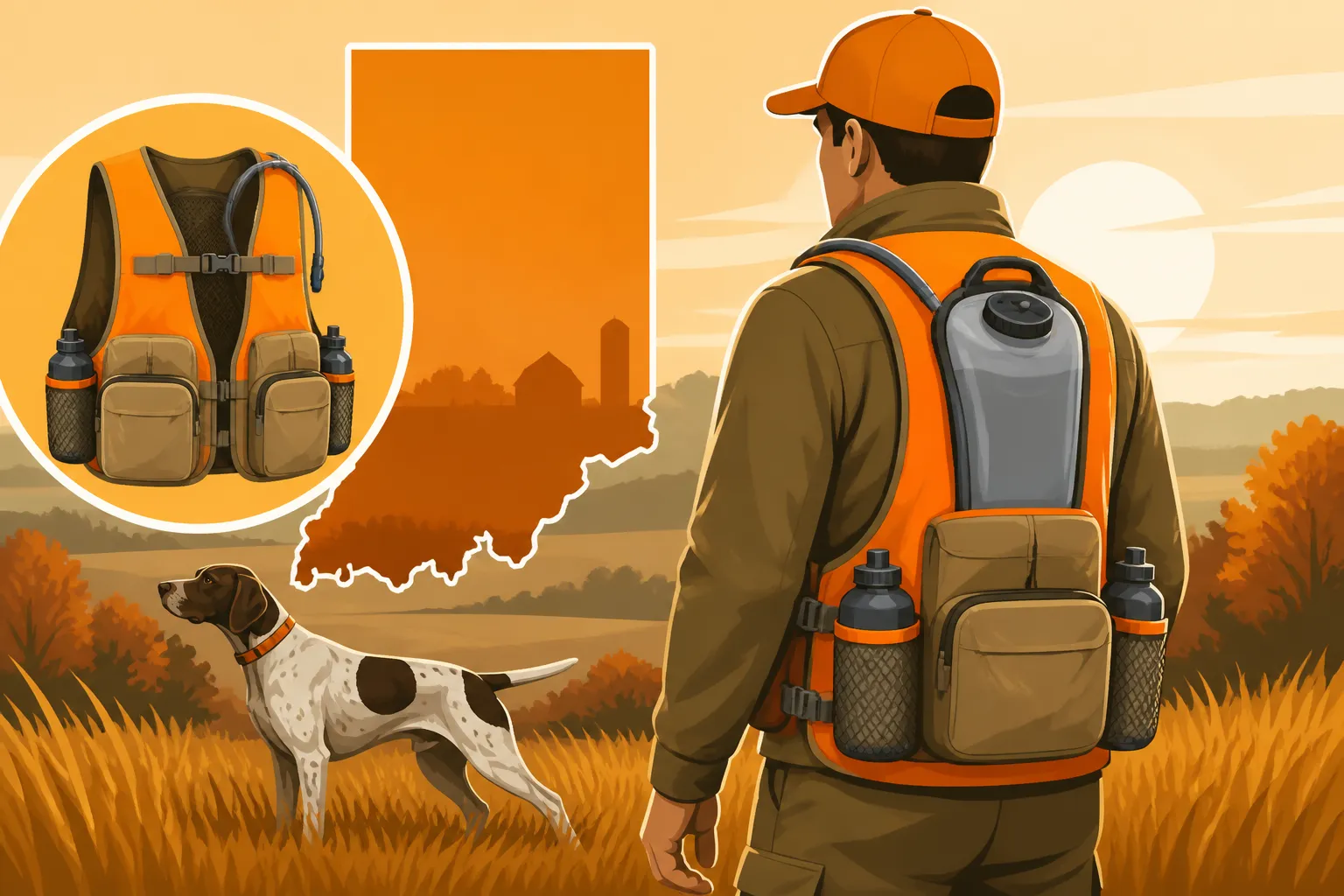
The real game-changer in modern upland vests is the seamlessly integrated hydration system. This typically comes in one of two primary forms: a dedicated pocket for a hydration bladder or strategically placed, purpose-built bottle holders that are an intrinsic part of the vest's design. Hydration bladders, often with capacities ranging from 1.5 to 3 liters, sit flat against your back. This design is key, as it distributes the weight evenly across your torso, making it feel less cumbersome. They typically feature a flexible hose that clips conveniently to your shoulder strap, allowing for hands-free sipping without ever breaking stride or interrupting your focus. This is incredibly convenient when you're in the thick of a pheasant field, constantly on the move, or when you're Running Pointing Dogs on Indiana Pheasants and need to keep your eyes locked on their every move.
Vests with integrated bottle holders, on the other hand, often feature two elasticized, form-fitting pockets, usually one on each side. These are designed specifically for standard water bottles, often accommodating a typical 20-32 oz bottle. While not as truly hands-free as a bladder system, these are excellent for hunters who prefer the ease of removing and refilling bottles, or who want to carry different liquids, such as water in one and an electrolyte drink in the other. Some premium vests even offer the flexibility of both options or allow you to choose which system works best for your particular hunt. Regardless of the system, look for designs that secure bottles tightly to prevent annoying bouncing while still allowing for quick and easy access when you need a drink.
The paramount benefit of either integrated system is the deliberate engineering to carry water comfortably. The weight is expertly distributed across your shoulders, often bolstered by a supportive hip belt that takes much of the load. This stands in stark contrast to the uneven pull and discomfort of a heavy bottle rattling around in a single vest pocket. This thoughtful distribution of weight significantly reduces fatigue over a long day of walking, especially when you're simultaneously carrying a shotgun, a handful of shells, and, hopefully, a few birds. This intentional and ergonomic design is precisely what elevates these modern vests far above simply stuffing a bottle into an old pocket.
Enhanced Storage and Ergonomics for the Upland Hunter
Beyond just providing water, these advanced vests truly excel in optimizing overall gear storage and ergonomic design. A truly great upland vest with integrated water capacity will feature a large, often expandable, game pouch positioned conveniently on the back. This pouch should be capable of comfortably holding several pheasants, rabbits, or squirrels without them bouncing around awkwardly or feeling like a heavy, shifting burden. Critically, this pouch should ideally be easy to clean – a blood-proof liner, a removable and washable bag, or even an exterior mesh material are huge advantages after a successful and messy hunt. Dedicated shell loops or organized pockets are also crucial, keeping your ammunition neatly arranged, protected, and, most importantly, readily accessible for quick reloads.
Many modern vests, particularly those from brands focusing on serious hunting gear, incorporate a padded and robust hip belt. This isn't just a stylistic flourish; it's an essential feature for transferring a significant portion of the vest's load from your shoulders to your stronger hip muscles, much like a well-designed backpacking pack. This makes a massive difference in sustained comfort and reduces strain, especially when the vest is fully loaded with water, shells, and game. Fully adjustable shoulder straps and sternum straps further aid in customizing the fit, ensuring the vest stays secure, doesn't shift or sag, even when you're busting through heavy cover or climbing over fences.
Think about the myriad small details that enhance functionality: strategically placed zippered pockets for securing your phone, keys, and hunting license, perhaps a dedicated pouch for a GPS unit or rangefinder, and external loops or D-rings for attaching dog leashes or training electronics. Some vests even ingeniously include a small, easily accessible pouch specifically for dog treats or a compact first-aid kit for your canine companion. The best designs anticipate nearly every need, allowing you to focus completely on the subtleties of the hunt, rather than constantly fumbling for misplaced gear. When you're out Rabbit Hunting Indiana Fencerows, you want quick, intuitive access to everything, and these well-designed vests deliver precisely that, enhancing your overall effectiveness and enjoyment.
Choosing the Right Upland Vest for Indiana Hunting
Selecting the ideal upland vest is a personal choice, but a few key considerations about materials, fit, and features will ensure you pick a piece of gear that stands up to Indiana's varied conditions and your specific hunting style.
Material, Durability, and Weather Resistance
Indiana's diverse upland hunting season can throw all sorts of weather conditions at you, from relatively warm and dry early fall days to damp, chilly, and even occasionally snowy late-season hunts. The material of your vest is therefore paramount to its performance and longevity. Look for vests constructed from durable, abrasion-resistant fabrics like heavy-duty nylon, Cordura, or reinforced polyester. These robust materials are designed to withstand the constant abuse of pushing through thorny multiflora rose, climbing over fallen logs, navigating dense thickets, and enduring repeated washes after messy hunts. A vest that shows significant wear and tear or tears easily after just a season or two of use is a poor investment and a frustration you don't need in the field.
Water resistance is another critical factor often overlooked. While an upland vest typically doesn't need to be fully waterproof like a rain jacket, a DWR (Durable Water Repellent) coating or inherently water-resistant fabric can effectively shed light rain, morning dew, and even some light snow. This keeps your internal gear drier and, crucially, prevents the vest itself from soaking up moisture, becoming heavy, and chilling you. This is especially important for protecting sensitive items in your pockets, such as your phone, truck keys, or important licenses. Furthermore, pay close attention to the quality of stitching and the presence of reinforced stress points, particularly where shoulder straps connect, around pocket openings, and especially in the game pouch. These are strong indicators of a well-made vest built to last through many demanding Indiana seasons. Consider how Wool Versus Synthetics in Wet Snow applies to your outer layers, and extend that thought to your vest material; breathability is also key.
Breathability, despite the need for durability, is equally crucial. You absolutely do not want a vest that traps excessive heat, especially during active hunts in warmer temperatures. Vests incorporating mesh panels, particularly on the back and shoulders, significantly aid in ventilation, preventing uncomfortable sweat build-up and keeping you far more comfortable throughout the day. Finding that optimal balance between ruggedness for enduring thick cover and sufficient breathability for active exertion is key to an effective upland vest that can comfortably handle the full spectrum of diverse conditions, from an early September dove hunt to a late December rabbit chase. Brands like GoHunt often prioritize these thoughtful material choices to ensure optimal performance across varied outdoor environments.
Fit, Adjustability, and Specific Features
A vest that doesn't fit properly is a vest you simply won't want to wear all day, regardless of its other features. The best upland vests with integrated water capacity offer a wide and versatile range of adjustability. Look for vests with fully adjustable shoulder straps, side straps, and, most importantly, a supportive hip belt. This extensive adjustability allows you to customize the fit not only for your unique body type but also to accommodate the different layers of clothing you might wear throughout the season – from a light shirt on an early season day to heavy insulated layers in the late season. A well-fitting vest will conform to your body without restricting movement, ensuring your shotgun mounts smoothly to your shoulder and your swing isn't impeded by shifting fabric or an unbalanced load. You're not just carrying gear; you're wearing your gear as an integral part of your hunting system.
Beyond general fit, consider your specific hunting style and individual needs. Do you frequently carry a lot of dog training equipment, like an e-collar transmitter, whistle, or extra lead? Then look for vests with additional external loops, specialized pockets, or modular attachment points. Are you primarily hunting pheasants in open fields or reclaimed grassland where visibility is a concern? A vest with ample blaze orange or blaze pink panels, prominently displayed, might be a critical safety feature. If you frequently Hunting the Indiana Spring Turkey Opener and then transition to upland hunting in the fall, some highly versatile vests can even adapt, offering removable components or modular attachments that cater to different seasons and species. Take a moment to genuinely think about what items you actually carry on a typical hunt, and choose a vest that accommodates those essential items comfortably, securely, and efficiently.
Above all, do not underestimate the immense value of trying a vest on, ideally with some simulated weight in it (e.g., a few water bottles and a couple of bricks in the game pouch). Walk around, simulate shouldering and swinging an unloaded shotgun, and practice bending and reaching. This hands-on trial will give you a real and accurate sense of its comfort, balance, and overall functionality. A reputable brand like GoHunt would wholeheartedly emphasize the importance of field-testing gear before making a final commitment, because what looks appealing on a hanger might not feel good or perform well after an hour of busting dense brush or trekking across challenging terrain. Your ultimate goal is a vest that feels like an effortless extension of your body, rather than an added burden, allowing you to fully immerse yourself and enjoy your time pursuing upland game across Indiana's diverse and beautiful landscapes.
Comparative Table: Upland Vest Features
To help you visualize the differences and benefits, here's a quick comparison of common upland vest types:
| Feature | Basic Vest (No Hydration) | Mid-Range Vest (Bottle Pockets) | High-End Vest (Bladder Compatible) |
|---|---|---|---|
| Hydration Capacity | Minimal (user-supplied bottle in pocket) | 1-2 standard water bottles (approx. 32-64 oz) | 1.5-3 Liter hydration bladder + sometimes bottles |
| Hydration Access | Requires stopping, digging for bottle | Easy reach, usually from side pockets | Hands-free hose with bite valve (continuous sipping) |
| Weight Distribution | Can be uneven, saggy when loaded | Better, but still bottle-dependent pockets | Excellent, evenly spread across back & hips via belt |
| Game Pouch | Basic, often unlined, less secure | Roomy, sometimes lined, moderate bounce | Expandable, often blood-proof, minimal bounce, secure |
| Shell Storage | Open loops or basic, limited pockets | Dedicated shell loops, zippered pockets, organized | Ample, highly organized shell loops/pouches, easy access |
| Comfort Features | Basic shoulder straps, minimal padding | Padded shoulder straps, some waist support | Padded hip belt, fully adjustable sternum/shoulder straps, breathable mesh |
| Durability | Varies, can be entry-level, less robust | Good, ripstop fabrics, reinforced stitching | Excellent, heavy-duty Cordura/nylon, premium hardware, long-lasting |
| Extra Storage | Minimal utility pockets for small items | Several utility pockets, d-rings, moderate capacity | Dedicated pockets for GPS, phone, dog gear, first aid, high capacity |
| Typical Use Case | Short, casual hunts, less active | Mid-length, active hunts, moderate terrain | Long, strenuous hunts in varied conditions, serious pursuit |
Maintenance and Longevity of Your Hydration Upland Vest
A quality upland vest with integrated hydration is an investment that will serve you well for many seasons. However, like any piece of essential hunting gear, proper care and maintenance are crucial for ensuring its longevity and consistent performance.
Cleaning Your Vest and Hydration System
After a successful day Pheasant Hunting Indiana Grassland or chasing rabbits through thorny cover and muddy fields, your vest is going to be dirty, and quite possibly a bit bloody from game. Proper cleaning is absolutely essential, not only for hygiene but also for the long-term durability of the materials. For the vest itself, always, always check the manufacturer's care instructions first. Many modern synthetic vests can be spot-cleaned with a mild soap and warm water solution, or even carefully machine washed on a gentle cycle with a scent-free, hunting-specific detergent to effectively eliminate odors, and then thoroughly air-dried. Avoid using harsh chemicals, bleach, or high heat in a dryer, as these can permanently damage specialized fabrics, waterproof coatings, and structural components. Pay particular attention to the game pouch; if it’s removable, take it out and scrub it thoroughly to prevent bacterial growth, lingering game odors, and staining.
The integrated hydration system demands specific and meticulous attention. If you're using a bladder, empty it completely after each use and rinse it thoroughly with warm, clean water. Many hydration bladders and their associated hoses come with specialized cleaning kits that include brushes for the hose and mouthpiece, which are particularly prone to developing mildew and unpleasant tastes if not cleaned properly. After rinsing, ensuring it air dries completely, often by hanging it upside down with the opening propped open, is crucial. For vests utilizing water bottles, a good scrub with a bottle brush and dish soap will typically suffice. Regular and diligent cleaning prevents unpleasant odors, ensures your water always tastes fresh, and significantly extends the life of these vital hydration components. Neglecting this crucial step can lead to foul-tasting water and potentially harmful bacterial growth.
Don't forget the small but important details. Inspect all zippers for any embedded mud or debris, ensuring they operate smoothly. Brush off any burrs, seeds, or thorns from the vest's fabric, as these can embed themselves and cause premature wear or snags over time. By consistently taking a few extra minutes after each outing to properly clean your vest and its hydration system, you're not just making it more pleasant for your next hunt; you're actively preserving your investment. This diligence ensures that when you're ready to head back out for Hunting the Indiana Rut in Early November or a late-season small game push, your gear is in prime condition and ready to perform.
Storage and Pre-Season Checks
Once the hunting season winds down, proper off-season storage is paramount to preserving your vest's condition and ensuring it's ready for action next year. Before putting it away for an extended period, ensure your vest is meticulously clean and absolutely dry. Storing a damp or dirty vest is an open invitation for mold, mildew, and persistent odors, which can irreversibly ruin fabrics and make the vest unusable. Hang it in a cool, dry, well-ventilated area, safely away from direct sunlight, which can cause colors to fade and materials to degrade over time. If your hydration bladder or bottles are removable, take them out, clean them thoroughly, and store them separately, ensuring they are also completely dry to prevent any long-term moisture issues or plastic degradation.
Before the next hunting season officially kicks off, perform a thorough pre-season check of your vest. This comprehensive inspection should include examining all zippers, buckles, and straps for any signs of wear, fraying, loose stitching, or damage. If you use a hydration bladder, test it for any leaks, paying particular attention to the seams and hose connection points. Make sure the bite valve on the hose is still functioning correctly and isn't clogged or deteriorating. This is also an excellent opportunity to resupply any small, essential items you keep in your vest, such as a compact first-aid kit, extra shotgun shells, a headlamp, or dog training supplies. Crucially, if your vest features blaze orange or blaze pink panels, check that they are still vibrant and free of tears, ensuring they meet How Much Blaze Orange Indiana Requires for safety regulations.
This diligent pre-season ritual isn't merely about maintenance; it's a critical component of responsible preparation. You absolutely do not want to discover a torn strap, a faulty zipper, or a leaky hydration bladder on opening morning when you're already scrambling to get out the door. A quick, thorough once-over ensures your upland vest, a truly critical piece of your hunting kit, is in peak condition, ready to reliably support you through countless long walks, exciting flushes, and memorable moments afield. While investing in a quality vest from a reputable brand like GoHunt means it's built to last, even the best gear benefits immensely from consistent care and attention.
Disclaimer
This article is for general informational purposes only and does not constitute professional advice. Laws, prices and regulations vary by location and change over time. Consult a qualified professional for guidance on your specific situation.