Barrel Length for Walking Thick Cover
If you've spent any time at all still-hunting through the gnarly briar patches of southern Indiana, creeping along a dense creek bottom, or even trying to slip into a woodlot bordered by a thick fencerow in the northern part of the state, you know the struggle: that moment when your rifle barrel snags on a stray branch, scrapes against a sapling, or gets tangled in a vine, making noise that echoes through the quiet woods and instantly blows your chances. It’s a frustrating reality for many Hoosier hunters, but it doesn't have to be. This guide is all about helping you understand how barrel length impacts your ability to move silently and efficiently through Indiana's thickest cover, and how to choose the right setup for your style of hunting.
The Real Challenge of Thick Cover for Indiana Hunters
Indiana's diverse landscape, from the steep, timbered hills and deep ravines of the south to the patchwork of woodlots, fencerows, and agricultural fields up north, often presents hunters with incredibly dense cover. This isn't wide-open Western country where long-range shots dominate; here, many encounters happen at close quarters, often in environments where visibility is limited to mere yards. Navigating these environments effectively is paramount to success, and your firearm's barrel length plays a far more significant role than many realize.
When Every Inch Feels Like a Foot: Maneuverability Matters
Imagine yourself easing through a stand of young pines, the branches interlocking like a thorny maze, or trying to slip down into a brushy draw in the Hoosier National Forest. Every step is deliberate, every movement slow and controlled. Now, picture doing that with a rifle barrel that feels like a fishing pole extending endlessly in front of you. It's a recipe for disaster. A longer barrel is simply harder to maneuver. It catches on everything. You're constantly having to shift it, push branches out of the way, or lift it over obstacles.
This constant adjustment not only slows you down, but it breaks your rhythm. Still-hunting, in particular, demands a fluid, almost meditative pace. When your rifle becomes an impediment, it takes you out of the moment, diverting your attention from reading sign, scanning for movement, and listening for the subtle sounds of the woods. A more compact firearm allows for quicker, smoother transitions through tight spaces, letting you maintain that stealthy cadence without feeling like you're wrestling a fence post. It helps keep your focus where it needs to be: on the hunt itself.
The Silent Stalker's Nightmare: Snags, Noise, and Lost Opportunities
Beyond just the physical awkwardness, a long barrel in thick cover is a noise machine waiting to happen. That scrape against a dry branch, the thwack of it hitting a sapling you didn't see, or the rustle of leaves as you try to adjust its position – these are all sounds that carry surprisingly far in the still woods. Deer, with their incredible hearing, will pick up on these anomalies long before you even know you've made a mistake. A long barrel significantly increases the surface area prone to contact, and thus, prone to making noise.
Think about trying to slowly raise your rifle for a shot when a deer suddenly appears through the brush. If your barrel is constantly catching, you might not get that shot off cleanly, or worse, you spook the animal before you even have a chance to aim. This is especially true when attempting to track a deer that has moved just out of sight, and you're trying to quickly close the distance through tangled undergrowth. Every snag is a potential missed opportunity. For those who embrace the challenge of hunting deep in the Indiana timber, minimizing noise and maximizing quick, unhindered movement is the name of the game, and a shorter barrel can be a significant advantage here.
Understanding Common Barrel Lengths for Indiana Hunting
When you're shopping for a rifle or shotgun, or even just thinking about what you already have in the safe, barrel length might seem like a secondary consideration. But in the context of Indiana's hunting environments, it moves front and center. Let's break down the common options and what they mean for your time in the woods.
Short Barrels (18-20 Inches): The Nimble Advantage
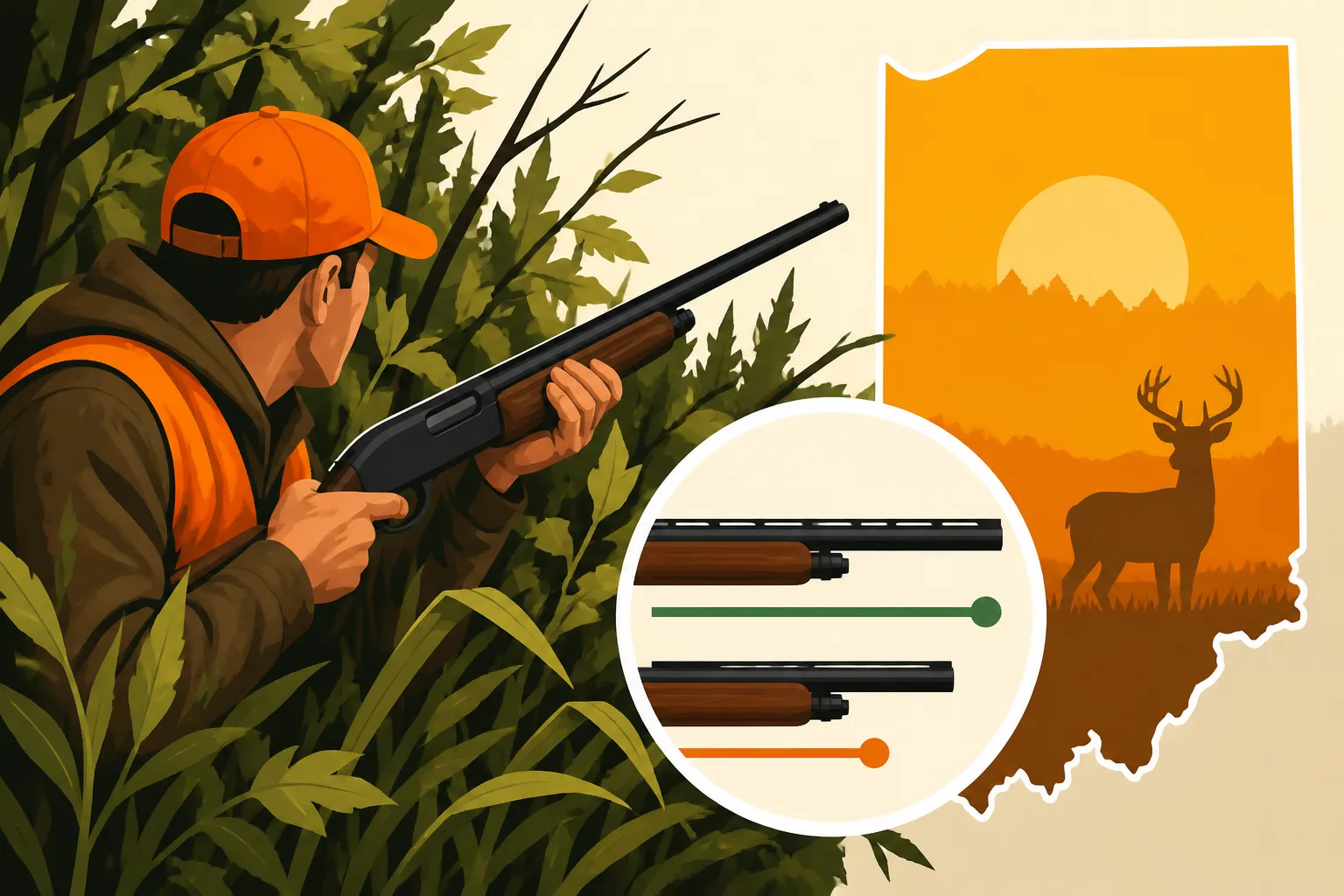
When we talk about short barrels, we're generally looking at firearms with barrel lengths in the 18 to 20-inch range. These are often found on carbine versions of popular rifles, some lever-actions, or specific shotgun models. Their primary advantage, as you might guess, is superior maneuverability.
Pros:
- Exceptional Handling: In thick brush, dense pines, or tight ground blinds, a short barrel shines. You can swing it quickly, navigate obstacles with ease, and keep it close to your body without snagging. This is incredibly beneficial when Still-Hunting Southern Indiana Ridges where you're constantly weaving through cover or when you're perched in a Treestand Setups in Hoosier National Forest trying to get a shot off without hitting a branch.
- Reduced Weight: Generally, shorter barrels mean less overall weight, making for a lighter package to carry on those long treks through public land.
- Quicker Target Acquisition: The shorter length can make the firearm feel "faster" to bring to bear, which can be crucial for snap shots at deer that suddenly appear in heavy cover.
Cons:
- Velocity Loss: This is the most frequently cited drawback. A shorter barrel typically means less powder burn time, resulting in slightly lower muzzle velocity for a given cartridge. While this might be a concern for extreme long-range shooting, for the typical 50-150 yard shots often encountered in Indiana woods, the difference is usually negligible for deer-sized game and most common hunting cartridges.
- Increased Muzzle Blast/Recoil: The powder has less room to expand and burn, which can lead to a louder muzzle report and sometimes a perceived increase in recoil, though often mitigated by firearm design.
- Slightly Shorter Sight Radius (for iron sights): If you're using open sights, a shorter barrel means the distance between your front and rear sight is reduced, which can theoretically impact precision at longer distances. With optics, this is a non-issue.
For many Indiana hunters operating in challenging terrain, the trade-offs of a short barrel are often well worth it for the enhanced handling and quiet movement it provides.
Standard Barrels (22-24 Inches): The All-Around Performer
This is arguably the most common barrel length range for hunting rifles across the country, and for good reason. Firearms with 22- to 24-inch barrels offer a versatile balance that works well in a variety of conditions.
Pros:
- Good Velocity Retention: These lengths provide a near-optimal balance of powder burn and bullet velocity for most standard cartridges, maximizing their ballistic potential without becoming unwieldy.
- Manageable Size: While not as nimble as a carbine, a 22- to 24-inch barrel is still quite manageable in most Indiana hunting scenarios. It allows for decent maneuverability in moderately thick woods and is comfortable for stand hunting.
- Broad Availability: The vast majority of commercially available hunting rifles fall into this category, giving you a huge array of options in terms of caliber, action type, and features.
Cons:
- Less Nimble Than Short Barrels: In truly dense cover – think the nastiest honeysuckle thickets or tangled river bottom briars – even a 22-inch barrel can feel a bit long and prone to snagging compared to its shorter counterparts.
- Still a Potential for Snags: While better than a longer barrel, you're not entirely immune to those frustrating snags and noise-making incidents when trying to slip through really tight spots, especially when Hunting a Funnel Between Two Woodlots that's overgrown.
A 22-inch barrel is a fantastic choice for the hunter who wants a single rifle that can do it all – from stand hunting a cut cornfield in northern Indiana to slowly still-hunting a slightly more open timber stand in the south.
Long Barrels (26+ Inches): Power and Precision, But at What Cost?
Longer barrels, typically 26 inches and up, are more commonly found on magnum cartridges, dedicated target rifles, or some older shotgun models designed for specific purposes like waterfowl or turkey hunting where maximum velocity or choke constriction is desired.
Pros:
- Maximum Velocity: For cartridges that benefit from a longer burn time, these barrels can wring out every last foot per second of muzzle velocity, which can be advantageous for extremely long-range shooting.
- Reduced Muzzle Flash/Noise: More complete powder burn means less muzzle flash and often a slightly less intense muzzle report.
- Longer Sight Radius (for iron sights): For those few hunting with open sights at range, a longer sight radius can improve precision.
Cons:
- Very Cumbersome in Thick Cover: This is where long barrels truly fall short for the Indiana deer hunter. They are incredibly difficult to maneuver silently through anything but the most open woods. Snagging, noise, and awkward handling become constant companions. Trying to get a quick shot off in tight quarters with a 26-inch barrel can feel like an exercise in futility.
- Increased Weight: The extra steel adds noticeable weight, which can become fatiguing on long walks, especially through challenging terrain.
- Slower to Mount and Point: The length and weight can make the firearm slower to bring to the shoulder and point quickly at a moving target.
For most deer hunting situations in Indiana, particularly if you spend any time moving through the woods, a long barrel is often more of a hindrance than a help. Its benefits are primarily realized in open country or static shooting positions that are far less common in the dense cover we frequently encounter here. If you're specifically interested in choosing a rifle now that cartridge limits are gone, you might find that many of the modern, effective cartridges don't require extreme barrel lengths to perform exceptionally well within typical Indiana hunting distances.
Here's a quick comparison of barrel lengths:
| Barrel Length Category | Typical Range (Inches) | Primary Advantage | Primary Disadvantage | Best for Indiana Scenarios |
|---|---|---|---|---|
| Short | 18-20 | Extreme maneuverability, light | Slight velocity loss, increased muzzle blast | Still-hunting dense creek bottoms, cedar thickets, brushy ravines, Hunting Small Woodlots Near Suburban Indianapolis |
| Standard | 22-24 | Balanced performance, good velocity | Less nimble than short in extremely thick cover | General purpose, stand hunting, moderate still-hunting, Hunting Northern Indiana Farmland Deer woodlots, open timber |
| Long | 26+ | Max velocity, reduced muzzle flash | Very cumbersome, heavy, difficult to maneuver | Long-range open country (rare in IN deer hunting), specific shotgun applications (e.g., dedicated turkey/waterfowl setups) |
Matching Barrel Length to Your Indiana Hunting Style and Terrain
Now that we've looked at the different barrel lengths, let's get practical. The best barrel length for you isn't just about the gun; it's about how and where you hunt in Indiana. Tailoring your gear to your specific approach will make a huge difference in your effectiveness and enjoyment afield.
Still-Hunting Through Dense Woods and Bottomlands
If your preferred method is to silently slip through the timber, reading the land and stalking deer in their natural habitat, then maneuverability is king. This is especially true when you're working the deep draws and brush-choked creek bottoms that often hold deer in places like the Hoosier National Forest, or trying to navigate the tangled vines and briars of Indiana river bottoms.
For the dedicated still-hunter, a short barrel (18-20 inches) is often the optimal choice. It allows you to:
- Maintain Stealth: Reduce the chance of snagging branches and making noise, letting you get closer to wary deer.
- React Quickly: If a buck slips out of a thicket unexpectedly, you can bring the rifle to bear faster and more smoothly.
- Move Unhindered: No more battling your own firearm through every patch of cover. You can focus on your foot placement, wind, and sign.
When I'm still-hunting those thick areas, the difference a shorter barrel makes is profound. It's not just about comfort; it's about being able to weave through cover like a ghost, rather than lumbering along, bumping every twig in your path. This kind of hunting thrives on quiet precision, and a compact rifle is a vital tool in that pursuit. Think about using a resource like GoHunt to analyze aerial photos of your favorite public land spots, identifying those dense bedding areas and travel corridors where a shorter barrel will truly shine. Reading Aerial Photos for Southern Indiana Deer will help you identify these areas pre-hunt.
Stand Hunting on Field Edges and Woodlot Perimeters
Many Indiana hunters primarily hunt from a stationary position, whether it's a treestand overlooking a food plot, a ground blind on a field edge, or a saddle on a ridge. In these scenarios, extreme maneuverability isn't quite as critical as it is for still-hunting, but it still plays a role.
If you're mainly stand hunting, a standard barrel (22-24 inches) is an excellent all-around choice. You still get good ballistic performance, and the slightly longer barrel isn't usually an issue when you're set up and waiting. However, even in a stand, a shorter barrel can offer some advantages:
- Easier in Compact Stands/Blinds: If your treestand platform is small, or your ground blind is a tight fit, a shorter barrel is much less likely to hit the roof, wall, or rails when you need to pivot for a shot.
- Clearer Shooting Lanes: Sometimes, even with trimmed lanes, a shorter barrel can give you an extra degree of freedom to thread a shot through a narrow window.
- Approach/Exit Stealth: Even if you're stand hunting, you still have to walk to and from your stand. If that path involves navigating brushy trails or thick transitions, a shorter barrel makes those crucial, pre-dawn and post-dusk movements quieter and less prone to snagging.
Even when perched high in an oak, you want to be able to silently raise your firearm when that deer steps out. A 22-inch barrel is a fantastic compromise that works beautifully in these situations, allowing you to carry a potent rifle without it becoming a cumbersome burden during the walk in or out.
Deer Drives and Fast-Paced Action in Thick Stuff
Deer drives, while sometimes controversial, remain a popular and effective method, especially on Indiana public land, for pushing deer out of heavy cover. This type of hunting often involves both "pushers" moving through dense woods and "posters" waiting at strategic escape routes.
For the "pusher" doing the dirty work, busting through thickets and pushing deer, a short barrel (18-20 inches) is almost a necessity. You'll appreciate:
- Maximum Maneuverability: When you're constantly fighting through brush, a compact firearm reduces fatigue and the chances of snagging.
- Quick Shots: Deer often break out of cover fast during a drive. A shorter barrel is quicker to shoulder and point for those fast-moving targets.
For the "poster" waiting at an escape route, a standard barrel (22-24 inches) is typically fine, as you're in a more stationary position. However, if that escape route itself is through dense cover, or if you anticipate needing to quickly pivot for a shot, a shorter barrel is still a solid choice. In any deer drive, especially with Deer Drives With Three or Four Hunters, communication and safe gun handling are paramount, but ease of movement and quick target acquisition are also key to success.
Beyond the Barrel: Other Gear for Navigating Indiana's Toughest Terrain
While barrel length is a critical factor for success in thick cover, it’s far from the only piece of the puzzle. Optimizing your other gear can further enhance your ability to move silently, stay comfortable, and protect your equipment in the demanding environments Indiana's woods often present. Every little detail can add up to make your hunt more successful and enjoyable, especially when you’re pushing deep into those less-pressured areas.
The Importance of a Good Sling and Carry Method
Having the right barrel length is one thing, but how you carry that firearm is just as important, particularly when you're traversing rough terrain or thick brush. A quality sling isn't just about comfort; it's about control and accessibility.
Consider a wide, comfortable two-point sling that allows you to carry the rifle securely across your chest or back. This keeps the firearm tight to your body, preventing it from swinging wildly and snagging on low-hanging branches or undergrowth. When you need to free up both hands to climb over a log, push through a particularly thorny patch, or glass an area, being able to cinch your rifle securely to your back is invaluable. For quick access, carrying it slung diagonally across your chest allows you to bring it to your shoulder with minimal movement.
Experiment with different carry methods before the season starts. Take your unloaded rifle, with your chosen sling, and walk through some of the denser parts of your property or a local woodlot. Notice how the rifle sits, where it might snag, and how quickly you can get it into a shooting position. You might find that carrying the rifle muzzle-down with the buttstock high can protect the muzzle from dirt and debris while offering good balance, especially if you have a shorter barrel. This is the kind of practical, in-the-field testing that GoHunt often advocates for in their gear reviews, helping you confirm that your setup performs as expected.
Protecting Your Gear: Optics, Muzzle, and More
Thick cover isn't just a challenge for your movement; it's a gauntlet for your gear. Scrapes, dings, and outright damage can happen quickly if you're not prepared. Protecting your optics and the crucial end of your barrel is paramount.
- Optics Covers: A good pair of flip-up or stretchy neoprene scope covers is a must. They protect your lenses from scratches, rain, snow, and the inevitable brush contact. There’s nothing worse than getting to your stand or spotting a deer only to find your scope smeared with mud or covered in water droplets from pushing through wet leaves. Clear vision is non-negotiable, especially when trying to discern a deer in Low-Light Performance in a Scope during those magical first and last minutes of legal shooting light.
- Muzzle Protection: While not strictly necessary for every hunter, a small piece of electrical tape over the muzzle or a rubber muzzle cover can keep dirt, snow, or debris from entering your barrel when you're crawling through thickets or if you take a tumble. A plugged barrel can be extremely dangerous if fired, so this is a simple, cheap insurance policy.
- Durable Finishes: While you might not be buying a new rifle just for this, if you are in the market, consider firearms with durable, non-reflective finishes. Cerakote or other tough synthetic coatings can better resist the scrapes and dings that come from constant contact with brush, keeping your rifle looking good and preventing rust from forming in compromised spots.
Think of it as preparing your gear for battle. The woods are beautiful, but they are also unforgiving, and investing a little in protection now can save you a lot of headache and expense down the road.
Apparel and Accessories for the Bushwhacker
Finally, your clothing and accessories play a huge role in your comfort and stealth when pushing through thick cover. It's not just about blending in; it's about moving quietly and preventing your clothes from becoming a snag magnet.
- Brush Pants/Chaps: If you're going to be in briars, multiflora rose, or other thorny vegetation, investing in a pair of durable brush pants or chaps is a game-changer. They protect your legs from punctures and scrapes, allowing you to focus on moving quietly rather than wincing with every step. Brands like Gamehide or even heavy-duty Carhartt can make a huge difference.
- Layered Clothing: Indiana weather can be wildly unpredictable, swinging from mild to bone-chilling cold, sometimes within the same day. Layering for an Indiana Deer Stand is essential. Choose quiet, durable outer layers that resist snags. Fleece, wool, or softshell materials are generally quieter than noisy nylons or crinkly rain gear.
- Durable Boots: Your feet are your foundation. Good boots with ankle support and solid traction are non-negotiable for navigating uneven, often muddy or slippery terrain. Boots for Indiana Mud and Snow should be a priority. Waterproofing is also key, as creek crossings and dew-soaked vegetation are common.
- Packs: Choose a pack that sits securely and doesn't have a lot of external straps or pockets that can snag. A streamlined daypack, like those designed for a Packs Built for a Hoosier Forest Day Hunt, will carry your essentials without adding to the frustration of navigating dense cover.
Every piece of gear, from the length of your barrel to the fabric of your pants, contributes to your overall effectiveness and enjoyment in the field. By thinking through these details, you can transform a frustrating bushwhack into a fluid, stealthy hunting experience, giving you the edge you need to fill your tag in Indiana's challenging woods.
Disclaimer
This article is for general informational purposes only and does not constitute professional advice. Laws, prices and regulations vary by location and change over time. Consult a qualified professional for guidance on your specific situation.