Layering for an Indiana Deer Stand
There's nothing quite like the excitement of a crisp fall morning heading to your Indiana deer stand, but that excitement can quickly turn to misery if you're not dressed for success. Whether it's a mild September day that turns chilly or a biting January wind that cuts right through you, staying comfortable is key to staying focused and effective. This guide is all about mastering the art of layering, helping you stay warm, dry, and scent-free through all of Indiana's unpredictable hunting conditions.
Understanding Indiana's Volatile Weather
Indiana isn't known for mild manners when it comes to weather, especially during hunting season. We can experience all four seasons in a single week, sometimes even a single day! This notorious unpredictability is precisely why a well-thought-out layering system isn't just a suggestion; it's absolutely essential for any serious deer hunter in the Hoosier State. If you've ever shivered uncontrollably on a stand only to sweat bullets walking back to the truck, you know exactly what I'm talking about.
The Four Seasons on an Indiana Deer Stand
Think about the sheer range of conditions we face. Early archery season in late September or early October can still see days where the thermometer creeps into the 70s, making a morning sit feel like summer, only for an evening cool down to drop into the 40s. You might start your hunt sweating, only to be chilled to the bone by dusk. Then comes the glorious rut in November, which can swing from Indian summer warmth to spitting snow in a matter of hours.
As we transition into late firearms season and then the thick of muzzleloader and late archery in December and January, things get truly serious. A calm, cold morning might give way to a blustery afternoon with freezing rain. It’s not uncommon to deal with single-digit temperatures and deep snow one week, then a thawy, muddy mess the next. Each of these phases presents its own unique challenge, demanding adaptability from your clothing choices. Hunting the Late-Season January Lull requires a completely different approach to attire than an early season sit.
You might be hunting a sheltered river bottom one day and a windswept ridge in the Hoosier National Forest the next. Each location, coupled with the ever-changing weather patterns, dictates how effective your clothing will be. It's never just about the temperature; it's about temperature combined with wind, precipitation, and your own activity level. Getting this wrong can lead to premature exits from the stand, missed opportunities, and just plain misery.
Humidity and its Impact on Perceived Cold
Many hunters focus solely on temperature, but here in Indiana, humidity often plays a huge, often underestimated, role in how cold you actually feel. When the air is damp, whether it's from morning dew, fog rolling off the Wabash River, or light rain, that moisture conducts heat away from your body much faster than dry air. This means a 40-degree day with high humidity can feel significantly colder than a 30-degree day with dry air.
Wetness is the enemy of warmth. If your clothing absorbs moisture—either from the outside or from your own sweat—it loses its insulating properties. A cotton base layer might feel fine on a dry, cool day, but let it get damp, and it becomes a cold, clammy sponge pressed against your skin, actively drawing warmth away. This is a common pitfall for hunters who don't prioritize moisture-wicking materials in their inner layers.
Even a light drizzle or heavy fog can saturate the outer layers of your clothing over a long sit, especially in still conditions where the moisture just settles. This penetration compromises the insulation underneath and can quickly lead to a deep chill that's hard to shake. Understanding this relationship between moisture and cold is fundamental to selecting the right fabrics and layering them effectively.
Wind Chill: The Silent Killer of Comfort
If humidity is a sneaky heat thief, wind chill is a bulldozer. Anyone who has spent time in an Indiana deer stand when the wind is howling knows how quickly it can cut through even seemingly warm clothing. Wind chill isn't just about the temperature; it's about the rate at which moving air carries heat away from your exposed skin and penetrates through your clothing. A 20-degree day with a 20 mph wind can feel like zero degrees or colder.
Wind actively strips away the thin layer of warm air that your insulating layers are trying to trap close to your body. If your outer layers aren't windproof, that warmth is simply blown away, leaving you exposed and shivering. This is particularly noticeable on exposed ridges in places like Brown County or open field edges in northern Indiana where there's nothing to break the breeze. Wind and Thermals on a Southern Indiana Ridge often means you're dealing with wind exposure too.
This is where the outer layer becomes absolutely critical. It needs to be a barrier, a shield against the relentless force of the wind. Without proper wind-blocking capabilities, all the fantastic insulation you're wearing underneath might as well not be there when that blustery November front rolls in. It's a key factor many hunters overlook until they're already shivering uncontrollably, wishing they'd chosen different gear.
The Core Principle: Three Layers for Success
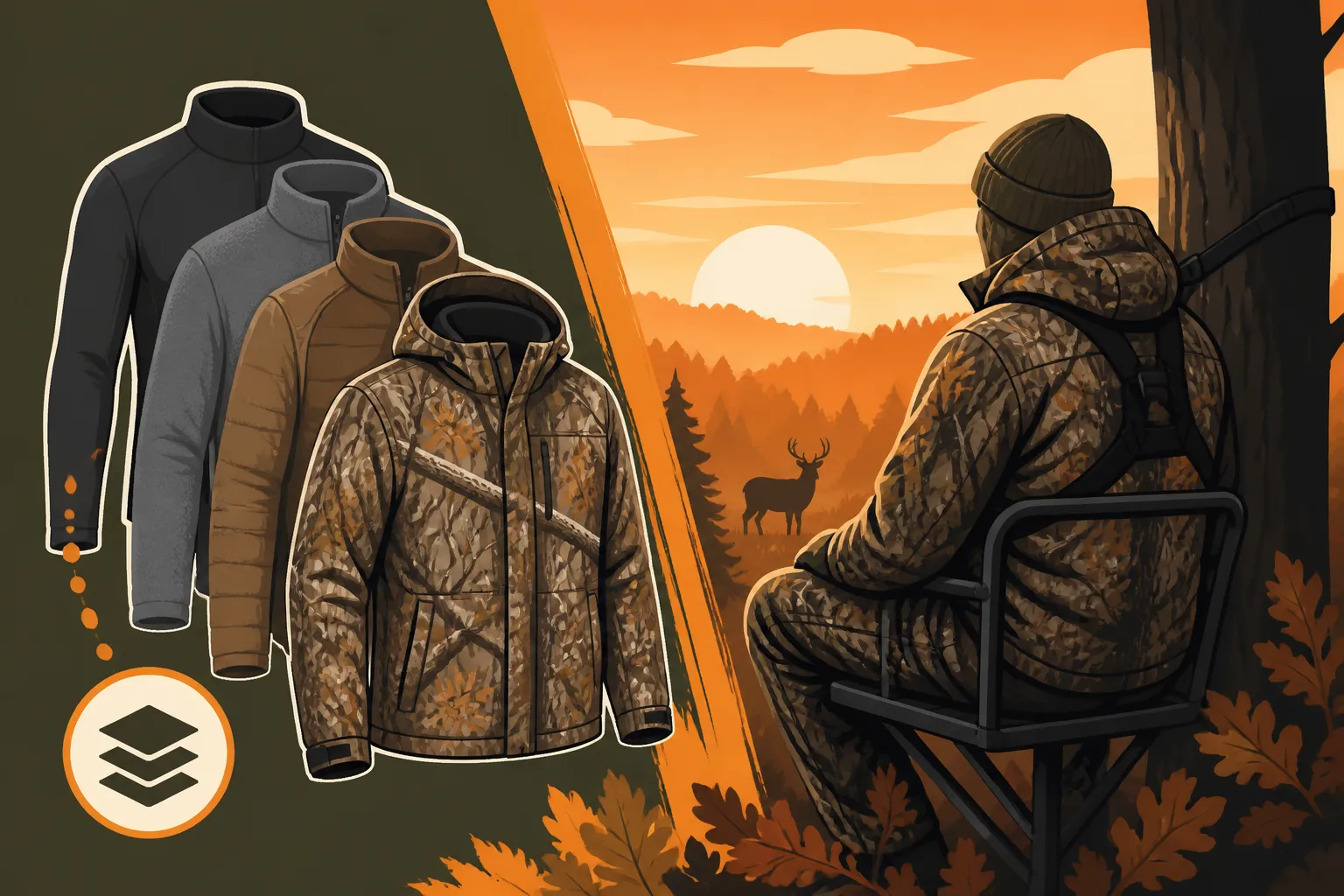
The secret sauce to staying comfortable in the woods, no matter what Indiana throws at you, is the three-layer system. It’s not a new concept, but it’s one that countless hunters, including myself, have proven effective over decades. This approach allows you to adapt to changing conditions by adding or shedding layers, trapping heat efficiently, and protecting yourself from the elements without sacrificing mobility or creating too much bulk.
This versatile system creates pockets of air that your body heats, acting as a personal microclimate. When you start hiking in and generate heat, you can shed an outer layer to prevent sweating. When you settle into your stand and cool down, you add layers to maintain warmth. It’s all about managing your body temperature proactively, rather than reacting to being too hot or too cold once it's too late.
Each layer serves a distinct purpose, and understanding those roles is critical. You can't just throw on three random shirts and expect it to work. The materials, fit, and design of each piece contribute to the overall effectiveness of the system, creating a synergy that keeps you comfortable from the trailhead to your treestand. This thoughtful approach is what separates a truly comfortable hunt from a miserable one.
Base Layers: Your Skin's Best Friend
Your base layer is the foundation of your entire layering system, the one closest to your skin. Its primary job is moisture management. When you walk to your stand, you sweat. That sweat, if not moved away from your skin, will cool rapidly once you stop moving, leaving you clammy and cold. A good base layer wicks that moisture away, transferring it to the next layer so it can evaporate, keeping you dry and comfortable.
Think of it as a second skin. It needs to fit snugly but not restrictively, allowing it to efficiently pull sweat off your body. Materials like merino wool or synthetic polyesters are champions at this. Merino wool offers natural odor resistance and incredible warmth-to-weight even when damp, while synthetics like those from GoHunt or other technical brands are often quicker drying and highly durable. Base Layers for an Indiana December are non-negotiable for serious cold.
Never, ever wear cotton as a base layer for hunting in cold weather. Cotton absorbs moisture and holds onto it, making you cold, clammy, and miserable. It literally sucks the heat out of you. While it might feel comfortable walking around town, it's a critical mistake in the woods. Investing in quality base layers in different weights (light, mid, heavy) will allow you to fine-tune your comfort for any temperature.
Mid-Layers: The Insulators
The mid-layer is where the real warmth happens. Its job is to trap warm air close to your body, providing insulation. These layers are typically bulkier than base layers and designed to hold as much air as possible within their fibers. Fleece, down, synthetic puffy jackets (like Primaloft or Thinsulate), or even thicker wool sweaters are common choices for mid-layers.
The key here is trapped air. The more air a material can hold, the better it insulates. Down is famous for its incredible warmth-to-weight ratio, but it loses much of its insulating power when wet. Synthetics, on the other hand, perform better in damp conditions, making them a more reliable choice for unpredictable Indiana weather, especially if you anticipate any rain or heavy snow. Wool Versus Synthetics in Wet Snow highlights this important distinction.
You might even use multiple mid-layers on truly frigid days. For example, a thinner fleece over your base layer, topped by a puffy synthetic jacket. This allows you to create customizable warmth. Just remember to avoid compressing these layers too much with a tight outer shell, as that can reduce their ability to trap air and, consequently, their insulating power.
Outer Layers: Protection from the Elements
The outer layer is your shield, your last line of defense against the elements. Its primary functions are windproofing, waterproofing (or at least water resistance), and often, camouflage. It needs to protect the insulating mid-layers from wind and moisture, preventing them from losing their effectiveness. Without a good outer shell, even the warmest mid-layers will struggle in a stiff breeze or steady rain.
Modern hunting outer layers often incorporate technologies that make them both waterproof and breathable, allowing some internal moisture vapor to escape while blocking external moisture. This is crucial because you still want sweat to be able to move away from your body. Look for features like DWR (Durable Water Repellent) finishes, taped seams, and quality waterproof membranes if you anticipate wet weather.
Beyond protection, your outer layer is also where you'll typically incorporate your camouflage pattern and often your blaze orange requirements. Indiana Blaze Orange Requirements mean you'll need to integrate this visible safety layer effectively. Some hunters choose quiet softshell outer layers for stalking, while others prioritize ruggedness and extreme waterproofing for static stand hunting in harsh conditions. Quiet fabrics are always a plus to avoid spooking deer.
Choosing Your Materials Wisely
The materials you choose for each layer are just as important as the layers themselves. Each fabric has unique properties that affect its warmth, weight, breathability, moisture-wicking ability, and scent retention. Understanding these differences will help you build a system that truly performs in the diverse conditions of an Indiana deer stand.
It's a common mistake to just grab whatever is "warmest" without considering how it interacts with the other layers or the specific weather you'll encounter. A heavy cotton sweatshirt might seem warm, but it's a terrible choice for a mid-layer if you're sweating or it starts to rain. Likewise, a purely waterproof shell might keep you dry, but if it doesn't breathe, you'll be soaked from the inside out.
Thinking critically about fabric choice for each component of your layering system—from the shirt against your skin to the outer shell—can dramatically improve your comfort and endurance in the woods. It's an investment in your hunting success.
Natural Fibers: Merino Wool and Cotton Considerations
Merino Wool: This is a superstar in the hunting world, especially for base and mid-layers. Merino wool fibers are incredibly fine, making them soft against the skin, unlike the scratchy wool sweaters of old. It excels at wicking moisture away from your body, and here's the best part: it continues to insulate even when it's damp. This is a huge advantage in humid or wet Indiana conditions.
Another massive benefit of merino wool is its natural odor-fighting properties. Unlike synthetics that can start to smell after a day of sweating, merino wool resists bacterial growth, meaning you can wear it for multiple days without turning into a walking deer repellant. This makes it a prime choice for extended hunts or when trying to maintain a low scent profile. The only real downside is that it can be more expensive and sometimes less durable than synthetics, but many hunters find the benefits outweigh the cost.
Cotton: We already touched on this, but it bears repeating: avoid cotton for any layer that will be in contact with your body or act as insulation in cold or wet conditions. Cotton absorbs moisture like a sponge and dries very slowly. Once wet, it loses almost all its insulating properties and will actively draw heat away from your body, leading to hypothermia in extreme cases.
While you might wear a cotton t-shirt for scouting in July, it has no place in your serious hunting kit during the colder months in Indiana. It's cheap and comfortable for everyday wear, but it's a liability in the field. Save your cotton shirts for hanging around camp after the hunt.
Synthetic Wonders: Polyester, Fleece, and More
Synthetic fabrics have come a long way and offer incredible performance for hunters. Polyester is a workhorse, frequently used in base layers and mid-layers. It's excellent at wicking moisture, dries quickly, and is very durable. Many technical hunting brands use proprietary polyester blends that enhance these features, sometimes incorporating silver or other antimicrobial treatments to help with odor control.
Fleece, often made from polyester, is another fantastic synthetic mid-layer. It's soft, warm, lightweight, and retains much of its insulating power even when damp. It's also relatively inexpensive and comes in various thicknesses, from microfleece to heavy expedition-weight fleece. Fleece is a staple for adding bulk-free warmth.
Other synthetics like nylon (often used in outer shells for its durability and water resistance) and high-loft synthetic insulations (like Primaloft or Thinsulate, which mimic down's warmth but perform better when wet) are also crucial. These materials are engineered to perform in harsh conditions, making them ideal for the challenging weather often encountered in Hunting Northern Indiana Farmland Deer or the exposed areas of the Hoosier National Forest.
Blending for Performance: How Hybrids Can Excel
Sometimes, the best solution isn't one material or the other, but a clever combination. Hybrid garments blend the best attributes of different fibers to create specialized performance. For instance, a base layer might have a merino wool exterior for warmth and odor control, with a polyester interior for faster moisture wicking against the skin. This gives you the best of both worlds.
Another common hybrid approach involves mid-layers that combine synthetic insulation with fleece panels or breathable mesh in high-activity areas. This allows for excellent warmth where you need it, with better ventilation where you tend to sweat more, preventing overheating during hikes or while setting up. Many jackets and pants from companies like GoHunt leverage these advanced material combinations to optimize performance.
Outer layers can also be hybrids, combining a rugged, waterproof nylon shell on the outside with a soft, quiet fleece lining on the inside. This creates a garment that's tough against brush, quiet for movement, and protective against rain and wind. Understanding how these blends work allows you to select gear that precisely matches your hunting style and the conditions you expect to face in Indiana.
Practical Layering Strategies for Different Seasons
Now that we understand the principles and materials, let's talk about how to apply them to Indiana's distinct hunting seasons. What works for an early season bow hunt is going to be completely inadequate for a late-December muzzleloader sit. Tailoring your layers to the expected conditions is crucial for comfort and effectiveness.
The key is adaptability. You want a system that allows you to adjust your warmth level as the day progresses and as your activity level changes. Always pack more than you think you'll need, especially for a full day on the stand. It's much easier to shed a layer than to conjure one up when the mercury drops unexpectedly.
Consider your personal metabolism too. Some people run naturally hot, others run cold. What works for your buddy might not work for you. Experiment during non-hunting trips or scouting days to find your sweet spot for different temperature ranges.
Early Archery (September/October): Dealing with Warm Days and Cool Evenings
Early archery season in Indiana is often a game of managing temperature swings. You might start your hike in the dark feeling a chill, only to be sweating by the time the sun is fully up. The afternoon can be warm, but once that sun dips below the horizon, temperatures can plummet quickly. Indiana Archery Season Opening Day often starts with comfortable temperatures, but evening can get chilly.
For your base layer, a lightweight, moisture-wicking synthetic or thin merino wool is perfect. This will handle any sweat from your walk in and keep you dry. Your mid-layer might be a lightweight fleece vest or a thin long-sleeve shirt. This provides a bit of warmth but isn't too bulky. Often, you'll carry this layer to your stand and put it on once you've cooled down.
Your outer layer should be quiet, breathable, and offer decent wind resistance for those cooler evenings. A light softshell jacket or even just a heavier long-sleeve shirt in a suitable camo pattern can work. The focus here is on shedding heat, wicking sweat, and having a light option to add if the temperature drops. A small daypack is essential for carrying these extra layers so you can adjust as needed.
Rut Action (Late October/November): Adapting to Fluctuating Temps
The rut is prime time, but the weather can be incredibly dynamic. You might have mild days perfect for Hunting the Rut in Early November, followed by sudden cold fronts bringing biting winds and even snow. This is when your layering system truly gets tested. Flexibility is paramount.
Your base layer should be a mid-weight merino wool or synthetic. This provides good initial warmth while still managing sweat effectively. For mid-layers, think versatile. A heavier fleece jacket, a lightweight puffy synthetic jacket, or even a couple of lighter fleece layers can be stacked. The ability to add or remove these as the day warms or a front moves in is key. I'll often carry an extra puffy jacket in my pack, ready to pull out when I settle into my stand or if the wind picks up.
Your outer layer for the rut needs to be robust. It must be windproof and water-resistant, if not fully waterproof, especially if you're going to sit through a November drizzle or snow shower. Quietness is still critical, as bucks are moving more, and you need to be able to draw your bow or shoulder your rifle silently. This is also when your Indiana Blaze Orange Requirements come into play if you are hunting during firearms season.
Late Season (December/January): Battling the Deep Freeze
This is where true grit and proper layering pay off. Late season in Indiana can be brutally cold, with single-digit temperatures, heavy winds, and snow. Staying warm is not just about comfort; it's about safety and extending your time in the deer stand. Every layer needs to pull its weight.
Start with heavy-weight base layers, both top and bottom, made of merino wool or a high-performance synthetic. These are designed to provide significant insulation right against your skin while still wicking moisture. For mid-layers, you'll want maximum insulation. A thick fleece jacket, a heavy synthetic puffy jacket, and possibly a second fleece vest are not overkill. Down can be an option here if you are confident it will stay dry, but synthetic insulation often performs better for prolonged wet-weather exposure.
Your outer layer needs to be a fortress against the elements. It must be completely windproof, highly waterproof, and durable. Look for insulated outer shells designed for extreme cold. Bibs or insulated pants are highly recommended for the bottom half, as they eliminate gaps where cold air can sneak in. Don't forget extremities; keeping your core warm is futile if your fingers and toes are freezing. Cold-Weather Sitting Strategy in Indiana depends heavily on these robust layers.
Beyond the Core: Head, Hands, and Feet
Many hunters focus so much on their torso that they neglect the extremities, which are often the first to get cold. Your head, hands, and feet are crucial heat-loss zones, and keeping them warm is just as important as keeping your core comfortable. Neglecting them can send you packing long before your target buck makes an appearance.
Think about it: have you ever been forced to leave a stand because your fingers were too numb to release an arrow or your toes felt like blocks of ice? I know I have. Even if your core is toasty warm, cold extremities can quickly make you miserable and unproductive.
Just like with your core, layering applies to these areas too. You might need different options for hands and feet depending on your activity level and the severity of the cold. Investing in quality gear for these areas is never a waste of money.
Headwear: Crucial for Heat Retention
You lose a significant amount of body heat through your head, especially if it's uncovered. A good hat is one of the easiest and most effective ways to stay warm. For early season, a lightweight beanie or baseball cap might suffice. But as the temperatures drop, you'll want something more substantial.
A warm fleece or wool beanie is a staple. On truly cold days, a balaclava provides full head, face, and neck coverage, which is invaluable against biting winds. Many outer jackets also come with insulated hoods, which can be pulled over your beanie for an extra layer of warmth and wind protection. Remember, if you're wearing blaze orange, your hat should also meet those requirements during firearms season.
I often carry multiple head coverings: a thin merino balaclava for a base, and a thicker fleece or wool beanie to put over it. This allows me to adjust as needed. When stalking or walking in, I might wear just the balaclava, then add the beanie once I'm stationary in the stand.
Handwear: Dexterity vs. Warmth
This is often the trickiest area for hunters. You need warmth, but you also need dexterity to operate your bow, rifle, calls, or rangefinder. The good news is there are many options to help strike that balance.
For early to mid-season, thin merino wool or synthetic liner gloves are great for wicking sweat and providing a light layer of warmth. You can often shoot a bow or operate a firearm with these on. As it gets colder, you might layer these under a heavier, insulated glove or a pair of mittens. Mittens are generally warmer than gloves because your fingers share warmth, but they sacrifice dexterity.
Many hunters swear by a combination: thin liner gloves, and then a large, insulated hand muff (often with a pocket for Hand Warmers That Last a Full Sit) or flip-top mittens. This allows you to keep your hands warm in the muff or mittens, but quickly expose your fingers for a shot or to use equipment. Look for gloves with grip palms for better control of your weapon.
Footwear: The Foundation of Warmth
Cold feet can ruin a hunt faster than almost anything else. Proper footwear starts with good socks. Avoid cotton at all costs, and opt for merino wool or synthetic blends. Layering socks can also be effective: a thin liner sock to wick moisture, followed by a thicker, insulated wool sock. Ensure your socks aren't so thick that they constrict your feet inside your boots, as this will actually cut off circulation and make your feet colder.
For boots, you need insulation, waterproofing, and comfort for walking. For early season, waterproof uninsulated or lightly insulated boots might be fine. But for mid to late season, you'll want significantly insulated, waterproof hunting boots, often with 800g to 1200g of Thinsulate or equivalent. Brands like Lacrosse or Irish Setter offer fantastic options for Boots for Indiana Mud and Snow.
On those truly frigid late-season sits, consider insulated boot covers that you slip over your boots once you're in the stand. These provide an extra layer of warmth and can make a huge difference, often extending your sit by several hours. Make sure your boots are broken in, comfortable for walking, and sized correctly to accommodate thick socks without being too tight. Insulated Boots for All-Day Sits are an investment you won't regret.
| Layer Type | Primary Function | Recommended Materials (Indiana Hunting) | Avoid (Indiana Hunting) | Key Features for Indiana |
|---|---|---|---|---|
| Base Layer | Moisture Wicking, Initial Warmth | Merino Wool, Performance Polyester | Cotton | Snug fit, quick-drying, odor resistance |
| Mid Layer | Insulation, Trapped Warmth | Fleece (Polyester), Synthetic Puffy (Primaloft), Down (if dry) | Cotton, non-breathable | Lightweight, compressible, retains warmth when damp (synthetics) |
| Outer Layer | Weather Protection (Wind/Water), Camo | Waterproof/Windproof Breathable Membrane (Gore-Tex, etc.), Softshell | Non-waterproof/windproof fabrics | Quiet fabric, durable, suitable camo, blaze orange integration |
Scent Control and Layering: A Tactical Edge
In the world of deer hunting, minimizing your human odor is just as critical as your camouflage pattern. Whitetails, especially those wary Indiana bucks, have an incredible sense of smell, and a single gust of wind carrying your scent can blow your hunt before it even starts. Layering offers a fantastic opportunity to integrate effective scent control practices into your routine.
It’s not just about spraying down with scent eliminator as you walk to the stand; it's a comprehensive approach that starts long before you even leave your house. Every layer, from your underwear to your outer shell, can carry and emit human odor. Therefore, each component of your layering system needs to be treated as part of your overall scent strategy.
Ignoring scent control, even with the perfect layering system for warmth, is like showing up to a gunfight with a knife. You’re putting yourself at a significant disadvantage, particularly when Hunting a Ridge-Top Saddle for Rutting Bucks where wind swirls and deer often approach from unexpected directions.
Scent-Free Practices for Every Layer
The first step in scent control is meticulous cleaning. Wash all your hunting clothes, including base layers, mid-layers, and outer layers, in scent-free detergent. Don't use your everyday laundry detergent, which is often full of brighteners and strong perfumes that deer can easily detect. After washing, dry your clothes on a line outdoors if possible, or in a dryer with scent-free dryer sheets, ensuring they don't pick up household odors.
Once clean and dry, store your hunting clothes in airtight containers, scent-free bags, or a dedicated tote. This prevents them from absorbing odors from your home, garage, or vehicle. Don't put them on until you're ready to head to your hunting area. I even keep a separate pair of "driving clothes" to change out of once I reach the hunting spot, putting on my hunting layers only at the last minute.
In the field, handle your clothes as little as possible with bare hands. Wear clean gloves when dressing and when handling your gear. Once dressed, a liberal application of a quality scent eliminator spray can help, but it's a temporary measure. The real work is done in the washing and storage process.
Carbon vs. Silver Technologies: A Quick Look
Many hunting apparel brands incorporate advanced technologies into their fabrics to further aid in scent control. Two common approaches are activated carbon and silver-based technologies.
Activated Carbon: This technology involves integrating tiny particles of activated carbon into the fabric, or creating layers of carbon fabric within the garment. Activated carbon is highly porous and acts like a sponge, adsorbing odor molecules. When you wear carbon-infused clothing, it literally traps your body odor. The downside is that activated carbon needs to be "recharged" (often by heating in a dryer or exposure to fresh air) to release absorbed odors and regain its effectiveness. It can also be a bit stiffer and sometimes noisier than other fabrics.
Silver-Based Technologies: These systems use silver ions embedded into the fabric. Silver is a natural antimicrobial agent, meaning it kills the bacteria that cause body odor. By eliminating the bacteria, these technologies prevent the odors from forming in the first place. Silver-based clothing tends to be lighter, more flexible, and doesn't require "recharging" in the same way carbon does. It's often found in base layers and mid-layers, where bacterial growth is most prevalent. Some brands, like those found on GoHunt, leverage these advanced materials to help hunters stay undetected.
Strategic Layering for Minimal Scent Contamination
When it comes to scent control, layering isn't just about warmth; it's about creating an odor barrier. Your inner layers, the ones that touch your skin, are where most of your body odor originates. This is where merino wool's natural odor resistance or synthetic base layers with silver technology truly shine. By controlling scent at the source, you reduce the overall odor load.
Your mid-layers, especially if they are also treated with scent-control technologies, further help contain any escaping odors. Think of it as a series of defenses. Finally, your outer layer acts as a final barrier. While many outer layers aren't specifically "scent control" fabrics, they do provide a shell that can minimize the dispersion of any lingering odors from underneath.
The key is to minimize the exposure of your clean, scent-controlled layers to external odors before and during the hunt. This means putting them on at the last possible moment, wearing clean gloves, and avoiding anything that could transfer foreign smells. A well-executed layering system, combined with diligent scent-control practices, significantly increases your chances of going undetected by that wise old Indiana whitetail.
Disclaimer
This article is for general informational purposes only and does not constitute professional advice. Laws, prices and regulations vary by location and change over time. Consult a qualified professional for guidance on your specific situation.