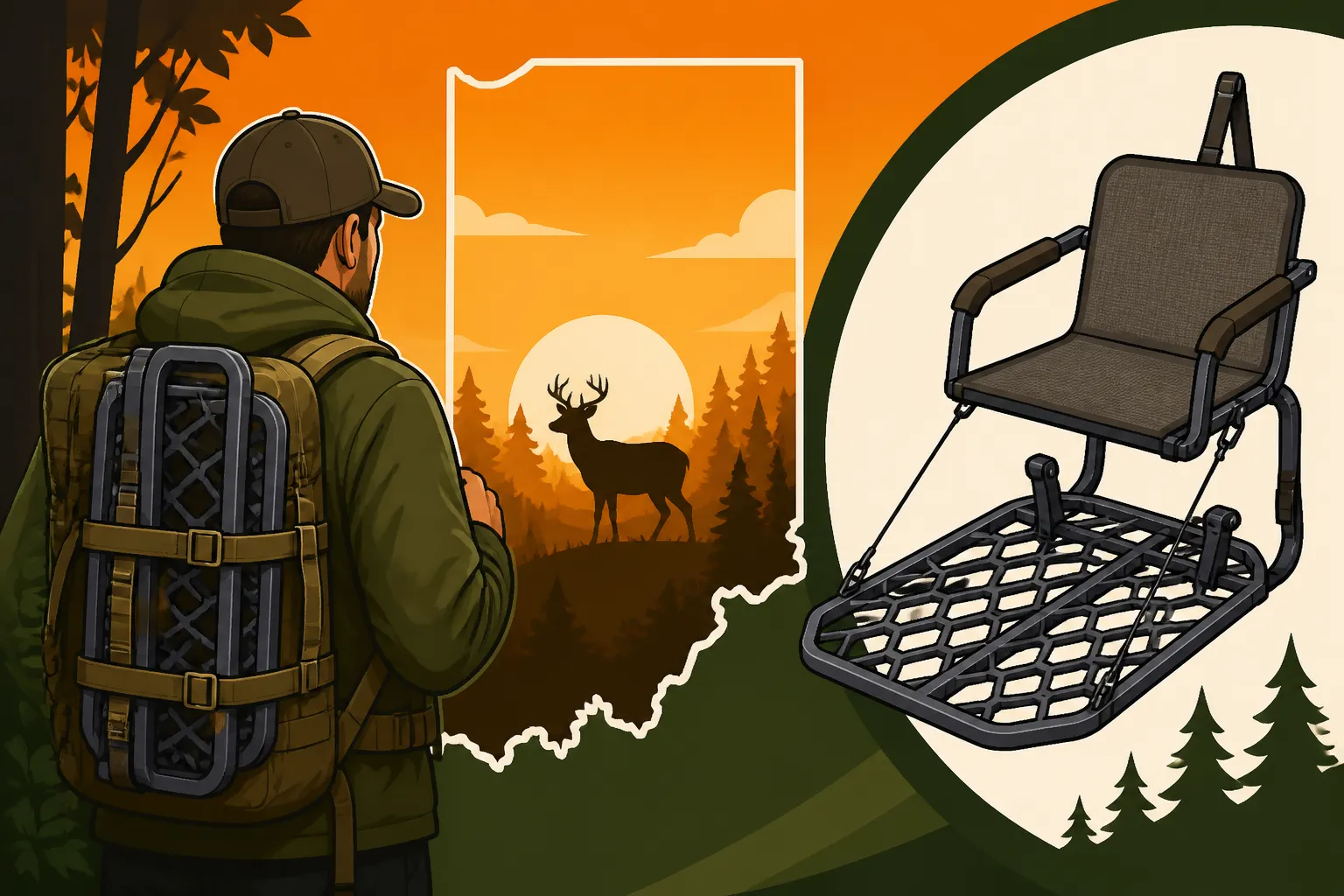
Portable Treestands Worth Packing In
As Indiana hunters, we often face the challenge of finding that perfect spot, only to realize it's deep in the woods, far from any established trail or easy access. Hauling a heavy, cumbersome treestand through thick brush, over creeks, and up steep ridges can be a real deterrent, making us settle for less-than-ideal locations. This guide is all about equipping you with the knowledge to choose and utilize truly portable treestands, allowing you to venture deeper, adapt to changing deer patterns, and ultimately put yourself in better positions for success across Indiana's diverse landscapes.
The Indiana Hunter's Need for Mobility: Public Land Realities and Changing Deer Patterns
Let's be honest, hunting in Indiana, especially on public land like the Hoosier National Forest or our various State Forests and Fish & Wildlife Areas, often means dealing with pressure. Deer, being the intelligent creatures they are, quickly learn to avoid areas with heavy human traffic. This forces us, as hunters, to get off the beaten path, push deeper into less-accessible areas, and sometimes, even adjust our stand locations on the fly. A fixed stand, especially if it's a permanent setup or a bulky ladder stand, simply doesn't offer the flexibility needed in these dynamic situations.
Think about a crisp October morning when you scouted a phenomenal funnel between two woodlots, only to find fresh sign indicating deer have shifted their bedding due to recent corn harvest or increased pressure. If your stand is fixed miles away, or too heavy to move quickly, you're stuck hoping the deer revert to their old patterns. Portable treestands liberate you from this constraint, allowing you to respond to real-time information rather than being bound by static setups. It’s about being nimble, and that's a huge advantage in our often-pressured hunting environment.
The Dynamics of Deer Movement in Indiana
Deer in Indiana are constantly on the move, influenced by everything from acorn crop availability in the Hoosier National Forest Hunting to harvesting schedules in Hunting Northern Indiana Farmland Deer. A strong mast crop in one area might pull deer away from their usual trails, or a sudden cold front could push them to thicker thermal cover. If you've been relying on a single, permanent stand location, you're essentially gambling that deer will continue using that exact spot throughout the season.
With a truly portable treestand, you're not just tied to one tree. You can scout extensively using mapping tools like GoHunt, identify several potential trees along a ridge, in a creek bottom, or overlooking a field edge, and then pick the best one for that day's wind and conditions. This capability means you're no longer reacting to what the deer might do, but proactively putting yourself where they are doing it. This kind of adaptability is critical for consistent success, especially as the season progresses and deer become warier.
Overcoming Public Land Challenges with Portability
Public lands in Indiana are a treasure, but they come with their own set of rules and challenges. You can't just leave stands out indefinitely, and some areas have specific regulations regarding stand type or how long they can remain in place. Plus, the sheer effort of getting deep into some of these tracts can be exhausting. Dragging a massive stand and a full pack for a mile or two, navigating through tangled multiflora rose or across rocky creek beds, is enough to make anyone reconsider their setup.
Portable treestands are designed with this in mind. They prioritize lighter weight, compact design, and ease of assembly. This allows you to carry your stand, sticks, and pack comfortably, covering more ground with less fatigue. Imagine finding a perfect pinch point on a public land parcel that's a mile back – with a lightweight, packable system, that walk becomes an exciting journey to a potential hotspot, not a grueling test of endurance. It's about empowering you to hunt the unpressured pockets that other hunters might overlook due to access difficulties.
Dissecting Portable Treestand Options: Climbers, Hang-ons, and Saddle Hunting
When we talk about "portable treestands worth packing in," we're generally focusing on a few key types that prioritize mobility. Each has its own strengths and ideal scenarios, so understanding these differences is crucial for choosing the right tool for your Indiana hunting style. It's not a one-size-fits-all world out there, and what works best in the rolling hills of Brown County might not be ideal for the flat farm country up north.
The Versatility of Hang-On Stands with Climbing Sticks
Hang-on stands are arguably the most versatile portable option. They consist of a platform and a seat that you hang from a tree. The "portable" aspect comes in when you pair them with lightweight Climbing Sticks for Indiana Hardwoods or a climbing system like a rope-style aider. This combination allows you to ascend various types of trees, from the gnarled oaks of southern Indiana to straighter maples and beeches. The real beauty here is that you're not limited to perfectly straight, limbless trees, which is a significant advantage in many parts of the state.
A typical setup involves carrying your hang-on stand, usually weighing between 10-20 pounds, along with 3-5 climbing sticks. Once you reach your desired tree, you attach the sticks sequentially, climbing as you go, until you reach your hunting height. Then, you hoist and attach the hang-on stand. This system offers incredible flexibility for stand placement in dense timber, irregular trees, or areas where you need to get above low-hanging cover. It's a favorite for many public land hunters who need to adapt to diverse tree types and want to be able to access those out-of-the-way spots.
The Simplicity of Climbing Stands
Climbing stands are the original kings of portability for many. They come in two main sections – a bottom platform and a top section with a seat – that you "climb" up the tree with. The advantage here is that they are an all-in-one unit; you don't need separate climbing sticks, reducing the number of pieces to carry. They are generally quick and relatively quiet to set up once you've found the right tree, making them excellent for run-and-gun tactics during the Hunting the Rut in Early November.
However, climbing stands come with a significant limitation: they require a straight, limbless tree. This means they are often best suited for areas with mature, straight timber, such as some of our larger State Forests or specific woodlots in agricultural areas. If you're hunting younger, brushy growth, or irregularly shaped hardwoods, a climbing stand might prove frustrating or even impossible to use safely. When considering a climber, always evaluate the type of trees you'll most often be hunting.
The Ultimate Mobility: Saddle Hunting
For those truly embracing the "pack-in" philosophy, Saddle Hunting in Indiana Hardwoods offers perhaps the most lightweight and minimalist approach. Instead of a large platform and seat, a saddle system involves wearing a harness-like saddle around your waist that you connect to a tree with a tether. You stand and hunt from this suspended position, using a small platform or set of steps for your feet. The gear is incredibly compact and lightweight, often weighing just a few pounds for the saddle itself, plus your climbing method.
Saddle hunting provides a full 360-degree range of motion around the tree, allowing you to use the tree itself as cover, which can be a huge advantage when deer get close. It excels in diverse terrain and tree types, similar to a hang-on, but with an even lower profile. The learning curve can be a bit steeper, as it's a different style of hunting, but once mastered, it offers unparalleled stealth and adaptability. It's truly a system designed for the hunter who wants to go anywhere and set up almost invisibly.
Key Features to Look for in a Packable Stand
Choosing the right portable treestand isn't just about picking a type; it's about evaluating the specific features that contribute to its "packability" and overall effectiveness in the field. A stand might be lightweight, but if it rattles like a maraca on your back, it's not truly portable for hunting. We need to consider a balance of attributes to find that sweet spot for Indiana's hunting conditions.
Weight: The Ultimate Determinant of Portability
This one is obvious, but it bears repeating: weight is paramount. When you're humping gear a mile or more into a public land block or navigating tough terrain in Hunting Southern Indiana Hill Country, every single pound matters. A difference of just 5-10 pounds in your stand and sticks can be the difference between making it to that untouched honey hole or settling for a closer, more pressured spot.
Look for stands made from aluminum for the best weight-to-strength ratio. While steel stands are cheaper, their weight often makes them unsuitable for serious packing in. When comparing models, don't just look at the stand's weight; factor in the weight of your climbing method (sticks or sections of a climber). A good rule of thumb for a true "pack-in" system (stand + sticks/climber) is to aim for under 25-30 pounds total. This allows you to carry your hunting pack, weapon, and other essentials without feeling like you're training for a strongman competition.
Compactness and Carryability
Beyond just the raw weight, how a stand packs is incredibly important. Does it fold flat? Do the climbing sticks nest together neatly? Can you attach everything securely to a good hunting pack without excessive bulk or rattling? A stand that's lightweight but awkward to carry will frustrate you just as much as a heavy one. Many modern portable stands are designed with backpack straps or attachment points specifically for this purpose.
Consider how the stand will integrate with your existing gear. Can you strap it to your primary hunting pack, or will you need a separate carrying system? Pay attention to any loose parts or components that might jingle or bang against each other while you walk. A quiet carry system is almost as important as a quiet setup. Companies like GoHunt often feature reviews that touch on these real-world aspects of carryability, offering insights from hunters who've put these stands through their paces.
Ease and Speed of Setup
You've hiked to your spot, now you need to get into the tree. Fumbling with complicated straps, noisy clips, or difficult-to-align components is not only frustrating but also wastes precious hunting time and increases your chances of being detected. A truly portable stand should be intuitive and relatively quick to set up, even in low light or cold weather.
For hang-on stands, look for simplified attachment systems that use cam straps, ratchets, or silent-pull ropes. For climbing sticks, ensure they attach securely and quickly to the tree. If you're considering a climbing stand, practice with it extensively before the season to master the climbing motion silently and efficiently. The goal is to be able to ascend and set up within 10-15 minutes, allowing you to maximize your time actually hunting, not fussing with gear.
| Feature | Hang-On Stand + Sticks | Climbing Stand | Saddle Hunting System |
|---|---|---|---|
| Typical Weight | Moderate (15-25 lbs total) | Moderate (18-28 lbs) | Very Light (5-15 lbs total) |
| Tree Versatility | High (irregular, limby trees) | Low (straight, limbless trees only) | Very High (almost any tree) |
| Setup Speed | Moderate to Slow (multiple pieces) | Fast (once tree is selected) | Moderate to Fast |
| Stealth | Good | Good | Excellent (tree as cover) |
| Comfort | Varies greatly by model | Generally good with padded seat | Requires practice, less passive |
| Best Use in IN | Diverse timber, public land | Mature timber, less brushy areas | Deep timber, highly mobile hunts |
Strategic Deployment: Maximizing Your Portable Stand's Effectiveness
Having the right portable treestand is only half the battle. Knowing how and where to deploy it effectively across Indiana's varied terrain is what truly separates successful hunters from those who just "go for a walk in the woods." This involves a blend of pre-season scouting, in-season adaptability, and meticulous attention to detail.
Scouting with Portability in Mind
Before you even step foot in the woods with your stand, the real work begins. Use digital mapping tools, like the excellent resources from GoHunt, to identify potential pinch points, funnels, bedding areas, and food sources. Look for subtle terrain features that might concentrate deer movement, such as saddles on a ridge, creek crossings, or transition lines between different habitat types. Pay special attention to areas that are harder to access, as these often hold less-pressured deer.
When you're physically Scouting Indiana Public Land Before Season, don't just look for deer sign; look for suitable trees. For hang-ons and saddle setups, you have more flexibility, but still, look for healthy trees that offer good concealment and clear shooting lanes. For climbers, specifically seek out those straight, limbless trunks. Mark these potential stand trees on your GPS, noting their species, size, and any unique characteristics. Having a handful of pre-scouted options for different wind directions in a given area can drastically increase your efficiency once the season starts.
Adaptability to Wind, Pressure, and Changing Conditions
The beauty of a portable stand lies in its ability to adapt. Let's say you've planned to hunt a specific ridge because Reading a Ridge for Hoosier Forest Deer indicated good bedding, but the morning brings a wind shift or unexpected hunting pressure on an adjacent parcel. Instead of throwing in the towel, you can quickly relocate to a pre-scouted tree on a different ridge line, or deep within a secluded bottomland that now has a favorable wind. This dynamic approach means you're always putting yourself in the best possible position, rather than being stuck with a suboptimal setup.
This adaptability extends to the progression of the season. Early season might find deer clinging to reliable water sources or soft mast. By the time the Hunting the Rut in Early November hits, they're focused on scrapes and chasing does. Late season, they'll be hammering remaining hard mast or specific thermal cover. Your portable stand allows you to follow these changing patterns. You might be hunting a field edge in early October, then a thick cedar swamp in late December, all with the same core equipment.
Setting Up for Silence and Concealment
Even the lightest, most portable stand is useless if your setup spooks every deer in the county. Silence and concealment are paramount. Before you climb, clear any leaves or debris from around the base of your chosen tree to avoid crunching underfoot later. As you ascend, move slowly and deliberately, ensuring all your gear is secure and nothing rattles. Many hunters add tape or rubber dampeners to their stands to minimize metallic noises.
Once at hunting height, take your time to trim only essential shooting lanes. Don't create a gaping hole in the canopy; just enough to get a clear shot. Use natural cover to break up your silhouette. If you're using a saddle, utilize the tree itself for maximum concealment. For hang-ons, choose a tree with some branches that you can blend into. Even with the best camouflage, movement will always give you away, so practice drawing your bow or shouldering your rifle silently from your chosen position. Remember that the goal is to become an invisible part of the forest, and your portable stand facilitates that by allowing you to choose the perfect "hide" for the day.
Disclaimer
This article is for general informational purposes only and does not constitute professional advice. Laws, prices and regulations vary by location and change over time. Consult a qualified professional for guidance on your specific situation.