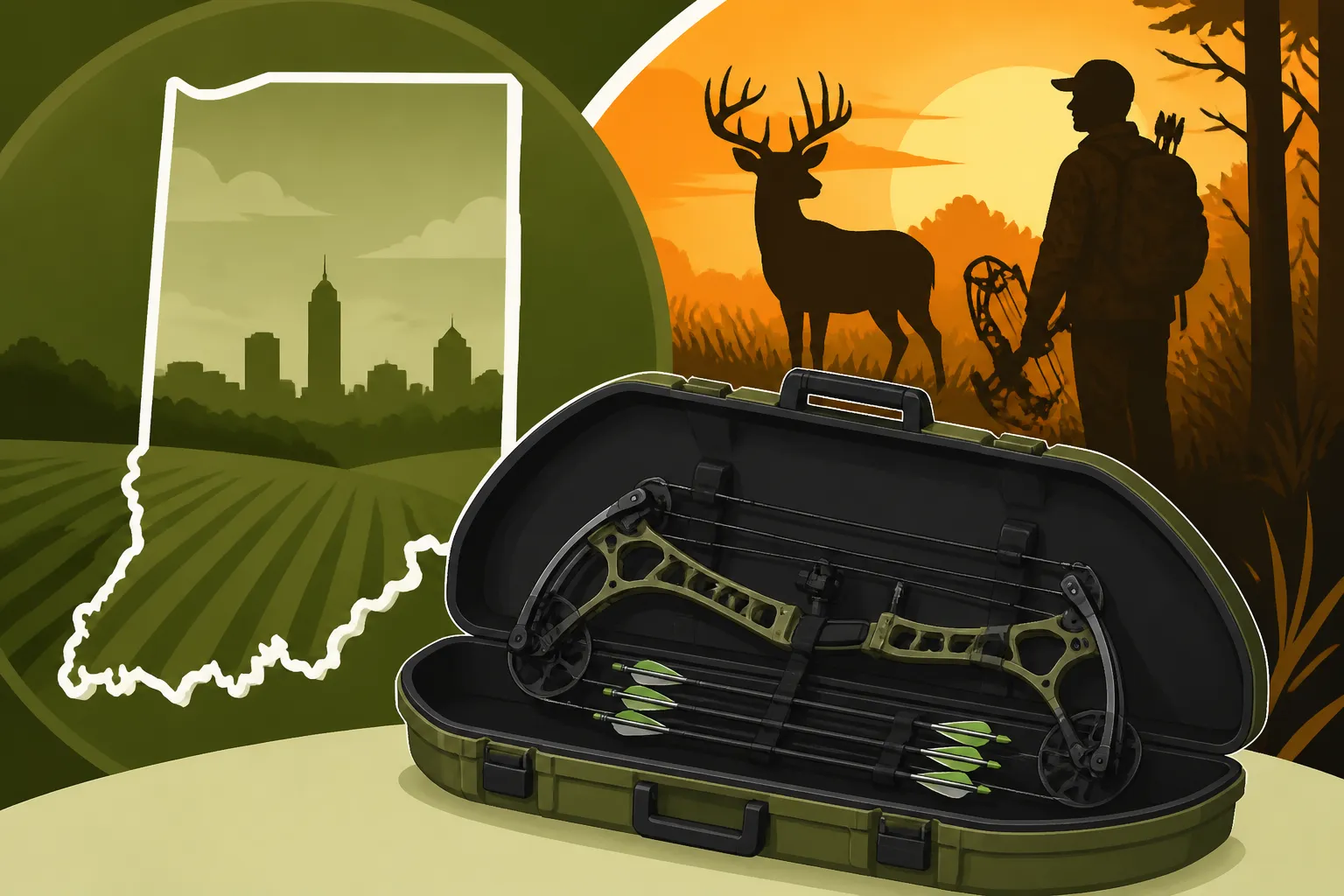
Bow Cases for Travel to Indiana
Traveling to Indiana for a bowhunting trip, whether by plane or piling gear into the truck, often presents a gnawing concern: the safety of your bow. It’s an expensive, finely tuned piece of equipment, and even a minor bump can throw off your zero or damage a critical component, ruining your hunt before it even begins. This guide will walk you through everything you need to know about choosing and utilizing the best bow cases to ensure your archery setup arrives in Indiana ready for action.
Why a Quality Bow Case is Non-Negotiable for Travel
When you're investing time, money, and precious vacation days into a hunting trip, the last thing you want is a preventable gear mishap. Your bow is the heart of your archery setup, and its integrity directly impacts your success and enjoyment in the field. Skimping on a bow case is a risk simply not worth taking.
Protecting Your Investment
Think about all the delicate components on your bow: the sight pins, the arrow rest, the cam systems, the string, and the cables. Each piece is vital, and even a slight bend or misalignment can lead to disastrous accuracy issues. Imagine landing in Indianapolis, grabbing your bow from baggage claim, and discovering a cracked limb or a sight that’s completely knocked off. That's a nightmare scenario many hunters unfortunately experience.
A good bow case acts as a sturdy shield against these common travel hazards. It protects your bow from drops, impacts, and the general rough handling that often occurs during transit. It also helps stabilize the bow against vibrations and shifts that can occur in a bouncing truck bed or the cargo hold of an airplane. Furthermore, temperature and humidity fluctuations can subtly affect materials, and a well-sealed case offers a layer of protection against these environmental stressors. It’s all about maintaining that precise tuning you worked so hard to achieve at home, ensuring your Bow Draw Weight for Indiana Whitetails is performing exactly as expected.
Navigating Airline and Vehicle Transport
If you're flying into Indiana, understanding airline regulations for sporting goods, especially bows, is crucial. Most airlines require bows to be transported in a hard-sided case, often with specific locking mechanisms. Failure to comply can mean your bow never leaves the ground, or worse, gets damaged with no recourse. You’ll need to declare it as a firearm (even though it's a bow, the security protocols are often similar for secure transport) and follow all the necessary steps, including making sure it's unloaded (no arrow nocked or quiver attached inside the case).
For road trips, especially those involving gravel roads or bumpy public land access, a bow case is equally important. Simply tossing your bow in the back seat or truck bed, even if it looks secure, is asking for trouble. Bumps, quick stops, and sharp turns can send your bow sliding, potentially impacting the cams or limbs against other gear. A sturdy case keeps it stationary and protected, no matter how rugged the journey to your favorite Hunting the Southern Indiana Hill Country spot might be. This is particularly important when navigating long hauls to places like the Hoosier National Forest, where roads can be less than perfect.
Types of Bow Cases: Hard Shell vs. Soft Shell for Indiana Trips
Choosing the right type of bow case boils down to understanding your travel habits and the level of protection you need. Both hard and soft cases have their place, but one generally offers superior protection for travel.
Hard Shell Cases: Maximum Protection
Hard shell cases are the heavy-duty champions of bow protection. Constructed from rigid materials like high-density polyethylene, ABS plastic, or even aluminum, these cases are designed to withstand significant impact, crushing forces, and often, extreme weather conditions. They feature robust latches, often with multiple points of closure, and many are designed to accept TSA-approved locks. Inside, you'll find thick layers of foam, which can be pre-cut to specifically fit your bow or customizable with pluck-and-pull foam to cradle your specific setup perfectly. Some even come with built-in wheels for easier airport navigation.
The primary benefit of a hard case is peace of mind. When your bow is inside one, you know it's as secure as possible against external threats. This is absolutely essential for air travel where your gear will be out of your sight and control. For driving, especially if your gear will be exposed to the elements in a truck bed, the weather-resistant seals on many hard cases prevent moisture and dust intrusion. While they can be bulkier and heavier, their protective qualities are unparalleled. Brands often reviewed on sites like GoHunt frequently highlight the crush resistance and sealing capabilities of their premium hard cases.
Soft Shell Cases: Lightweight and Convenient
Soft shell cases, made from durable fabrics like Cordura or ballistic nylon, offer a more lightweight and flexible option. They typically feature ample padding to protect against minor bumps and scratches, and many have multiple pockets for organizing accessories like rangefinders, releases, and even arrows. Some are designed as backpack-style cases, making them ideal for carrying your bow hands-free over shorter distances, such as from your vehicle to a ground blind or a Portable Treestands Worth Packing In setup.
The main advantages of soft cases are their portability and storage convenience. They're easier to carry and take up less space when empty. However, they simply don't offer the same level of impact or crush protection as a hard case. While perfectly adequate for protecting your bow during short car rides to a local range or when stored carefully in the cabin of your truck, they are generally not suitable for checked airline baggage or situations where your bow might be subjected to significant external pressure. If you're driving your personal vehicle and can control how your gear is packed, a good soft case can still be a viable option, especially if you’re only taking it a short distance to hunt Deer Drives on Indiana Public Land. For true travel, though, most hunters will prefer the security of a hard case.
Here's a quick comparison of hard and soft shell bow cases:
| Feature | Hard Shell Case | Soft Shell Case |
|---|---|---|
| Protection | Excellent (impact, crush, weather) | Good (scratches, minor bumps) |
| Material | Polyethylene, ABS, Aluminum | Cordura, Ballistic Nylon, Canvas |
| Security | Accepts TSA locks, multiple latches | Zippers, less robust locking options |
| Durability | Very High | Moderate to High |
| Weight/Bulk | Heavier, bulkier | Lighter, more flexible |
| Travel Type | Air travel, rough road trips, cargo holds | Local trips, vehicle cabin transport |
| Cost | Generally Higher | Generally Lower |
| Features | Custom foam, wheels, waterproof seals | Accessory pockets, backpack straps |
Key Features to Look for in a Travel Bow Case
Once you've decided between a hard or soft case, diving into the specific features will help you pick the perfect one for your Indiana hunting adventures. It’s the details that often make the biggest difference in protecting your investment and ensuring a stress-free trip.
Interior Padding and Tie-Downs
The inside of your bow case is just as important as the outside. Look for dense, high-quality foam that provides ample cushioning and prevents your bow from shifting during transit. Many hard cases come with either convoluted (egg-crate style) foam or pluck-and-pull foam, which allows you to customize the fit around your bow, riser, and cams. Custom-cut foam inserts, while sometimes pricier, offer the absolute best fit, cradling your bow perfectly.
Beyond the foam, consider how your bow will be secured. Velcro straps or other tie-down systems are crucial for preventing movement. Even with perfectly cut foam, violent jolts can cause your bow to shift, potentially impacting delicate components like your Bow Sights for Timber Shots or the string. Ensure there are enough straps to firmly secure the riser, limbs, and any loose accessories. Some cases even have dedicated compartments or straps for arrows, broadheads, and other small items, keeping them organized and preventing them from rattling around and causing damage.
Locking Mechanisms and Security
For any travel, especially air travel, robust and secure locking mechanisms are non-negotiable. Hard cases typically feature sturdy latches, often made from metal or heavy-duty plastic, that positively engage and hold the case closed. Many reputable cases are designed to accept TSA-approved locks. These locks allow TSA agents to open and inspect your case without damaging the lock, which is critical for smooth airport processing.
Look for cases with multiple latch points along the perimeter, not just one or two. This distributes the pressure and prevents warping or accidental opening if one latch fails. A lock provides peace of mind against theft and ensures that curious hands don't access your equipment. While security isn't just about locks, having a case that deters casual tampering and meets transport requirements is a huge weight off your shoulders. Remember, you can't just throw your bow in a soft case for an airplane trip; it needs to be properly secured for both safety and regulation compliance.
Durability and Weather Resistance
A travel bow case needs to be tough enough to handle anything the journey throws at it, from baggage handlers to inclement weather. Durability refers to the case’s ability to resist punctures, cracks, and deformation under stress. High-quality hard cases often boast impact-resistant shells, designed to absorb and distribute force without compromising the contents. This resilience is vital for protecting against accidental drops or heavy items being stacked on top during transit.
Weather resistance is another critical factor, especially if you plan to travel through varying climates or if your case will be exposed in an open truck bed. Look for cases with O-ring seals or similar gasket systems around the lid. These create a watertight and dust-proof barrier, protecting your bow and accessories from rain, snow, humidity, and fine dust. Imagine driving through a sudden Indiana downpour in November; a weather-sealed case means your bow will arrive at your hunting lodge dry and ready. GoHunt reviews are a great resource for seeing how specific models hold up to real-world abuse and environmental challenges. After all, you’ll be out in it anyway during Bowhunting Indiana's Long Archery Season, so your gear should be prepared too.
Packing Your Bow Case Smartly for the Indiana Hunt
Once you have your ideal bow case, knowing how to pack it correctly is the final piece of the puzzle. Proper packing not only maximizes protection but also ensures you have easy access to what you need when you arrive in Indiana.
Bow and Accessory Placement
Start by ensuring your bow is fully secured within its dedicated foam cutouts or strapped down firmly. For compound bows, consider removing detachable accessories like your stabilizer, quiver, and maybe even your sight if it’s an easily removable model. This reduces bulk and minimizes leverage points that could be damaged during impacts. Place these removed items in their own designated foam cutouts or secure pockets within the case.
Arrows should be stored in an arrow tube or secured in a separate compartment to prevent them from bending or damaging other equipment. Broadheads, especially mechanical ones, should be stored in a separate broadhead box to prevent accidental deployment or damage to the blades. Your release aid, rangefinder, and any other delicate electronics should also be cushioned and secured so they don't rattle around. Think about all your critical components for Hunting the Indiana Rut in Early November and how you can best protect them. Every piece of gear, from your Broadheads for Timber Shots to your spare strings, should have a snug home.
Declaring Your Bow and Airline Regulations
When flying, always check your specific airline's current regulations regarding sporting equipment and firearms. While a bow isn't a firearm, it's often handled under similar security protocols for checked baggage. This typically means:
- Hard-sided case: As mentioned, this is almost always required.
- Unlocked: You must use TSA-approved locks. The agents will need to inspect it.
- Unloaded: No arrows attached to the bow or in a quiver inside the case. The bow should be unstrung if possible or practical, though this is less common for compounds.
- Declaration: You must declare your bow at the check-in counter. They will likely give you a declaration tag to place inside or on the case.
Do not try to carry your bow on board or circumvent these rules. Safety is paramount, and non-compliance can lead to serious delays, fines, or even confiscation of your equipment. It's a small hassle at the beginning that saves a huge headache later. For driving, the rules are much simpler: just ensure it's packed securely and won't shift. A quick look at a GoHunt forum might even provide recent airline experiences from fellow hunters, offering practical tips and what to expect.
General Packing Tips for a Smoother Trip
Beyond the bow itself, use the space wisely in your case. Pack small, durable items that won't damage your bow but might need extra protection or easy access. Things like a small tool kit for field adjustments, spare nocks, a string wax, or even a compact first aid kit can be tucked into available spaces. Just remember not to overstuff the case, as this can put undue pressure on your bow.
Consider labeling your case with your contact information, both inside and out, in case it's separated from you. Take photos of your packed case, especially for air travel, as documentation of its condition before it leaves your hands. And finally, before heading out, double-check your Packs for a Hoosier Forest Day Hunt to ensure you have all your essential gear ready for the field. Taking these small extra steps can make your trip to hunt in Indiana much more enjoyable and productive.
Disclaimer
This article is for general informational purposes only and does not constitute professional advice. Laws, prices and regulations vary by location and change over time. Consult a qualified professional for guidance on your specific situation.