Shooting Sticks From a Farmland Field Edge
Hunting Indiana's vast farmland, especially from a field edge, presents a unique set of challenges, particularly when that trophy buck steps out at an unexpected distance or the crosswinds are swirling. Trying to make a steady, ethical shot off your knee, a fence post, or even a backpack can be incredibly frustrating and often leads to missed opportunities. This guide is all about giving you the solid support you need, literally, by exploring how shooting sticks can dramatically improve your accuracy and confidence when hunting from those crucial farmland field edges.
Why Shooting Sticks are a Game Changer for Indiana Farmland Edges
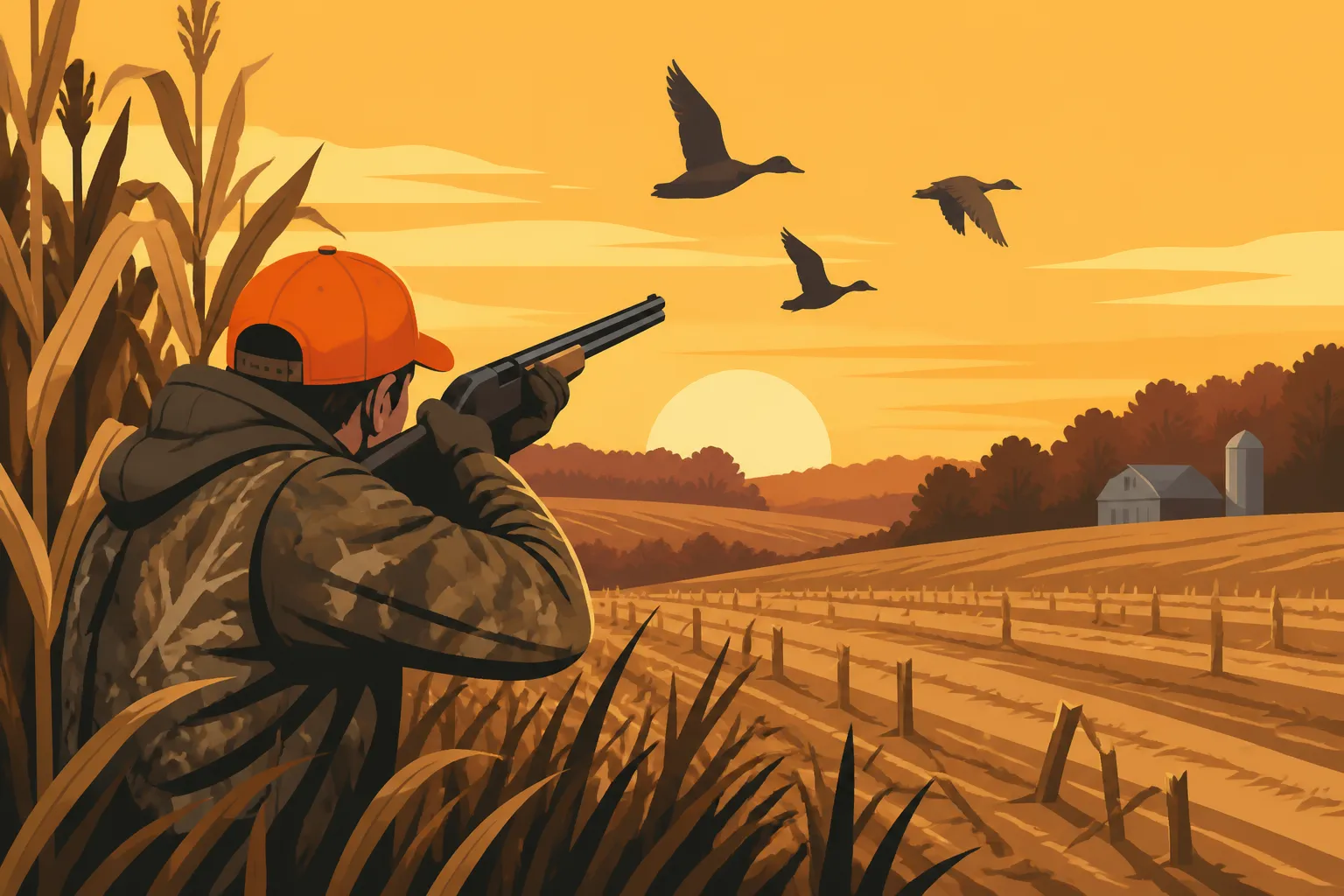
When you're perched on the edge of an Indiana soybean field, a standing cornfield, or even a freshly cut stubble field, you often have a clear view for hundreds of yards. That's a huge advantage, but it also means those deer you've been watching might decide to browse at 150 yards, or even 250 yards, instead of that nice, close 75-yard mark you had mentally set. Unlike hunting dense timber where shots are typically shorter and quicker, farmland hunting can demand precision at extended ranges. Trying to freehand a shot at those distances, especially after you've been sitting still for hours in a chilly November breeze, is a recipe for frustration.
The Unpredictability of Farmland Shots
Deer behavior on farmland can be incredibly unpredictable. One evening, they might filter out of the woodlot right into your lap, offering a chip shot. The next evening, with a different wind or more pressure, they might skirt the field edge at a distance, nibbling on remaining crops, just out of comfortable freehand range. This isn't like sitting in a ground blind in a small woodlot where you can often brace your rifle against a window sill. Out on that field edge, you're exposed, and any natural rest might be too high, too low, or simply non-existent.
Imagine you've been watching a nice buck working a distant hedgerow. He finally decides to cross a section of open ground, but he pauses at 200 yards, broadside, just for a moment. Without a steady rest, your heart rate spikes, your breathing gets shallow, and that perfect shot becomes a shaky gamble. This is where shooting sticks step in, turning that unstable moment into a controlled, confident aim. They bridge the gap between "wish I had a rest" and "I've got this."
Overcoming the Elements: Wind and Fatigue
Farmland edges are often open to the elements. Wind, even a light breeze, can wreak havoc on your stability, especially when trying to hold a rifle steady for an extended period. After a long walk into your spot, setting up, and then sitting for hours, fatigue can creep in. Your muscles might start to tremor subtly, or your stance just won't feel as solid as it did back at the truck. These are factors that shooting sticks effectively neutralize. They provide a stable, independent platform that doesn't rely on your body's dwindling strength or your ability to perfectly brace against an imperfect natural object. They allow you to concentrate on breathing, trigger control, and judging the shot, rather than fighting to keep your crosshairs from dancing. Even seasoned hunters know that the difference between a clean kill and a frustrating miss often comes down to that final moment of stability.
Choosing the Right Shooting Sticks for Your Field Edge Setup
Just like you wouldn't use a deer stand designed for thick timber in the middle of an open field, choosing the right shooting sticks for an Indiana farmland field edge is crucial. There are several types, each with pros and cons, and understanding them will help you make the best decision for your hunting style and the specific terrain you encounter.
Monopods: Lightweight and Quick
Monopods are essentially a single pole with a V-rest at the top. They are incredibly lightweight, easy to carry, and lightning-fast to deploy. If you're hunting smaller field edges where deer might pop out and disappear quickly, or if you're actively still-hunting along fencerows and need to set up fast, a monopod can be a great option. They offer a quick, solid point of contact to steady your shot, significantly reducing vertical movement.
However, the trade-off is horizontal stability. A monopod still relies on you to control the left-to-right wobble, similar to how you'd hold a camera steady with a monopod. While far better than freehand, it's not as rock-solid as a multi-legged system. For those unexpected, fleeting shots where speed is paramount, and the distance isn't extreme, a monopod shines. They're also less cumbersome if you're frequently moving your setup, perhaps stalking a hedgerow or walking a Working a Fencerow for Late-Season Deer.
Bipods: The Sweet Spot for Many
Bipods, with two legs, offer a much more stable shooting platform than monopods. They provide excellent left-to-right stability, which is often what hunters struggle with most. Many bipods attach directly to your rifle's sling swivel stud or a rail, folding up neatly when not in use. Others are free-standing units. For stationary hunting from a field edge, a bipod can be an ideal choice. It allows you to quickly set up, rest your rifle, and then use your body to control the vertical adjustment, shifting your weight slightly to fine-tune elevation.
The primary advantage of a bipod on a field edge is its ability to handle longer holds and slightly longer shots with much greater confidence. You can glass with your binoculars, then quickly settle your rifle onto the bipod when a deer appears, maintaining a steady sight picture. This makes a huge difference when you're waiting for that buck to clear some brush or turn broadside. When considering optics, pairing a good set of Binocular Choice for Indiana Whitetails with a reliable bipod allows for efficient scanning and quick, stable acquisition.
Tripods: Maximum Stability, Less Portability
Tripods, featuring three legs, provide the ultimate in stability. They offer unparalleled steadiness for both vertical and horizontal movement, making them exceptional for very long shots or when you need to hold steady for an extended period. If you're primarily hunting from a fixed position, like a ground blind overlooking a vast field or a strategically placed chair on a field edge, a tripod can provide bench-rest-like accuracy. Some tripods are tall enough for standing shots, while others are designed for kneeling or sitting.
The main drawback of tripods is their size and weight, making them less ideal for run-and-gun hunting or situations where you need to move frequently. Setting them up takes a little more time and attention, which might not always be feasible if deer are on the move. However, for glassing large sections of farmland with a spotting scope, or for situations where you expect very long shots, the added stability is worth the extra bulk. When utilizing a platform like GoHunt to scout aerial photos and pinpoint exact field edge setups, considering the size and deployment time of a tripod becomes part of your pre-hunt strategy.
| Shooting Stick Type | Stability (Horizontal/Vertical) | Portability | Deployment Speed | Best Use Cases |
|---|---|---|---|---|
| Monopod | Fair / Good | Excellent | Very Fast | Quick shots, stalking, frequent movement, shorter ranges on small field edges. |
| Bipod | Good / Good | Good | Fast | Stationary hunting, moderate to longer shots, open field edges, good balance of stability and portability. |
| Tripod | Excellent / Excellent | Fair | Moderate | Fixed positions, very long shots, ground blinds, glassing with optics, bench-rest level accuracy. |
Mastering the Technique: Using Shooting Sticks Effectively
Having a good set of shooting sticks is one thing; knowing how to use them to their full potential is another. It's not just about setting your rifle on them; it's about integrating them into your shooting fundamentals to become a seamless extension of your aiming process. Especially on open farmland edges, where deer can offer shots at varying angles and distances, quick and efficient deployment is key.
Practice Makes Perfect
Like any piece of hunting gear, shooting sticks require practice. Don't wait until opening day to try them out. Take them to the range and practice shooting from kneeling, sitting, and even standing positions, mimicking the scenarios you expect to encounter on a field edge. Practice deploying them quickly and adjusting their height. Get comfortable with how your rifle sits in the V-rest and how it feels to control the rifle's movement with the sticks as your primary support.
A great drill is to set up a target at an unknown distance, simulate spotting a deer, quickly deploy your sticks, settle in, and take a shot within a realistic time frame. Pay attention to your breathing, trigger control, and follow-through. You'll quickly find what works and what doesn't for your particular setup and shooting style. This practice also helps in knowing your rifle's capabilities, especially after you've completed Sighting In a Centerfire Rifle for Indiana Woods at various distances.
Optimal Setup and Stance
When you spot a deer, the first thing is to get into a stable position. For most field edge hunting, a sitting or kneeling position will offer the best combination of stability and a low profile. Extend your shooting sticks to the appropriate height so that your rifle rests comfortably, allowing your non-shooting hand to either support the rifle's forend or control the height of the sticks.
Your body position is still critical. Square your shoulders to the target as much as possible, creating a solid base. Place your elbows on your knees for added stability if sitting or kneeling. The sticks take away much of the effort of holding the rifle's weight, allowing you to relax your upper body and focus on the shot. When Hunting a Standing Soybean Field, remember that the height of the beans can vary, requiring quick adjustments to your stick height for a clear shot.
Think about the angle of the shot. If the deer is quartering away, you'll need to adjust your body and the sticks slightly. Always maintain a comfortable and stable posture; don't contort yourself into an awkward position just to use the sticks. The sticks should enhance your natural shooting stance, not complicate it. Many hunters find that a simple bipod attached to their rifle provides the fastest, most effective setup for those unexpected shots across open ground.
Adjusting for Height and Terrain
Farmland edges are rarely perfectly flat. You might be sitting on a slight rise, in a small ditch, or next to a fencerow that's slightly elevated. Good shooting sticks will allow for quick height adjustments. Many models feature quick-release levers or twist-locks that let you extend or retract legs silently and efficiently.
Before a shot opportunity arises, take a moment to scan your surroundings and identify potential shooting lanes and varying terrain features. If you anticipate a shot over a low spot, extend your sticks accordingly. If you're on a slight downhill slope, you might need to shorten them. The key is to be adaptable. A platform like GoHunt can help you analyze the topography of your Setting Up on a Northern Indiana Field Edge even before you leave home, giving you a better idea of the height adjustments you might need.
Integrating Shooting Sticks with Other Farmland Hunting Strategies
Shooting sticks aren't a standalone tool; they're part of a larger system that works together to increase your success. Thinking about how they fit into your overall hunting strategy for Indiana's farmland can significantly improve your odds.
Scouting and Setup Synergy
Before you even step foot in the field, a solid scouting plan is crucial. Using tools like GoHunt to analyze satellite imagery can help you identify key pinch points, funnels, and feeding areas along farmland edges. Knowing where deer are likely to travel or feed will dictate your setup. Once you've identified a prime field edge, you can then consider how shooting sticks will integrate into your chosen position.
For instance, if you plan to Hunting Northern Indiana Farmland Deer by sitting on a fence line overlooking a large alfalfa field, you'll want to ensure your sticks are tall enough for a comfortable sitting shot, or even a standing shot if the situation demands it. If you're hunting a funnel created by two woodlots with a short strip of standing corn in between, you might need a quicker deploying bipod for those closer, faster shots as deer dart between cover. Scouting helps you anticipate shot distances and angles, allowing you to choose and prepare your shooting sticks accordingly.
Rangefinders and Confidence
On expansive farmland, judging distance can be tricky. What looks like 150 yards can easily be 200 or more. This is where a reliable rangefinder becomes an invaluable partner to your shooting sticks. Once you've got your rifle resting steadily on your sticks, you can use your rangefinder to get an exact distance to your target. This precise measurement, combined with the stability provided by your sticks, builds immense confidence for the shot.
Modern rangefinding binoculars can be particularly efficient, allowing you to range without breaking your shooting posture. After ranging, you can make any necessary adjustments for bullet drop, whether using your scope's holdovers or dialing your turret. This combination of stability and precise distance measurement removes much of the guesswork and anxiety from longer shots across a field. Having the right Rangefinders in Thick Southern Indiana Cover for the open field can be a real advantage.
Pairing with Ground Blinds
While shooting sticks are fantastic for open-air field edge setups, they also pair exceptionally well with ground blinds. Many ground blinds have shooting ports or window sills that are too low or too high for a truly comfortable, stable shot. Setting up your shooting sticks inside the blind provides a fully independent, adjustable rest that guarantees a solid platform regardless of the blind's interior configuration. This is particularly useful if you're Hunting a Green Field Planted for Deer and want to make sure you're ready for any shot opportunity.
This approach means you don't have to awkwardly lean out of a window or stack gear inside the blind to create a makeshift rest. You simply deploy your sticks, adjust them to your sitting height, and enjoy a perfectly stable shooting position. This combination is especially effective when hunting in inclement weather, allowing you to stay dry and comfortable while still being ready for a steady shot.
Maintaining Your Shooting Sticks for Peak Performance
Like any piece of hunting gear, your shooting sticks need a little care to ensure they perform flawlessly when you need them most. Neglecting them can lead to sticky legs, loose fittings, or even outright failure in the field – and no one wants that when a trophy buck is finally in your sights.
Cleaning and Storage
After a long season of hunting muddy field edges and sitting out in the elements, your shooting sticks will inevitably get dirty. Mud, dust, and moisture can work their way into the leg mechanisms, making them stiff or noisy. Take the time to wipe them down with a damp cloth after each outing, paying special attention to the leg joints and locking mechanisms. If they're really grimy, you might need to extend the legs fully and clean around the seals.
Ensure they are completely dry before storing them, especially if they're going into a case or bag. Storing them wet can lead to corrosion or mildew. If you notice any squeaks or stiffness, a light application of a silicone-based lubricant (avoid oil-based lubricants as they can attract dirt) to the moving parts can do wonders. A quick check of all screws and bolts to ensure they're snug is also a good habit.
Inspecting for Wear and Tear
Before each season, or even before a significant hunt, give your shooting sticks a thorough inspection. Check the V-rest at the top for any cracks or excessive wear that might compromise its grip on your rifle. Look at the leg tips – are they still providing good traction? If they're rubber, are they worn smooth or missing? Some sticks have replaceable feet, which can be a cost-effective way to extend their life.
Examine the locking mechanisms on the legs. Do they engage positively and hold securely? If a lever lock feels loose, see if it can be tightened. If a twist lock slips, clean it thoroughly. Any signs of structural damage, like bent legs or cracked components, mean it might be time for a repair or replacement. After all, the entire purpose of shooting sticks is reliability, and a failing component can ruin your hunt. Trusting your gear, especially when you've gone through the effort of proper Zeroing a Rifle for Mixed Distances, is paramount.
Disclaimer
This article is for general informational purposes only and does not constitute professional advice. Laws, prices and regulations vary by location and change over time. Consult a qualified professional for guidance on your specific situation.