Hunting Kankakee River Marsh Waterfowl
The Kankakee River marshes, for all their legendary allure, can be an incredibly daunting place to hunt waterfowl. It's not like sitting in a dry pit blind on a cut cornfield or tucked into a river bank. No, the Kankakee presents its own unique set of challenges, from treacherous footing and ever-changing water levels to navigating dense cattails and finding those fleeting pockets where ducks and geese want to be. It’s easy to feel overwhelmed, wondering if you have the right gear, the right boat, or even the right mindset to tackle such a vast and wild expanse. This guide is here to walk you through everything you need to know, offering practical advice and seasoned insights to help you successfully hunt the Kankakee River marshes and bring home some Indiana waterfowl.
Understanding the Kankakee River Marshes for Waterfowl
The Kankakee River, often called the "Everglades of the North" in its historical context, is a marvel of Indiana's natural landscape. While much of its original vast marshland was drained for agriculture over a century ago, significant portions remain, particularly within the Kankakee Fish and Wildlife Area and other public access points. This isn't just a river; it's a complex network of slow-moving water, oxbow lakes, sloughs, dense cattail stands, buttonbush thickets, and scattered timber, all of which create an unparalleled habitat for migratory waterfowl on the Mississippi Flyway.
The Unique Ecosystem and Its Challenges
Hunting the Kankakee means immersing yourself in an environment that is constantly in flux. Water levels can swing dramatically with rainfall and snowmelt, turning familiar sloughs into dry mudflats or expanding small ponds into sprawling, shallow lakes overnight. This dynamic nature means that what worked last week, or even yesterday, might not work today. The bottom can be notoriously soft and mucky, making walking a laborious task, if not outright dangerous in some areas. Dense vegetation, particularly cattails and phragmites, forms thick walls that can disorient even experienced hunters, making navigation tricky without proper tools.
Beyond the physical challenges, the sheer scale of the Kankakee marsh system can be intimidating. It's easy to get lost, especially in pre-dawn darkness or when fog rolls in. The ecosystem supports a vast array of wildlife, but it demands respect and careful preparation from those who venture into it. Understanding its ever-changing character is the first step in successful hunting here; you can't just show up and expect easy pickings. It requires observation, patience, and a willingness to adapt to whatever conditions Mother Nature throws your way.
Waterfowl Species You'll Encounter
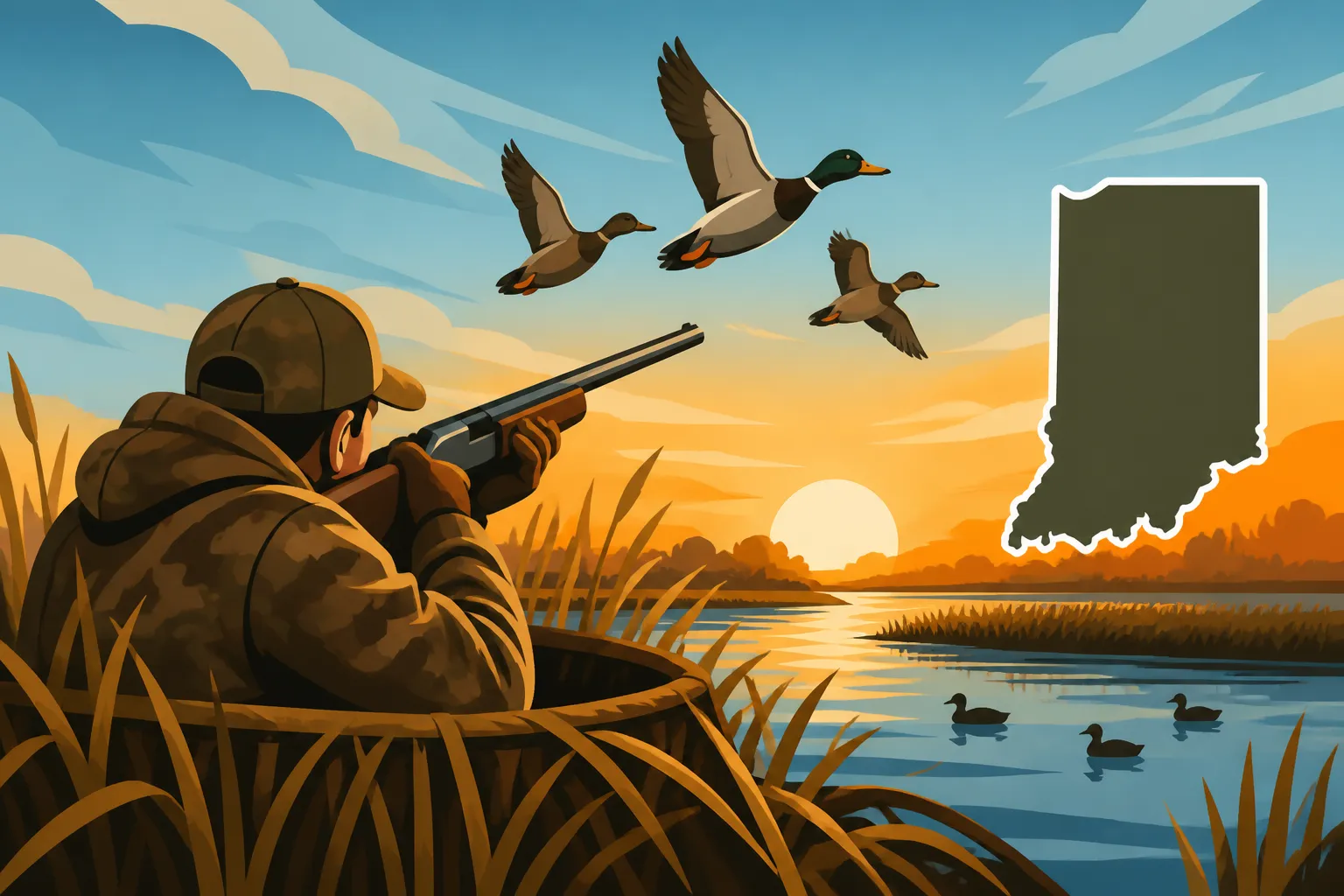
The Kankakee River marshes are a vital stopover for a diverse array of waterfowl, making it a prime destination for hunters. You're likely to encounter a mix of dabbling and diving ducks, along with various geese species, throughout the season. Early in the season, teal species like blue-winged and green-winged teal are common, zipping through the marsh in tight formations. As the weather cools, mallards become the primary target, especially in the shallower vegetated areas and flooded timber pockets. Wood ducks, with their distinct squealing calls and rapid flight, are also abundant, particularly in areas with more tree cover along the river's edges.
Beyond dabblers, the deeper channels and larger open water areas often hold diving ducks such as canvasbacks, redheads, scaup, and ring-necked ducks. While not as prevalent as dabblers, they offer an exciting challenge for hunters set up in the right locations. Of course, Canada geese are a consistent presence, either resting on large open water bodies or feeding in nearby agricultural fields before returning to the marsh to roost. Occasionally, you might even spot snow geese or white-fronted geese, especially during peak migration. Knowing what species are likely to be in the area, and understanding their preferred habitats and feeding behaviors, is crucial for setting up an effective spread and employing the right calling techniques. For more details on species distribution, check out resources on Mallards and Geese on Kankakee Marshes.
| Waterfowl Species | Typical Habitat in Kankakee Marshes | Common Behavior | Best Time to Hunt |
|---|---|---|---|
| Mallard | Shallow vegetated water, flooded timber, sloughs | Dabbling, puddle feeding | All season, esp. mid-late |
| Wood Duck | Flooded timber, wooded edges, slower channels | Flashing through trees | Early season |
| Blue-Winged Teal | Shallow open water, mud flats | Fast, erratic flight, small flocks | Early season |
| Green-Winged Teal | Shallow vegetated water | Swift, agile flight | Early season |
| Canada Goose | Large open water, agricultural fields, marsh roosts | Grazing, loud calling | All season |
| Ring-Necked Duck | Deeper channels, open water bodies | Diving, fast flight | Mid-late season |
| Canvasback/Redhead | Large, open water areas, deeper sloughs | Diving, strong, direct flight | Mid-late season |
Navigating the Kankakee Marsh System
The Kankakee is not a place you just "wander into." Its vastness, dense cover, and often-treacherous conditions demand careful planning and the right tools for safe and effective navigation. Getting stuck or lost is not just an inconvenience; it can be a serious safety hazard, especially in cold weather.
Access Points and Public Land Considerations
Indiana offers several excellent public access points to the Kankakee River marshes, primarily through the Indiana Department of Natural Resources (DNR) Fish and Wildlife Areas (FWAs). The Kankakee Fish and Wildlife Area itself is the crown jewel, encompassing thousands of acres of diverse habitat. You'll find designated boat ramps, parking areas, and specific regulations that govern hunting within its boundaries. Other significant areas nearby might include LaSalle Fish and Wildlife Area, which also offers excellent hunting opportunities along the Kankakee.
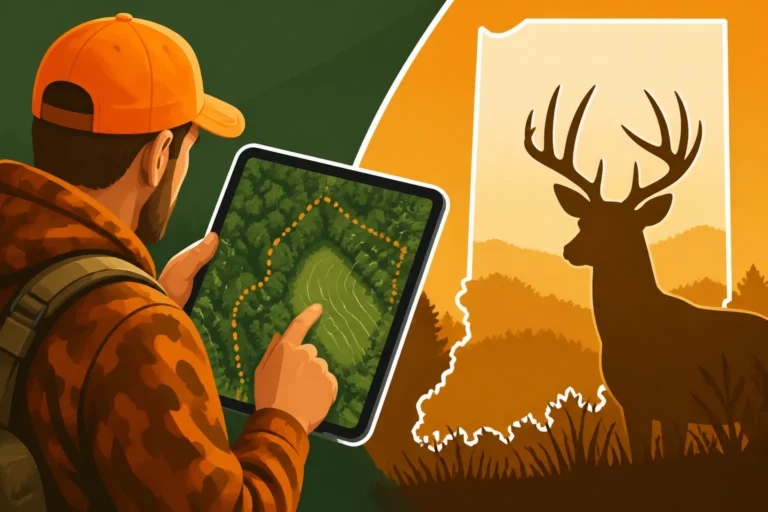
It's absolutely critical to familiarize yourself with the specific rules for each FWA you plan to hunt. Some areas have special draw hunts, daily check-in requirements, or restrictions on motor size and type. Always check the DNR website or call the property office before you go. Additionally, investing in a good mapping tool like OnX Hunt or even the DNR's own mapping resources can be invaluable. These apps allow you to scout from home, identify property boundaries, mark potential hunting spots, and navigate safely in the field, even when cell service is spotty. Knowing where you can legally access and hunt is paramount, and these tools are essential for preventing accidental trespass and maximizing your time afield. Remember, understanding Hunting Pressure on Indiana Public Land can help you find less-crowded spots.
Essential Marsh Navigation Tools and Techniques
Once you've identified your access point, the real challenge begins: moving through the marsh itself. Traditional boats can be difficult to maneuver in shallow, vegetated water. This is where specialized equipment truly shines. A marsh boat or jon boat with a shallow-running mud motor (like a Go-Devil or Pro-Drive) is arguably the most efficient way to cover ground in the Kankakee. These motors are designed to operate in extremely shallow water and through heavy vegetation, making areas accessible that would be impossible with an outboard. Alternatively, canoes, kayaks, or even specialized duck skiffs with push poles can be effective for quieter, more stealthy access into tight pockets, though they require significantly more physical effort.
Beyond your primary vessel, a push pole is an absolute must, even if you have a mud motor. There will inevitably be spots where the motor can't go, or where you need to silently slip into position. A sturdy push pole, preferably with a duck foot or V-shaped end, will be your best friend. A reliable GPS unit or smartphone with a pre-downloaded map is non-negotiable for safety. Mark your entry point, your proposed hunting spot, and any potential hazards or turns you make. The marsh can look entirely different once you're deep inside, and dense fog or darkness can quickly disorient you. Always carry a compass as a backup, and consider a whistle or air horn for emergencies. Being prepared for everything is the only way to tackle the Kankakee confidently. Learning to read the subtle changes in water current and vegetation can also guide you, much like understanding Reading a Kankakee Marsh for a Morning Flight.
Decoy Spreads and Calling Strategies for Marsh Hunting
Success in the Kankakee isn't just about getting to a spot; it's about making that spot irresistible to passing waterfowl. This involves thoughtful decoy placement and skilled calling that mimics the natural behaviors of ducks and geese in a marsh environment.
Effective Decoy Setups for Shallow Water and Vegetation
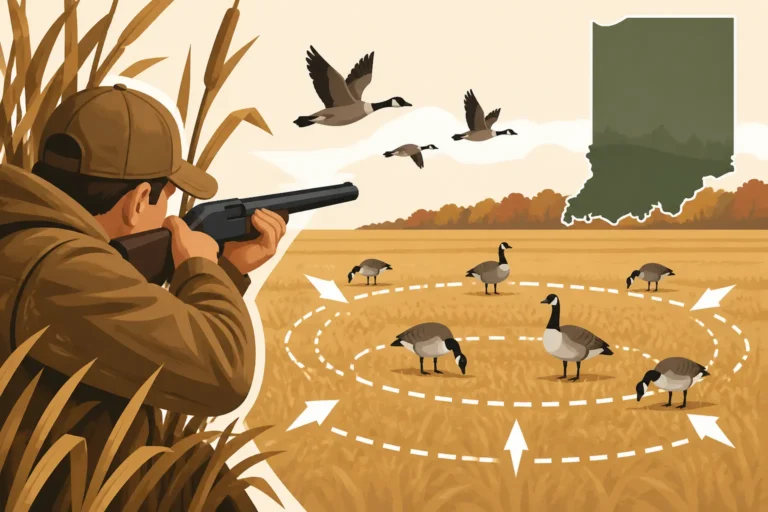
Marsh hunting often means hunting in very shallow water, frequently interspersed with dense vegetation. This dictates a different approach to decoy spreads than you might use in a deep-water lake or open field. Think about creating a "landing zone" – an open pocket of water or a clearer area just big enough for a small flock of ducks to feel comfortable dropping into. Your decoys should be set up around this zone, mimicking birds that are resting, feeding, and preening. For more insights, refer to Decoy Spreads for Kankakee Divers.
When hunting dabblers like mallards and wood ducks, focus on smaller, natural-looking spreads. Use a mix of active feeder decoys and upright sentry decoys. Place some decoys in the sparse vegetation right at the water's edge to make the spread look more natural and inviting. Motion decoys, like spinning wing decoys, can be incredibly effective in marsh settings to grab attention, but use them sparingly on pressured birds. For geese, a smaller, more realistic spread of half-shell or full-body floaters, again with a clear landing strip, often works better than a massive field spread. Consider using Texas rigs or permanent lines for easy deployment and retrieval in muddy conditions. Ensure your lines are long enough to account for variable water depths but short enough to keep your decoys from drifting into dense cover.
Calling Techniques for Kankakee Ducks and Geese
Calling in the Kankakee is as much an art as it is a science, and it requires a nuanced approach. While loud, aggressive calling might work in open fields, the thick cover of the marsh often demands a more subtle and realistic style. For ducks, especially mallards, focus on soft quacks, contented feeder chuckles, and greeting calls that sound welcoming rather than challenging. A "comeback call" can be useful if birds start to drift away, but avoid overdoing it. Remember, ducks in the marsh are often seeking refuge and food, so your calls should convey safety and contentment.
When hunting geese, particularly Canada geese, a good range of calls is essential. Start with basic greeting calls and clucks to get their attention, then transition to more pleading or insistent honks as they get closer. Keep an eye on how the geese react; if they start to flare, ease off the call or switch to softer notes. Sometimes, a single cluck from a feeding goose call is all it takes. The goal is to sound like a small, happy flock enjoying the marsh, not a chaotic convention. Practice your calling regularly, listen to actual waterfowl, and pay attention to how birds respond in different scenarios. A keen ear and adaptable calling are keys to drawing birds into range.
Essential Gear for Kankakee Waterfowl Hunters
Heading into the Kankakee unprepared can quickly turn a promising hunt into a miserable, even dangerous, experience. The right gear isn't a luxury; it's a necessity for comfort, safety, and success in this challenging environment.
Waders, Boats, and Blind Options
Starting from the ground up, high-quality waders are non-negotiable. Chest waders, preferably made from durable neoprene or a breathable but tough material with reinforced knees and seat, are essential. You'll be wading through mud, pushing through thick vegetation, and potentially sitting in shallow water for hours. Look for insulated options for late-season hunts and ensure they fit well, allowing for layering without restricting movement. Your waders are your primary defense against the cold, wet marsh. For deeper insights, see our guide on Waders for Marsh Hunting.
As discussed, a marsh boat or a sturdy jon boat with a reliable mud motor is the most effective way to navigate the Kankakee. If that's not an option, a robust canoe or kayak equipped with a push pole can get you into quieter spots, but be prepared for a workout. Whichever vessel you choose, ensure it's stable and large enough to carry your gear, decoys, and any harvested birds. For blinds, the Kankakee offers a variety of solutions. If hunting from a boat, simple boat blinds made from camo netting and natural vegetation are common. For shore-based or island setups, layout blinds can be effective if you find dry enough ground, or you might construct a natural blind from cattails and other marsh flora. The goal is to blend seamlessly into the environment. Our piece on Layout Blinds and Marsh Boats offers more ideas.
Shotgun, Ammo, and Cold Weather Clothing
Your firearm choice for Kankakee waterfowl hunting is fairly straightforward: a reliable 12-gauge shotgun is the standard. Whether it's a pump-action like a Mossberg 500 or Remington 870, or a semi-automatic from brands like Benelli or Beretta, ensure it functions flawlessly in wet, muddy, and cold conditions. Choke choice is important; modified or improved modified are good all-around choices for varying ranges. Always remember that nontoxic shot is required for all waterfowl hunting in Indiana, so steel, bismuth, or tungsten loads are your only options. For more information on appropriate ammunition, check out Waterfowl Loads for Kankakee Divers. Carry enough shells for the day, but don't overpack and weigh yourself down unnecessarily.
Layering is the key to comfort and safety in Indiana's often unpredictable weather. Start with a good base layer that wicks moisture away from your skin, followed by insulating mid-layers like fleece or wool. Your outer shell should be waterproof, windproof, and breathable to protect you from rain, snow, and bitter winds. A waterproof, insulated hat and gloves are critical, as you lose a lot of heat through your head and extremities. Even on what seems like a mild day, sitting still in a marsh can lead to rapid heat loss. Always pack an extra set of dry clothes in a waterproof bag, especially if you're using a boat. Hypothermia is a real threat, and being able to change into dry layers can be a lifesaver.
Scouting and Adaptability in a Dynamic Environment
Hunting the Kankakee is rarely a "set it and forget it" affair. Its dynamic nature demands constant scouting and a willingness to adapt your plans on the fly. Birds patterns change, water levels fluctuate, and what was a hot spot yesterday can be devoid of life today.
Pre-Season Scouting and In-Season Adjustments
Effective pre-season scouting is foundational for Kankakee success. Long before opening day, use aerial maps (like those found on GoHunt or OnX Hunt) to identify potential access routes, open water pockets, sloughs, and areas of dense cover that might hold birds. Look for adjacent agricultural fields where geese might be feeding, as they'll likely return to the marsh to roost. During the pre-season, if allowed, take a boat or kayak out to physically explore these areas, noting water depths, bottom conditions, and the density of vegetation. Look for old blinds, natural cover, and any signs of bird activity. This groundwork helps you build a mental map of the area and identify primary and secondary hunting locations.
Once the season opens, scouting doesn't stop. Bird behavior changes throughout the season, influenced by migration patterns, hunting pressure, and food availability. Pay attention to weather forecasts, particularly wind direction and temperature swings, as these heavily influence bird movement. If your primary spot isn't producing, be prepared to move. This might mean pulling up decoys and relocating a few hundred yards to a different slough, or it could mean packing up entirely and heading to an entirely different part of the marsh. The most successful Kankakee hunters are those who are flexible, observant, and willing to put in the extra effort to find where the birds want to be that day.
Reading Weather and Water Levels
The Kankakee's temperament is largely dictated by the weather and, consequently, its water levels. A heavy rain event upstream can cause significant rises, flooding new areas and making others impassable. Conversely, a prolonged dry spell can drop water levels, exposing mudflats and consolidating birds into fewer, deeper pockets. Monitoring river gauges (available from sources like the USGS) for the Kankakee River can give you crucial insights into what to expect. A rising river might mean new sheet water in timbered areas, while a falling river could open up hidden channels or expose new mud to feed on.
Wind is another critical factor. Ducks and geese typically prefer to land into the wind, so understanding the prevailing wind direction for the day is essential for positioning your blind and decoys effectively. A strong north wind often signals new birds pushing down from the north, and it can create choppy conditions on larger open water. Cold fronts can concentrate birds as they seek refuge and food, while warm fronts might spread them out. Learning to interpret these environmental cues—from water depth and clarity to wind speed and temperature—will significantly improve your chances of being in the right place at the right time. Being able to predict how birds will react to these changes is a skill honed over many hours in the marsh.
Safety First: Crucial Considerations for Marsh Hunters
The Kankakee River marshes are a beautiful and rewarding place to hunt, but they demand respect. The environment can be unforgiving, and overlooking safety precautions can have severe consequences. Your well-being, and that of your hunting partners, should always be your top priority.
Hypothermia and Cold Water Risks
Indiana winters, especially near bodies of water like the Kankakee, can be brutal. Hypothermia is a constant threat, and it can set in even on days that don't feel "that cold," especially if you get wet. Waders, while essential, are not foolproof, and falling into cold water can be life-threatening. Always wear multiple layers of clothing, with an emphasis on wool or synthetics that retain insulating properties even when damp. Avoid cotton, which loses all thermal value when wet. Carry spare dry clothes in a waterproof bag, and consider bringing a portable hand warmer or even a small, emergency survival blanket.
If you're using a boat, especially a small marsh boat, wear a personal flotation device (PFD) at all times. Accidents happen quickly, and a capsized boat in cold water can be deadly without a PFD. Never hunt alone if possible, and always inform someone of your hunting plans, including your exact location and expected return time. Knowing the signs of hypothermia (shivering, confusion, clumsiness) in yourself and your partners is vital, as is knowing how to react. Getting to shore, getting dry, and warming up are critical first steps. For general cold weather strategies, consult our guide on Cold-Weather Sitting Strategy in Indiana.
Navigation Safety and Emergency Preparedness
Getting lost in the Kankakee marsh is a very real possibility, especially in low light, dense fog, or unfamiliar territory. As mentioned, a reliable GPS unit or a smartphone with pre-downloaded maps (like GoHunt's offline maps) is paramount. Don't rely solely on your phone, as batteries can die in the cold, or signal can be lost. Carry a physical map and compass as backup and know how to use them. Mark your entry point, your hunting location, and your exit route. Pay attention to landmarks, even subtle ones, as you travel.
Beyond navigation, general emergency preparedness is crucial. Carry a first-aid kit stocked with essentials for minor injuries, and also consider items like a multi-tool, duct tape, a headlamp with spare batteries, and a fire starter. If you're using a boat, ensure it's in good working order and carry emergency repair items like spare shear pins, an extra propeller, and tools. A fully charged cell phone is a good idea, but again, don't rely on it as your sole means of communication. A whistle or air horn can help signal your location if you become separated from partners or need to attract attention. Being prepared for the unexpected is the best way to ensure a safe and successful trip to the Kankakee marshes.
Disclaimer
Please note that hunting regulations, seasons, and licensing requirements are subject to change. Always consult the most current Indiana Department of Natural Resources (DNR) regulations before planning any hunting trip. This guide is for informational purposes only and should not be considered a substitute for official DNR publications or professional safety instruction. Adherence to all local, state, and federal laws is the responsibility of the hunter.