Working a Timbered Fence Line for Deer
You've probably spent countless hours trying to decipher deer movement in the big woods or sprawling ag fields, only to feel like you're missing a piece of the puzzle. Sometimes, the most overlooked travel corridors are right under your nose, quietly funneling deer traffic where you least expect it: timbered fence lines. These linear strips of cover, often connecting woodlots, fields, and bedding areas, are absolutely critical for understanding and effectively hunting Indiana whitetails. This guide is all about peeling back the layers to reveal why these unassuming features are deer magnets and how you can use them to your advantage.
Why Timbered Fence Lines Are Deer Magnets in Indiana
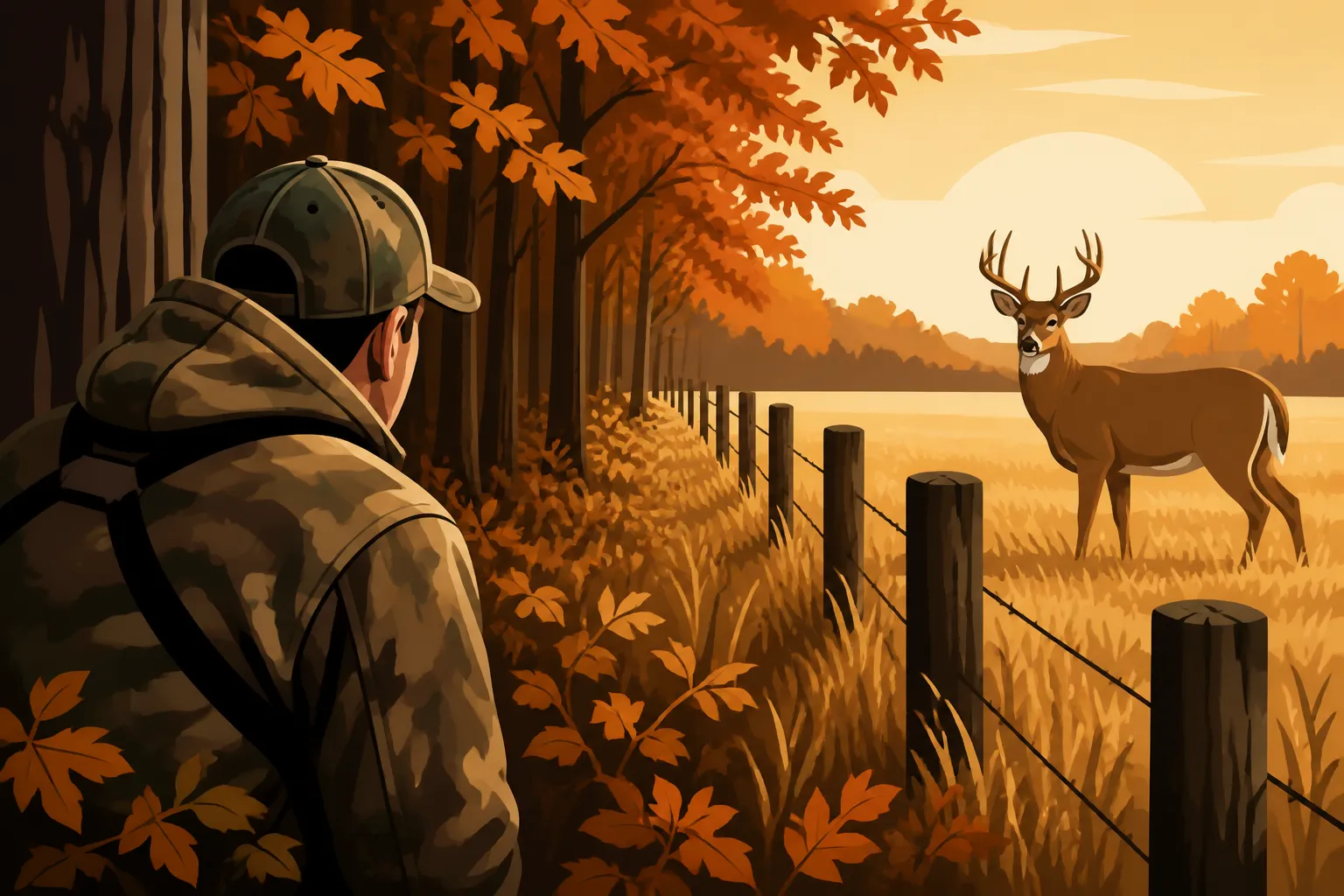
Timbered fence lines, those overgrown boundaries separating fields, properties, or even different habitat types, are far more than just property markers. For a whitetail deer, especially in Indiana's diverse landscapes, they represent a lifeline – a secure, predictable, and efficient travel route. It's easy to dismiss them as just "edge habitat," but their linear nature and often dense cover make them indispensable.
Security and Concealment for Traveling Deer
Imagine being a deer, trying to move from a bedding area to a prime feeding spot, or perhaps cruising for does during the rut. Open ground feels risky, but thick timber can be slow-going. A timbered fence line offers the perfect compromise: dense overhead and lateral cover, allowing deer to move relatively unexposed. This is particularly true in areas dominated by agricultural fields or smaller woodlots, common across much of Northern Indiana farmland deer country. These lines of trees, often a mix of mature hardwoods, cedars, and dense undergrowth like multi-flora rose or honeysuckle, create an invisible tunnel through which deer feel safe traveling even during daylight hours.
Deer aren't just looking for absolute cover; they're seeking perceived security. A fence line might not be impenetrable, but it breaks up their silhouette, muffles sounds, and offers quick escape routes into the surrounding cover or timber. This confidence means they're more likely to use these routes consistently, especially mature bucks who are notoriously security-conscious. When you're trying to figure out Where Hoosier National Forest bucks bed, remember that these linear features often connect smaller bedding thickets within the larger forest landscape, providing crucial travel lanes between them.
Funnels and Connectivity Between Key Habitats
Perhaps the most significant reason deer rely on timbered fence lines is their ability to act as natural funnels, connecting disparate habitat elements. Think about a long, open soybean field with a small woodlot on either end. Instead of crossing the open field, deer will almost invariably hug the timbered fence line that connects the two. This makes them highly predictable travel corridors. These lines might link a primary bedding area to a distant food source, or connect two distinct parcels of timber that would otherwise require deer to traverse exposed ground.
These natural corridors are often crucial during the rut when bucks are constantly on the move, scent-checking for does. A buck cruising a timbered fence line can cover a lot of ground quickly, checking wind currents and leaving his own sign, all while maintaining a sense of security. Identifying these funnels is key when you're trying to decode deer movement for Hunting a funnel between two woodlots or even just a small patch of cover. They concentrate deer movement into a narrower, more predictable path, making your scouting efforts far more efficient and your stand placement decisions more impactful.
Food and Browse Opportunities Within the Edges
While not always a primary food source, many older, timbered fence lines offer supplementary browse and hard mast. A mature oak or hickory growing within the fence line can drop acorns or nuts, attracting deer that might pause for a quick snack while traveling. The edges of these lines often host various brushy species that provide tender shoots and leaves, especially during the early season. Additionally, in regions where landowners plant fruit trees or other deer-attracting vegetation along their property lines, these fence lines can become unexpected feeding stations.
Furthermore, the dense cover within these lines provides excellent bedding opportunities, particularly for individual deer seeking refuge or bucks looking to lie up during daylight hours. A thick briar patch or a clump of young cedars nestled within an old fence row can be just enough cover for a deer to feel safe, especially if it offers a good vantage point to observe any approaching danger. This combination of travel security, funneling effect, and occasional food/bedding opportunities makes timbered fence lines multifaceted attractions for Indiana deer.
Reading the Signs: Scouting Indiana's Fence Line Highways
Successfully hunting a timbered fence line starts long before the season opens. It requires meticulous scouting to understand exactly how deer are using these linear corridors. You need to become a detective, piecing together clues to form a clear picture of deer movement patterns. Don't just look for a fence; look for the story the deer are telling.
Identifying Key Intersections and Crossings
Not all sections of a timbered fence line are created equal. Deer will often utilize specific spots more heavily than others. These "hotspots" are typically where the fence line intersects with another distinct habitat feature, such as a creek crossing, a low spot in the terrain, a game trail leading into a larger timber block, or even a subtle saddle if the fence line runs along a ridge. You might find a heavy trail where the fence line dips down to cross a small drainage, or where it meets a well-used field edge access point.
Pay close attention to where deer are actually crossing the fence itself, if it's still intact. Look for areas where the wire is pushed down, or where tracks are heavily concentrated on both sides. These crossing points are high-traffic zones. Using mapping tools like the GoHunt app can be incredibly helpful here. You can identify these linear features on an aerial map and then confirm them on the ground. When you're Scouting Indiana public land before season, mark every potential crossing, intersection, and change in elevation along the fence line. These often serve as natural bottlenecks, concentrating deer movement and offering prime stand locations.
Decoding Rubs, Scrapes, and Worn Trails
Deer sign along a fence line speaks volumes. Worn trails are your most obvious indicator of travel. Look for deeply cut paths, especially where the undergrowth is matted down. These trails will often be more pronounced at funnel points or intersections. During the rut, these trails will be even more heavily used as bucks patrol.
Rubs and scrapes are the big buck calling cards. Bucks will rub their antlers on saplings and small trees along these travel corridors to communicate their presence. Look for fresh rubs, especially those on larger saplings, which indicate a more mature buck. Scrapes, particularly primary scrapes with an overhanging licking branch, are social hubs. Bucks (and sometimes does) will paw the ground, urinate, and scent-mark the licking branch. A timbered fence line that acts as a consistent travel route often has scrape lines running along it. A logging road along a timbered fence line might also have a scrape line running along it, making it an even better spot. The presence of multiple, fresh rubs and scrapes is a strong signal that a mature buck is actively using that specific section of the fence line. Don't just look for one or two; an active scrape line or cluster of rubs is what you're after.
Understanding Wind and Thermal Dynamics
Hunting a linear feature like a fence line requires a keen understanding of wind and thermals. Your scent will travel along this corridor, and deer often use the same. In flatter terrain, wind direction is paramount. You want your stand placed so your scent is blowing away from the anticipated travel route of the deer, but also not swirling back into the fence line itself. This might mean setting up slightly off to the side, or on the downwind edge of the fence line, rather than directly within it.
In Southern Indiana ridgelines or any area with varied topography, thermals play a significant role. Air rises as it warms in the morning and falls as it cools in the evening. If a fence line runs up a draw or along a ridge, deer often move with the thermals. For example, in the morning, deer might travel uphill as the air rises, and in the evening, they might move downhill as the air falls. Understanding the Wind and thermals on a Southern Indiana ridge can be complex, but applying this knowledge to your fence line stand placement can make all the difference. Always consider how your scent will move given the time of day and the terrain when selecting your approach and stand location.
Strategic Stand Placement and Hunting Approaches
Once you've identified the key fence lines and their high-traffic zones, the next step is strategic stand placement and choosing the right hunting approach. This isn't just about throwing up a stand; it's about minimizing your impact and maximizing your chances of intercepting a deer.
Maximizing Cover and Shooting Lanes
The very nature of a timbered fence line – dense cover – can be both a blessing and a curse. While it provides security for deer, it can also limit your shooting lanes. When hanging a stand, look for trees that offer natural breaks in the foliage, or positions that provide a clear view down the fence line in both directions, as well as into any adjacent fields or timber. You might need to do some minimal trimming, but avoid over-clearing, as this can alert deer to your presence or make them feel less secure.
Consider hanging a stand where the fence line meets another feature, such as a single large tree or a slight bend in the line, which naturally opens up your field of view. A strategic spot could be Where to hang a camera on a logging road that also follows a fence line, giving you a wider area to watch. For example, if the fence line has an old, mature oak, that might be your perfect tree. Its broader trunk provides good concealment, and its canopy allows for better visibility than dense younger growth. The goal is to be hidden, yet have enough visibility to make an ethical shot when the moment arrives.
Ideal Stand Locations Along the Line
The "best" stand location will depend on how deer are using the fence line, but a few general principles apply. First, position yourself downwind or crosswind of the primary travel corridor. This is non-negotiable. Second, consider locations where the fence line naturally bottlenecks or intersects with another feature. A sharp bend, a creek crossing, or where a field funnels down into the timbered fence line are all prime spots.
A common and effective tactic is to place your stand slightly off the fence line, perhaps 10-20 yards into the adjacent timber or field edge, especially if the fence line itself is too dense for a clean shot. This allows you to observe deer moving along the fence line without being directly in their path, offering more flexibility in your shot angle. If you're using a ground blind on Indiana public land, brushing it in meticulously near a fence line intersection can also be highly effective, offering excellent concealment and scent control. Remember, deer are often looking into the fence line from the field or timber, so being slightly offset can hide you better.
| Fence Line Type | Deer Usage | Best Stand Placement | Key Scouting Focus |
|---|---|---|---|
| Old Growth Timbered | Heavy travel, secure bedding, occasional browse | Downwind of bends/intersections, slightly off-line | Rubs, scrapes, worn trails, distinct crossings |
| Brushy/Thicket | Daytime bedding, short-distance travel, fawning cover | Upwind of thickest cover, overlooking trails | Bedding areas, heavy tracks, natural funnels |
| Sparse Tree/Clean Edge | Quicker travel between woodlots, late-day feeding | Where it connects to heavier cover, evening sits | Fresh tracks, destination points, field edges |
| Creek Bottom/Drainage | Water access, thermal hubs, consistent travel | Downwind of water, where fence line crosses drainage | Water sources, heavy trails leading to/from water |
Timing Your Hunt and Minimizing Pressure
When hunting timbered fence lines, timing is everything. Deer often use these corridors during low-light hours – dawn and dusk – for major movements between bedding and feeding. However, during the rut, bucks will cruise these lines at any time of day, making mid-morning and early afternoon often productive. If you're Hunting the Indiana rut in early November, a timbered fence line can be a goldmine for catching a cruising buck.
Minimizing your pressure is paramount. Plan your entry and exit routes carefully to avoid spooking deer that might be using the fence line. Approach your stand from a direction that doesn't put your scent over the anticipated deer travel route. If the fence line runs along a field, you might enter from the field side if the wind is right and deer are expected from the timber. Similarly, if the fence line borders heavy timber, entering from the deeper woods might be better. Repeatedly bumping deer from a fence line will quickly teach them to avoid it during daylight. Only hunt a particular stand when the wind is absolutely perfect, and be prepared to move if conditions change.
Overcoming the Challenges of Fence Line Hunting
While timbered fence lines can be incredibly productive, they also present their own set of challenges. From dealing with public land pressure to navigating thick cover and unpredictable deer, you'll need to be adaptable and strategic.
Dealing with Public Land Pressure
Indiana's public lands, from State Forests to Fish and Wildlife Areas, often see considerable hunting pressure. This pressure can affect how deer use timbered fence lines. Heavily pressured deer might still use these lines for travel, but they'll often do so even more cautiously, primarily under the cover of darkness, or stick to the densest, most difficult-to-access sections.
If you're hunting public land, look for fence lines that are off the beaten path – perhaps a longer walk from a parking area, or one that requires crossing some less appealing terrain. Deer often avoid areas with human scent, so finding ground others walk past can be key. A fence line running deep into a property, or connecting two large, dense blocks of timber, might see less pressure than one hugging a road or trail. Also, consider hunting during weekdays or after the initial opening week rush when pressure tends to drop off. Always check specific property rules, as some public lands have unique requirements, such as those for Atterbury Fish and Wildlife Area managed hunts.
Adapting to Unpredictable Deer Movement
While fence lines funnel deer, deer are still wild animals, and their movement can sometimes be unpredictable. A sudden change in weather, new food sources, or increased hunting pressure can shift their patterns. You might have a perfectly scouted fence line that goes cold for a few days. This is where adaptability comes in. Don't be afraid to move your stand if the sign isn't fresh or if you're not seeing deer.
Having multiple stand locations along a fence line, or even on different fence lines, allows you to adapt to changing conditions and winds. Keep an eye on the latest weather forecasts and recent harvest reports. If there's been a hard frost that opened up new browse, deer might shift. If a new clear-cut opened up nearby, they might start using a fence line to connect to that fresh growth. Remember, deer are opportunistic, and their travel routes will adjust to perceived safety and available resources.
Navigating Thick Cover and Limited Visibility
As mentioned earlier, the dense cover that makes fence lines attractive to deer can make hunting them challenging for you. Thick briars, tangled vines, and dense saplings limit visibility and can make for noisy entries and exits. When choosing a tree for your stand, look for one that minimizes the amount of trimming needed. If you must trim, do it well in advance of the season, ideally months before, to allow deer to get used to the change and for your scent to dissipate.
Also, consider the type of weapon you're using. Bowhunters often need closer shots and clearer lanes than rifle hunters. If the fence line is exceptionally thick, it might be better suited for an archery setup where you can patiently wait for a close-range shot, or even for a still-hunting approach if you're comfortable moving slowly and silently within the cover. For firearms hunters, make sure your line of sight is clear enough for a safe and ethical shot, even if it means placing your stand a bit further back from the densest part of the fence line. Often, the best shots present themselves when a deer briefly steps out of the thickest cover, perhaps to cross a small opening or scent-check.
Working a timbered fence line for deer isn't just about finding a good spot; it's about understanding the deer's perspective, diligently scouting, and then executing a well-thought-out plan. With patience and attention to detail, these linear travel corridors can become some of your most productive hunting locations in Indiana.
Disclaimer
Hunting is an inherently dangerous activity. Always prioritize safety by adhering to all local, state, and federal hunting regulations. Ensure you have the proper licenses and permits before hunting. Be aware of your surroundings, wear appropriate blaze orange or pink when required, and always identify your target and what lies beyond it before taking a shot. This guide is for informational purposes only, and safe hunting practices are the responsibility of the individual hunter.