Hunting a Reclaimed Strip Mine Bench
Hunting reclaimed strip mine benches in Indiana can feel like trying to solve a puzzle with a blindfold on. These areas are often a maze of steep inclines, deep ravines, and dense, tangled vegetation, making it tough to even know where to begin. But for those willing to put in the work, these overlooked landscapes hold incredible potential, offering secluded pockets where deer thrive away from typical hunting pressure. This guide will walk you through understanding these unique environments, developing effective scouting strategies, and employing successful hunting tactics to help you unlock the secrets of Indiana's reclaimed strip mine benches.
Understanding the Unique Landscape of Reclaimed Strip Mines
Reclaimed strip mines are not your typical Indiana woods. They are a mosaic of man-made and natural features that, while challenging, create distinct advantages for wildlife, especially whitetail deer. The very act of mining creates a topographical rollercoaster, and the reclamation process attempts to stabilize and revegetate it, often leading to a dense, thorny haven.
Topography and Vegetation Patterns
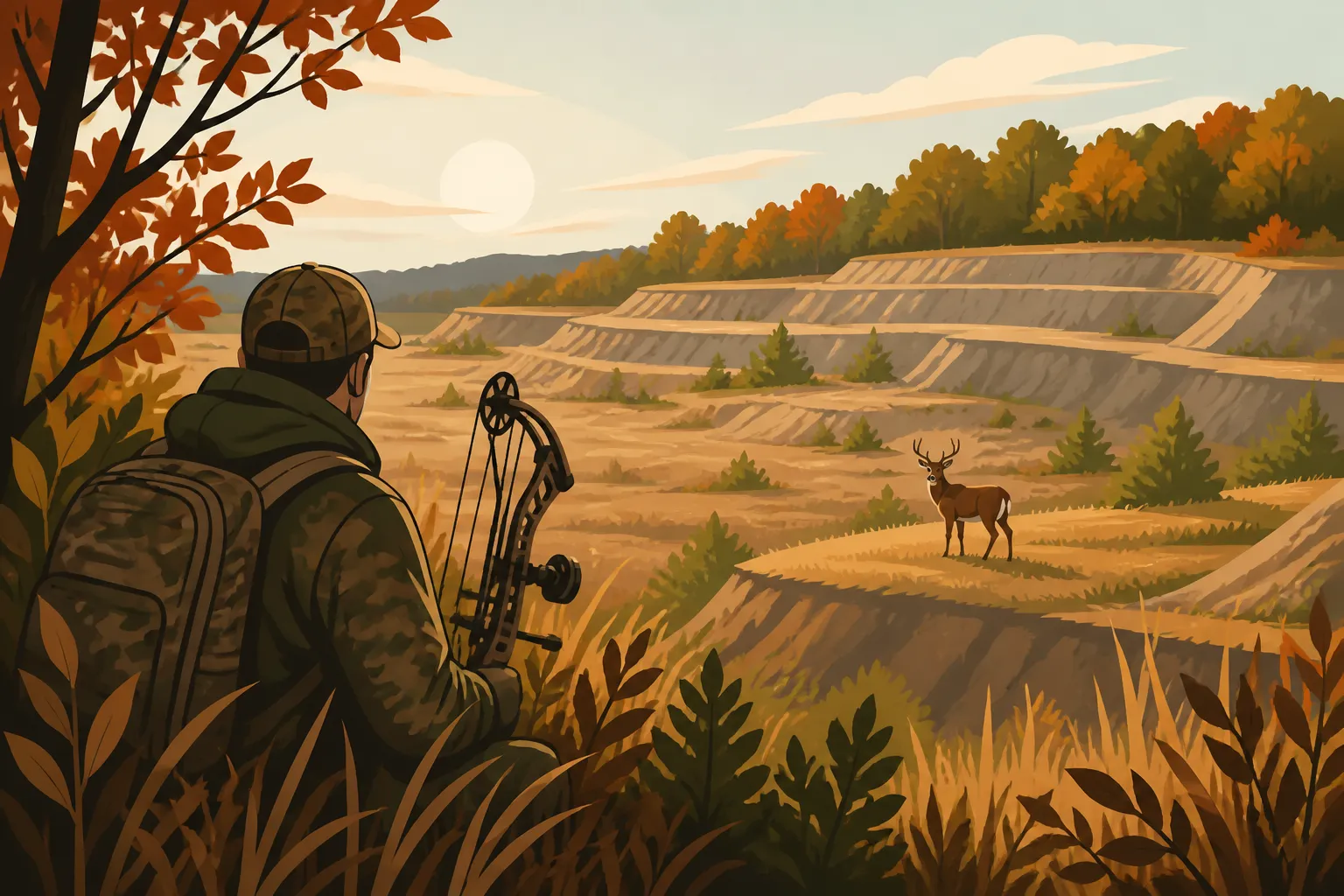
Imagine a series of steps carved into the earth, then left to be overgrown by nature. That's essentially what you're dealing with. The "benches" are these relatively flat, often elongated terraces that sit at various elevations. Above them, you might have "high walls" – steep, sometimes sheer cliffs. Below, "low walls" or gradually sloping areas lead down to the next bench or a valley floor.
The vegetation is key here. Because the soil was disturbed, you often find thick, pioneering species like multiflora rose, autumn olive, honey locust, and various brambles. These plants, while a nightmare to walk through, provide incredible bedding and browse for deer. The benches themselves might have slightly more mature trees, or they could be choked with young saplings and thick brush. Deer will often use these benches as travel corridors, bedding sites, and feeding areas because the thick cover makes them feel safe, and the varied elevation gives them a vantage point. Don't underestimate how much deer use these benches to navigate the otherwise brutal terrain.
Water Sources and Forage Availability
Even though these areas were once industrial sites, nature reclaims them, and water is often a critical component. You'll frequently find small ponds, often called "mine ponds" or "pit lakes," nestled in the lower elevations. These can be spring-fed or simply collect rainwater. Seepage from high walls can also create small, consistent water sources, even just damp patches, that deer will seek out. These water sources are magnets, especially during dry spells in the early archery season.
Forage is another huge draw. The dense, diverse vegetation on these reclaimed lands provides an incredible variety of browse year-round. Beyond the brambles and shrubbery, you might find pockets of clover or other grasses planted during reclamation, or even areas where persimmon and wild grape have taken root. During the fall, any mature oak trees that survived or have grown up on less disturbed sections of the benches can drop acorns, becoming prime feeding locations. Even after a poor acorn year, the sheer volume of varied browse makes these areas attractive.
Overlooked Sanctuaries for Deer
This is where the magic happens. Due to the rugged, sometimes intimidating terrain and dense cover, many hunters simply avoid reclaimed strip mines. This lack of human pressure creates genuine sanctuaries for deer, especially mature bucks. They learn quickly that these areas offer safety in numbers of thickets and elevation changes. You'll often find deer living their entire lives within a few benches, rarely venturing out, especially during the firearms season when pressure in more traditional woods ramps up.
I've seen it time and again in places like parts of Greene or Sullivan counties, where these landscapes are prevalent. Hunters stick to the easier-to-access woodlots, leaving these tangled, steep areas largely undisturbed. A big buck knows this and will often retreat to the thickest, nastiest bench it can find the moment it feels pressure, making these areas prime for a patient, determined hunter.
Scouting Strategies for Benches and Overlooked Pockets
Effective scouting is paramount when tackling reclaimed strip mine benches. You can't just wander in hoping to stumble upon a hot sign. These areas demand a thoughtful, multi-pronged approach that combines modern tools with good old-fashioned legwork.
Interpreting Aerial and Topographic Maps
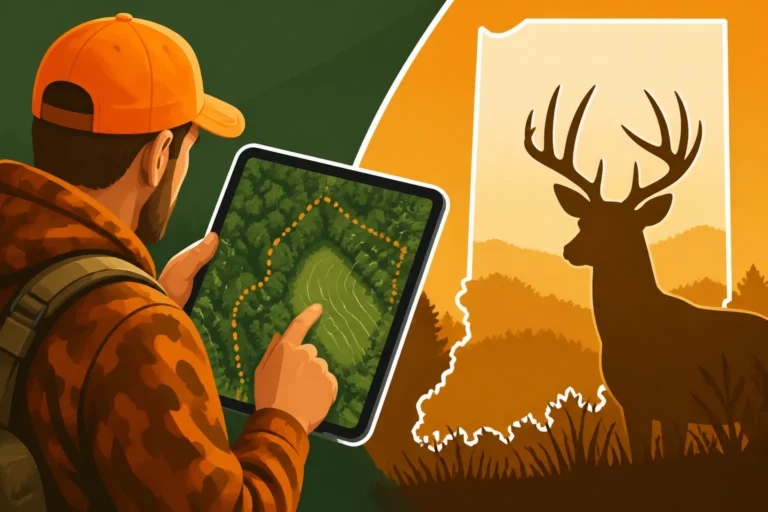
Before you even step foot in the woods, spend significant time studying maps. Aerial imagery, like what you find on GoHunt or the Indiana DNR app, is your best friend here. Look for those distinct, relatively flat lines that indicate benches. Trace them. Identify where they narrow into funnels, where they meet steeper inclines, or where they expand into broader, brushy flats. These lines are your primary travel corridors for deer.
Pay close attention to changes in vegetation visible from the air. Darker, denser patches often indicate the thickest cover – prime bedding areas. Lighter, more open areas might be old reclamation plantings or fields. Also, look for water – those tell-tale blue spots that signify a pond or a wet area. Topographic maps will show you the elevation changes, helping you visualize how deer might move between different benches or ascend/descend the high walls. Identify saddles, draws, and points along these benches, as these are natural pinch points for deer movement. Remember, reading aerial photos for Southern Indiana deer requires a keen eye for these subtle transitions.
Boots-on-the-Ground Reconnaissance
Once you have a few promising spots identified on your map, it's time to hit the ground. Be prepared for a challenging hike. Wear durable, briar-resistant clothing and sturdy boots. Focus your efforts on confirming what you saw on the map. Find those benches. Are they as flat and wide as they looked? Is the cover as dense?
Look for deer trails. Deer will often create very distinct trails on these benches, especially where the terrain is otherwise difficult to navigate. Pay attention to how these trails connect different benches, lead to water sources, or access potential food sources. Scout for rubs and scrapes, particularly along the edges of thicker cover on the benches. This sign will tell you not only that deer are present but what kind of deer. Look for bedding areas – typically dense thickets with matted-down grass or leaves. These can be incredibly difficult to penetrate, but often a visual scan from an adjacent bench or a higher vantage point can reveal them. Remember, finding sign in big Hoosier Forest timber is similar in principle to finding it in these thick areas; deer will leave clues, you just have to know what to look for.
Using Trail Cameras in Dense Cover
Trail cameras can be invaluable in these areas, especially if you're trying to figure out how deer are using a specific bench or funnel. However, deployment requires strategy. Don't just stick them on the first tree you see.
Focus your cameras on natural pinch points along the benches: where two benches merge, where a game trail crosses a draw, or on trails leading directly to a water source or a known food plot. Position your cameras carefully to avoid them being overgrown by the rapidly growing vegetation. Clear out a small shooting lane if necessary. Using a security box can also be wise, as these areas can be remote, but still, you want to protect your investment. Keep an eye on the wind when checking cameras, just like you would when hunting, to minimize your impact. The goal is to get intelligence without educating the deer.
Effective Hunting Tactics for Challenging Terrain
Once you've done your homework and found some promising benches, it's time to think about how you're going to hunt them. The unique nature of this terrain demands a different approach than your typical flat woods hunting.
Still-Hunting the Benches and Seclusion
Still-hunting is perhaps one of the most effective strategies for these reclaimed areas. The dense cover often limits visibility, making long-range shots rare, but it also allows you to move incredibly slowly and quietly, often getting within bow range before a deer knows you're there. This method is all about patience and using the terrain to your advantage.
Focus on moving along the benches, especially those with good cover, using the slight undulations and thickets as concealment. Take three steps, then pause for several minutes. Scan every shadow, every cluster of brush. Look for horizontal lines (a deer's back) in a vertical world (trees and saplings). Pay attention to any small changes in the wind or thermals as you navigate the varying elevations. This slow, deliberate approach allows you to pick apart the thick cover and often catch deer bedded or browsing within their sanctuary. It's a true test of patience, but the rewards can be substantial. For similar challenging terrain, consider the principles of Still-Hunting Southern Indiana Ridges.
Stand Placement on Funnels and Edges
While still-hunting is excellent, sometimes a stand is the ticket, especially if you've identified a consistent travel route or feeding area on a bench. Stand placement in reclaimed strip mines is about finding those subtle funnels that deer use to move through the thick stuff.
Look for places where a bench narrows, forcing deer into a smaller corridor. Identify where a major game trail cuts across a draw between two benches, or where a thick bedding bench meets a more open feeding area. Think about wind and thermals, which can be tricky in this undulating terrain. Morning hunts might see thermals rising, drawing deer up from lower benches, while evening hunts might see them falling. A common strategy is to set up on the downwind side of a thick bedding bench, intercepting deer as they move to feed. Using a ground blind on Indiana public land can also be a great option here, as the dense cover makes it easy to brush in a blind effectively, offering excellent concealment and scent control. Remember, treestand setups in Hoosier National Forest also emphasize using terrain for funnels; apply similar thinking here.
Drive Tactics for Pockets of Cover
For larger pockets of extremely thick cover on a bench, or a series of interconnected benches, small, organized deer drives can be incredibly effective, especially during the Indiana firearms season. This isn't about pushing deer across a mile-long field; it's about systematically pushing a specific, dense patch of cover where you know deer are holed up.
You'll need a small group, typically three or four hunters. Identify the escape routes – how do deer typically leave this particular bench or thicket? Station your blockers (shooters) along these escape routes, often on an adjacent bench or at a natural bottleneck. The drivers then move slowly and deliberately through the thick cover, making enough noise to encourage deer to move, but not run wildly. Communication is key. Use two-way radios if possible, or establish clear hand signals. Safety is paramount; everyone needs to know where others are at all times and have clear shooting lanes. These targeted drives can be incredibly productive for moving deer out of seemingly impenetrable sanctuaries. For more on this, consider tactics like Deer Drives With Three or Four Hunters.
Gear Considerations for Rugged Strip Mine Hunting
Hunting reclaimed strip mine benches isn't a stroll in the park. The terrain is unforgiving, the cover is dense, and success often hinges on being prepared with the right gear.
Footwear and Clothing for Rugged Terrain
This isn't the place for your worn-out hiking boots. You need serious footwear. Look for boots with excellent ankle support, a stiff sole to protect against rocks and uneven ground, and waterproof construction. Rubber boots are often a good choice, as mine ponds and seepage can create muddy, wet conditions. Prioritize durability above all else; cheap boots will fall apart quickly in this environment. For more specific recommendations, check out our guide on Boots for Indiana Mud and Snow.
For clothing, think "armor." Briars, thorns, and tough brush will be constantly snagging and tearing at your clothes. Look for brush pants or chaps made of durable canvas or Cordura. A sturdy hunting jacket with reinforced elbows and shoulders is also a good idea. Layers are always important for temperature regulation, but the outer layer needs to be tough. Don't forget a blaze orange vest or jacket for safety, as required during firearms season in Indiana.
Navigation and Communication Tools
It's easy to get disoriented in these winding, steep areas, even with plenty of sunlight. A reliable GPS unit or a smartphone with a robust hunting app like GoHunt or onX is absolutely essential. Download offline maps before you go, as cell service can be spotty or nonexistent in some of these deep valleys and thick areas. Mark your truck, your stand locations, and any significant sign you find.
Two-way radios can be a lifesaver if you're hunting with a partner or running small drives. Even short-range FRS/GMRS radios can often penetrate the thick cover better than cell signals. Always carry a compass and know how to use it as a backup. A small power bank for your phone is also a smart move, as GPS usage can drain batteries quickly. Remember to Scout With the Indiana DNR App too, as it provides valuable public land boundaries and features.
Essential Field Dressing and Extraction Gear
If you're successful, getting a deer out of a reclaimed strip mine can be the hardest part of the hunt. The terrain is brutal. A sharp, durable field dressing knife is a given. But also consider a small bone saw if you're going to quarter a deer for easier packing out.
A good game bag or two can protect your meat from dirt and flies, especially if you have a long drag ahead. And speaking of dragging, a sturdy deer drag or a sled, even a small, collapsible one, can save your back significantly. If the terrain is extremely steep and rugged, a pack frame might be your best friend, allowing you to bone out the animal and carry it out in manageable loads. Think about a good headlamp, too. It's easy to misjudge the time it takes to process and extract an animal, and you don't want to be navigating those benches in the dark without adequate light.
| Feature Type | Typical Characteristics | Hunting Potential | Challenges |
|---|---|---|---|
| High Benches | Relatively flat, often with mature timber or dense brush; high elevation. | Excellent bedding, travel corridors, vantage points. | Steep ascent/descent to access, limited escape routes. |
| Mid-Level Benches | Mix of mature trees and thick brush; common travel routes. | Prime for intercepting deer moving between bedding and feeding. | Can be very thick, hard to move quietly. |
| Low Benches/Valleys | Often contain mine ponds, seeps, or more open regrowth. | Water sources, feeding areas, travel to/from higher ground. | Very thick, potentially swampy, high insect pressure. |
| High Walls | Steep, sometimes sheer, rocky cliffs or inclines. | Rarely hunted, offers escape routes, thermal hubs. | Dangerous to climb/traverse, difficult to set up. |
| Mine Ponds/Seeps | Open water, often surrounded by thick vegetation. | Major attractant for water, often a funnel point. | Muddy edges, limited cover for stand placement. |
| Thick Regrowth | Dense, thorny shrubs, saplings, brambles. | Primary bedding and sanctuary areas. | Extremely difficult to penetrate or hunt still. |
Disclaimer
Hunting is an inherently dangerous activity. Always prioritize safety, understand and follow all Indiana hunting regulations, and respect private property. The information provided in this guide is for educational purposes only and should not replace proper hunter education or professional advice. Always check current Indiana DNR regulations before heading afield.