Indiana Duck Zone Boundaries
It can be incredibly frustrating to plan a duck hunt in Indiana, only to realize that the season dates or bag limits might change just a few miles down the road. Migratory bird regulations, especially for ducks, are often complex and vary by specific geographical zones, which can leave even seasoned hunters scratching their heads. This guide aims to clear up the confusion surrounding Indiana's duck hunting zone boundaries, helping you understand exactly where each zone lies and what that means for your next hunt.
Understanding Why Duck Zones Exist in Indiana
Indiana, like many states, doesn't operate under a single, statewide set of duck hunting regulations. Instead, the state is divided into distinct zones, each with its own set of season dates and sometimes even slight variations in bag limits. This isn't just to make things complicated; there's a very real and scientific reason behind it. These zones are primarily established to align with the migratory patterns of waterfowl moving down the Mississippi Flyway, a massive aerial highway that ducks, geese, and other migratory birds use during their annual journeys.
Think about it: the first birds arriving in northern Indiana, say near the Kankakee Marshes, might be there weeks before the main push reaches the Ohio River bottoms way down south. Different zones allow wildlife managers to set season dates that best match when the majority of ducks are present in a particular area, maximizing hunting opportunities while also ensuring sustainable harvest levels. It's a delicate balance, and it means that a hunter in South Bend might be enjoying an early season opener while someone near Evansville is still waiting for the main migration to arrive. This approach helps conserve the resource by managing hunting pressure and harvest rates more effectively across varied habitat conditions and migration timing within the state.
The Science Behind Regional Management
Waterfowl biologists and state DNR agencies constantly monitor duck populations, breeding success, habitat conditions, and migration timing. They use banding data, aerial surveys, and hunter harvest reports to make informed decisions. The zone system is a direct reflection of these biological realities. For example, cold fronts often push birds south, and the progression of these fronts isn't uniform across the state. A severe cold snap in the North Zone might freeze up smaller water bodies, pushing birds into the Central Zone, while the Ohio River Zone remains open water.
These distinctions allow for more flexible and responsive management. Without zones, a single statewide season would either open too early for southern hunters, leading to poor success rates, or too late for northern hunters, missing peak migration. This nuanced approach helps keep hunter satisfaction up and ensures that hunters across Indiana have a reasonable opportunity to pursue waterfowl, whether they're setting up decoys on a private farm pond or wading through a public marsh. Many hunters rely on digital tools like GoHunt to keep track of these fluid regulations, as they can sometimes shift from year to year based on population data.
Impact on Hunter Experience and Planning
For hunters, understanding these zones is paramount to a successful and legal hunt. Imagine driving hours to a favorite spot, only to discover the season hasn't opened yet, or worse, that it closed last week. It's a frustrating scenario many have faced. The zone system means you absolutely must know which zone your hunting location falls into. It dictates when you can hunt, how many birds you can take, and sometimes even species-specific limits.
This complexity underscores the importance of pre-hunt planning. It's not just about scouting birds; it's about scouting the regulations. Ignoring these boundaries can lead to violations, fines, and potentially losing your hunting privileges. For those who hunt across different regions of the state, it means keeping track of multiple sets of dates, which can feel like a part-time job itself. This is where resources like the official Indiana DNR website or integrated mapping services become invaluable, providing clear, up-to-date information that helps hunters stay within the law and make the most of their limited time afield.
Pinpointing Indiana's Duck Zone Boundaries
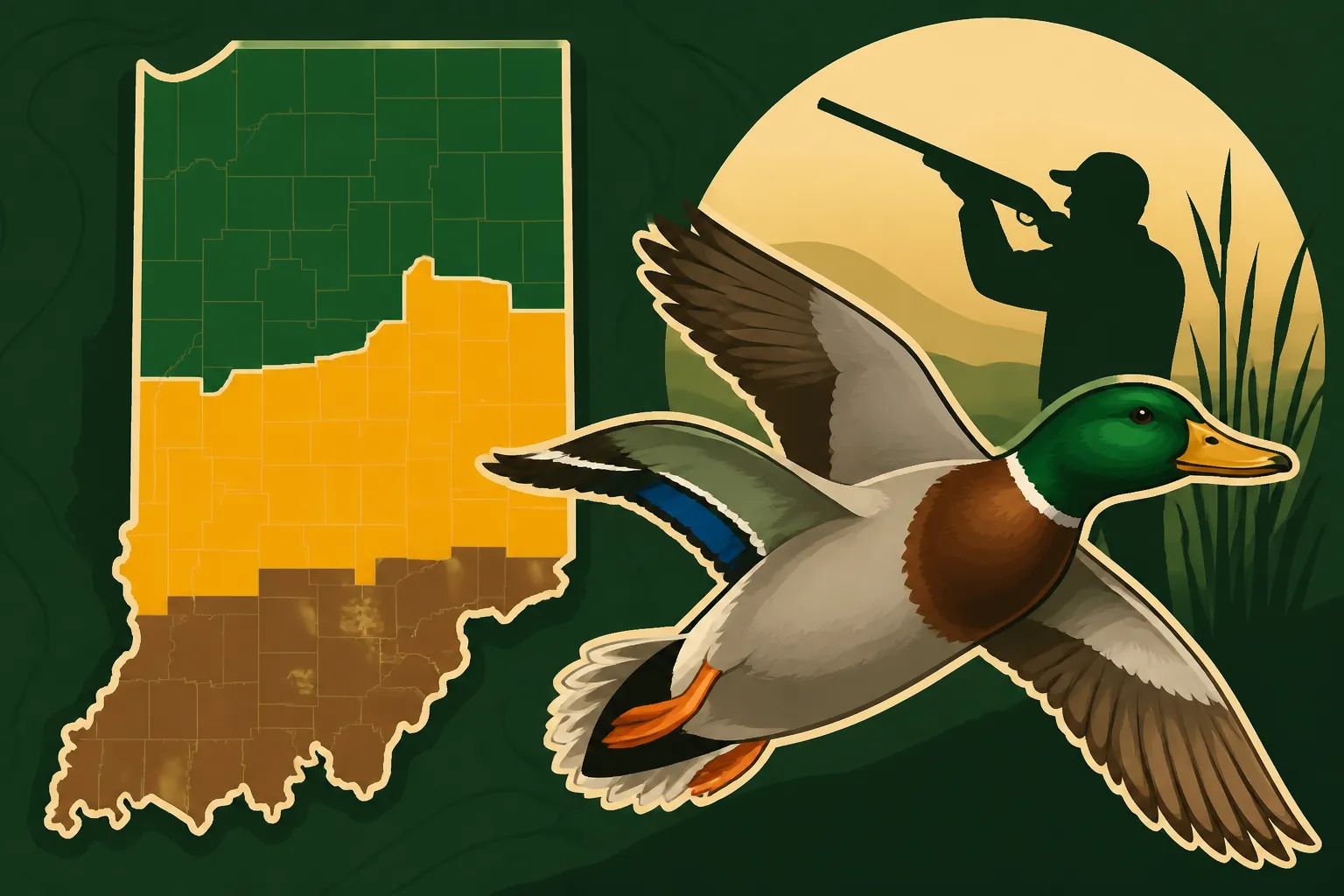
Now, let's get down to brass tacks: where exactly are these zones? Indiana is divided into three primary duck hunting zones: the North Zone, the Central Zone, and the Ohio River Zone. While these might sound straightforward, the specific lines drawn on a map can sometimes be a bit tricky to remember.
The North Zone Defined
The North Zone covers the northernmost counties of Indiana. Its southern boundary is generally defined by specific US Highways and State Roads. As of current regulations, the North Zone is delineated by a line extending east from the Illinois state line along U.S. 24 to Huntington, then southeast along U.S. 224 to Markle, then south along Ind. 3 to the interchange with I-69, then northeast along I-69 to the Ohio state line.
Essentially, if you're hunting in counties like Newton, Jasper, Starke, Pulaski, Fulton, Kosciusko, Whitley, Allen, Noble, DeKalb, Steuben, LaGrange, Elkhart, St. Joseph, Marshall, Porter, LaPorte, or Lake County, you are almost certainly in the North Zone. This zone typically has the earliest season opener, as it's the first to receive the migratory push of ducks from Canada and the northern states. Hunters often focus on the larger marshes and agricultural areas in this region, such as those near the Kankakee River. If you're planning a trip to the Kankakee River Marshes, you'll be operating under North Zone regulations.
The Central Zone Defined
The Central Zone sits directly south of the North Zone, acting as a crucial transition area. Its northern boundary is the southern boundary of the North Zone, as described above. Its southern boundary follows US Highway 50 from the Illinois state line to Seymour, then south along US 31 to its intersection with I-65, then south along I-65 to its intersection with US 50 again near Seymour, and then east along US 50 to the Ohio state line.
Counties such as Benton, White, Carroll, Cass, Miami, Wabash, Huntington, Wells, Adams, Warren, Tippecanoe, Clinton, Howard, Grant, Blackford, Jay, Fountain, Montgomery, Boone, Hamilton, Madison, Delaware, Randolph, Vermillion, Parke, Putnam, Hendricks, Marion, Hancock, Henry, Wayne, Vigo, Clay, Owen, Morgan, Johnson, Shelby, Rush, Fayette, Union, Sullivan, Greene, Monroe, Brown, Bartholomew, Decatur, Franklin, Knox, Daviess, Martin, Lawrence, Jackson, and Jennings fall predominantly within this zone. This zone experiences migration slightly later than the North Zone, offering a prolonged season that captures birds as they move further south. Many productive hunting grounds exist in the Central Zone, from large reservoirs to river bottoms and flooded timber.
The Ohio River Zone Defined
The southernmost part of Indiana is designated as the Ohio River Zone. This zone's northern boundary is the southern boundary of the Central Zone (US 50 from the Illinois state line to Seymour, then US 31 to I-65, then I-65 to US 50 near Seymour, then US 50 to the Ohio state line). Its southern boundary is, as the name suggests, the Ohio River.
This zone includes counties like Gibson, Pike, Dubois, Orange, Washington, Scott, Jefferson, Switzerland, Dearborn, Posey, Vanderburgh, Warrick, Spencer, Perry, Crawford, Harrison, Floyd, and Clark. The Ohio River Zone typically has the latest season dates, accounting for the final push of migratory birds that often winter in the southern states. Waterfowlers in this region often target the Ohio River itself, its numerous backwater sloughs, and surrounding agricultural areas that attract late-season ducks and geese. The focus here is often on bigger rivers and deep-water refuges.
To help visualize this, here's a table summarizing the zones and their general characteristics:
| Duck Zone | General Location | Southern Boundary (North/Central) / Northern Boundary (Central/Ohio) | Typical Season Timing | Key Habitats |
|---|---|---|---|---|
| North Zone | Northern Indiana Counties | US 24, US 224, IN 3, I-69 to Ohio state line | Earliest opener, generally finishes first | Kankakee Marshes, northern lakes, agricultural fields |
| Central Zone | Central Indiana Counties | North Boundary: South of North Zone; South Boundary: US 50, US 31, I-65 | Mid-range opener, typically runs through late season | Reservoirs, river bottoms, flooded timber, farm ponds |
| Ohio River Zone | Southern Indiana Counties along the Ohio River | North Boundary: South of Central Zone; South Boundary: Ohio River | Latest opener, often extends longest into winter | Ohio River, backwater sloughs, southern agricultural lands |
Remember, these boundary descriptions are based on general information, and regulations can be updated. Always cross-reference with the most current Indiana DNR hunting guide for exact details before heading afield.
Navigating Season Dates and Bag Limits by Zone
Understanding the zone boundaries is just the first step. The real impact on your hunting strategy comes from the specific season dates and bag limits that apply to each zone. These can vary significantly, requiring diligent attention to the annual regulations.
Typical Season Openers and Closers
Generally, the North Zone will have the earliest duck season opener. This allows hunters to target the first waves of ducks moving south as early as late September or early October. The Central Zone follows, usually opening a week or two later than the North Zone, which still provides opportunities to hunt early migrants while also being positioned for later flights. Finally, the Ohio River Zone typically has the latest opener, often not kicking off until late October or early November. This staggered approach ensures that hunters in each region can experience the peak of their local migration without over-harvesting birds before they've settled in.
For example, a hunter pursuing Mallards and geese on Kankakee Marshes in the North Zone might see their season close well before the peak migration hits the White River Bottomland in the Central Zone or the main channel of the Ohio River in the Ohio River Zone. Conversely, the Ohio River Zone often allows for some of the latest hunting opportunities, stretching into the colder winter months when ducks are concentrated on larger bodies of open water. This means if you have multiple hunting locations, you might find yourself switching zones throughout the season to follow the birds or extend your hunting window. Checking the specific dates for each zone is non-negotiable every year, as they are often adjusted by the DNR.
Daily Bag and Possession Limits
While the overall federal framework for duck bag limits is fairly consistent, state-specific zones can sometimes have slight adjustments, particularly for certain species. For instance, the number of canvasbacks, pintails, or mallard hens allowed in your daily bag might be consistent across Indiana's zones, but it's still crucial to confirm this. The bigger impact of zones on limits often comes in conjunction with season length. If a particular zone has a shorter overall season, it might be balanced with a slightly more generous approach to certain species, though this is less common for ducks than for other migratory birds.
The most important thing for hunters to remember is that the season structure directly influences the available days to hunt and thus the potential cumulative harvest. Even with uniform daily bag limits, a longer season in one zone means more days to fill those limits. This is why many hunters, if they have the means, will hunt across multiple zones to maximize their time afield and experience different phases of the migration. You'll need to be particularly mindful of the Indiana Duck and Goose Bag Limits, which are published annually. When considering the best Optics for Southern Indiana Ridges, remember those binoculars can also be great for spotting ducks on the water from a distance, extending their utility beyond just deer hunting.
Essential Tools and Best Practices for Zone-Aware Waterfowlers
Navigating Indiana's duck zones effectively requires more than just knowing where the lines are drawn. It demands proactive planning and utilizing the right resources to stay informed and compliant.
Utilizing Digital Mapping and Regulatory Resources
In today's age, there's no excuse for not knowing your exact location relative to a zone boundary. Smartphone apps and online mapping tools have revolutionized how hunters access information. The Indiana DNR website is your absolute first stop for official, up-to-date regulations, including precise zone descriptions and current season dates. They often provide downloadable PDFs of the hunting guide, which you should have on your phone or in print.
Beyond the official DNR resources, many hunters find third-party apps incredibly valuable. Platforms like GoHunt offer detailed satellite imagery layered with property boundaries, public land designations, and crucially, often include hunting zone overlays. This means you can pinpoint your exact location with GPS and see which duck zone you're standing in, eliminating any guesswork. This is especially useful if you're hunting near a zone boundary, where a matter of a few hundred yards could mean the difference between being in or out of season. Using such a tool for scouting Indiana Public Land Before Season can also help you visualize where the zone lines fall relative to potential hunting spots.
Scouting with Zone Regulations in Mind
Effective scouting goes beyond just finding birds; it involves understanding how the zone regulations will impact your ability to hunt them. When scouting a new area or even a familiar one, consider which zone it falls into. Does this location typically hold early-season birds, or is it better for a late-season push? For example, if you're scouting potential spots for Wood Ducks in Indiana River Bottoms, knowing the Central Zone's season dates will inform whether those birds will still be present or if they'll have moved further south by the time the season opens.
Pay attention to cold fronts and migration forecasts, too. These weather patterns are the primary drivers of duck movement, and understanding them in conjunction with zone dates can give you a significant edge. A strong cold front pushing through the North Zone might signal a good opportunity to hunt the Central Zone a few days later. When you're planning your Treestand Setups in Hoosier National Forest, remember that while you're focused on deer, the same forest can also hold prime duck habitat in its lower elevations and along watercourses, though subject to the appropriate zone regulations for ducks. For those considering hunting, understanding the rules around blaze orange is also critical, especially if you're hunting during an overlap with deer season. Indiana Blaze Orange Requirements are clearly outlined in the state's hunting guide.
Adapting Hunting Strategies to Zone Timings
The different season timings across zones also necessitate adapting your hunting strategies. Early season hunting in the North Zone, for example, might involve smaller decoy spreads and targeting local birds or early migrators that are less wary. As the season progresses into the Central and Ohio River Zones, ducks will have faced more hunting pressure, potentially requiring larger, more elaborate decoy spreads, more realistic calling, and greater attention to concealment.
For hunters who travel between zones, this means having versatile gear and a flexible mindset. A layout blind setup that works perfectly for Layout Blind Hunting Indiana Farm Fields in the Central Zone might not be ideal for a deep marsh hunt in the North Zone if the water levels are high. Similarly, the Clothing for an Indiana Late Season needs to be warm enough for the deep winter conditions often found in the Ohio River Zone, compared to the milder temperatures of an early North Zone opener. Always double-check your gear and tactics against the expected conditions for the specific zone and time of year you plan to hunt.
Disclaimer
Please note that hunting regulations, season dates, and zone boundaries are subject to change annually by the Indiana Department of Natural Resources (DNR). While this guide provides general and accurate information, it is absolutely critical for all hunters to consult the most current official Indiana Hunting & Trapping Guide published by the Indiana DNR before participating in any hunting activity. This guide is for informational purposes only and should not be considered a substitute for official state regulations.