Indiana Property Access Permit Requirement
It's incredibly frustrating when you're trying to do everything by the book, but the rules for accessing hunting land in Indiana can feel like a tangled mess. One minute you're hearing about needing a "property access permit," and the next you're wondering if that even applies to where you want to hunt. This guide is here to untangle that confusion, explaining exactly what's required to legally access both public and private hunting grounds across our great state.
Understanding Indiana's Varied Land Access Rules
Indiana offers a fantastic array of hunting opportunities, from the dense hardwoods of the Hoosier National Forest to the sprawling wetlands of our Fish and Wildlife Areas (FWAs) and the vast private farmlands. However, each type of land comes with its own set of rules for access, and what one person calls a "property access permit" might actually be a different procedure depending on where you are. The biggest point of confusion often stems from not realizing that there isn't one single, universal "Indiana Property Access Permit" that covers all scenarios. Instead, it's about understanding the specific requirements for the land you intend to hunt.
The "Permit" for Indiana Fish and Wildlife Areas (FWAs)
When most Hoosier hunters talk about an "access permit," they're often referring to the mandatory check-in/check-out system at Indiana's Fish and Wildlife Areas. These state-managed properties, like Glendale FWA down south or Winamac FWA up north, are designed for public recreation, including hunting, but they operate under a specific management plan that requires tracking hunter activity.
This check-in process serves several important purposes for the Indiana Department of Natural Resources (DNR). It allows them to collect valuable data on hunter numbers, harvest success rates, and species presence, which is crucial for making informed wildlife management decisions. It also helps manage hunting pressure, ensuring a quality experience for everyone and helping to prevent overcrowding. Furthermore, in areas designated for Chronic Wasting Disease (CWD) surveillance, this system can be vital for collecting samples and monitoring herd health. So, while it feels like a permit, it's more of a mandatory reporting and management tool.
Failing to properly check in and out of an FWA can lead to fines or other penalties, because it directly impacts the DNR's ability to manage these critical resources effectively. It's not just a formality; it's a fundamental part of responsible public land use here in Indiana. Think of it as your contribution to keeping these areas healthy and accessible for generations to come.
State Forests and Hoosier National Forest Access
In stark contrast to FWAs, the vast stretches of Indiana State Forests and the federal Hoosier National Forest generally do not require a separate "property access permit" beyond your standard hunting license. If you've got your valid Indiana hunting license and any necessary stamps (like a deer or turkey tag), you're typically good to go for hunting these lands. This distinction often catches new hunters, or those accustomed to FWA rules, by surprise.
These expansive timberlands operate under a different philosophy. While they welcome hunters, the focus is less on daily individual tracking and more on overall resource management. You won't find check-in stations or a mandatory digital sign-in for these areas. However, this doesn't mean there are no rules. You still need to adhere to all state hunting regulations, understand specific rules regarding vehicle access on forest roads, and be mindful of other users like hikers and campers.
For example, when exploring areas like Yellowwood State Forest or the sprawling lands of the Hoosier National Forest, you'll find that while direct access for hunting is relatively open, there are specific guidelines about things like dispersed camping, motorized vehicle use, and even where you can place a treestand. Always check the DNR website or the US Forest Service website for specific property rules, especially if you plan an overnight trip or are bringing an ATV. Knowing the rules about Treestand Setups in Hoosier National Forest can save you a headache later on.
How to Fulfill Indiana's Access Requirements Digitally
Navigating the various access requirements doesn't have to be a guessing game. In our modern world, the Indiana DNR has made it much easier to stay compliant, especially for those highly managed Fish and Wildlife Areas. The key is to embrace the digital tools available and always plan your trip with access in mind. Don't wait until you're at the property line to figure things out; a little pre-season homework goes a long way.
Utilizing the Go Outdoors Indiana System
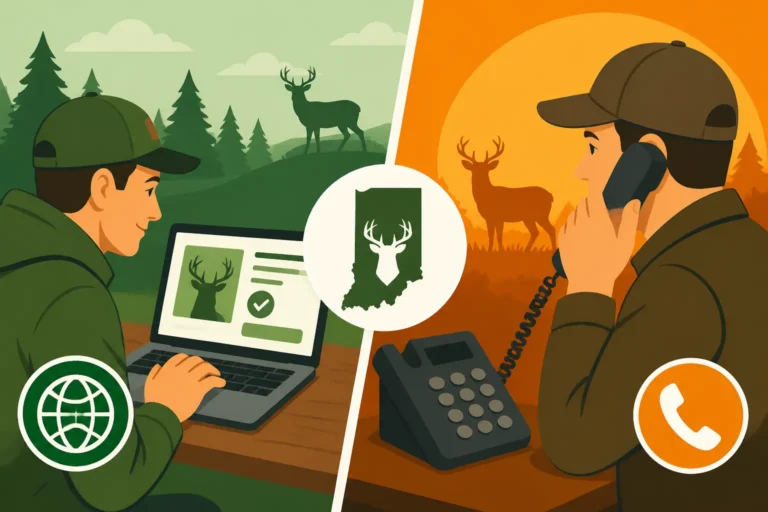
For hunting on Indiana Fish and Wildlife Areas, the "Go Outdoors Indiana" system is your best friend. This is the official platform for buying your hunting licenses, obtaining tags, and crucially, completing your FWA check-in and check-out. You can access it via their website or through the Go Outdoors Indiana mobile app, which is incredibly convenient when you're already in the field.
The process is straightforward: Before you head afield on an FWA, you'll need to log in, select the property you'll be hunting, and indicate what species you're targeting. The system will prompt you for details like your license number. This digital record serves as your "property access permit" for that specific FWA on that specific day. It's a quick process that ensures the DNR has the necessary data to manage wildlife populations and hunting pressure effectively. And remember, the check-out is just as important. Whether you harvest something or not, you must check out to complete the loop, reporting your effort and any harvest. For folks who use mapping and scouting apps like GoHunt, it's still crucial to use the official Go Outdoors Indiana system for the actual check-in process. While GoHunt can help you find property boundaries and scout potential spots, it doesn't replace the official DNR check-in.
Understanding Specific Area Regulations
Beyond the general FWA check-in, some public hunting areas in Indiana have even more specific regulations or require special draw hunts. You can't just assume that if it's public land, the rules are uniform. For instance, properties like Big Oaks National Wildlife Refuge or Muscatatuck National Wildlife Refuge often have quota hunts or unique application periods that you need to be aware of well in advance. These are not covered by the general FWA check-in and require separate applications or permits.
Always, always double-check the specific rules for the exact property you intend to hunt. The DNR's website is a treasure trove of information, with dedicated pages for each FWA, State Forest, and even specific sections on federal lands. Many properties also have physical kiosks with posted rules and regulations at their main entrances. Don't rely on hearsay; confirm the current rules yourself. For instance, if you're planning on Hunting the Kankakee River Marshes, you'll find very distinct rules regarding waterfowl blinds and specific hunting units that differ greatly from deer hunting in a State Forest. Tools like GoHunt can be invaluable here, too, providing overlays that show specific unit boundaries or special regulation zones on a map, helping you verify that you're in the right place and following the right rules.
Here's a quick overview of common public land types and their general access requirements in Indiana:
| Public Land Type | Primary Access Requirement | Digital Check-in/Check-out? | Special Regulations Common? | Examples |
|---|---|---|---|---|
| Fish & Wildlife Areas | Valid hunting license + Mandatory Check-in/out | Yes (Go Outdoors Indiana App/Website) | Yes (e.g., specific hunt units, daily draws) | Winamac FWA, Glendale FWA, Atterbury FWA |
| State Forests | Valid hunting license | No | Yes (e.g., vehicle access, camping, treestands) | Yellowwood State Forest, Morgan-Monroe State Forest |
| Hoosier National Forest | Valid hunting license | No | Yes (e.g., vehicle access, dispersed camping) | Charles C. Deam Wilderness Area, Hardin Ridge |
| National Wildlife Refuges | Valid hunting license + Special Permit/Draw | Varies by Refuge | Very common (e.g., quota hunts, limited seasons) | Big Oaks NWR, Muscatatuck NWR |
| State Parks | Valid hunting license + Special Quota Hunt | Yes (Special Application Process) | Yes (Highly restricted, lottery based) | Turkey Run State Park (for specific hunts only) |
Navigating Private Land Access in Indiana
While public lands have their own specific rules, a significant portion of Indiana's hunting opportunities lie on private property. The rules for accessing these lands are fundamentally different and revolve entirely around permission. This is where the concept of a "property access permit" truly transforms into something much simpler yet equally critical: the direct consent of the landowner.
Obtaining Permission: The Golden Rule
For any private land in Indiana, whether it's a sprawling farm in northern Indiana or a small woodlot in the southern hills, the golden rule is you must obtain explicit permission from the landowner before stepping foot on their property for hunting purposes. There's no state-issued "permit" for private land; your "permit" is the landowner's verbal or, preferably, written consent. This is a fundamental aspect of responsible and legal hunting.
Approaching landowners respectfully, clearly stating your intentions, and offering to help out around the property in exchange for access can go a long way. Many landowners appreciate hunters who are willing to manage deer populations that might be impacting their crops. A great place to start is to research properties using mapping tools, including the public land layers found in apps like GoHunt or OnX, to identify private parcels adjacent to areas you're interested in, and then use county GIS records to find landowner contact information. Remember, simply knowing who owns the land isn't permission; it's just the first step. When considering Getting Private Land Permission in Indiana, it's always best practice to get permission in writing, especially if you plan to hunt multiple times or throughout a season. This eliminates any potential misunderstandings and provides a clear record for both parties.
Retrieving Game and Posted Land
Indiana's trespass laws are clear: you cannot enter private property without permission. This holds true even if you're tracking a wounded deer. If a deer you've shot crosses onto private land, you still need to obtain the landowner's permission before pursuing it. Entering without permission, even with the best intentions of retrieving game, is trespassing and can lead to legal consequences. It's a tough pill to swallow, but it's the law, and respecting property rights is paramount.
The concept of "posted" land is also important. While all private land technically requires permission to hunt, land that is clearly marked with "No Trespassing" signs or purple paint on trees leaves absolutely no room for ambiguity. Hunting on posted land without express permission is a direct violation of Indiana Trespass and Permission Law and can result in severe penalties. Even on unposted land, the expectation is that you have obtained permission. Never assume that just because a property isn't posted, it's open season. Always secure permission first. For comprehensive scouting, understanding property boundaries and ownership can be greatly aided by tools like GoHunt, allowing you to clearly see private vs. public land lines and identify potential landowners to contact for permission.
Disclaimer
The information provided in this guide is for general informational purposes only and does not constitute legal advice. Hunting regulations and property access rules in Indiana can change, and specific interpretations may vary. It is the responsibility of every hunter to consult the most current Indiana Department of Natural Resources regulations and local ordinances before engaging in any hunting activities. Always verify specific property access requirements with the appropriate authorities or landowners.