Public Ground Near Lafayette
Trying to find quality public hunting land when you're situated near a bustling area like Lafayette, Indiana, can feel like searching for a needle in a haystack. Unlike the vast, rolling hills of southern Indiana's Hoosier National Forest, central Indiana tends to be a mosaic of agriculture and smaller, often fragmented woodlots. This guide is here to help you navigate those challenges, uncover hidden gems, and develop effective strategies for hunting the public ground available near Lafayette.
The Unique Realities of Hunting Central Indiana Public Land
Hunting near Lafayette isn't like heading into a massive wilderness area. The landscape here is characterized by extensive agricultural fields, interspersed with smaller timber blocks, creek drainages, and river bottoms. This creates a different set of opportunities and challenges compared to the sprawling public lands found elsewhere in the state. You're often dealing with more defined boundaries, closer proximity to roads and towns, and a higher likelihood of encountering other hunters. It requires a slightly different mindset and approach, but success is absolutely possible for those willing to put in the effort.
Navigating Farmland and Fragmented Woods
Much of central Indiana is dominated by corn and soybean fields, which means deer and other game often rely on the remaining pockets of timber for cover and bedding. Public hunting opportunities in this region are frequently tied to these smaller, often linear, woodlots or floodplains along waterways. These areas might seem small on a map, but they can be incredibly productive if you understand how game uses them. Deer, for instance, will often stage in these woodlots before entering fields at dusk or bed down in dense cover during the day, using the cover of ditches and fencerows to travel undetected. Understanding these travel patterns is key to finding success when Hunting Northern Indiana Farmland Deer.
The fragmented nature also means that game animals often move between public and private land. This can be both a blessing and a curse. A blessing because private land agriculture often provides excellent food sources that draw deer, and those deer will use connecting public timber for security. A curse because if the private land is heavily hunted or has less cover, the deer might be pushed onto public parcels, increasing the pressure there. It's a constant dynamic, and being aware of the surrounding land use is a huge part of your scouting.
Don't overlook the potential of linear features like old railroad beds, overgrown fencerows that haven't been cleared, or powerline cuts, especially if they connect larger blocks of timber. These corridors act as natural travel routes for deer and small game, providing both cover and efficient pathways between bedding and feeding areas. While they might not be designated "public hunting land" in the traditional sense, understanding how animals use these features, even on adjacent private ground, can inform your strategy for nearby public parcels.
Increased Pressure and Limited Acreage
Let's be realistic: public land near any population center in Indiana is going to see more hunting pressure. Lafayette is no exception. When there are fewer acres available, more hunters tend to concentrate on those spots. This means you might find more boot tracks, treestands already hung, and vehicle traffic, especially on opening days and weekends. It can be frustrating to walk into a spot you scouted only to find someone else already there.
However, this doesn't mean these areas are "hunted out." It simply means you need to be smarter, more patient, and often willing to work a little harder than the next hunter. Many hunters stick to easily accessible areas close to parking lots or main trails. By venturing a bit further, finding overlooked pockets of cover, or hunting during less popular times, you can often escape the crowds and find undisturbed game. It's about finding that "hidden" part of an otherwise well-known area.
The limited acreage also means that deer can be more nocturnal and wary. They learn quickly where the pressure is coming from. This means your entry and exit routes become even more critical, as does minimizing your scent and movement. Consider hunting tight to bedding areas during the middle of the day if you know deer are using a specific thicket, rather than just focusing on field edges. The more you understand the local deer behavior in response to pressure, the better your chances.
Key Public Hunting Areas Within Reach of Lafayette
While Lafayette isn't surrounded by hundreds of thousands of acres of contiguous public hunting ground, there are options within a reasonable drive. Most of these will be state-managed properties, often Fish and Wildlife Areas (FWAs), designed to provide diverse habitat and recreational opportunities, including hunting. These areas are typically managed for a variety of game species, offering a chance for deer, small game, and sometimes waterfowl.
Local Fish and Wildlife Areas (FWAs)
The most prominent FWA relatively close to Lafayette is Deer Creek Fish and Wildlife Area, located primarily in Carroll County, a short drive northeast. This FWA offers a mix of timber, brush, wetland, and agricultural fields. It’s managed intensely for wildlife, providing food and cover throughout the year. Deer Creek is a fantastic option for deer, small game like rabbit and squirrel, and even offers some waterfowl opportunities, especially during migration periods along the creek itself. They often have designated parking areas and established trails, but don't be afraid to put some distance between yourself and the road. Deer Creek Fish and Wildlife Area can provide excellent hunting, but it does see pressure, particularly on weekends.
When planning a trip to an FWA, always check the Indiana Department of Natural Resources (DNR) website for specific regulations, as some areas may have special draw hunts, sign-in requirements, or unique rules regarding vehicle access or stand placement. Some FWAs might also have areas designated for specific activities like dog training or specific types of hunting, so familiarizing yourself with the property map is crucial. Understanding the annual management plans can also give you clues as to recent habitat improvements or controlled burns that might concentrate game.
Beyond Deer Creek, other FWAs like Tri-County FWA or Willow Slough FWA are a bit further out but offer different hunting experiences, particularly for waterfowl and upland birds if you're willing to make the drive. Tri-County is known for its wetland and marsh habitat, while Willow Slough has historically been a popular spot for pheasant releases. While not "near Lafayette" in the immediate sense, they are viable options for a day trip if you're targeting specific species.
River Bottoms and Creek Corridors
The Wabash River flows right past Lafayette, and its associated river bottomlands and tributaries offer some excellent public hunting opportunities. While large, contiguous blocks of public land directly on the river might be scarce, many smaller state-managed parcels, sometimes integrated into FWAs or other public access points, follow these waterways. These areas are ecological goldmines, providing diverse habitat from mature hardwoods to dense brush and wetlands. Deer, turkey, squirrels, rabbits, and a variety of waterfowl can all be found in these rich corridors. Hunting the Wabash River Bottoms requires careful scouting to identify public access points, as private land can checkerboard the area.
Beyond the main stem of the Wabash, smaller creeks like Wildcat Creek or Deer Creek (which feeds into the FWA) often have linear public access points, sometimes as simple as a DNR fishing access site or a small block of state-owned timber. These narrow strips of cover can be incredible travel corridors for deer moving between large agricultural fields. They offer natural funnels and pinch points that savvy hunters can exploit.
Hunting these river and creek bottoms requires a keen understanding of elevation changes and water levels. High water can push game to higher ground, concentrating them in specific areas, while dry periods allow access to areas normally too wet to hunt. Pay attention to changes in vegetation, as dense thickets often offer excellent bedding cover, while mature hardwoods provide food sources like acorns. These areas are often overlooked by hunters who prefer larger, more open tracts, making them prime targets for those willing to explore.
| Public Land Type | Primary Game Species | Typical Habitat | Average Pressure Level | Access Considerations |
|---|---|---|---|---|
| Fish & Wildlife Areas | Deer, Small Game, Waterfowl, Turkey, Pheasant | Diverse: Timber, Wetlands, Crop Fields, Brush | Moderate to High, especially on weekends | Designated parking, sign-in required, specific rules |
| River/Creek Bottoms | Deer, Small Game, Turkey, Waterfowl | Mature hardwoods, dense brush, wetlands | Moderate, can be lower in harder-to-reach spots | Often linear, mix of public/private, careful mapping needed |
| Small State Forest Blocks (if available) | Deer, Squirrel, Turkey | Mature hardwoods, mixed timber | Low to Moderate | Limited facilities, often require longer walks |
Strategies for Success on Lafayette-Area Public Ground
Finding the ground is only half the battle. To be successful on the smaller, often pressured public parcels around Lafayette, you need to employ smart strategies that differentiate you from other hunters. This often comes down to meticulous scouting, understanding animal behavior in pressured environments, and being adaptable.
Thorough Digital Scouting and Map Tools
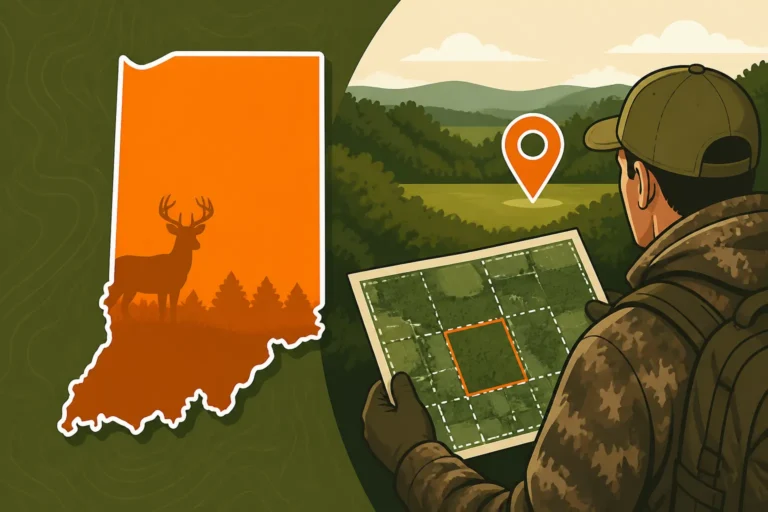
In an area with fragmented public land, digital scouting tools are your best friend. Services like onX Hunt and GoHunt are indispensable for identifying every acre of public access, understanding property boundaries, and pinpointing key habitat features. Start by layering public land designations over aerial imagery. Look for access points that aren't obvious, potential pinch points, secluded corners that might hold deer, or transitions between different types of cover. This helps you develop a game plan before you even step foot in the woods. Scouting With the Indiana DNR App is also a great resource for understanding specific property rules and boundaries.
Don't just look for green blocks on the map; zoom in. Identify subtle elevation changes, drainage ditches, dense thickets (often indicated by darker green or brushy textures), and old logging roads or trails that animals might use. Look for areas that require a bit of a walk, as these often see less pressure. By meticulously studying the topography and vegetation on your chosen app, you can often "see" deer movement patterns without ever leaving your couch. Use the public land layer to make sure you're always on legal ground, especially where public and private parcels are intertwined. onX Layers for Indiana Land Status can be a lifesaver in these situations.
Once you have a few potential spots identified digitally, make a physical scouting trip. Even during the off-season, you can confirm what you saw on the map, look for old sign like rubs and scrapes, identify potential bedding areas, and plan your exact entry and exit routes. This combination of digital and physical scouting gives you a significant advantage. Even if you're hunting small game like squirrels or rabbits, knowing where dense cover or mast-producing trees are located can make all the difference.
Early Season Pressure and Off-Peak Timing
As mentioned, public land near Lafayette can get busy, especially during the peak of deer season, like opening weekend of firearms season or the rut in early November. One of the best ways to combat this pressure is to hunt during off-peak times. Consider hunting weekdays instead of weekends, especially if you have a flexible schedule. You'll often find yourself with far more solitude and undisturbed animals. The middle of the week, particularly mid-morning or early afternoon, can be surprisingly productive as other hunters have gone home or are at work.
Another effective strategy is to hunt the fringes of the season. Early archery season in October can be great before the woods get really hammered. Likewise, the late season, especially in December and January, after firearms season has ended and many hunters have hung up their gear, can be excellent. Deer are often focused solely on food at this point, and if you can find their late-season food sources, you might have them all to yourself. Hunting the Late-Season January Lull can yield some incredible opportunities, even on small parcels.
Don't underestimate the impact of bad weather. A rainy, cold, or windy day will deter many hunters, leaving the woods quieter for those who are willing to brave the elements. While it might not be the most comfortable hunt, these conditions can often trigger increased animal movement and reduce human interference, making it a prime time to be in your stand or blind. Dress appropriately, bring some warm food or drink, and you might just have a successful hunt while others are watching from their warm homes.
Small Game and Opportunistic Hunting
While many hunters focus primarily on deer, don't overlook the abundance of small game species available on public land near Lafayette. Squirrels and rabbits are often plentiful in these fragmented woodlots and fencerows. Pursuing small game can be a fantastic way to enjoy the outdoors, hone your hunting skills, and put some delicious meat in the freezer, especially if deer hunting proves challenging. Plus, it gives you a great excuse to get out and learn a property's nuances without the intense pressure of deer season. Squirrel and Small Game Hunting in Indiana can be a very rewarding endeavor.
Coyotes are another excellent opportunistic target in central Indiana. They are present in good numbers and can be hunted year-round without a bag limit. Predator hunting can be a thrilling experience and helps manage local populations, which can benefit deer and turkey. Many public lands allow coyote hunting, often with different regulations than big game, so always check the specific FWA or state property rules. Calling coyotes on a quiet evening in a smaller woodlot near agricultural fields can be surprisingly effective.
By diversifying your hunting interests, you increase your chances of success and spend more time in the field. Sometimes, a casual squirrel hunt can turn into a valuable scouting mission, as you observe deer sign or learn new travel patterns in an area you hadn't considered for big game. Don't limit yourself to just one species; embrace the variety that Indiana's public lands offer, even in the more populated regions. Remember, the goal is to be out there, connect with nature, and appreciate the unique hunting opportunities that are indeed available, even close to home.
Disclaimer
This article is for general informational purposes only and does not constitute professional advice. Laws, prices and regulations vary by location and change over time. Consult a qualified professional for guidance on your specific situation.