Jackson-Washington State Forest Hunting
It can be incredibly daunting to scout and plan a hunt on large tracts of public land, especially when you're facing new terrain or just trying to maximize your limited hunting time. Jackson-Washington State Forest, with its sprawling hills and diverse habitat, offers fantastic opportunities but also presents challenges. This guide is here to help you unravel the secrets of hunting this incredible Indiana public land, covering everything from deer and turkey tactics to essential navigation tips and understanding the local regulations.
Discovering Jackson-Washington State Forest for Hunting
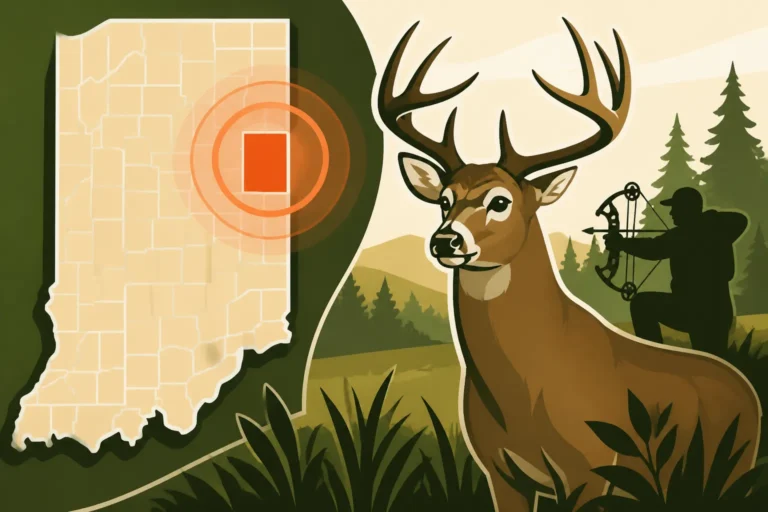
Jackson-Washington State Forest, tucked away in the heart of southern Indiana, is a true gem for public land hunters. Spanning over 18,000 acres across parts of Jackson and Washington counties, this forest offers a rugged, often steep, landscape that feels far removed from the flat agricultural fields found in other parts of the state. It's a place where you can truly immerse yourself in the hunt, feeling the crunch of leaves underfoot as you navigate deep hollows, climb steep ridges, and explore dense timber. The sheer size and varied habitat make it a prime location for deer, turkey, and a host of small game, but its topography demands a thoughtful approach and a good understanding of the land.
A Hunter's Introduction to the Terrain
When you first drive through Jackson-Washington State Forest, you're immediately struck by the rolling hills and dense deciduous woodlands. Unlike some state forests that might be fragmented, Jackson-Washington offers large, contiguous blocks of timber. This means deer and turkey have vast areas to roam, find food, and escape pressure. The forest is characterized by oak-hickory ridges, which are vital for mast production, particularly acorns, drawing in wildlife during the fall. Deep ravines and hollows, often holding small creeks or seepages, crisscross the landscape, creating natural travel corridors and bedding areas. You'll also encounter areas of pine plantation, remnants of past reforestation efforts, which provide thick thermal cover during colder months and offer unique challenges for hunters trying to navigate their dense rows. Understanding these different habitat types is crucial for patterning game throughout the various seasons.
The elevation changes here, while not mountainous, are significant enough to make a walk feel like a serious workout, especially if you're packing gear. These hills are not just obstacles; they dictate how deer move, where turkeys roost, and how you'll approach your hunt. Deer often use the contours to travel unobserved, moving along benches and secondary ridges. Turkeys will fly down into the hollows to feed and then work their way back up to roost on high points at dusk. This kind of terrain demands not just physical stamina but also a keen eye for subtle changes in topography that indicate prime ambush points or bedding areas. It's a fantastic place to practice Hunting Southern Indiana Ridges.
Understanding Public Access and Management
As an Indiana State Forest, Jackson-Washington is managed by the Indiana Department of Natural Resources (IDNR) for multiple uses, including timber production, recreation, and wildlife habitat. This means you'll see evidence of forest management, such as recent timber stand improvements or clear-cuts, which can actually be beneficial for hunting. Freshly regenerating areas, though thick and challenging to penetrate, often provide excellent browse and cover for deer, acting as magnets for wildlife seeking food and sanctuary. Old logging roads, while sometimes overgrown, can serve as excellent walking paths for hunters accessing remote areas, or even as linear features that deer will travel.
Access points are generally well-marked off county roads, but once you're inside, the road system can become a bit more primitive. Some roads are gravel and well-maintained, while others are dirt tracks that may require a high-clearance vehicle, especially after heavy rain. Always check the current regulations regarding vehicle access, as some roads are gated or seasonal. You'll want to review general guidelines for Indiana State Forest Hunting before heading out. The key is that this is your public land, and with a little effort, you can find quiet corners away from the crowds, even during peak seasons.
Deer Hunting Strategies in Jackson-Washington
Hunting deer in Jackson-Washington State Forest can be incredibly rewarding, but it's not always easy. The dense woods and steep terrain mean you're often working harder than hunters in flatter, more open country. However, this also means deer have fantastic security cover, and older, larger bucks can often be found here if you're willing to put in the legwork. Success often hinges on your ability to read the landscape, understand deer movement patterns, and adapt to the changing conditions of the forest.
Navigating the Topography for Whitetails
The deep ravines, steep slopes, and winding ridges of Jackson-Washington are both your greatest challenge and your biggest asset when hunting deer. Deer, being creatures of efficiency, will use the terrain to their advantage, often traveling along benches or subtle saddles between ridges rather than climbing straight up and down. These natural funnels are prime locations for setting up a stand or still-hunting. Learning to spot these subtle terrain features on a topographical map or an app like onX Hunt can give you a significant advantage. I always tell folks to study the map intensely before stepping foot in the woods; imagine where you'd walk if you were a deer trying to conserve energy.
Another critical aspect is understanding how thermals work in this hilly country. In the mornings, cold air sinks into the hollows, while warm air rises up the ridges. In the evenings, this reverses. This means your scent cone will travel differently depending on the time of day and your elevation. Hunting a morning stand on a ridge top means your scent might drop down into a hollow, while an evening hunt often benefits from sitting lower to catch deer moving up to feed as thermals rise. It's a constant chess match with the wind and the landscape. Pay close attention to these dynamics, and always have multiple stand locations in mind based on predicted wind and thermal conditions. You can get more pointers on this by researching Reading Aerial Photos for Southern Indiana Deer.
Late Season Food Sources and Thermal Cover
As the season progresses into late fall and early winter, food sources become more scattered and thermal cover becomes increasingly important for deer. The oak-hickory ridges that were so productive during the early season for acorns might be picked clean, forcing deer to seek out other options. Look for areas with persistent browse, such as honeysuckle or greenbrier, which can remain palatable even after hard frosts. Laurel thickets, often found on north-facing slopes, and scattered pine stands also offer critical thermal cover where deer will bed during cold snaps or snow. These thick, dense areas might not be where you hunt, but they tell you where the deer are likely spending their midday hours.
Late season hunting here often means focusing on the transition zones between these bedding areas and any remaining food sources, or along creek bottoms where a bit of green browse might still be available. Deer will move less during daylight in cold weather, making travel corridors and pinch points near heavy cover even more crucial. Don't be afraid to push into thicker cover than you might normally, especially if you're doing a quiet still-hunt on a cold, calm day. A good pair of boots and sturdy brush pants are your friends here!
Rut Hunting Tactics in the Forest
The rut in Jackson-Washington State Forest can be an exciting, albeit challenging, time. While deer densities might not be as high as in prime farmland areas, the presence of older bucks who have survived previous seasons makes it a quality hunt. During the peak of the rut, typically in early November, bucks will be covering significant ground in search of does. Focus your efforts on known travel corridors, saddles, and benches where deer are naturally funneled. Funnels where two or more ridges converge, or where a thicket narrows down to a small crossing point, can be exceptionally productive.
Vocalizations like rattling and grunting can be very effective, especially if you're hunting aggressive, mature bucks who are territorial. Try a short rattling sequence followed by a few grunts, then be prepared and stay still. These calls can carry a good distance in the open timber but might need to be louder if the terrain is particularly broken. Remember, patience is paramount during the rut. A buck might not come charging in, but he might circle downwind or approach cautiously. Knowing how to set up your stand properly, perhaps using a saddle hunting setup or a well-placed ladder stand, can give you the advantage you need. If you're using a climbing stand, make sure the trees are straight enough to safely use it; often, the mature timber in state forests can be quite gnarled. For more on this, check out Treestand Setups in Hoosier National Forest.
Chasing Gobblers and Small Game in the Hills
Jackson-Washington State Forest isn't just for deer. It also offers excellent opportunities for spring turkey hunting, and during the fall, it's a fantastic place to pursue squirrels and other small game. The varied habitat that supports a healthy deer herd also benefits these other species, making for a diverse hunting experience.
Spring Turkey Hunting Opportunities
Spring turkey hunting in Jackson-Washington is a true test of your woodsmanship. The steep terrain means you'll be doing a lot of walking, climbing, and listening. Turkeys typically roost on the highest points of ridges, especially those with mature trees that offer clear fly-down paths. Your early morning strategy should involve locating roosted birds before dawn and then positioning yourself to intercept them as they fly down to the hollows or secondary ridges to feed. This often requires getting deep into the woods well before first light.
Calling strategies need to be dynamic. In the open timber of the ridge tops, your calls will carry a good distance, but in the deep hollows, they can get muffled. Focus on soft, realistic calls to draw a gobbler in close. If a bird is henned up, sometimes the best strategy is to be patient and wait for him to break away, or try a "run-and-gun" approach, moving to different calling positions to see if you can spark a response. Remember, Indiana's spring turkey season allows you to bag one gobbler or bearded hen. After your first bird, you can buy a second tag, but filling two can be a challenge on public land. Learn more about effective tactics by reading Run-and-Gun Turkey Tactics on Public Land.
Squirrel and Other Small Game Pursuits
For many, squirrel hunting in a state forest like Jackson-Washington is a cherished tradition, a perfect way to introduce new hunters to the woods, or simply to enjoy a day afield without the intensity of deer or turkey season. The abundant oak and hickory trees across the forest floor make it prime squirrel habitat. Early in the season, you'll find squirrels actively feeding on mast, often betraying their presence with the tell-tale sound of cutting nuts or chattering. Focus on stands of mature hardwoods, especially along creek bottoms where the best mast crops tend to fall. These areas often have higher squirrel densities and offer easier walking.
Beyond squirrels, you might also find opportunities for rabbit hunting, particularly along the edges of clear-cuts or in brushy areas where early successional growth provides cover. These areas can be thick, making for challenging but exciting hunting. With a good pair of beagles or a quiet walk, you can often flush cottontails from their hiding spots. Remember to check the specific small game seasons and regulations before heading out, as they vary by species. This forest provides a fantastic environment for Squirrel Hunting Indiana Bottomland Hardwoods.
Essential Tools and Considerations for Your Hunt
Hunting Jackson-Washington State Forest demands preparation. The rugged terrain and large scale of the forest mean that good navigation tools, adherence to regulations, and a solid plan for backcountry safety are not just suggestions – they're necessities.
Mapping and Navigation for Success
Modern mapping apps have truly revolutionized public land hunting, and nowhere is that more evident than in a place like Jackson-Washington State Forest. Gone are the days of relying solely on paper maps (though a paper map and compass are still excellent backups!). Apps like onX Hunt are invaluable for navigating these sprawling woods. They allow you to:
- View Property Boundaries: Instantly see where the state forest ends and private land begins, preventing accidental trespassing.
- Layer Topographical Data: Identify subtle benches, saddles, and funnels that are invisible at ground level.
- Mark Waypoints: Drop pins for stand locations, bedding areas, rubs, scrapes, or where you parked your truck.
- Track Your Movement: See exactly where you've been, making it easier to retrace your steps or understand how you covered ground.
- Offline Maps: Crucial in areas with spotty cell service, which is common in deep hollows of the state forest.
Before you even leave your driveway, spend time digitally scouting the forest. Look for those hidden fingers of timber, the steep-sided ravines, and the benches along ridgelines. Identify potential entry and exit routes that minimize impact and put you in a good position with the wind. Another great tool for general state land information and potential hunt draws is GoHunt, though its primary focus might lean more towards western states, the principles of planning and research it promotes are universally applicable. Combining aerial imagery with topo lines helps paint a comprehensive picture of the terrain. Scouting Indiana Public Land Before Season is always a wise investment of your time.
Respecting Regulations and Fellow Hunters
Hunting on public land means sharing the resource, and a big part of that is respecting the rules and the experience of others. Always be intimately familiar with Indiana's hunting regulations, especially those specific to state forests. These can include rules about tree stands (e.g., no permanent stands, removal of stands at season's end, specific attachment methods), trail camera use, and camping. Blaze orange requirements are in effect during firearms seasons, even for archery hunters, so make sure you're compliant.
A general understanding of etiquette goes a long way. If you arrive at an access point and another vehicle is already parked in the spot you planned to hunt, consider finding another area. While you have every right to hunt, spreading out helps maintain a quality experience for everyone and reduces pressure on the deer herd. Avoid loud noises, excessive calling, or disturbing another hunter's setup. The goal is to enjoy the outdoors, and that includes being a good steward of both the land and the hunting community. For details on general public land guidelines, review Public Hunting Land in Indiana.
Here's a quick look at some general rules that often apply to State Forests, but always check current IDNR regulations for Jackson-Washington specifically:
| Category | Common Rule / Guideline | Details (Always Verify) |
|---|---|---|
| Tree Stands | Portable, non-damaging stands only. | Must be removed by specified date. No screws or nails into trees. Often requires identification tag with hunter info. |
| Trail Cameras | Permitted, but may require identification/tags. | Check specific forest rules; generally not allowed to damage trees or obstruct trails. |
| Vehicles | Restricted to designated roads. | Some roads may be seasonally closed or require high-clearance. No off-road vehicle use unless explicitly permitted. |
| Camping | Designated campgrounds or primitive backcountry camping. | May require permits/fees. Check rules for specific areas within Jackson-Washington, especially for primitive camping. |
| Blaze Orange | Mandatory during all firearms seasons. | Specific acreage requirements (e.g., 400 sq. inches visible 360 degrees) and color. Check current law, including blaze pink options. |
| Firearms Discharge | Minimum distances from roads, dwellings, or recreation areas. | Be aware of surrounding property lines and other users. |
Camping and Backcountry Considerations
For those who truly want to immerse themselves in the Jackson-Washington experience, or simply want to maximize their time afield, camping within or near the state forest is a fantastic option. Jackson-Washington offers developed campgrounds for those who prefer amenities, as well as designated primitive camping areas for a more rugged experience. Primitive camping, often allowed off designated forest roads, means you're carrying everything in and packing everything out, leaving no trace. This can be an excellent way to access more remote hunting areas, allowing you to be in place well before dawn without a long drive.
When backcountry camping for a hunt, keep a few things in mind:
- Water: You'll need to carry all your water or have a reliable filtration system for natural sources.
- Food: Plan calorie-dense meals that are easy to prepare.
- Gear: Lightweight, durable gear is key. A good sleeping bag, pad, and tent suitable for the expected temperatures are crucial.
- Safety: Tell someone where you're going and when you expect to return. Carry a first-aid kit, a headlamp, and means of communication (even if just a fully charged phone for emergencies).
- Leave No Trace: This is paramount on public land. Pack out everything you pack in, including food scraps.
Overnight stays allow you to hunt deeper, rest closer to your stands, and avoid the hustle and bustle of daily travel. This can significantly improve your chances of success and make for a much more enjoyable hunt. You can find more details about general rules in Camping Rules on Indiana State Forest Land. While the hunting can be challenging, the rewards of harvesting game from these beautiful, wild woods are unmatched. Don't be afraid to put in the work; Jackson-Washington State Forest truly embodies the spirit of public land hunting in Indiana.
Disclaimer
This article is for general informational purposes only and does not constitute professional advice. Laws, prices and regulations vary by location and change over time. Consult a qualified professional for guidance on your specific situation.