Clark State Forest Hunting
Venturing into a state forest like Clark State Forest for a hunting trip can feel like stepping into a vast, challenging unknown. It’s not your cozy private land with familiar deer trails and established blinds. Instead, you're faced with rugged terrain, varied timber, and the ever-present question of where to even begin. This guide is here to break down what makes Clark State Forest unique and how to approach hunting its expansive woodlands, offering practical advice to help you find success on public ground.
Understanding Clark State Forest's Unique Landscape
Clark State Forest, nestled in the southern Indiana hills, presents a distinctly different hunting experience than the flat farmlands up north. This isn't just a patch of woods; it's a sprawling, rugged landscape with its own rhythms and challenges. Understanding its topography and how the Indiana Department of Natural Resources (DNR) manages it is crucial for any hunter stepping foot on its ground.
Geographic Features and Habitat Diversity
Clark State Forest encompasses over 24,000 acres, making it one of the largest state forests in Indiana. The terrain is characterized by steep ridges, deep ravines, and winding creek bottoms that carve through the landscape. This varied topography creates a multitude of microhabitats, from mature oak-hickory stands on the ridgetops to dense brush and younger growth in the valleys and recent clear-cuts. Deer, turkeys, and small game utilize these diverse areas differently throughout the seasons, making careful scouting and observation key.
The forest management practices here also play a significant role. You'll encounter areas of selective timber harvesting, creating pockets of dense regeneration that provide excellent bedding cover and browse for deer. Other sections might feature older, more open timber, ideal for spotting distant turkeys or still-hunting quietly. Understanding the interplay between natural features and forest management helps you predict game movement. For example, a newly thinned area might concentrate browse, drawing deer in, while mature mast-producing oaks on a ridge could be a late-season magnet for a variety of game.
Rules and Regulations for State Forest Hunting
Hunting on Indiana State Forest land comes with its own set of guidelines, which can differ slightly from Fish and Wildlife Areas or Hoosier National Forest ground. It's not enough to just have your Indiana hunting license; you need to understand the specifics. For instance, portable treestands are generally permitted, but they must be clearly marked with your name and address, and often have a date by which they must be removed after the season. You're also typically not allowed to use screws or nails that damage the tree, which means screw-in steps are out. Ground blinds are also acceptable, but always ensure they don't impede public access or pose a hazard.
Vehicle access is usually restricted to designated roads and parking areas, meaning that once you park, you'll likely be hoofing it into your hunting spots. This is where physical conditioning and a good pack become your best friends. Always check the current Indiana DNR regulations for Clark State Forest before you head out, as rules can occasionally be updated. Knowing these nuances, such as what constitutes a legal treestand setup or where camping is allowed, can prevent a frustrating encounter with a conservation officer and keep your hunting trip on track. If you're wondering about the specifics, check out Indiana State Forest Hunting for a broader overview of state forest regulations.
Deer Hunting in Clark State Forest
Deer hunting in Clark State Forest is a quintessential southern Indiana experience. It's often physically demanding, but the rewards can be substantial for those willing to put in the effort. The deer here are wild, wary, and accustomed to navigating challenging terrain, making for an exciting hunt.
Strategies for Whitetails in Rugged Terrain
When you're hunting the steep hills and hollers of Clark, traditional flatland strategies often need an adjustment. Deer tend to use saddles, benches, and creek bottoms as travel corridors. Saddles, those dips in a ridge line, are natural funnels, especially during the rut when bucks are cruising for does. Benches, flat spots along a hillside, act as natural highways where deer can traverse the steep slopes with less effort. Targeting these features, particularly where they intersect with thicker cover or food sources, can be incredibly effective.
Furthermore, thermal currents play a massive role in these hilly environments. In the mornings, air tends to flow downhill, and in the evenings, it rises. Positioning yourself to take advantage of these thermals, staying downwind of where you expect deer to approach, is critical. A deer's nose is its primary defense, and a strong wind current carrying your scent downhill right into their path can blow your hunt before it even begins. Pay close attention to subtle shifts in the breeze as well, as those swirling winds in ravines can be tricky. Don't forget that using mapping tools like onX Hunt can help you identify these topographical features before you even step foot in the woods, allowing you to plan your routes and stand locations more effectively.
Scouting and Locating Deer Hotspots
Effective scouting is paramount in a vast public land like Clark State Forest. Instead of just wandering, focus on finding pinch points, bedding areas, and consistent food sources. Deer sign, such as rubs, scrapes, and droppings, will be your primary indicators. Look for concentrations of fresh sign, especially near cover transitions or natural funnels created by the terrain. Creek bottoms often have old logging roads or trails running through them, providing easy travel for deer and, consequently, good places to set up.
Pre-season scouting, even just hiking through in the summer or early fall, can reveal a wealth of information. Pay attention to mast crops like acorns and hickory nuts; a good mast year means deer will concentrate in those areas once the nuts start dropping. Scouting Indiana Public Land Before Season is an excellent resource for more in-depth tips. You might also consider using trail cameras, although always check the specific rules for camera placement on state forest land, as they can vary. Identifying these micro-environments where deer naturally feel safe and have access to food and water is how you start to piece together a successful hunt plan on such large acreage.
Turkey Hunting in Clark State Forest
Clark State Forest also offers excellent opportunities for wild turkey hunting. The rolling hills and mixed timber provide ideal habitat for these wary birds, challenging hunters with their keen eyesight and sharp hearing. Both spring and fall seasons can be productive, each requiring slightly different tactics.
Spring Gobbler Tactics
Spring turkey hunting in Clark is all about locating gobblers and then calling them in. The steep terrain can make this both exciting and frustrating. Turkeys will often roost on high ridges, and listening for gobblers at first light from an advantageous position can tell you where to focus your efforts. Once you've heard a bird, the challenge becomes getting into a good setup without being seen or heard, which is particularly difficult when you're navigating steep slopes covered in leaves.
Setting up with good cover behind you, ideally at the base of a large tree, is critical. Being slightly above the bird, or on the same contour, can sometimes be an advantage, as gobblers prefer to come downhill or walk across rather than climb. Don't be afraid to employ "run-and-gun" tactics if a bird isn't responsive, moving to a new location to try and strike another one or reposition on a reluctant gobbler. Patience, realistic calling, and precise setup are the keys to success in these woods. For more on this, check out Calling an Indiana Gobbler Off the Roost.
Fall Turkey Opportunities
While spring is all about the gobblers, fall turkey hunting often focuses on breaking up flocks and calling in individual birds, particularly hens or jakes. Clark State Forest's extensive timber stands provide plenty of forage, with mast crops being a major draw. Turkeys will spend their days scratching for acorns, hickory nuts, and other food items in the mature woods. Locating these feeding areas, often identified by scratched-up leaves and droppings, is a good starting point.
The strategy typically involves finding a flock, busting it up, and then setting up quickly to call individuals back together. Kee-kee runs and lost calls are very effective for fall birds. The denser undergrowth and younger timber in certain parts of Clark can also provide good cover for approaching flocks. Fall hunting also offers the unique challenge of potentially calling in birds that are a bit more spread out and less vocal than their spring counterparts. Understanding these differences can really boost your chances, especially if you're targeting birds during Hunting the Fall Archery Turkey Window or Hunting the Fall Firearms Turkey Counties.
Other Game Species in Clark State Forest
While deer and turkey often get the spotlight, Clark State Forest is a vibrant ecosystem supporting a variety of other game species, offering additional hunting opportunities for those who enjoy a diverse pursuit.
Small Game and Upland Bird Hunting
Clark State Forest is a fantastic place for small game hunters, particularly squirrels and rabbits. The abundant oak-hickory forests provide prime habitat for both fox and gray squirrels. Early season squirrel hunting, when leaves are still on the trees, requires a sharp eye and quiet movement. Later in the season, after leaf fall, squirrels are easier to spot, especially around den trees or active feeding areas. Look for concentrations of mast crops like acorns and hickory nuts, and you'll often find squirrels. Squirrel Hunting Indiana Hickory Groves has some great advice on locating these spots.
Rabbit hunting in the forest tends to be best in areas of dense brush, briar patches, and younger forest regeneration, often found in recent timber cuts or along the edges of fields adjacent to the forest. These thickets provide excellent cover for cottontails. A good beagle can be invaluable for pushing rabbits out of these dense areas, making for exciting, fast-paced action.
Coyote and Predator Hunting
Coyotes are prevalent in Clark State Forest, offering year-round hunting opportunities. These intelligent predators roam the entire landscape, from deep timber to the edges of clearings. Hunting coyotes here often involves calling, either distress calls that mimic a wounded rabbit or fawn, or territorial howls to elicit a response. The broken terrain can be a friend or foe; it can conceal your approach but also makes spotting distant coyotes challenging.
For successful predator hunting, understanding wind direction and setting up with a clear line of sight, preferably elevated, is crucial. Camouflage and remaining absolutely still are also key. Coyotes are incredibly wary, and the slight movement or flash can send them packing. Calling strategies might need to be adapted to the timbered environment, perhaps using lower volume calls or shorter sequences to avoid carrying your sound too far. Predator Calling Southern Indiana Ridgelines can provide specific tips for the hilly terrain.
Navigating Public Land Challenges
Hunting public land, especially a large state forest like Clark, comes with its own unique set of challenges. Understanding and preparing for these can make the difference between a frustrating trip and a successful one.
Managing Hunting Pressure
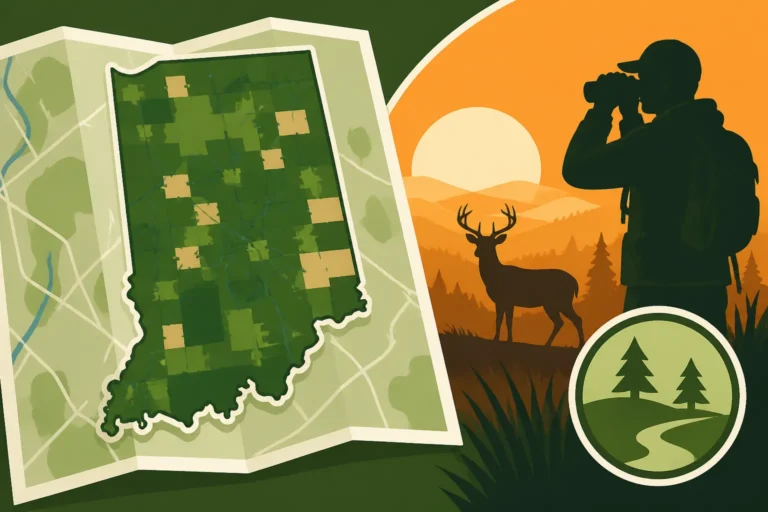
Clark State Forest, like many accessible public lands, can experience hunting pressure, particularly during opening weekends of popular seasons. However, the sheer size and ruggedness of the forest mean that hunters willing to walk further and penetrate deeper into the woods can often find unpressured areas. Most hunters will stick close to roads and easy access points. By utilizing topographical maps and aerial imagery, perhaps with a mapping app like GoHunt or onX Hunt, you can identify areas that are difficult to reach, whether by steep inclines, dense brush, or creek crossings.
These "walk-in-only" zones, sometimes a mile or more from the nearest road, are where you'll often find deer and turkeys that haven't been pushed around as much. Planning your entry and exit routes carefully to minimize disturbance is also crucial. Consider hunting during weekdays if possible, or later in the season when crowds typically thin out. Patience and persistence are vital; if your initial spot feels too crowded, don't be afraid to pack up and move to a more remote location. Finding Ground Others Walk Past is a key public land skill.
Access Points and Trail Systems
Clark State Forest has numerous designated parking areas and an extensive network of multi-use trails, including hiking, mountain biking, and horseback riding trails. While these trails can be convenient for accessing deeper parts of the forest, it’s important to remember they are shared spaces. Be aware of other users and always prioritize safety. Avoid setting up directly on or immediately adjacent to a heavily trafficked trail.
Learning to read the terrain and create your own routes off these main trails is often the secret to finding undisturbed hunting grounds. Sometimes, an old, overgrown logging road that isn't on a general trail map can provide a quiet entry point. Always be mindful of property boundaries, especially where the state forest borders private land. While apps like onX Hunt are incredibly useful for identifying these boundaries, always double-check with physical boundary markers if you're unsure.
Essential Gear and Scouting for Clark State Forest
Hunting in Clark State Forest is an endeavor that benefits greatly from careful preparation, both in terms of the gear you carry and the scouting you undertake. The terrain can be unforgiving, and being properly equipped can significantly enhance your safety and success.
Recommended Gear for Rough Terrain
Given the rugged, hilly nature of Clark State Forest, your gear choices need to reflect the environment. Good quality, sturdy hiking boots with excellent ankle support are non-negotiable. You'll be traversing steep slopes, slick creek beds, and uneven forest floors, so foot comfort and stability are paramount. Layered clothing is also essential, as morning temperatures in the ravines can be significantly cooler than midday highs on the ridgetops, and your exertion levels will vary. Breathable base layers and quiet outer shells are always a good choice. For warmth in late season, consider wool or quality synthetics that insulate even when wet. Clothing for an Indiana Late Season offers great advice on this.
Beyond clothing, a comfortable, well-fitting backpack is crucial for carrying your essentials: water, snacks, a first-aid kit, a headlamp, and any game processing tools. A reliable GPS unit or a smartphone with a robust mapping app (like onX Hunt or GoHunt) and downloaded offline maps is an absolute must. Cell service can be spotty or non-existent in many parts of the forest, so relying solely on streaming maps is a recipe for getting lost. A good pair of binoculars can also be invaluable for scanning distant ridges or identifying game in thick cover.
| Gear Item | Why It's Essential for Clark State Forest |
|---|---|
| Sturdy Hiking Boots | Excellent ankle support and traction for steep, uneven terrain. |
| Layered Clothing | Adapt to fluctuating temperatures and exertion levels in varied topography. |
| Comfortable Backpack | Carry essentials like water, food, first-aid, and extra layers for long treks. |
| GPS/Offline Mapping | Critical for navigation where cell service is unreliable; prevents getting lost. |
| Binoculars | Spot game on distant ridges, identify terrain features, and check for movement. |
| First-Aid Kit | Accidents happen; be prepared for cuts, sprains, or unexpected medical needs. |
| Headlamp | Navigate safely in the pre-dawn dark or after-dark recoveries. |
| Water Bottle/Filter | Stay hydrated during physically demanding hunts; access natural water sources. |
Post-Season and Pre-Season Scouting
The work doesn't stop when the season ends, especially for public land hunters. Post-season scouting, after the leaves have dropped and snow might be on the ground, can reveal an incredible amount of information. Fresh deer tracks in the snow can show travel patterns to late-season food sources like honeysuckle or standing corn on adjacent private land. You can find sheds, identify heavily used trails, and locate bedding areas that were too thick to see during the season. This is also a great time to check for Shed Hunting on Indiana Public Land opportunities.
Pre-season scouting in the summer and early fall allows you to assess mast crops, identify new growth areas from timber management, and pinpoint water sources. Look for distinct funnel points or transition areas, perhaps a narrow strip of timber connecting two larger blocks, or a fence line that deer consistently cross. This proactive approach, combining off-season observation with modern mapping tools, allows you to build a comprehensive understanding of Clark State Forest's game movements before you even carry a weapon into the woods. A thorough scout can transform a challenging public land hunt into a rewarding experience.
Disclaimer
This article is for general informational purposes only and does not constitute professional advice. Laws, prices and regulations vary by location and change over time. Consult a qualified professional for guidance on your specific situation.