Sleds and Drags for Farm Country
There's nothing quite like the rush of adrenaline when you make a good shot on a deer, especially in Indiana's sprawling farm country. But that rush often gives way to a grim reality when you finally walk up to your buck or doe: now you have to get it out. Dragging a deer across muddy cornfields, through thick soybean stubble, or over frosted winter wheat can be one of the most physically demanding parts of the hunt, often leaving you exhausted and sore. This guide is all about making that process easier on your back, your body, and your hunting partners, exploring the best sleds and drags for navigating the unique challenges of Indiana's agricultural landscapes.
The Brutal Reality of Dragging Deer in Indiana Farmland
Let's face it, hunting in farm country isn't always like those pristine wilderness scenes on TV. When a deer drops in a picked cornfield, a muddy bean field, or a wet hay pasture, you're not pulling it over smooth, soft ground. You're fighting suction, friction, and the sheer dead weight of the animal, often after a long sit in a cold stand or a brisk walk. It's tough work, and without the right tools, it can quickly turn a successful hunt into a miserable chore.
The Terrain: Mud, Rows, and Ditches
Indiana's farm country presents a very specific set of challenges for deer recovery. Picture this: you've just dropped a nice doe in a field that saw rain yesterday. The topsoil is a sticky, greasy mess that clings to everything. Every step is an effort, and now you have to contend with dragging a hundred-plus-pound animal through it.
If the field is picked corn, you're not just dragging over mud; you're also navigating old rows, often 30 inches apart, which act like miniature speed bumps. The stalks themselves, even when broken down, can catch and snag, making a smooth pull almost impossible. Then there are the ditches – those sneaky, grass-lined waterways that crisscross farm fields, often deeper and muddier than they appear. Trying to hoist a deer out of a wet ditch on your own is a recipe for a pulled muscle and a lot of frustration. Even a short drag from a field edge to your truck can feel like an eternity. This is especially true if you've been Hunting Northern Indiana Farmland Deer, where open fields dominate the landscape.
The Weight: When Adrenaline Fades
That post-shot adrenaline is a powerful thing, masking fatigue and making you feel like you can conquer anything. But it doesn't last forever. Once the excitement of the kill wears off and the reality of the task sets in, that 150-pound buck can feel like 300 pounds. Each pause for breath becomes longer, each pull more strained. Solo hunters know this pain particularly well; there's no one to tag-team with, no one to offer a helping hand when you hit that particularly boggy section.
The sheer mass of a deer, combined with its awkward shape and sometimes still-pliable joints, makes it incredibly difficult to get a good grip and maintain momentum. Its legs flop, its head drags, and its body creates maximum friction with the ground. This is precisely why having a dedicated tool to manage that weight and friction becomes absolutely essential. Without it, you might find yourself taking a lot more breaks than you'd like, potentially affecting meat quality if the weather is warm, or just adding hours to your recovery time when all you want to do is get back home.
Deer Sleds: Your Back-Saving Solution
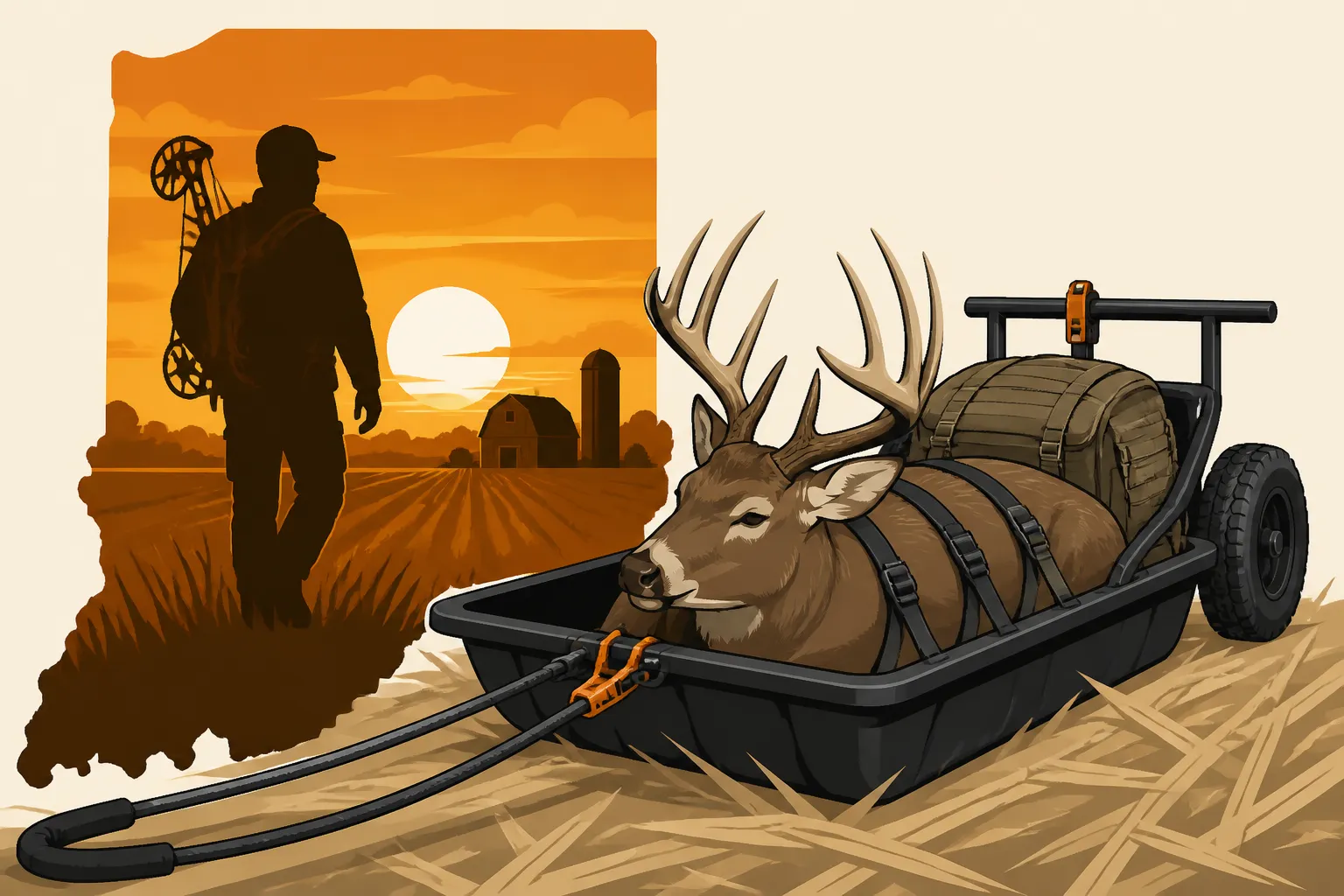
Deer sleds are, quite simply, a game-changer for anyone hunting in farm country. They act as a low-friction barrier between your deer and the ground, significantly reducing the effort required to move an animal. Think of them as a giant, durable plastic toboggan for your deer. They allow the animal to glide over obstacles rather than snagging on every corn stalk or muddy rut, preserving your energy for the rest of the season.
Different Types of Sleds and Their Features
When you start looking at deer sleds, you'll find there's a good variety out there, each with slightly different features designed for various hunting conditions. The most common type is a simple, heavy-duty plastic or polyethylene sheet, often shaped like a canoe or a flat-bottomed boat, with a raised front lip. These are incredibly durable and can withstand significant abuse from rocks, stumps, and frozen ground. Some are designed to be wider and shallower, perfect for spreading out the load and preventing tipping, especially if you're pulling a really big deer or perhaps even two smaller ones.
Look for sleds with reinforced tow ropes or pre-drilled holes for attaching your own sturdy rope or harness. Some even come with built-in grommets and tie-down straps to secure the deer, preventing it from sliding off during your drag. A key feature to consider is the thickness and flexibility of the plastic. A thicker, more rigid sled will hold its shape better and slide more consistently over varied terrain, while a thinner, more flexible one might be easier to roll up and carry into the field if you're covering a lot of ground before setting up your stand. The right sled can make all the difference, whether you're bringing a trophy buck out of a tough spot or simply making short work of a doe for the freezer.
When to Choose a Sled Over Other Options
A deer sled truly shines in specific situations, making it a superior choice compared to just a rope drag or even a game cart in many farm country scenarios. If you're dealing with thick, mucky mud, where a cart's wheels would just sink and spin, a sled distributes the weight over a much larger surface area, allowing it to glide. Similarly, in fields covered with dense stubble, like picked soybeans or cut silage corn, a sled lifts the deer over the jagged edges that would snag and tear at the hide if simply dragged. This also helps keep the animal cleaner, reducing the amount of dirt and debris that gets ingrained into the fur and, inevitably, the meat during the drag.
Sleds are also excellent for solo hunters. While a deer cart can be unwieldy to load alone, especially with a large animal, a sled allows you to simply roll or pull the deer onto its low-profile surface. Once secured, you can then manage the drag yourself with less physical strain. They're also indispensable for those long drags where you need to minimize friction as much as possible, or when you anticipate having to cross multiple ditches, fences, or other obstacles that would challenge wheeled transport. For navigating diverse agricultural landscapes, from open fields to timbered fence lines, a good sled is often the most practical and efficient solution for recovery.
Maximizing Sled Efficiency in Varied Conditions
Getting the most out of your deer sled means a little bit of technique and foresight. First, always secure your deer to the sled. Use straps, bungees, or even spare rope to make sure the deer stays centered and doesn't slide off, especially if you're navigating hills or uneven ground. You want the animal's weight distributed evenly to minimize drag.
When pulling, try to keep a consistent, low angle on your tow rope. Pulling too high can cause the front of the sled to dig into the ground, while too low might make it hard to steer. If you're encountering particularly sticky mud, a light application of cooking spray or silicone lubricant to the bottom of the sled can drastically reduce friction, making for a surprisingly easy pull. For frozen ground or patchy snow, a sled will glide with remarkable ease. If you're hunting in areas with varied terrain, like a patch of woods bordering a field, knowing where to switch from a sled to, say, a game cart is a strategic advantage. Before the season, I often use mapping tools, like the ones from GoHunt or the Scouting With the Indiana DNR App, to identify potential extraction routes, looking for the path of least resistance. This planning can save you a ton of effort when the moment of truth arrives.
Deer Drags and Harnesses: Simple Yet Effective
Sometimes, the simplest tools are the most effective. While sleds offer maximum efficiency, a good deer drag or harness is often all you need, especially for shorter distances, smaller deer, or when you want to minimize the amount of gear you carry into the field. These tools focus on giving you a better grip and leverage on the deer itself, transforming an awkward, back-breaking pull into a more manageable task.
Basic Rope Drags and Their Limitations
At its most fundamental, a deer drag is simply a sturdy rope. You can fashion a makeshift drag out of paracord, clothesline, or even a heavy-duty ratchet strap. The common method is to loop the rope around the deer's neck or antlers, giving you a handle to pull. This is certainly better than trying to grip the deer's legs or antlers directly, which can be slippery and uncomfortable, especially if the deer is still warm or muddy. Many hunters carry a short section of rope specifically for this purpose in their Packs for a Day on Public Land.
However, basic rope drags have their limitations. The rope can dig into your hands, making long drags painful. More significantly, it still allows the deer's full body to contact the ground, meaning you're contending with maximum friction. If you're pulling through thick brush, dense corn stubble, or deep mud, the deer will snag on everything, making progress slow and arduous. For a really heavy buck, a simple rope drag can quickly lead to exhaustion, especially if you're alone. It's a quick fix, but not always the most comfortable or efficient one for extensive farm country recovery.
Shoulder Harnesses and How They Help
This is where shoulder harnesses come into play, vastly improving on the basic rope drag. A good shoulder harness distributes the pulling force across your shoulders and back, rather than concentrating it solely in your hands. This immediately makes the drag more comfortable and allows you to engage your larger muscle groups, reducing strain on your arms and lower back. Many harnesses are designed with padded straps, similar to a backpack, which prevent chafing and discomfort over longer distances.
Some harnesses feature a Y-shaped design that clips onto the deer's antlers or neck, keeping the deer's head pointed forward and somewhat elevated, which can reduce snagging. Others use a single sturdy strap with a loop for the deer's head. The beauty of a shoulder harness is that it still offers the minimalist, lightweight advantage of a rope, easily fitting into your pack without adding bulk, but drastically improves the ergonomics of the drag. It's an excellent compromise for hunters who want more leverage than a simple rope but don't want to carry a full sled or cart. This is particularly useful when you need to quickly get an animal out of a spot, perhaps after Field Dressing a Deer in Cold Weather.
Group Drags and Utilizing Multiple People
Even with the best sled or shoulder harness, sometimes sheer manpower is the most effective tool, especially when tackling a truly massive deer or navigating particularly challenging terrain. A group drag turns the solo struggle into a shared, and often much quicker, effort. The key is coordination and having the right setup for multiple people to pull comfortably and safely.
With a sled, multiple ropes or straps can be attached to the front and sides, allowing two, three, or even four people to pull simultaneously. For a heavy buck, having one person pull from the front with a sled, and another two or three pushing from the rear, can make incredibly fast work of what would otherwise be a grueling ordeal. If you're using just a drag, a simple method is to have one person at the deer's head with a shoulder harness, and another person or two use separate ropes looped around the deer's hind legs or torso. This distributed effort not only reduces the load on any single individual but also allows for better control and maneuvering of the deer through tight spots or over obstacles. Always communicate clearly, especially when moving through brush or crossing fences, to avoid injuries and ensure everyone pulls together.
Specialized Tools and Accessories
While sleds and drags are excellent, sometimes the situation calls for something a bit more specialized, or you might find yourself needing a blend of different recovery methods. Modern hunting gear offers several innovative solutions that can further ease the burden of deer recovery, especially when you're hunting in vast farm fields or areas that are particularly remote from vehicle access.
Game Carts: A Hybrid Approach
Game carts represent a popular hybrid solution, offering the best of both worlds in certain situations. Unlike sleds that slide, carts roll on wheels, which can be a huge advantage over relatively smooth or moderately uneven ground. If you've shot a deer in a cut hayfield, a grassy pasture, or even along a gravel field road, a game cart can move an animal with significantly less effort than dragging it, even with a sled. Many carts are designed with large, pneumatic tires that can handle rough terrain, and some even fold up for easier transport to your hunting location. This could be particularly useful when you've got a shot near a path or access road after Hunting a Funnel Between Two Woodlots.
However, game carts do have their downsides in farm country. They struggle in deep mud, where their wheels can bog down and get stuck, effectively turning them into heavier, harder-to-pull sleds. They also struggle in thick, standing crops like corn or tall weeds, where the frame and wheels can get tangled. Loading a large, heavy deer onto a cart by yourself can also be a challenge, often requiring creative leverage or a ramp. So, while a cart is fantastic on certain types of farm terrain, it's not a universal solution and often complements rather than replaces a good sled or drag, especially if you are facing significant wetness or deep crop cover. For comparing options, you might look at Deer Carts on Forest Roads for more insights on their utility.
Winches, ATV/UTV Attachments, and Mechanical Aids
When the deer is truly massive, the terrain is truly awful, or you're dealing with a long, uphill pull to vehicle access, sometimes you need more than human power. This is where mechanical aids shine. A portable hand winch, for example, can be an absolute lifesaver. These small, crank-operated devices use a steel cable to provide incredible pulling power, allowing one person to move a heavy deer (or a deer on a sled/cart) with relative ease. They can be anchored to a sturdy tree, a fence post, or even a vehicle, giving you mechanical advantage for those impossible drags.
For hunters with ATVs or UTVs, specialized attachments can turn your vehicle into a powerful recovery tool. Deer winches can be mounted directly onto the vehicle, allowing you to pull a deer (again, often best done with the deer on a sled to protect the hide) behind you. Some manufacturers even make dedicated deer haulers or trailers that attach to a hitch, keeping the deer elevated and clean. However, vehicle access is not always an option, especially on public lands or properties where you don't have permission to drive off-road. Always check local regulations before using motorized vehicles for game recovery, and ensure you have permission from the landowner if on private ground. And remember, even with these tools, navigating a freshly Hunting a Standing Soybean Field can still be tricky.
Strategic Planning for Easier Extraction
The best way to make deer recovery easier often starts long before you even fire a shot. Strategic planning and scouting can drastically reduce the effort required to get your animal out of the woods or field. Before opening day, take the time to walk potential hunting areas, paying close attention to terrain features that could aid or hinder a drag. Look for old field roads, tractor paths, or natural drainage areas that might offer a flatter, less obstructed path to your vehicle. Identifying these "extraction routes" beforehand can save you hours of struggle later.
Using modern mapping apps, like the sophisticated overlays available on GoHunt, is a phenomenal way to scout these routes from home. You can mark potential stand locations, observe elevation changes, and identify the easiest paths for dragging a deer. Knowing where thick patches of timber meet open fields, or where ditches are shallow enough to cross easily, can be invaluable. Even considering where you might be able to get closer with a vehicle (if allowed) by making a slightly longer stalk to set up your stand, can pay dividends. For instance, if you're hunting a woodlot adjacent to a Hunting a Grain Elevator Adjacent Woodlot, planning your entry and exit to use an existing gravel path could save your back entirely. Taking the time for this kind of tactical preparation is a hallmark of an experienced and smart hunter.
| Recovery Method | Best Use Cases | Pros | Cons |
|---|---|---|---|
| Basic Rope Drag | Short distances, small deer, emergency situations | Lightweight, compact, always available | High friction, uncomfortable for hands, deer snags easily, dirty meat |
| Shoulder Harness | Medium distances, solo hunters, varied terrain | Distributes weight, better leverage, more comfortable | Still moderate friction, deer can snag, requires more physical effort than a sled |
| Deer Sled | Long distances, muddy/stubbly fields, heavy deer | Low friction, keeps deer clean, protects hide, easy loading | Can be bulky to carry in, not ideal for very steep hills or dense timber, can be loud if stiff |
| Game Cart | Flat, smooth-to-moderate terrain, field roads | Wheels reduce friction significantly, keeps deer off ground | Struggles in deep mud/thick brush, loading can be difficult solo, bulky, can be expensive |
| Mechanical Winch | Heavy deer, uphill pulls, remote locations | Immense pulling power, one person can move large animals | Requires anchor point (tree/vehicle), heavier to carry, slower than direct drag, can be noisy |
| ATV/UTV Attachment | Vehicle accessible areas, very heavy loads | Easiest for heaviest loads, fastest recovery | Requires ATV/UTV access, expensive equipment, not always allowed or practical off-road |
No matter how excited you are after a successful hunt, the work isn't over until that deer is back at your vehicle. Navigating Indiana's diverse farm country—from muddy cornfields to dense fencerows—requires more than just a strong back; it requires smart planning and the right tools. Whether you opt for a sturdy deer sled to glide over stubble, a comfortable shoulder harness to ease the strain, or even leverage a game cart for those gravel paths, investing in proper recovery gear transforms a potential ordeal into a manageable task. Do your back a favor this season: choose the right gear and scout those extraction routes ahead of time. Your future self, and perhaps your hunting partners, will thank you.
Disclaimer
This article is for general informational purposes only and does not constitute professional advice. Laws, prices and regulations vary by location and change over time. Consult a qualified professional for guidance on your specific situation.