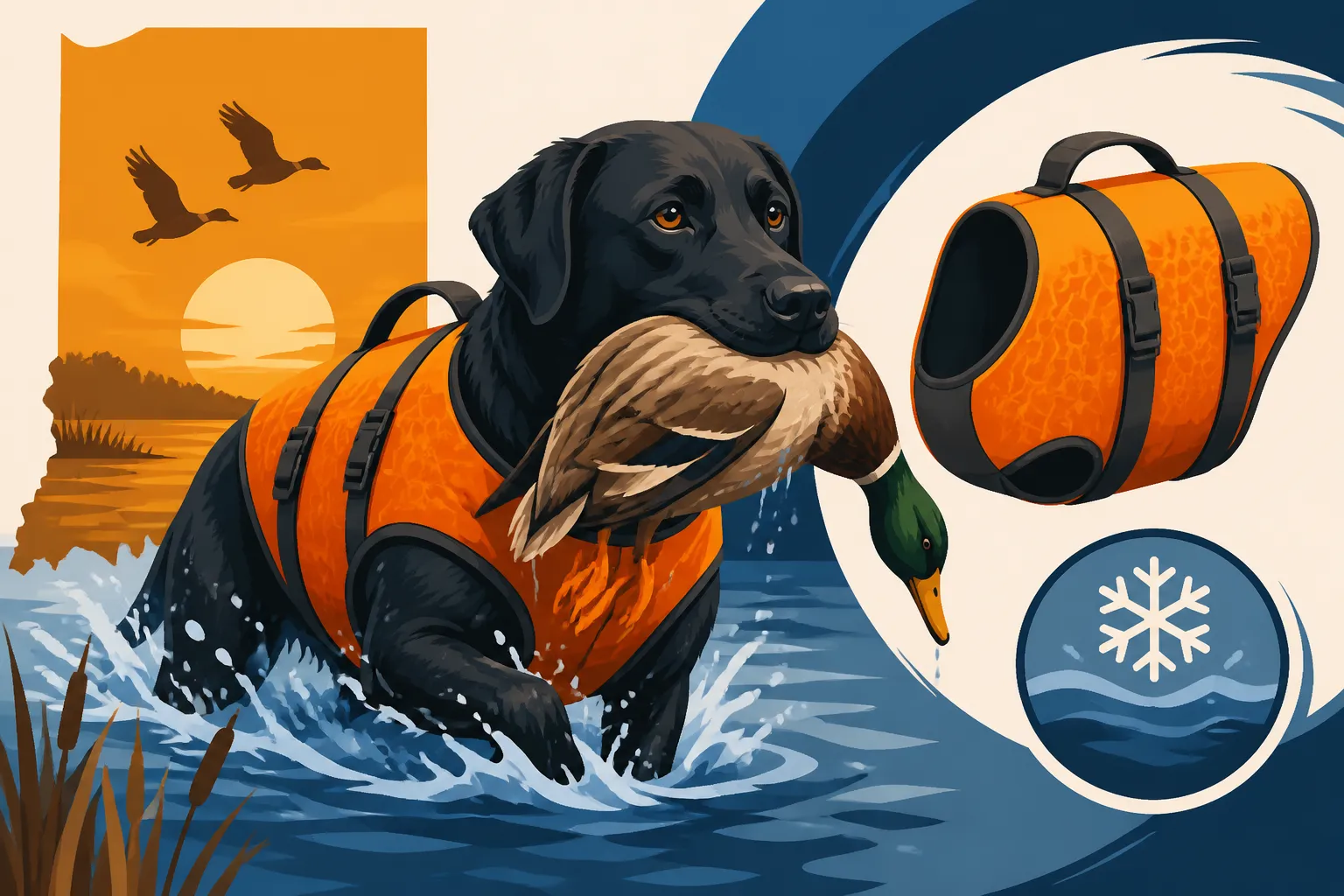
Dog Vests for Cold Water Retrieves
Few things are as heartwarming as watching a well-trained retriever burst into icy Indiana water, fueled by pure drive, to bring back a downed bird. But that heart-pounding moment can quickly turn into a heart-stopping one if you're not prepared for the brutal cold our state's waterways dish out, especially as the season wears on. Many a waterfowl hunter has underestimated the danger of hypothermia for their canine partner, thinking a dog's natural coat is enough. This guide is here to tell you it often isn't, and we'll dive deep into why a proper dog vest for cold water retrieves isn't just an accessory, but a vital piece of safety gear.
Why a Cold Water Vest Isn't Just "Extra Gear" for Your Hunting Dog
Let's be honest, we spend good money on our own cold-weather gear—waders, insulated jackets, warm hats, and gloves. We understand the bite of a north wind off a frozen lake or the shock of wading into a frigid marsh. But sometimes, we forget that our four-legged hunting partners, despite their thick coats, are just as susceptible to the cold, if not more so, given their repeated immersion in icy water. A quality cold water vest is about protecting your dog's health and ensuring they can perform their job safely, season after season. It’s an investment in their well-being and longevity.
The Hidden Dangers of Hypothermia for Canine Companions
Hypothermia is a serious, life-threatening condition where a dog's body temperature drops below its normal range. For a retriever, repeatedly plunging into 35-degree water, even for short bursts, can rapidly lead to this dangerous state. While their natural fur provides some insulation, it can quickly become saturated, losing much of its insulating properties. As the dog shivers uncontrollably to generate heat, they burn through precious energy reserves.
Symptoms can start subtly: shivering, lethargy, a decreased response time, and cold ears or paws. If ignored, these can escalate to muscle stiffness, shallow breathing, dilated pupils, and eventually, loss of consciousness and cardiac arrest. You might notice your dog's retrieves becoming slower, or they might seem less enthusiastic to get back in the water. These aren't signs of a lazy dog; they could be early warnings of hypothermia. Equipping them with a well-insulated vest adds a crucial layer of protection, slowing down heat loss and buying precious time between retrieves. It’s a proactive step, much like wearing your own Layering for an Indiana Deer Stand or Cold-Weather Sitting Strategy in Indiana for extended comfort.
Buoyancy Benefits Beyond Just Staying Afloat
While insulation is paramount, many cold water vests also offer significant buoyancy. This isn't just for dogs that aren't strong swimmers—most retrievers are absolute powerhouses in the water. However, imagine a long retrieve for a downed goose across a choppy lake, or navigating a debris-filled river. The added buoyancy helps your dog expend less energy to stay afloat. This conserved energy can be critical in cold conditions, as less exertion means less burning of calories that are vital for maintaining core body temperature.
Furthermore, buoyancy can be a lifesaver if your dog encounters an unexpected obstacle or gets tangled in underwater vegetation. It provides an extra margin of safety, making it easier for them to keep their head above water while they work themselves free, or for you to reach them. Think of it as an extra safety net, especially when you're hunting in challenging environments like the vast waters of Waterfowl Hunting the Kankakee Marshes where conditions can change rapidly.
Visibility and Safety in Low Light or Choppy Water
Waterfowl hunting often begins before dawn, ends after dusk, or takes place on overcast, foggy days. These low-light conditions, combined with the often-murky waters of Indiana's rivers and lakes, can make it incredibly difficult to keep tabs on your dog. A cold water vest, almost universally, comes in bright, high-visibility colors like blaze orange or yellow, often with reflective strips.
This enhanced visibility is crucial for several reasons. First, it helps you track your dog's progress on a retrieve, especially when they're a distance out or working through reeds and cattails. Second, and perhaps even more importantly, it makes your dog more visible to other hunters who might be in the area, preventing accidental incidents. In a crowded marsh or on a busy public access point, ensuring your dog is seen is just as important as ensuring they are warm. This is especially true when hunting areas like the Kankakee, where you might encounter other groups. A bright vest is a simple, yet highly effective, safety measure.
Essential Features to Prioritize in a Quality Cold Water Dog Vest
Not all dog vests are created equal, especially when you're talking about the specific demands of cold water retrieving in places like Indiana. Just grabbing any old vest off the shelf might provide minimal protection, but a truly effective one will incorporate specific design and material choices tailored for extreme conditions. Don’t settle for less when your dog’s safety is on the line.
Material Matters: Insulation and Durability
The core purpose of a cold water vest is to insulate, and for that, neoprene is king. This is the same material used in wetsuits for humans, and it works by trapping a thin layer of water against the skin, which then gets warmed by body heat, creating an insulating barrier.
When evaluating neoprene vests, look for:
- Thickness: Generally, 3mm to 5mm is ideal for Indiana's cold water. Thicker neoprene offers more insulation but can be a bit more restrictive. A 3mm vest might suffice for milder cold, but a 5mm vest is far better for late-season hunts or exceptionally frigid temperatures.
- Quality of Neoprene: High-density, closed-cell neoprene will offer better insulation and durability. Some vests also incorporate a fleece lining on the interior for added warmth and comfort, which is a fantastic bonus.
- Outer Shell: The exterior of the vest should be durable and resistant to punctures and tears from sticks, ice, and abrasive cover. Reinforced stitching, especially around seams and stress points, is a sign of a well-made vest built to withstand the rigors of repeated use in tough environments. Brands like Avery Outdoors, Browning, and Rig’Em Right often use robust materials designed for this kind of abuse.
Fit and Function: Ensuring Comfort and Mobility
A vest is only effective if it fits properly. Too loose, and it won't insulate efficiently and could snag; too tight, and it will restrict movement and chafe your dog. The fit around the chest, neck, and belly is critical.
Key fit and function considerations:
- Adjustability: Look for vests with multiple adjustable straps, often secured with durable buckles or strong hook-and-loop fasteners. This allows you to fine-tune the fit for your dog's unique build, ensuring a snug yet comfortable fit that doesn't hinder their natural swimming motion or ability to run.
- Freedom of Movement: The vest should not impede shoulder movement or neck rotation. The cut around the legs and neck needs to be generous enough to allow full range of motion without gaping, which could let in cold water or cause chafing. Your dog needs to paddle freely and lift its head to spot birds, even after a long walk to the blind.
- Protection for Vital Organs: The vest should cover the dog's chest and belly adequately, as these areas are particularly vulnerable to heat loss. The chest panel is crucial for protecting the heart and lungs.
Strategic Design Elements for Hunter and Dog
Beyond insulation and fit, modern dog vests incorporate features that enhance both the dog's safety and the hunter's convenience.
- Grab Handles: A sturdy, reinforced grab handle on the back of the vest is incredibly useful. It allows you to easily assist your dog back into a boat, lift them over obstacles, or retrieve them from icy water if they're struggling. This is a must-have feature for safety and control.
- Leash Attachment Points: A D-ring or strong loop for attaching a leash can be handy for walking your dog to and from the blind or keeping them secure before a retrieve. Make sure it's robust enough to handle a strong, wet dog.
- Accessory Pockets: Some vests include small pockets for carrying training bumpers, a whistle, or even a small GPS tracker. While not essential, these can be a nice bonus for convenience.
- Reflective Accents: As mentioned earlier, reflective strips greatly enhance visibility in low light, especially when a spotlight or flashlight beam hits them. This can be a lifesaver when searching for a dog after dark.
Choosing, Fitting, and Maintaining Your Dog's Cold Water Vest
Getting the right vest is only half the battle. Knowing how to properly size it, put it on, and care for it will ensure maximum effectiveness and longevity, protecting your hunting partner for many seasons to come. It’s a bit like learning to properly set up a Treestand Setups in Hoosier National Forest or Hanging a Stand on a Southern Indiana Ridge—the details matter.
Sizing Up Your Retriever for the Perfect Fit
Measuring your dog correctly is the most critical step in choosing a vest. Don't guess! Each manufacturer might have slightly different sizing charts, so always refer to theirs.
Here’s how to get accurate measurements:
- Neck Girth: Measure around the widest part of your dog's neck, typically just above the shoulders where a collar would sit.
- Chest Girth: This is the most important measurement. Measure around the broadest part of your dog’s chest, directly behind their front legs.
- Body Length: Measure from the base of the neck (between the shoulder blades) to the base of the tail. While many vests are designed to cover the chest and belly, some extend further back.
- Weight: While not a measurement, your dog's weight can also be a factor, especially for buoyancy vests.
Once you have your measurements, compare them to the manufacturer's chart. If your dog is between sizes, it's often better to go with the larger size, as you can typically cinch down straps. A snug fit is crucial for insulation, but it must not be restrictive. Take your time, and if possible, try the vest on your dog before a hunt to ensure they're comfortable moving in it. Consider if you'll be using tools like GoHunt to scout conditions, as this might inform how much insulation you need for certain days.
Donning and Doffing: Practicality in the Field
Getting a wet, excited, or cold dog into or out of a vest can sometimes be a wrestling match, especially with cold, numb fingers. Look for vests that are designed for easy on-and-off.
- Full-Zip vs. Slip-On: Some vests feature full-length zippers or buckles down the back or chest, making them easier to put on. Others are more of a slip-on style, requiring your dog to step through leg holes. While slip-on styles might offer a more streamlined fit, they can be harder to manage when your dog is eager to get to work or shivering from the cold.
- Adjustable Straps: Ensure the adjustment buckles are robust and easy to manipulate, even with gloves on. Some vests have a limited number of straps, while others feature many, allowing for a more custom fit but potentially adding complexity.
- Practice Makes Perfect: Practice putting the vest on and taking it off your dog at home, especially before your first hunt of the season. This helps your dog get accustomed to it and makes the process smoother in the field. Having a seamless routine will reduce stress for both of you when you're facing real hunting conditions.
Care and Storage: Maximizing Vest Lifespan
Proper care of your dog's cold water vest will ensure it performs well for years to come. Neoprene is a durable material, but it's not indestructible.
- Rinse After Every Use: After each hunt, especially if it's been used in salty or muddy water, thoroughly rinse the vest with fresh water. This removes mud, debris, and any corrosive elements that could degrade the neoprene or stitching.
- Air Dry: Hang the vest to air dry completely, both inside and out. Do not put it in a machine dryer, as high heat can damage the neoprene. Store it in a cool, dry place out of direct sunlight. Prolonged exposure to UV light can break down neoprene over time.
- Check for Damage: Regularly inspect the vest for any tears, frayed stitching, or broken buckles. Small tears in neoprene can often be repaired with a neoprene repair kit (the kind used for wetsuits). Addressing minor damage promptly can prevent it from worsening and compromising the vest's effectiveness.
- Odor Control: Neoprene can sometimes develop an odor from repeated use and moisture. Occasional washing with a mild, pet-safe soap or a specialized wetsuit shampoo can help keep it fresh. Just make sure to rinse thoroughly afterwards.
- Storage: When storing for the off-season, make sure the vest is completely dry and lay it flat or hang it to prevent creases that could weaken the material over time.
By investing in a quality cold water vest and taking the time to properly fit and care for it, you're not just buying a piece of gear; you're buying peace of mind. Your faithful retriever works tirelessly for you in the marsh, in the thick brush of Hunting the Wabash River Bottoms, or retrieving ducks from frigid field ponds. Giving them the protection they deserve is a crucial part of being a responsible hunting partner. Just like you'd meticulously check your Waterfowl Gear for Kankakee Marshes before a big hunt, make sure your dog's vest is always ready to go.
Disclaimer
This article is for general informational purposes only and does not constitute professional advice. Laws, prices and regulations vary by location and change over time. Consult a qualified professional for guidance on your specific situation.