Indiana Deer Camp Traditions
The crunch of autumn leaves underfoot, the crisp air carrying the scent of woodsmoke, and the anticipation of dawn breaking over a frost-kissed Indiana timber stand – these are the sensations that define deer season for countless Hoosier hunters. But beyond the individual pursuit, there's a deep, often unspoken, tradition that binds us: the deer camp. It's where stories are born, friendships are forged, and the lessons of the woods are passed down through generations. This guide dives into the cherished rituals and evolving spirit of Indiana deer camp, helping you understand and perhaps even build your own lasting legacy.
The Heart of Hoosier Deer Camp: More Than Just a Hunt
For many of us, deer camp is more than just a place to sleep between hunts; it’s the annual pilgrimage, a communal gathering that recharges the soul as much as it fills the freezer. It’s where the real magic of hunting happens, away from the daily grind.
Setting the Scene: Locations and Accommodations
Deer camps in Indiana come in all shapes and sizes, reflecting the diverse landscape of our state and the personal preferences of hunting groups. Some are elaborate, multi-generational affairs, while others might be a simple pop-up tent in a quiet corner of public land. The common thread is the shared space, however humble, that fosters a sense of belonging.
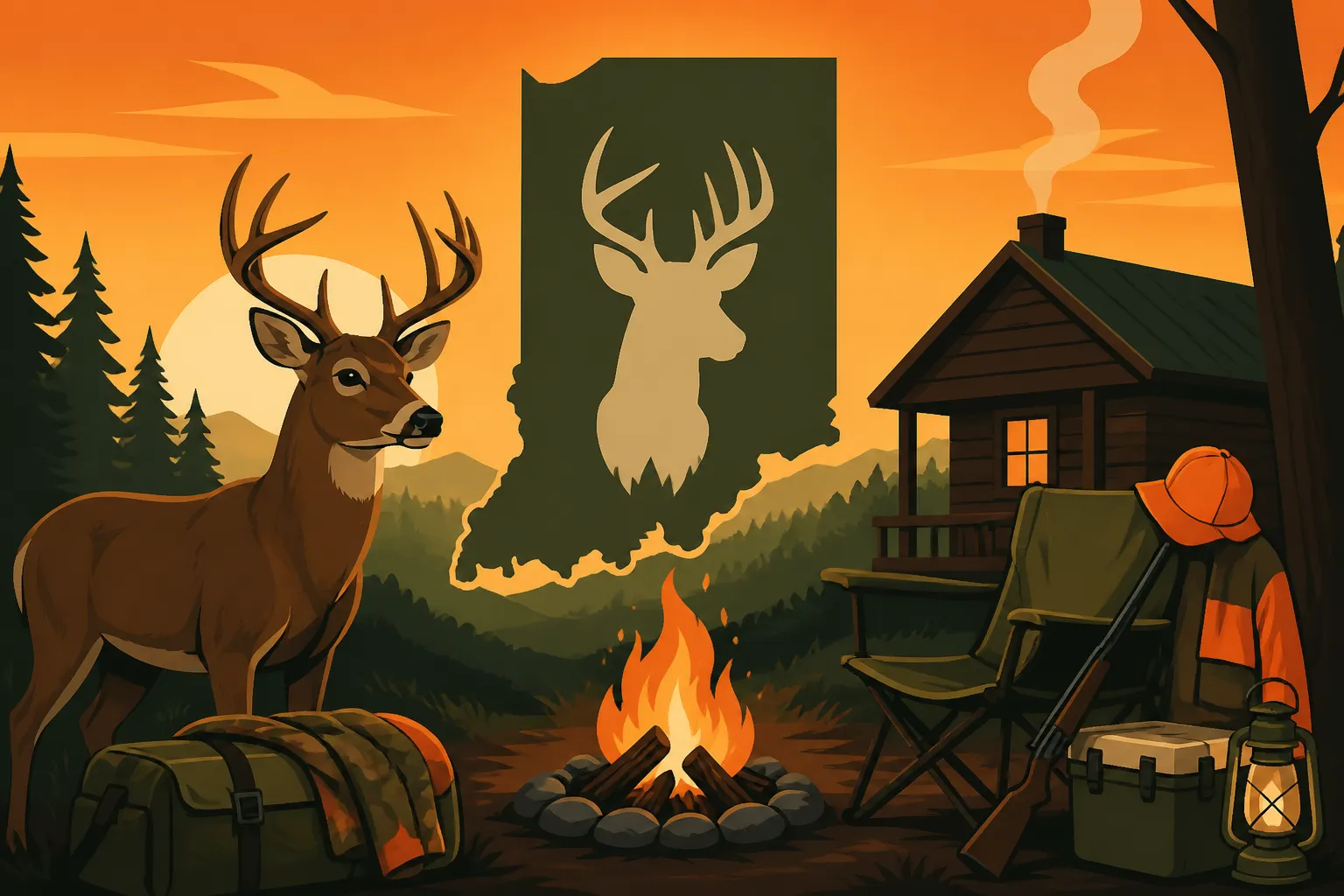
You might find some groups hunkered down in a rustic cabin deep within the sprawling hardwoods of the Hoosier National Forest, where the only sounds are the wind through the trees and the crackle of a wood stove. These spots are often off-grid, forcing a simpler existence and deeper connection. For others, a travel trailer or RV parked on a friend's private land or a designated campsite at one of Indiana's State Forests, like Yellowwood or Morgan-Monroe, serves as a mobile base of operations. These setups offer a bit more comfort, with the convenience of a warm bed and a hot meal after a long day in the cold. Then there are the "day-hunt" camps, where hunters might simply meet at a local diner for breakfast before splitting up, or rendezvous at a truck tailgate to share lunch and compare notes from the morning hunt. Even these informal gatherings carry the spirit of camp, providing that vital touchstone of camaraderie. The key is finding a location that allows your group to relax, share, and connect, reinforcing the bonds that make deer camp special, regardless of whether you're chasing whitetails in the rolling hills of Southern Indiana or navigating the agricultural labyrinth of Northern Indiana farmland.
Food, Fellowship, and Storytelling
If the location is the body of deer camp, then the food, fellowship, and storytelling are its very heart and soul. These elements infuse life into the camp, transforming it from a mere lodging into a vibrant hub of shared experience.
Meals are a ritual unto themselves. Forget fancy gourmet dishes; at deer camp, it's about hearty, stick-to-your-ribs fare that fuels long hours in the woods and warms you from the inside out. Breakfasts often consist of mountains of bacon, eggs, biscuits, and gravy, sometimes cooked over an open fire or on a well-seasoned cast-iron skillet. Dinners are frequently built around venison, whether it's a slow-cooked chili simmering all day, a rich venison stew, or steaks grilled over an open flame on a crisp evening. These shared meals are far more than just sustenance; they are moments of collective gathering, where everyone contributes and everyone feels nourished, both physically and spiritually. The smell of coffee brewing before dawn and the scent of frying venison in the evening air are as much a part of the deer camp experience as the sight of a mature buck.
And what would camp be without stories? As the day winds down and the fire glows, the tales begin. You'll hear about the monster buck that got away twenty years ago, the first deer a camp member ever harvested, or the comical mishap with a faulty treestand. These stories, embellished and refined with each telling, create a living history for the camp. They are a way to transmit knowledge, celebrate successes, and laugh at failures. Card games, board games, or simply quiet conversation often accompany these sessions, cementing friendships and making new members feel like part of the family. It's in these moments of fellowship that the true meaning of deer camp shines through, reminding us that while the hunt is often a solitary pursuit, the journey is best shared.
Rituals of the Hunt: Before, During, and After the Shot
Every deer camp, whether consciously or not, develops its own set of rituals that guide the hunting experience. These traditions provide structure, build excitement, and define how a group approaches the pursuit of whitetails.
Pre-Hunt Preparations and Superstitions
The anticipation leading up to opening day, or even just the next morning's hunt, is a powerful force in deer camp. Much of this excitement is built through meticulous preparation and, sometimes, a few good-natured superstitions. Before anyone steps foot into the timber, there's usually a flurry of activity. Gear checks are paramount: bows are tuned, crossbows are inspected, and rifles are sighted in for Indiana woods ranges, ensuring every shot counts. Hunters will often spread out their maps, whether they're paper topo maps or digital overlays on a tool like GoHunt or the Indiana DNR app, discussing strategy, potential stand locations, and entry routes. This collective planning, often accompanied by the aroma of fresh coffee, is a cornerstone of camp.
Beyond the practical, many camps have their own peculiar rituals or superstitions. It might be wearing a "lucky" hat that's seen more seasons than some of the hunters, insisting on a particular type of coffee in a specific mug, or a quiet moment of reflection before heading out. Some hunters might swear by a certain breakfast meal for good luck, while others might have a designated "first up" hunter whose early departure signals the start of the day. These seemingly small traditions contribute significantly to the camp's unique character and collective psychology, transforming routine tasks into meaningful parts of the hunting experience. The camaraderie found in these shared pre-hunt preparations and the passing down of knowledge, like how to best use an app for scouting Indiana public land before season, lays the groundwork for a successful and memorable hunt.
The Hunt Itself: Shared Experiences and Solo Reflections
Once the preparations are done, the hunters disperse, each embracing their chosen method for the day. This duality of shared purpose and individual experience is a defining aspect of deer camp life.
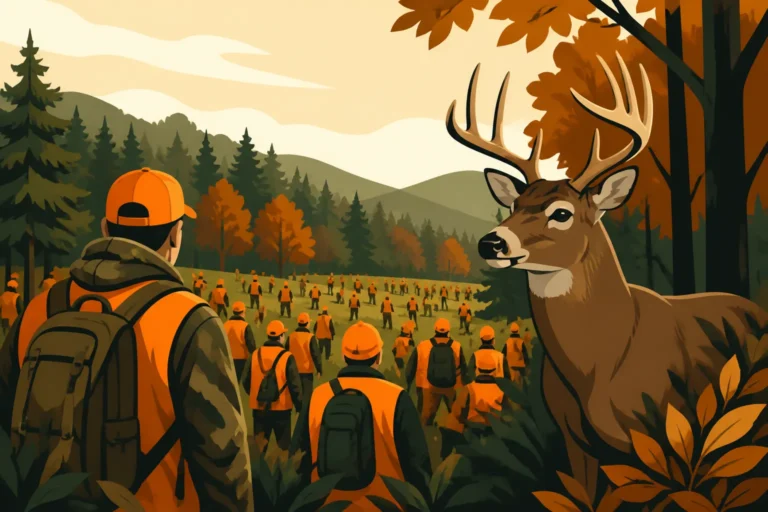
For many groups, especially on larger tracts of private land or in certain public land scenarios, organized deer drives are a time-honored tradition. Picture a line of hunters slowly pushing through a woodlot, hoping to nudge deer towards strategically placed "posters." This method requires coordination, communication, and trust, embodying a collective approach to hunting. In some areas, especially on extensive public lands like those found in the Hoosier National Forest, you might see groups organizing these types of drives with three or four hunters to cover specific sections effectively. While a drive might be over quickly, the post-drive analysis back at camp, detailing what was seen and what might have gone differently, is always a lively discussion.
However, much of Indiana deer hunting is a more solitary affair. Hunters might spread out to still-hunt Southern Indiana ridges or sit quietly in a treestand overlooking a funnel between two woodlots. The morning and evening hours are often spent in quiet contemplation, observing nature and waiting for a deer to appear. But even in these solo pursuits, the knowledge that your campmates are out there, sharing the same goal, creates a silent bond. The tradition is to meet back at camp, usually after dark or for a midday break, to share the day's experiences. These debriefings are essential, not just for recounting personal stories, but for collectively understanding deer movement, wind patterns, and potential hot spots. It’s where the individual hunt becomes a shared narrative, contributing to the collective knowledge of the camp and preparing everyone for the next foray into the woods.
Processing and Celebrating the Harvest
The moment a deer hits the ground, a new set of camp traditions springs into action, focused on responsible game recovery and celebration. This is often where the real work begins, but it’s work steeped in respect and gratitude.
The first tradition is often the notification – a quick radio call or text back to camp letting everyone know there's venison to be had. Then, the team effort begins. Field dressing, while not the most glamorous part of hunting, is a crucial step for proper meat care, especially if you're hunting during the warmer periods of Indiana's archery season. Many camps have experienced hands who guide newer hunters through the process, teaching them the quick, efficient way to get the deer field-dressed and cooled down. Dragging a deer, particularly out of a river bottom or up a steep Southern Indiana ridge, often requires multiple people and can be a strenuous but bonding experience. Sleds and deer carts, while not "traditional" in the pioneer sense, have become modern essentials for making the job easier, especially if you're alone or tracking a deer in fresh Indiana snow.
Back at camp, the celebration begins. This isn't just about high-fives; it’s about acknowledging the effort, the success, and the nourishment the animal provides. Many camps have a specific spot for hanging deer, often a sturdy tree or a dedicated game pole. The processing of the deer into usable cuts is another opportunity for shared labor and learning. Some camps prefer to do their own butchering at camp, passing down techniques for quartering and packaging. Regardless of how the meat is ultimately handled, the tradition of reporting your Indiana deer online, as required by the DNR, is a modern step that every responsible hunter embraces. And of course, the ultimate celebration is the first meal made from the fresh venison, a direct connection to the harvest and a culmination of the entire deer camp experience.
| Tradition Element | Traditional Approach | Modern Adaptation |
|---|---|---|
| Camp Location | Rustic cabin, canvas tent | RV, travel trailer, established public land campground |
| Scouting | Boot leather, physical maps | GPS apps (GoHunt), aerial photos, trail cameras |
| Communication | Yelling, hand signals, radios | Cell phones, two-way radios, walkie-talkies |
| Game Recovery | Manual dragging, horse | Deer carts, ATVs (where allowed), sleds |
| Meat Processing | Butchering at camp, local locker | Camp butchering, professional processor, vacuum sealing |
| Knowledge Transfer | Oral storytelling around fire | Stories, online forums, YouTube tutorials, mentorship |
| Navigation | Compass, stars, landmarks | GPS devices, smartphone apps |
Passing the Torch: Mentorship and Evolution of Traditions
Hunting traditions, like the forests and fields we hunt, are not static. They grow, adapt, and are continually renewed through the passing down of knowledge and the incorporation of new ideas.
Mentoring the Next Generation
One of the most vital and heartwarming traditions of any Indiana deer camp is the mentoring of new hunters, especially the younger generation. There's an immense sense of pride in guiding a novice through their first season, from the very basics of gun safety and ethical shot placement to understanding deer behavior and reading sign. Events like the Indiana Youth Deer Weekend are specifically designed to foster this mentorship, providing a dedicated time for experienced hunters to focus solely on introducing kids to the sport.
A good mentor teaches more than just how to pull a trigger. They instill a deep respect for the animal, an appreciation for the outdoors, and an understanding of conservation. They demonstrate patience, perseverance, and the importance of leaving no trace. This might involve sitting side-by-side in a ground blind, quietly explaining how to identify a deer's bedding area, or teaching them how to make a grunt call. It’s also about emphasizing the importance of legal and ethical hunting, ensuring they understand all of Indiana's hunting regulations and the necessity of completing their Indiana Hunter Education requirements. The joy of witnessing a new hunter, especially a child, experience the thrill of their first successful harvest is truly unparalleled and reinforces the very core of why we continue these traditions. It ensures that the passion for Indiana hunting continues for decades to come, enriching lives and preserving our outdoor heritage.
Adapting Traditions for Modern Indiana Hunting
While traditions are cherished, they must also evolve to remain relevant and effective in a changing world. Indiana's hunting landscape, with its shifting regulations and technological advancements, offers ample opportunities for adapting old ways without losing their essence.
Consider the recent changes in Indiana's firearms regulations, where the requirement for straight-wall cartridges was lifted, allowing hunters to use a much broader range of rifle calibers statewide. This major shift has undoubtedly sparked discussions around campfires about which rifle setups for Indiana deer hunting are now optimal, and how this impacts older traditions of using slug guns. Hunters are now choosing a rifle now that cartridge limits are gone, expanding their options beyond what was previously allowed. This doesn't mean abandoning the trusty shotgun, but it does mean embracing new capabilities and adapting strategies. Similarly, technology has profoundly impacted how we scout and navigate. While the old-timers might have relied on hand-drawn maps and intimate knowledge of the land, modern tools like GoHunt provide unparalleled satellite imagery, public/private land boundaries, and topographic data right at your fingertips. Learning to effectively use these tools, from reading aerial photos for Southern Indiana deer to understanding land ownership, can significantly enhance scouting efforts and improve hunting success.
Even challenges like Chronic Wasting Disease (CWD) have introduced new "traditions." In areas designated as part of Indiana's CWD positive area, hunters now adhere to mandatory testing protocols, which involve dropping off deer heads at designated sampling stations. While certainly a serious concern, this new ritual demonstrates how hunters adapt to protect the health of the deer herd and their hunting future. Embracing these adaptations—whether it's using advanced optics or adhering to new game management practices—ensures that deer camp traditions remain vibrant, effective, and responsible, marrying the wisdom of the past with the innovations of the present.
Building Your Own Deer Camp Legacy
Whether you’re a seasoned veteran looking to infuse new life into an existing camp, or a fresh face aiming to start something new, establishing a lasting deer camp legacy is a rewarding endeavor. It’s about more than just setting up a tent; it’s about intentionally fostering an environment where memories are made and shared.
Essential Elements for a Lasting Tradition
To truly build a deer camp that stands the test of time, you need a few key ingredients beyond just good hunting ground. Consistency is paramount; establishing an annual gathering, even if it's just a long weekend, creates an expectation and a rhythm that people look forward to. Think about setting up a regular date, perhaps tied to the opening weekend of Indiana’s firearms deer season, or a specific week in November to hunt the Indiana rut in early November. This predictability makes it easier for people to plan their lives around it.
Shared responsibility is another critical component. A deer camp thrives when everyone contributes. This could mean different people taking turns cooking, someone being in charge of gathering firewood, or another person handling all the map-reading and scouting. When everyone has a role, they feel invested and valued. And perhaps most importantly, cultivate a welcoming and inclusive atmosphere. Deer camp should be a place where everyone, regardless of their hunting experience, feels comfortable and part of the group. Encourage new stories, listen patiently to old ones, and make an effort to include newcomers. Create a few unique rituals specific to your group – it could be a silly award for the biggest missed shot, a specific type of coffee brew, or a campfire toast to fallen leaves. These small, personal touches will become the cherished hallmarks of your camp, building a legacy that extends far beyond the number of deer harvested.
Resources for an Authentic Indiana Deer Camp
Finding the right resources can make all the difference in building an authentic and enjoyable Indiana deer camp experience. Beyond the camaraderie, having the right tools and knowledge at your disposal can greatly enhance your time in the woods and around the fire.
For starters, understanding the lay of the land is crucial. Detailed mapping tools like GoHunt, which allows you to overlay property lines and topo maps, are invaluable for scouting and planning your hunts. Combine this with the Indiana DNR app for checking regulations and reporting harvests, and you’ll be well-equipped. If you're looking for new places to establish a camp or expand your hunting horizons, spend some time exploring the vast network of public hunting land in Indiana, including State Forests and Fish & Wildlife Areas. Websites like the Indiana DNR's provide maps and specific regulations for each property, helping you find those hidden gems. You might find that the public access points along the Wabash River Bottoms offer great opportunities, or perhaps a remote section of the Hoosier National Forest appeals to your group. Don't overlook local businesses either; many small-town outfitters and sporting goods stores across Indiana are hubs of local hunting knowledge and can provide essential gear or advice specific to the region. They might even know of a perfect secluded spot for camping, or where to find late-season food sources for Indiana whitetails. Building an authentic Indiana deer camp legacy means leveraging both the wisdom of those who came before you and the best resources available today, allowing you to connect deeply with the land, the game, and your fellow hunters.
Disclaimer
The information provided in this guide is for general informational purposes only and does not constitute legal advice. Hunting regulations, seasons, and licensing requirements can change. Always consult the most current Indiana Department of Natural Resources (DNR) regulations and local ordinances before engaging in any hunting activities. User assumes all risks.