How Early Season Squirrels Give Themselves Away
The early season woods in Indiana can be a deceiving place for squirrel hunters. With leaves still thick on the trees and undergrowth at its peak, it often feels like you're searching for a needle in a haystack. Many folks get frustrated, thinking squirrels are just not around, when in reality, they're simply hidden by the verdant canopy. This guide is all about helping you cut through that visual clutter and tune into the unmistakable signs that give away those wily early season squirrels, turning your frustrations into successful hunts.
Unpacking the Visual Cues of Hidden Squirrels
When the leaves are still dense in late summer and early fall, spotting a full-bodied squirrel can feel like winning the lottery. But squirrels are rarely perfectly still, and their constant movement, even when subtle, leaves a trail of visual breadcrumbs for the observant hunter. Learning to spot these tiny, almost imperceptible signs is key to filling your game bag when the canopy is at its thickest.
The Tell-Tale Twitch and Bark Scrapes
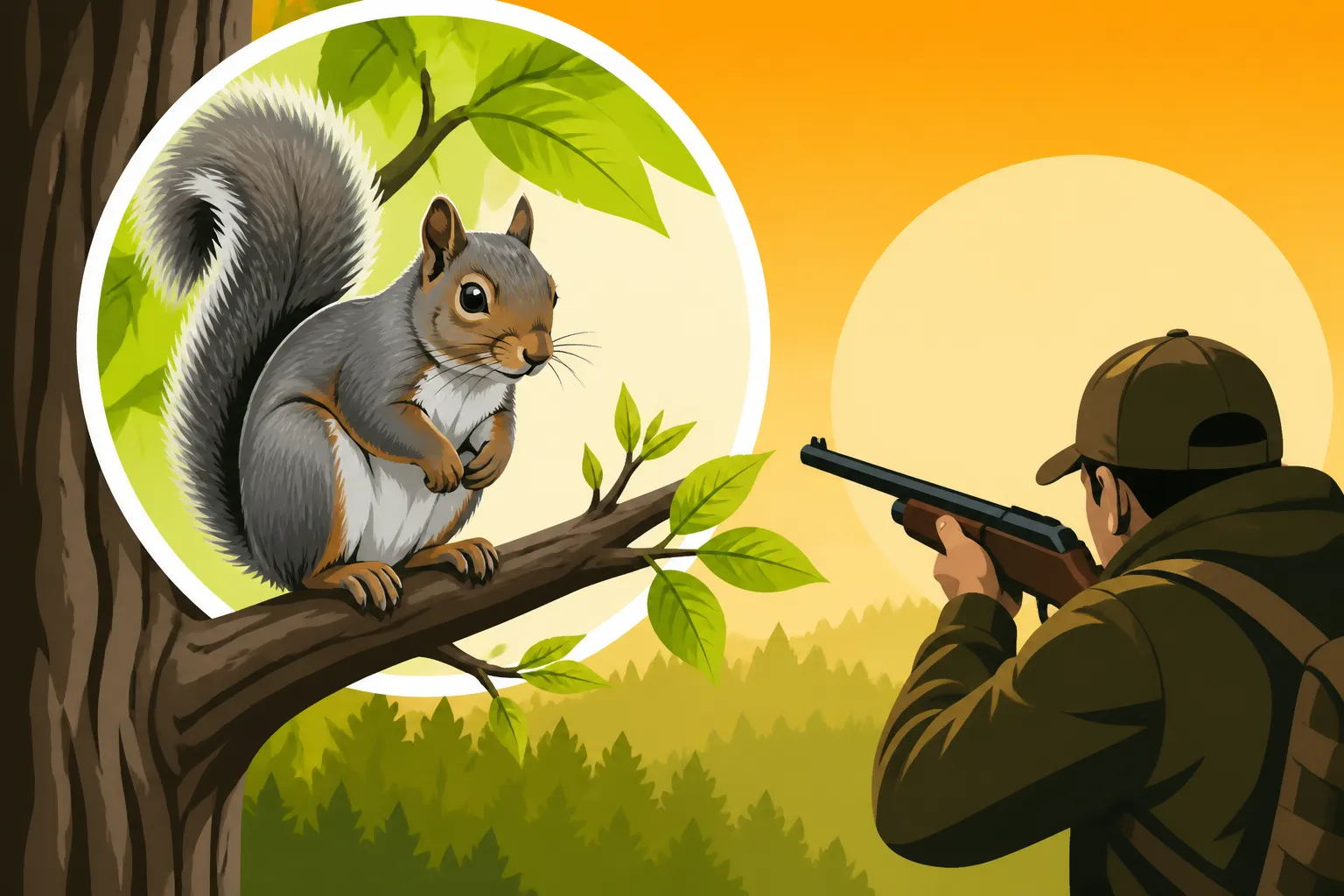
Don't expect to see a whole squirrel just sitting there, especially in early season. Instead, train your eyes to look for parts of a squirrel or the immediate aftermath of its passage. One of the biggest giveaways is the tail. A squirrel's tail is a dynamic, expressive appendage, constantly flicking, twitching, or waving, even if the rest of its body is obscured. That subtle, rhythmic flick of a bushy tail, even just a glimpse through a break in the leaves, can instantly tell you there’s a squirrel present. It’s like a tiny, furry semaphore flag.
Beyond the tail, watch for movement on tree trunks. Squirrels are master climbers, and as they ascend or descend, their claws can scuff and scrape the bark. In some cases, especially on smoother barked trees like maples or younger oaks, you might see fresh, shiny streaks where their claws have dug in. More commonly, you'll see a slight tremor or shake in a small branch or sapling as they navigate. The real trick is to distinguish this from wind movement. If there’s no breeze, but a branch is subtly swaying, often accompanied by a rustle, you’ve likely found a squirrel. Sometimes, they’ll even leave small flecks of bark on the ground below a frequently used climbing tree.
Subtle Leaf and Branch Movement in the Canopy
In a still woods, any unnatural movement stands out like a sore thumb. Early season squirrels are often high in the canopy, especially when feeding on budding nuts. Look for individual leaves or small clusters of leaves that seem to be moving independently of the wind. A single branch quivering, or a patch of leaves shaking gently, can betray a squirrel’s presence. This is particularly effective on calm mornings or evenings when the air is still. You'll often see this subtle movement just before you hear the distinct thump of a dropped nut.
It pays to stand still for a good long while, letting your eyes slowly scan the treetops. Break the canopy down into small, manageable sections. Don't try to take it all in at once; focus on a 10-foot by 10-foot section for a minute or two, then move your gaze. You'll be amazed at what you pick up. When you're still-hunting southern Indiana ridges, practicing this kind of slow, deliberate observation is invaluable.
Identifying Feed Trees and Fresh Cuttings
Squirrels are creatures of habit, especially when it comes to food. In the early season, they're often gorging on acorns, hickory nuts, walnuts, and even osage oranges. These nuts, when chewed, leave very distinctive cuttings. At the base of active feed trees, or on old stumps and fallen logs, you can often find piles of fresh nut shells or tiny, crescent-shaped pieces of husks. These are prime indicators that squirrels are actively feeding in that particular spot.
Look for a concentration of these cuttings. If you find a few, pause and look up. If you find a small mound, it’s a good bet squirrels are either currently in the tree above or have been there very recently. Different nuts leave different types of cuttings; acorns are often split or gnawed, while hickory nuts are often meticulously peeled. Learning the specific cuttings can even tell you what kind of mast they're targeting. When you are planning your hunts, using a mapping tool like GoHunt can help you locate areas rich in oak, hickory, and other mast-producing trees, making your scouting more efficient before you even step foot in the woods. This is crucial for early season success when other signs might be harder to come by.
Tuning Into the Auditory Cues of Early Season Squirrels
While visual signs are powerful, the soundscape of the early season woods offers even more definitive clues. Squirrels are noisy critters, and their vocalizations and feeding habits create a symphony of giveaways for the alert hunter. Learning to differentiate these sounds from other forest noises is a skill that comes with practice, but it's one that will drastically increase your success.
The Unmistakable Bark and Chatter
The most classic auditory cue from a squirrel is its distinct bark or chatter. This isn't always an alarm call; sometimes it’s just communication between individuals, or even a self-satisfied expression during a particularly good meal. A sharp, almost raspy churk-churk-churk is a dead giveaway, often accompanied by a flicking tail. If you hear this, slow down immediately and start scanning the area from which the sound emanated.
Sometimes the chatter is softer, more like a continuous chuck-chuck-chuck as they move through branches or around a trunk. This sound is a lot harder to pinpoint, but if you hear it consistently, try to narrow down the general direction and then rely on your visual cues. Don't rush in when you hear these sounds; often, the squirrel will pause its vocalizations as it senses your approach. Take your time, move slowly, and let your eyes confirm what your ears are telling you. This patience is especially important when hunting Squirrel and Small Game Hunting in Indiana, as squirrels are keenly aware of their surroundings.
Rustling Leaves and the Crunch of Nuts
Perhaps the most common sound betraying an early season squirrel on the ground is the rustle of dry leaves. Even if the ground is still damp from morning dew, squirrels moving through leaf litter create a surprisingly loud and distinct sound. It’s a rhythmic, almost scurrying sound, different from the heavier footfalls of a deer or the flight of a bird. Often, you'll hear this as they move between den trees and feeding areas, or when they're burying nuts for winter.
Even more specific is the distinct crunch or gnaw of a squirrel cracking open a nut. This sound, particularly with hickory nuts or walnuts, can carry a surprising distance on a still morning. If you hear it, it means a squirrel is actively feeding and likely somewhat distracted. This is your cue to move slowly, carefully, and try to get a visual. The sound of a nut cracking will usually be repeated as the squirrel continues its meal, giving you multiple opportunities to pinpoint its exact location. This is especially true in prime areas like Indiana hickory groves.
The Subtle Dropping of Mast
Early in the season, before all the mast has fallen, squirrels are often high in the trees, working diligently to gather and consume nuts. As they chew and process these nuts, or sometimes simply move too quickly, they'll inevitably drop a few. The sound of an acorn or hickory nut hitting the forest floor – a distinct thump or plink – is a fantastic indicator of activity overhead.
This sound often precedes a visual sighting. If you hear several nuts dropping in a particular area, it's highly probable there's one or more squirrels actively feeding in the canopy directly above. Pause, listen for additional drops, and then begin to scan the treetops where you suspect the activity to be. This is a very subtle clue, but it’s one of the most reliable ways to locate squirrels before they've even touched the ground.
Beyond the Obvious: Less Apparent Signs and Scouting
Sometimes, squirrels don't give themselves away with loud barks or frantic movement. They can be incredibly stealthy when they want to be, especially if they feel pressured. This is where looking for less obvious signs and employing smart scouting tactics becomes essential. These signs might not lead you directly to a squirrel in that moment, but they will certainly guide you to areas of high squirrel activity.
Droppings, Tracks, and Nests
While not as immediate as a twitching tail, finding squirrel droppings can tell you a lot about their habits. Squirrel droppings are small, cylindrical pellets, often found at the base of favorite feed trees, on fallen logs, or near den entrances. A concentration of fresh droppings indicates a regularly used area. This is a sign to mark mentally or physically (if you're using an app like GoHunt to mark waypoints) and return to later, perhaps at a different time of day.
Tracks, though often difficult to spot in the dense early season undergrowth, can also be a clue. Look for small, distinct tracks in soft mud near creek bottoms or damp soil after a rain. Squirrel tracks show four toes in the front and five in the back, often with a bounding gait. Finding fresh tracks confirms active presence.
Squirrel nests, or "dreys," are large, messy accumulations of leaves, twigs, and other plant material, usually high in the crotch of a tree or nestled among dense branches. While a drey might not be actively occupied when you see it, a cluster of dreys in an area indicates a healthy local squirrel population. More importantly, older, dilapidated dreys might have been built in prime locations, suggesting that new nests or den trees are likely nearby. This information is invaluable when you're scouting Indiana public land before season.
Utilizing Modern Scouting Tools
In today's hunting world, technology can be a huge asset, even for something as traditional as squirrel hunting. Mapping applications, like GoHunt, allow you to study satellite imagery and topographic maps to identify potential squirrel hotspots long before you set foot in the woods. Look for areas with a high concentration of mature hardwoods, especially oaks, hickories, and beeches, which are prime mast producers. Identify water sources and natural funnels that squirrels might use to travel.
By digitally scouting, you can create a mental map of where squirrels are likely to be found. This allows you to approach likely areas with more stealth and purpose, rather than aimlessly wandering. You can mark potential feed trees, den trees, and travel corridors, greatly increasing your efficiency. This kind of preparation ensures you’re not just hoping to stumble upon a squirrel, but are strategically placing yourself in high-probability areas.
Putting It All Together for Early Season Success
The true art of early season squirrel hunting isn't about being lucky; it's about being observant and patient. Combining all these visual, auditory, and indirect cues will transform your hunt from a hopeful walk in the woods to a focused, productive endeavor.
The Power of Patience and Observation
The biggest mistake many hunters make, especially in the early season, is moving too quickly. When the woods are thick, rushing through will only alert squirrels to your presence before you ever see or hear them. Instead, adopt a "sit and scan" or "stop and listen" approach. Move slowly, taking five to ten steps, then pause for several minutes. During these pauses, remain absolutely still and let your senses do the work. This is the essence of still-hunting Southern Indiana ridges, where patience is paramount.
Use your binoculars – even modest 8×42 or 10×42 binoculars in the woods can make a huge difference in spotting that single twitching tail or rustling leaf. Continuously scan the canopy, the mid-story, and the forest floor. Listen intently for any sound that breaks the natural quiet. The more patient you are, the more likely you are to pick up on the subtle giveaways that squirrels inherently broadcast.
Adapting Your Hunting Style
Depending on the signs you're picking up, you might need to adjust your hunting style on the fly. If you're hearing a lot of nut cracking and rustling from the ground, consider a still-hunting approach, slowly moving through known feed areas. If the activity seems to be high in the canopy, a sit-and-wait strategy under a promising oak or hickory might be more effective.
Table: Common Squirrel Giveaways and What They Mean
| Type of Sign | What to Look/Listen For | Implication | Best Hunting Strategy |
|---|---|---|---|
| Visual | Flicking tail, quivering branch | Active squirrel, often feeding/moving | Slow still-hunt, then sit-and-wait |
| Visual | Fresh bark scrapes on tree trunk | Recent climbing activity | Scan tree, look for nearby den/feed |
| Visual | Nut cuttings at tree base | Active feeding area | Sit-and-wait nearby, or still-hunt |
| Auditory | Sharp barks, continuous chatter | Alert or communicating squirrel | Freeze, listen, slowly pinpoint location |
| Auditory | Leaf rustle on forest floor | Squirrel moving, likely foraging | Slow still-hunt, scan ground level |
| Auditory | Nut cracking/gnawing sounds | Actively feeding, somewhat distracted | Stealthy approach, get a visual |
| Auditory | Dropping nuts/mast from above | Feeding high in canopy | Sit-and-wait under tree, scan treetops |
| Indirect | Fresh droppings, clear tracks | Regular presence, active area | Return later, focus hunt on area |
| Indirect | Active drey nests (leaf nests) | Established squirrel population | Identify feed trees nearby |
Remember to always consult the Indiana Small Game Season Rules before heading out. Early season squirrel hunting is a fantastic way to enjoy the woods and sharpen your observation skills. By learning to interpret the various ways these clever little critters give themselves away, you'll not only find more squirrels but also deepen your understanding and appreciation of the forest. Good luck out there!
Disclaimer
Hunting is an inherently dangerous activity. Always prioritize safety, understand and follow all local, state, and federal hunting regulations, and ensure you have the proper licenses and permits. The information provided in this guide is for informational purposes only and should not replace professional instruction or advice from local authorities. Always be aware of your surroundings and hunt responsibly.