Indiana Fall Firearms Turkey County List
The crisp air of autumn usually brings with it the excitement of deer season, but for those of us who love chasing wild turkeys, it can also bring a fair bit of head-scratching. It's frustrating when you're ready to hit the woods for fall turkey, only to find out that the rules aren't as straightforward as they are in the spring, especially when it comes to using a firearm. This comprehensive guide will clear up the confusion, providing you with the definitive list of Indiana counties where you can legally pursue fall turkeys with a firearm, along with crucial insights and strategies to make your hunt successful.
The Nuance of Indiana's Fall Turkey Seasons
Fall turkey hunting in Indiana isn't just a rerun of spring gobbler season with different foliage. It's an entirely different ball game, presenting unique challenges and rewards. The rules for fall hunting, particularly regarding firearms, can be a major point of frustration for many hunters who are used to the statewide opportunities of archery and spring firearms seasons.
Why Fall is Different for Turkeys
When the leaves start to turn, turkeys undergo a significant shift in behavior. Gone are the days of boisterous gobbling from the roost and strutting Toms trying to attract hens. In the fall, turkeys are much more focused on survival – primarily finding food and staying together in large flocks. This behavioral change means your spring tactics simply won't cut it. You're no longer listening for a booming gobble to pinpoint a bird; instead, you're looking for signs of their presence, like tracks, droppings, and scratched-up areas where they've been feeding.
These flocks, often composed of hens and their poults, or bachelor groups of gobblers, can be incredibly wary. They move silently through the woods, making them difficult to locate without extensive scouting. The challenge isn't just in finding them, but also in getting close enough for a shot. It really emphasizes the "hunt" in hunting, demanding a different kind of woodsmanship, patience, and a keen eye for subtle details. The shift from aggressive calling to more subtle, social sounds, or even silence, can be a steep learning curve for those accustomed to spring's lively vocalizations.
Archery Versus Firearms in the Fall
One of the biggest sources of confusion and exasperation for Indiana turkey hunters is the distinction between fall archery and fall firearms seasons. The Indiana DNR has long structured these seasons differently, and for good reason, though it doesn't make it any less perplexing when you're trying to plan a hunt. Essentially, Indiana's fall archery turkey season is statewide, meaning you can chase turkeys with your bow or crossbow in any county in Indiana where hunting is permitted. This offers a broad range of opportunities and flexibility, and for many, it's a fantastic way to extend their time in the woods after the deer archery opener. If you're looking to dive deeper into those rules, check out our guide on Indiana Fall Archery Turkey Rules.
However, the fall firearms season is a different beast entirely. It's not statewide. Instead, it's restricted to a specific, and often changing, list of counties. This means that while you might be able to chase deer with a rifle or shotgun in your home county, you might not be able to do the same for turkeys. This specific restriction is where the confusion often lies and why hunters need a clear, updated list. It's a system designed to manage turkey populations more precisely, ensuring that hunting pressure doesn't negatively impact local turkey numbers in areas where they might be less robust.
Understanding the Restricted Firearms Season
The decision to limit fall firearms turkey hunting to specific counties isn't arbitrary. It's a carefully considered approach by the Indiana Department of Natural Resources (DNR) to ensure the long-term health and stability of the state's wild turkey populations. Understanding the reasoning behind these restrictions can help temper some of the frustration and highlight the importance of adhering to the rules.
Historical Context and Management Goals
Indiana's wild turkey populations are a true conservation success story, a testament to decades of dedicated restoration efforts. Back in the early 20th century, wild turkeys were virtually extirpated from the state due to habitat loss and unregulated hunting. Through extensive trap-and-transfer programs that started in the 1950s and gained momentum in the 70s and 80s, turkeys were reintroduced and have since thrived in many areas.
The current restricted fall firearms season is a direct legacy of this recovery. The DNR employs a cautious, science-based approach to ensure that hunting opportunities remain sustainable. Fall turkey hunting, particularly with firearms, can be very effective at harvesting birds, especially juvenile turkeys which are often less wary. By limiting firearms season to counties with robust, well-established turkey populations, the DNR can carefully manage harvest rates, preventing overharvest in areas where populations might still be recovering or more sensitive to pressure. The goal is always to provide ample hunting opportunities while safeguarding the future of the species, ensuring future generations of Hoosier hunters can experience the thrill of a fall turkey hunt.
The Importance of County-Specific Regulations
The varying turkey populations across Indiana are the primary driver behind the county-specific regulations for fall firearms season. Not all parts of Indiana support turkeys equally well. Southern Indiana, with its extensive timber and hill country, historically provided prime habitat and was often where restoration efforts first took hold and populations boomed. Northern and central Indiana, characterized more by agriculture and fragmented woodlots, saw slower growth and, in some areas, turkeys still struggle to establish truly stable, widespread numbers.
Because of these regional differences, the DNR closely monitors turkey population trends, brood success rates, and spring harvest data on a county-by-county basis. If a county demonstrates a consistently strong and healthy turkey population, capable of withstanding additional harvest pressure, it might be opened for fall firearms hunting. Conversely, if numbers are lower or showing signs of decline, the county will remain closed to firearms hunting in the fall, or perhaps only open for archery. This constant evaluation means the list of open counties can change from year to year, which is why it's absolutely critical to consult the most current Indiana hunting regulations before you plan your trip. Relying on outdated information could lead to a citation, or worse, negatively impact local turkey populations. Platforms like GoHunt and the Indiana DNR App are invaluable resources for staying current with these dynamic regulations.
The Official Indiana Fall Firearms Turkey County List
Navigating the specifics of Indiana's fall firearms turkey season can feel like a moving target, but having the most current information is key to a successful hunt. The Indiana Department of Natural Resources (DNR) releases updated regulations annually, and it's always wise to double-check their official guide before heading afield.
Navigating the Current Season's Counties
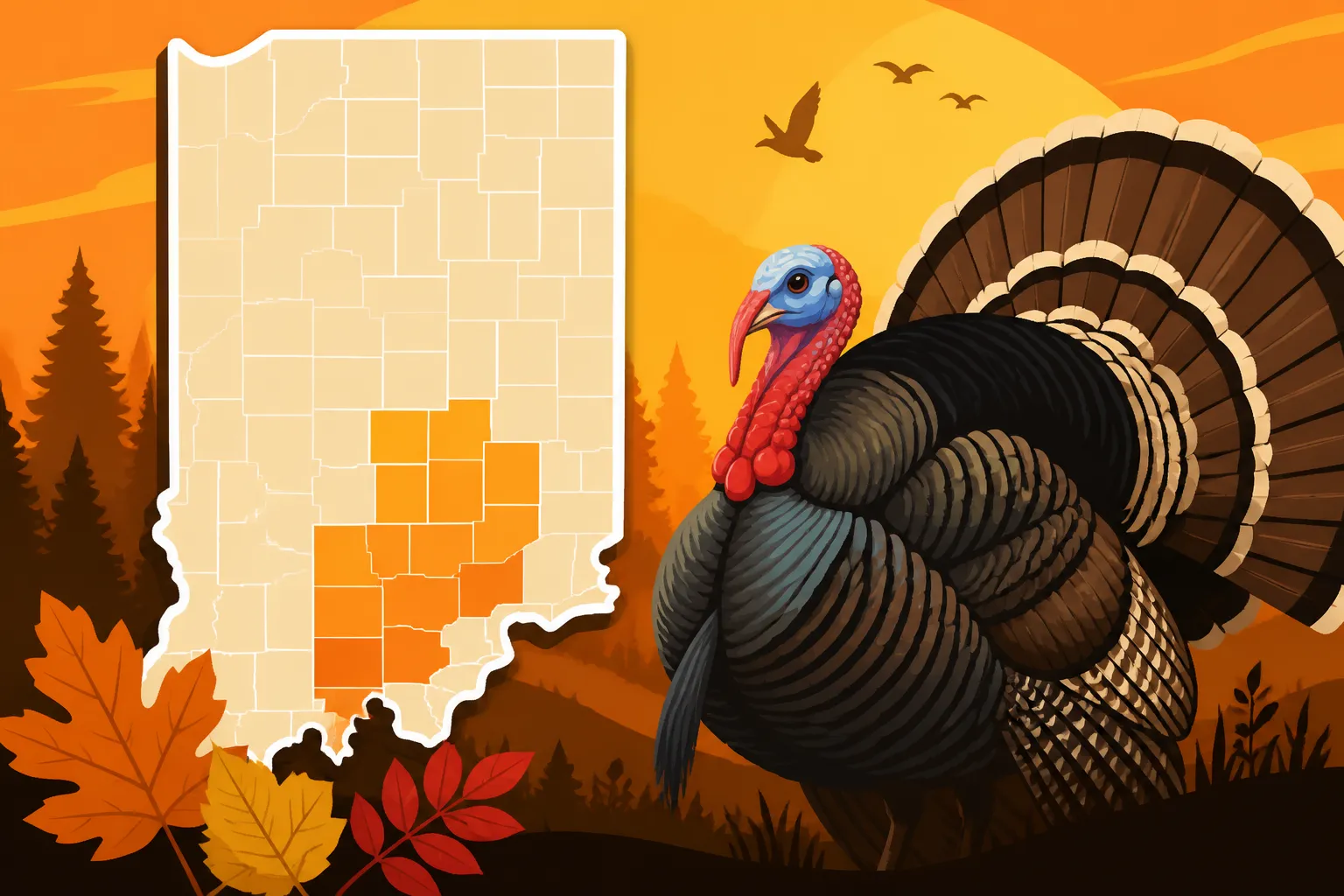
For the current season, the Indiana fall firearms turkey season is limited to the following counties. Remember, this list can change, so consider this a snapshot and always verify with the official DNR hunting guide or their website. This particular setup allows the DNR to focus harvest pressure on areas with consistently strong turkey populations, ensuring the overall health of the statewide flock.
Here’s a breakdown of the counties open for fall firearms turkey hunting:
| County Name | Region | Notes |
|---|---|---|
| Bartholomew | Central/South Central | Good mix of timber and agricultural land. |
| Brown | South Central | Renowned for extensive public timberland, including Brown County State Park (special hunts apply). |
| Clark | South Central | Mostly timbered, good habitat potential. |
| Clay | West Central | Mix of woods and fields. |
| Crawford | Southern | Heavily forested, excellent turkey habitat. |
| Daviess | Southwest | Agricultural with significant pockets of timber. |
| Dearborn | Southeast | Hilly, timbered terrain. |
| Decatur | Southeast | Primarily agricultural with some woodland. |
| Dubois | Southwest | Mix of timber and farmland. |
| Fayette | Southeast | Agricultural with scattered woods. |
| Floyd | Southern | Heavily wooded, close to the Ohio River. |
| Franklin | Southeast | Mix of farmland and timbered hills. |
| Gibson | Southwest | River bottomland and agricultural areas. |
| Greene | Southwest | Diverse habitats, including some Fish & Wildlife Areas. |
| Harrison | Southern | Very hilly and timbered, excellent turkey country. |
| Jackson | South Central | Extensive timber, including Jackson-Washington State Forest. |
| Jefferson | Southeast | Bluffs overlooking the Ohio River. |
| Jennings | Southeast | Mix of farmland and wooded areas. |
| Knox | Southwest | Primarily agricultural, but with Wabash River bottomlands. |
| Lawrence | South Central | Heavily timbered, close to Hoosier National Forest. |
| Martin | Southwest | Mix of federal and private timberland. |
| Monroe | South Central | Contains parts of Hoosier National Forest and Yellowwood State Forest. |
| Montgomery | West Central | Rolling farmland with wooded creek bottoms. |
| Ohio | Southeast | Smallest county, hilly and timbered. |
| Orange | Southern | Hilly and forested, good public land access. |
| Owen | West Central | Mix of timber and agricultural land. |
| Parke | West Central | Known for covered bridges and rolling, wooded terrain. |
| Perry | Southern | Very rugged and timbered, on the Ohio River. |
| Pike | Southwest | Agricultural, but with Patoka River drainage. |
| Posey | Southwest | Primarily agricultural, Ohio River floodplains. |
| Putnam | West Central | Rolling farmland with significant timbered creek drainages. |
| Ripley | Southeast | Mix of agricultural land and wooded stream corridors. |
| Spencer | Southwest | Ohio River bluffs and agricultural ground. |
| Sullivan | Southwest | Agricultural, with some larger timber tracts. |
| Switzerland | Southeast | Hilly, timbered, Ohio River frontage. |
| Vanderburgh | Southwest | Urbanizing, but with some remaining rural timber. |
| Vigo | West Central | Wabash River valley and surrounding farmland. |
| Warren | West Central | Rolling terrain, some prairie, and timber. |
| Warrick | Southwest | Mix of suburban areas, agricultural land, and timber. |
| Washington | Southern | Hilly and heavily timbered, good public land options. |
| White | North Central | Flat, agricultural, but with some river bottom habitat. |
When planning your hunt, it's a good idea to consult the GoHunt platform or the official Indiana DNR website for any last-minute changes or additional details, especially concerning specific public land rules within these counties. Some state parks or wildlife areas might have additional restrictions or managed hunts.
What to Do If Your County Isn't Listed
It can be a real letdown when you discover your favorite local hunting spot isn't in an open fall firearms turkey county. Many hunters face this frustration, especially those in the northern and central parts of the state where turkey populations might be lower or slower to expand. But don't despair! This doesn't mean your fall turkey hunting dreams are dashed; it simply means you need to adjust your strategy and potentially travel a bit further.
The most straightforward solution is to identify an open county that is within a reasonable driving distance. Many hunters from closed areas make the trip to southern Indiana, which traditionally has more open counties due to its abundant timber and thriving turkey populations. Once you've picked a county, your next step is to research public land opportunities within that area. The Hoosier National Forest, various State Forests like Yellowwood or Morgan-Monroe, and numerous Fish and Wildlife Areas (FWAs) offer excellent public access for turkey hunting. You can find more information on these areas in our guide to Public Hunting Land in Indiana. Don't forget to use tools like the GoHunt app or the DNR's online mapping resources to locate these spots and identify potential hunting zones.
Remember, successful turkey hunting in the fall, especially in an unfamiliar area, relies heavily on good scouting. Take the time to visit the area before the season opens, if possible. Look for fresh turkey sign, roosting areas, and prime food sources. Our article on Scouting Indiana Public Land Before Season can provide valuable tips for preparing your hunt in these new locations. By adapting and being willing to explore, you can still enjoy a rewarding fall firearms turkey hunt, even if it means venturing a little further from home.
Strategies for Fall Firearms Turkey Hunting
Fall turkey hunting is less about calling prowess and more about finding birds and then employing specific tactics to break up flocks and call them back in. It’s a completely different mindset than the spring season, rewarding patience, observation, and aggressive pursuit.
Scouting for Flocks and Food Sources
Unlike the spring, where a gobble can guide you to a bird, fall turkey hunting demands a shift to rigorous scouting. Turkeys in the fall are primarily focused on food, so identifying key food sources is paramount. This means walking the woods, looking for mast crops like acorns and beech nuts, which are a huge draw for turkeys. Look for areas where the ground has been scratched up, indicating turkeys have been feeding. If it's been a Hunting After a Poor Acorn Year, they might shift to other sources like waste grain in harvested fields or soft mast. Pay attention to field edges, especially those bordering timber, as turkeys will frequently move between cover and open areas to feed.
Beyond food, you’re looking for evidence of flock activity. Turkeys leave distinct tracks, droppings, and feather piles. Finding these signs helps you confirm their presence and understand their travel patterns. Identifying potential roosting areas – large, mature trees (often pines or hardwoods) near water sources or along ridge lines – is another critical piece of the puzzle. Turkeys will typically roost in the same general area for a period, offering a good starting point for morning hunts. Using aerial maps from services like GoHunt can help you identify these features from above, pinpointing dense timber blocks, water sources, and open fields where turkeys might be feeding or roosting. The more time you spend scouting before the season, the better your chances of encountering birds.
Breaking Up Flocks and Calling Tactics
The classic and often most effective strategy for fall turkey hunting is to locate a flock, then attempt to scatter them as widely as possible before setting up to call them back in. This tactic preys on the turkey's strong social instinct to regroup once separated. If you spot a flock, try to move quickly and aggressively towards them, running at them if necessary to cause a complete dispersal. The goal is to make every bird fly or run in a different direction.
Once the flock is completely broken up, wait for a period – often 20-30 minutes – to allow the turkeys to settle down and begin to feel the need to reassemble. Then, set up in a concealed position, preferably in the area where the birds were scattered. Your calling should mimic the sounds of lost turkeys trying to find their flock. Soft, pleading hen yelps, clucks, and especially the distinctive "kee-kee" or "kee-kee run" of young birds are incredibly effective. The kee-kee is a high-pitched whistle, often followed by a short yelp, that poults make when they're separated from their mother hen. Older turkeys also make this call. Listen for responses, and once you hear a bird, try to determine its direction and call just enough to draw it in without spooking it. This method requires patience and restraint, but it's incredibly rewarding when a wary fall turkey comes sneaking back to your calls. Our guide on Fall Turkey Tactics With Archery Gear offers more insights into these specific calling techniques, which apply regardless of your weapon.
Essential Gear and Safety Considerations
Success in the fall turkey woods, especially when using a firearm, hinges not just on knowing where to hunt and how to call, but also on having the right equipment and prioritizing safety above all else. The specific challenges of fall hunting – cooler temperatures, thicker cover, and the presence of other hunters – all factor into your gear choices and safety protocols.
Recommended Firearms and Ammunition
When it comes to fall firearms turkey hunting, a shotgun is your go-to. Most hunters opt for a 12-gauge, as it offers a wide range of ammunition choices and excellent pattern density. A 20-gauge is also a perfectly capable choice, especially for younger or smaller hunters, with modern ammunition delivering impressive performance. The key is to choose a shotgun that you can shoot accurately and comfortably. Barrel length typically isn't as critical as it is for waterfowl, but a shorter, more maneuverable barrel (24-26 inches) can be an advantage in the thick timber often encountered in Indiana's turkey country.
Choke selection is absolutely paramount. For turkey hunting, a tight, extra-full, or turkey-specific choke tube is essential to achieve a dense pattern capable of delivering enough pellets to the head and neck region for a clean kill. Patterning your shotgun with your chosen ammunition before the season is non-negotiable. Don't just assume a load will perform well; every shotgun and choke combination is unique. You'll want to see how tightly it patterns at various distances, typically out to 40 yards, which is often the maximum ethical range for a turkey. As for ammunition, modern turkey loads, especially those featuring Tungsten Super Shot (TSS), have revolutionized turkey hunting, offering incredible density and range. Lead shot is still a viable option and generally more affordable, but ensure it's legal in your specific hunting area and that your pattern is sufficient. For more detailed information, check out our guide on Turkey Shotguns and Chokes.
Staying Safe and Legal in the Woods
Safety should always be your top priority, especially during Indiana's fall seasons when various hunting activities might overlap. One crucial aspect of fall hunting is observing blaze orange requirements. During the firearms deer season and other overlapping seasons, hunters are typically required to wear a minimum amount of blaze orange, even if they are primarily targeting turkeys. Always consult the current Indiana DNR regulations for precise requirements regarding Indiana Blaze Orange Requirements to ensure you're visible to other hunters. Blaze orange isn't just a rule; it's a vital safety measure.
Beyond visibility, firearm safety basics are non-negotiable. Always treat every firearm as if it's loaded. Keep the muzzle pointed in a safe direction. Keep your finger off the trigger until you're ready to shoot, and always be sure of your target and what's beyond it. In the fall, distinguishing a legal turkey (any turkey, not just gobblers) from other game animals or even other hunters can sometimes be challenging in dense cover or low light. Positive identification is key. Remember, you're looking for a whole bird, not just movement or a sound. Lastly, ensure you have your proper hunting licenses and tags, and understand the reporting requirements for any harvested birds. If you're new to hunting or need a refresher, consider reviewing Indiana Hunter Education Requirements to ensure you're fully prepared and knowledgeable.
Disclaimer
Please be aware that hunting regulations are subject to change. While every effort has been made to provide accurate and up-to-date information, it is the hunter's responsibility to consult the official Indiana Department of Natural Resources (DNR) hunting regulations prior to any hunting activity. This guide is for informational purposes only and should not be considered a substitute for the official legal guidelines.