Why Indiana Bears Have No Open Season
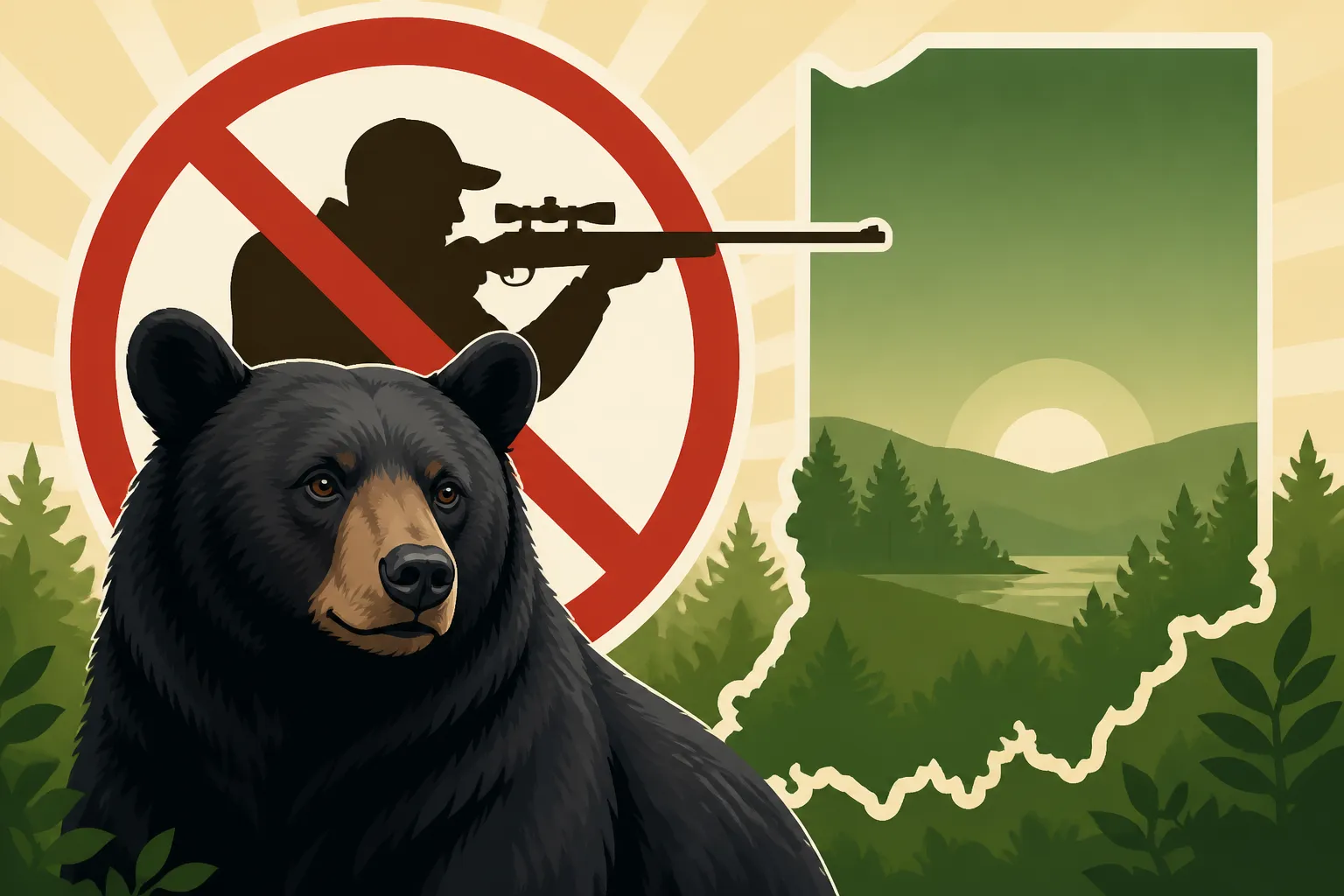
It can be incredibly frustrating to hear whispers and even see undeniable photographic evidence of black bears roaming Indiana, only to realize that, unlike our neighbors, we don't have an open hunting season for them. Many Hoosier hunters scratch their heads, wondering why these magnificent animals are off-limits when they're clearly establishing a presence. This guide is here to shed light on Indiana's current stance on black bears, explain the reasoning behind the lack of a hunting season, and offer insights into what the future might hold for these wanderers in our state.
The Elusive Indiana Black Bear: A Recent History
For generations, hearing about a bear in Indiana was usually met with skepticism, often dismissed as mistaken identity or a tall tale. Yet, in recent years, the evidence has become undeniable: black bears are, indeed, making their way back into the Hoosier State. It's a fascinating wildlife success story for the bears, but it certainly raises questions for hunters who are used to managing game populations.
Where Bears Come From
The black bears we're seeing in Indiana aren't just magically appearing; they're primarily dispersers from healthy, growing populations in neighboring states. Think about the strong bear populations in Michigan, particularly the Upper Peninsula, and even parts of Ohio and Kentucky. As these populations expand and younger males strike out to find new territories, some inevitably cross state lines and end up exploring Indiana's woodlands and river bottoms. They're looking for new food sources, mates, and just generally stretching their legs, sometimes traveling hundreds of miles. This natural expansion is a testament to successful conservation efforts in those areas, which is great news for bears, even if it presents new considerations for us here in Indiana.
How Sightings Are Documented
The Indiana Department of Natural Resources (DNR) takes bear sightings very seriously, though they don't actively encourage public interaction. When someone reports a black bear, conservation officers and wildlife biologists investigate. They look for tracks, scat, hair samples, and corroborating evidence like trail camera photos or videos. Genetic samples, when collected, can even tell them where a specific bear might have come from. The DNR maintains a public record of these Indiana's Occasional Black Bear Wanderers, charting their movements and helping us understand their presence. While not a permanent resident population, these documented sightings are crucial for understanding the current status of black bears in Indiana. It’s not just a rumor anymore; there’s solid data showing these animals are here, albeit intermittently.
Understanding Indiana's Wildlife Management Philosophy
Indiana's approach to wildlife management is steeped in science and conservation, always aiming to balance the health of wildlife populations with public safety and recreational opportunities. When it comes to a species like the black bear, which is considered extirpated (locally extinct) for so long, the focus shifts dramatically from managing an established population to understanding and supporting its potential return.
Focus on Species Reintroduction and Protection
For many decades, black bears were absent from Indiana due to historical habitat loss and unregulated hunting. Now, as they naturally return, the Indiana DNR's primary goal is to protect these individuals and allow for the natural re-establishment of a stable population, if possible. This means that any bear venturing into Indiana is generally considered a protected species. The philosophy here is that before you can even think about hunting a species, it needs to have a robust, self-sustaining population that can withstand hunting pressure without jeopardizing its long-term survival. Currently, Indiana's bear numbers are nowhere near that point. Our limited sightings, while exciting, don't represent a breeding population but rather transient individuals. It's a cautious, long-term approach, similar to how other species, like wild turkeys, were carefully reintroduced and managed until their populations flourished enough to support hunting seasons.
Differences from Neighboring States
It’s easy to look at states like Michigan, Wisconsin, or even Kentucky and wonder why they have bear seasons when Indiana doesn’t. The key difference lies in the status of their bear populations. These states boast well-established, breeding populations that have reached densities capable of supporting regulated hunting pressure. For instance, Michigan has a robust black bear population that requires management to keep numbers healthy and prevent overpopulation issues in certain areas. Kentucky, while historically having fewer bears than its northern neighbors, has seen its black bear population rebound significantly in the Appalachian regions, leading to a limited hunting season.
Here’s a quick comparison of the current status regarding black bears in Indiana versus some surrounding states:
| Feature/State | Indiana | Michigan | Kentucky | Ohio | Illinois |
|---|---|---|---|---|---|
| Established Breeding Population | No (Transient) | Yes | Yes (Eastern) | No (Transient) | No (Transient) |
| Hunting Season | No | Yes | Yes (Limited) | No | No |
| Population Management Goal | Protection, Monitor | Harvest, Management | Protection, Harvest | Monitor | Monitor |
| Primary Source of Bears | Dispersal from MI, KY | Self-sustaining | Self-sustaining | Dispersal from PA, WV | Dispersal from WI, MO |
This table clearly illustrates that Indiana, along with Ohio and Illinois, is still very much in the "monitoring and protecting" phase when it comes to black bears. The number of bears How Many Deer Have Tested CWD-Positive in Indiana in Indiana is still incredibly low, making any hunting season biologically unfeasible and ethically questionable from a conservation standpoint.
The Factors Against an Indiana Bear Season
While hunters might be eager for the possibility of a bear season, there are very practical and biological reasons why it's not on the horizon for Indiana anytime soon. It's a complex issue, involving more than just a few sightings.
Population Density and Distribution
The most significant factor is the sheer lack of a robust, breeding bear population. We don't have established breeding females and cubs across widespread areas. What we have are individual, usually young male, bears wandering into the state. They might stay for a while, explore, and then either move on or, unfortunately, sometimes get into trouble, like being hit by a car. For a hunting season to be sustainable, you need a population that can not only absorb annual harvest but also continue to grow. This requires a healthy sex ratio, consistent breeding, and sufficient numbers spread across suitable habitats. Indiana simply doesn't have that foundation yet. Trying to implement a season now would be like trying to harvest timber from a forest that's just starting to sprout saplings – it would undermine any chance of future growth.
Habitat Suitability and Connectivity
While Indiana has some excellent forested areas, particularly in the southern hill country like the Hoosier National Forest, the overall habitat connectivity for a large, wide-ranging animal like a black bear is still a challenge. Large tracts of unbroken forest are crucial for bears to thrive, find food, and avoid human conflict. Much of Indiana is heavily agricultural or urbanized, creating barriers and fragmenting potential bear habitat. Even where good habitat exists, it needs to be connected to allow bears to move freely and establish territories. Without these extensive, connected habitats, any naturally re-establishing population will struggle to grow to a point where hunting is even considered. This is a big reason Why Black Bears Rarely Reach Indiana in large numbers.
Public Perception and Political Will
Beyond the biological realities, public perception plays a huge role in wildlife management decisions, especially for charismatic megafauna like bears. While hunters might see a bear season as a logical step in game management, a significant portion of the non-hunting public often views these animals with a blend of awe and fear. There can be strong opposition to hunting bears, particularly when their numbers are perceived as low or when they are seen as a "recovering" species.
Historically, black bears were extirpated from Indiana. Many people want to see them return and thrive, and advocating for a hunting season at this early stage could be met with considerable public outcry. Wildlife agencies often have to balance the desires of different stakeholder groups, and at this point, the prevailing sentiment might be one of protection and recovery rather than harvest. Any decision to open a bear season would require extensive public discussion, biological surveys, and significant political will, none of which are currently in place.
What to Do If You Encounter a Black Bear in Indiana
Even without a hunting season, the increasing presence of black bears means we all need to be educated on how to safely coexist with them. Encounters are rare, but being prepared is always the best approach, especially when enjoying Indiana's public lands like Hoosier National Forest Hunting or state forests.
Staying Safe in Bear Country
If you're out hiking, camping, or hunting and find yourself in an area where bears have been sighted, common sense rules apply. The first and most important piece of advice is to never approach or feed a bear. A fed bear is a dead bear, as habituation to humans often leads to negative encounters and, ultimately, the bear's removal.
Here are some general safety tips:
- Make Noise: If you're hiking, talk, sing, or carry a bear bell to alert bears to your presence. Most bears want to avoid humans and will move away if they hear you coming.
- Secure Food: If camping, store food in bear-resistant containers, hung from a tree, or in your vehicle. Don't leave food scraps or trash around your campsite. Even bird feeders in residential areas can attract bears, so consider taking them down if a bear is known to be in the area.
- Travel in Groups: Bears are generally less likely to approach a group of people.
- Carry Bear Spray: In areas with known bear activity, carrying bear spray and knowing how to use it can be a wise precaution, although it's not something most Hoosiers consider for our local wildlife.
- If You See a Bear: Stay calm. Do not run. Make yourself look as large as possible, wave your arms, and speak in a loud, firm voice. Back away slowly while facing the bear. If the bear approaches, stand your ground and continue to make noise. If it charges, you may need to use bear spray.
Remember, black bears are generally shy and will avoid humans. Most encounters are simply a bear trying to go about its business.
Reporting Sightings to the DNR
Every reported sighting helps the Indiana DNR track the movements and numbers of these wandering bears. If you see a black bear, especially in an area where one hasn't been reported recently, it's crucial to contact the DNR. They have specific protocols for handling these reports. You can contact your local conservation officer or the DNR Division of Fish & Wildlife.
When reporting, be ready to provide as much detail as possible:
- Date and time of sighting.
- Exact location: GPS coordinates, street address, or descriptive landmarks.
- Description of the bear: Size, color, distinguishing marks, presence of cubs.
- Behavior of the bear: What was it doing? Was it aggressive? Was it calm?
- Photos or videos: These are incredibly helpful for verification.
The DNR uses this data to map How Indiana Tracks Wandering Bear Sightings and understand where bears are exploring. This information is vital for public safety announcements and for long-term population monitoring. Even if it's just a fleeting glimpse while Scouting Indiana Public Land Before Season, your report contributes to the scientific understanding of black bears in Indiana.
Future Prospects for Black Bears in Indiana
The question on many hunters' minds is, "Will Indiana ever have a black bear season?" It's a fair question, but one that currently has no definitive answer. The path to a sustainable bear population and a potential hunting season is a long one, filled with biological, social, and political hurdles.
Monitoring Population Growth
The most critical step toward any future bear season is the establishment of a self-sustaining, breeding population within Indiana. This isn't just about a few individual males showing up; it means female bears settling down, denning, and successfully raising cubs. For this to happen, several things need to align:
- Habitat Availability: Enough suitable, connected habitat to support multiple breeding territories.
- Consistent Influx: Continued dispersal from healthy populations in neighboring states to contribute to our gene pool.
- Minimizing Mortality: Keeping bear mortality rates, particularly from human-related causes like vehicle collisions or illegal harvest, as low as possible.
The Indiana DNR will continue to monitor sightings, investigate reports, and potentially employ more intensive monitoring methods like genetic sampling to gauge the actual presence and potential growth of a bear population. This scientific approach is the bedrock of all wildlife management decisions. The data, not just anecdotes, will ultimately dictate any future changes in policy.
Potential Management Changes Down the Road
If, and it's a big "if" at this point, Indiana ever sees a significant increase in its black bear population, the DNR would then begin to consider various management options. This could involve creating a formal bear management plan, which might include:
- Population Surveys: More rigorous methods to estimate population size and distribution.
- Education Programs: Increased public outreach on living with bears and reducing human-bear conflicts.
- Conflict Mitigation: Strategies to manage nuisance bears or those causing property damage.
Only after a robust, self-sustaining population is confirmed, and after extensive public input and biological analysis, would the topic of a regulated hunting season even enter the discussion. Such a season would likely start very conservatively, with limited tags and specific harvest zones, similar to how many states manage nascent populations of large game.
For now, black bears remain on the list of Game You Cannot Hunt in Indiana. While we might not have a bear season today, the return of these animals is a compelling story of nature's resilience. As hunters and conservationists, our role is to appreciate their presence, report sightings responsibly, and understand the ecological journey that lies ahead for these magnificent creatures in the Hoosier State.
Disclaimer
The information provided in this guide is for general informational purposes only and is subject to change. Always consult the official Indiana Department of Natural Resources (DNR) regulations and guidelines for the most current and accurate hunting and wildlife management rules. Wildlife regulations can change frequently, so verifying with the official sources before engaging in any hunting or wildlife-related activities is crucial.