Canada Geese on Indiana Farmland
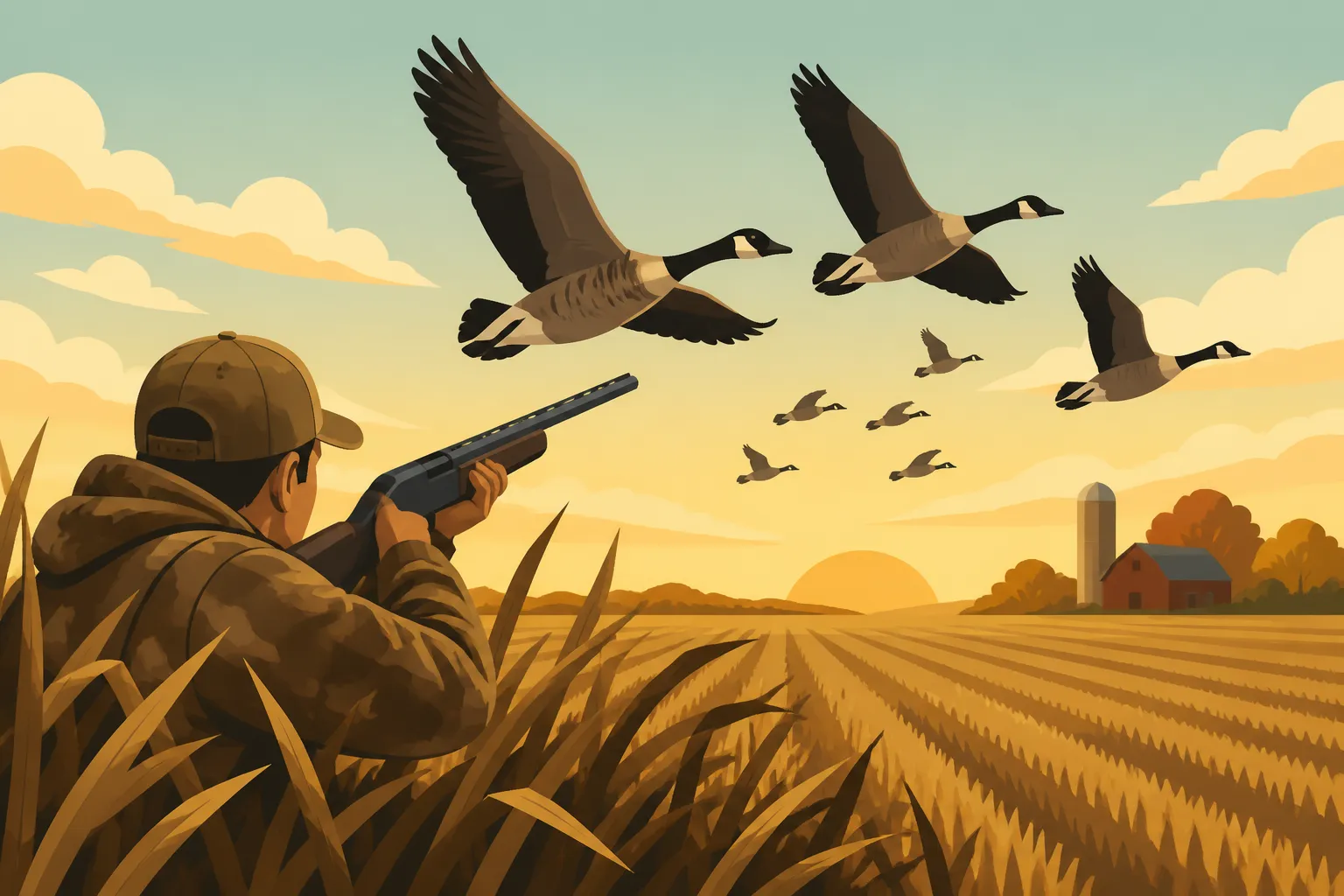
Hunting Canada geese on Indiana farmland can feel like a game of cat and mouse, especially when those big birds are spread out across thousands of acres of cut fields. It’s frustrating to see them everywhere, yet struggle to get them to commit to your spread. This guide is all about tackling that challenge head-on, giving you the insights and practical strategies you need to consistently put Canada geese in your strap when they’re feeding on Indiana’s rich agricultural lands.
Understanding Indiana's Farmland Goose Population
Indiana has a robust population of Canada geese, and while some are migratory, a significant portion are resident birds. These geese have adapted incredibly well to our agricultural landscape, often nesting in urban and suburban areas, then flying out to feed in vast corn and soybean fields once hunting season rolls around. This adaptation changes how we hunt them compared to their more traditional marsh or river haunts, presenting both unique opportunities and specific challenges.
Resident Geese Versus Migratory Birds
The distinction between resident and migratory Canada geese is crucial for Indiana hunters. Resident geese, as their name suggests, spend their entire lives within a relatively small geographical area. They learn the local landscape, food sources, and safe havens intimately. This means they are often less wary of human activity in general, but incredibly sharp when it comes to specific hunting pressure. They know every dog walker, every farm truck, and sadly, often every decoy spread in their immediate vicinity. Migratory geese, on the other hand, are traveling through and can be more susceptible to traditional calling and decoying tactics because they haven't experienced the same localized pressure. However, identifying which you're dealing with, and adapting to their typical behavior, is key to success.
Food Sources and Seasonal Movements
Indiana's farmlands offer an undeniable buffet for Canada geese. From freshly cut corn and soybean fields in the early fall to winter wheat and even grazed pastures, geese find ample nutrition to sustain their large bodies. Understanding what they're currently feeding on is paramount. In early season, they might be picking up waste grain in cut cornfields, while later, they'll target green shoots of winter wheat or even leftover soybeans. Their daily patterns often involve roosting on larger bodies of water – like reservoirs, large farm ponds, or sections of the Wabash River – and then flying out to feed during daylight hours. These movements are incredibly predictable once you pattern them, but they can shift rapidly due to weather changes, hunting pressure, or the availability of new food sources. Keeping an eye on what fields have just been harvested, or what green shoots are emerging, will give you a significant edge.
Scouting Indiana Farmland for Geese
Effective scouting is the bedrock of successful Canada goose hunting on Indiana farmland. You can have the best gear and calling skills in the world, but if you're not where the geese want to be, you're just practicing. It’s a time-consuming but highly rewarding part of the process, and it often feels like detective work.
Identifying Roosting and Feeding Areas
The first step in scouting is finding where the geese are spending their time. Roosting areas are typically large, open bodies of water where geese feel safe from predators at night. This could be a sprawling reservoir like Lake Monroe, a wide stretch of the Kankakee River, or even a large, undisturbed farm pond. Their flight paths from these roosts to their feeding grounds are often consistent, especially early in the season. You'll want to observe these flights at dawn and dusk. Look for large groups lifting off the water, heading in a particular direction, and then observe where they settle down to feed.
Feeding areas are generally the open agricultural fields. Look for fresh droppings, disturbed stubble, or even visible geese feeding. Pay close attention to the type of field (corn, beans, wheat) and the specific section of the field they are using. Geese tend to return to the same feeding spots until the food source is depleted or they are heavily pressured. Using aerial maps, which you can easily access through tools like GoHunt, can help you identify potential roosting waters and map out flight corridors between water and fields. This digital reconnaissance saves a lot of legwork, allowing you to prioritize which areas to scout in person.
Observing Daily Patterns and Flight Paths
Once you've identified potential feeding fields, it's time for some serious observation. Set up with a good pair of binoculars or a spotting scope (and be sure to check out our guide on Binocular Choice for Indiana Whitetails for some related advice on optics), well away from the birds, and watch them throughout the day. When do they arrive? How long do they stay? What part of the field do they prefer? Do they leave and return later? Understanding these nuances helps you pick the optimal time and precise location for your setup.
Note their flight paths – are they coming in high and circling, or are they making a low, direct approach from a certain direction? This intelligence will inform your decoy spread orientation and blind placement. Also, pay attention to the wind direction on the days you're scouting. Geese, like all waterfowl, land into the wind. Knowing the prevailing winds for your hunt day can dictate your entire setup. Don't be afraid to put in several scouting trips; patterns can change, and fresh intel is always worth the effort.
Gaining Permission on Private Land
The vast majority of prime goose hunting on Indiana farmland happens on private property. This means you absolutely must secure permission from the landowner before you even think about setting foot on their fields. This can be one of the most daunting aspects for many hunters, but a polite, respectful approach goes a long way. Start by identifying the landowner through county plat maps or by asking locals. Then, make a direct, in-person approach if possible. Dress neatly, introduce yourself, and clearly state your intentions. Offer to share some of your harvest, help with chores, or keep an eye on their property.
It’s a relationship-building exercise, not a transaction. Be clear about your hunting style, how many people will be with you, and any vehicles you'll be using. Always respect their property, leave no trash, and close all gates. Remember, they are doing you a favor. Never take access for granted. If you get permission, consider discussing Hunting Northern Indiana Farmland Deer or even other opportunities beyond goose season to build a lasting relationship. The Indiana DNR website also has resources on landowner permission, but nothing beats a face-to-face conversation.
Essential Gear and Setup for Farmland Goose Hunting
Once you've done your scouting and secured permission, it's time to gather your gear and plan your setup. Hunting geese on open fields requires specialized equipment to achieve the concealment and realism needed to fool these sharp-eyed birds. Don't cut corners here, as geese are notoriously wary.
Decoy Spreads and Types
Decoys are your primary tool for attracting geese. For farmland hunting, realism is key. You'll want a good number of full-body decoys, often 2-3 dozen, to simulate a flock of feeding geese. Shells can work to bulk up numbers, especially when paired with full-bodies. Motion decoys, such as a "flapper" or a few fully flocked silhouettes on stakes that move in the wind, add a crucial element of realism. These movements mimic feeding geese and can draw attention from long distances.
When setting up your spread, think about what a real flock looks like. Geese feed in family groups, often loosely spread out but with a clear "landing zone" where they feel safe to commit. A common setup is a "J" or "U" shape, with the open end facing into the wind, providing a clear flight path and landing zone. Place some "sentry" decoys (upright, alert-looking) on the edges, and some "feeders" (heads down, feeding) in the middle. Pay attention to our advice on Decoy Placement for Pressured Indiana Birds for more nuances, though that article focuses on turkeys, the principles of making decoys appear natural are similar. Overlapping family groups with varying postures will give your spread a natural, unpressured look.
| Decoy Type | Pros | Cons | Best Use |
|---|---|---|---|
| Full-Body | Most realistic, good movement | Bulky, expensive, heavy to transport | Primary spread, close-in realism |
| Shells | Lighter, stackable, less expensive | Less realistic, no motion without modification | Bulk numbers, perimeter of spread |
| Silhouettes | Very portable, affordable, easy to set up | Two-dimensional, less realistic up close | Building large numbers quickly, adding depth |
| Motion Decoys | Adds realism and attracts attention | Can be expensive, mechanical issues possible | Focal points, drawing distant birds |
Choosing Effective Blinds and Concealment
Geese have incredible eyesight, which makes concealment paramount. Layout blinds are the standard for field hunting. These low-profile blinds allow you to lie flat in the field, virtually disappearing into the stubble. Make sure your blind is brushed in thoroughly with local vegetation from the field you're hunting. Don't just throw a few stalks on it; truly become part of the field. This means taking the time to gather corn stalks, soybean stubble, or whatever else is available, and weaving it into the blind's stubble straps. For ideas, consider tips from Brushing In a Blind on a Field Edge.
Beyond the blinds themselves, personal concealment is also key. Wear camouflage that matches the field environment, often dull browns, tans, and grays. Face masks and gloves are non-negotiable to break up your human outline. Even if you're in a layout blind, a quick glance up with an exposed face can flare birds. Avoid shiny objects or sudden movements. Remain still until the moment to shoot.
Shotgun and Ammunition Selection
For Canada geese, a 12-gauge shotgun is the universal choice. Most hunters opt for a 3-inch or 3.5-inch magnum, providing ample power and pellet count. A modified or improved modified choke is a good starting point, offering a dense pattern at typical shooting ranges (25-45 yards). When it comes to ammunition, non-toxic shot is legally required for all waterfowl hunting, and steel shot is the most common and cost-effective option.
For steel shot, BB, BBB, or T shot sizes are excellent choices for Canada geese, providing good energy transfer and pattern density. Experiment with different brands and shot sizes to see what patterns best out of your specific shotgun and choke combination. Patterning your shotgun is not just a suggestion; it's a necessity. You need to know exactly how your gun performs at typical hunting distances to ensure clean kills. Don't forget to practice shooting from your layout blind, as it's a different shooting position than standing or sitting in a treestand.
Effective Hunting Tactics for Field Geese
You've done the scouting, you've got the gear, now it's time to execute. Hunting Canada geese in Indiana's farmlands demands patience, precision, and an understanding of goose behavior.
Decoy Spreads and Blind Placement
Setting up your decoy spread is an art form. As mentioned, a "J" or "U" shape facing into the wind with an open landing strip is classic. This allows geese to approach, lock up, and land without feeling crowded. Place your layout blinds on the "crossbar" of the "J" or "U", allowing you to shoot at birds over the decoys as they commit to the landing zone. Crucially, position your blinds so you have the wind at your back, forcing the geese to land directly in front of you. Geese almost always land into the wind.
Beyond the shape, consider the density of your spread. Sometimes a tight cluster works, mimicking a feeding frenzy. Other times, a more spread-out look suggests relaxed birds. Adapt to the pressure they've been seeing. If they're heavily pressured, a smaller, more realistic spread might be more effective than a massive one. If possible, set up near a slight rise or dip in the field. These subtle topographic features can help break up your outline even further, as discussed in detail in guides like Hunting Layout Blind Hunting Indiana Farm Fields.
Calling Strategies and Communication
Goose calling is about more than just making noise; it's about communication. Learn the basic goose vocalizations: the greeting call, the cluck, the moan, and the pleading call. A good hail call will get their attention from a distance, but as they get closer, you need to transition to more realistic, conversational calls. Clucks and moans simulate feeding geese, encouraging them to commit. A few sharp "honks" can often turn a hesitant flock.
Calling should be a team effort if you're hunting with partners. Designate a primary caller, but have others join in with clucks and moans to create a realistic "flock sound." Watch the birds' reactions intently. If they start to turn away, change your calling. If they're locked in, sometimes less is more. Know when to lay off the call and let the decoys do their work. A crucial element often overlooked is subtle, soft calling that makes them feel like they're flying into a perfectly natural, undisturbed situation.
Timing the Shot and Safety
Timing the shot is critical. Resist the urge to jump up too early. Let the geese commit fully, dropping their landing gear and cupping their wings, as they set down in your decoys. The ideal shot is when they are hovering, just above the decoys, or have just touched down. A common mistake is shooting at birds that are still too far out or too high. This often results in cripples or missed birds and can educate the flock, making them harder to hunt in the future.
Communicate clearly with your hunting partners. Designate a shot caller who gives the command to rise and shoot. This ensures everyone is on the same page and prevents someone from standing up prematurely. Always maintain safe shooting lanes and be absolutely certain of your target and what lies beyond it. When shooting, aim for the bird's head or neck for a clean, quick kill. This is especially important for large, tough birds like Canada geese.
Navigating Regulations and Access on Indiana Farmland
Hunting waterfowl in Indiana, particularly on farmlands, comes with specific regulations and requires careful attention to legal access. Ignoring these details can lead to fines, loss of privileges, and give hunters a bad name.
Indiana Waterfowl Season Dates and Bag Limits
Indiana's waterfowl seasons are set by the Indiana Department of Natural Resources (DNR) in coordination with the U.S. Fish and Wildlife Service, falling under the Mississippi Flyway regulations. Canada goose seasons typically include an early September resident goose season, followed by a longer regular season that often includes multiple zones (North, Central, South) with staggered dates to account for migration patterns. It’s absolutely crucial to check the current year’s Indiana Migratory Bird Regulations guide, available on the DNR website, for specific dates, shooting hours, and daily bag limits. These can change annually, and relying on last year’s knowledge is a recipe for trouble.
Bag limits vary, but for Canada geese, they are often generous during the early resident season and then may be more restricted during the main migratory season. Always respect these limits. Over-bagging is a serious offense that harms the resource and the reputation of law-abiding hunters. You’ll also need to be federally HIP (Harvest Information Program) certified when you purchase your license, and acquire an Indiana Migratory Waterfowl Stamp, in addition to your state hunting license and federal duck stamp. Our comprehensive guide on Indiana Duck and Goose Bag Limits provides an excellent overview of these critical rules.
Understanding Public Versus Private Land Access
While there are some public hunting opportunities for waterfowl in Indiana, such as at Fish and Wildlife Areas (FWAs) like Willow Slough or Tri-County, or along larger rivers like the Kankakee, the most consistent field hunting for Canada geese usually occurs on private farmland. Public land hunting for field geese can be incredibly challenging due to high pressure and often less consistent goose activity.
This brings us back to the vital importance of securing permission on private land, as discussed earlier. Never assume access, even if a field looks unposted or unused. Always get explicit permission from the landowner. Some landowners might allow hunting but have specific rules about vehicle access, timing, or even who can hunt. Respect these stipulations without question. Using mapping apps like GoHunt can help you identify land ownership, which is the first step in asking for permission. Remember, good relationships with landowners are the lifeblood of private land hunting in Indiana.
Key Regulations Beyond Licenses
Beyond licenses and bag limits, several other regulations are critical for Indiana waterfowl hunters. For instance, migratory birds, including geese, must be hunted with non-toxic shot. Lead shot is strictly prohibited for waterfowl. You also need to be aware of regulations regarding baiting; it is illegal to hunt waterfowl over baited areas. This means no scattering corn, grain, or other feed to attract birds.
Shooting hours for migratory birds generally run from one-half hour before sunrise to sunset. Make sure you have an accurate timekeeping device and know your exact sunrise and sunset times for your specific location. Additionally, federal regulations require hunters to retrieve all downed birds. Making every effort to recover game is not just a legal requirement but an ethical one. Understanding these rules ensures you're hunting responsibly and legally.
Challenges and Considerations for Successful Field Hunts
Hunting Canada geese on Indiana farmland can be incredibly rewarding, but it’s rarely easy. There are common challenges that every hunter faces, and knowing how to anticipate and overcome them can drastically improve your success.
Dealing with Educated Geese
Resident Canada geese, especially those that spend their lives in areas with hunting pressure, become incredibly educated. They’ve seen every decoy spread, heard every call, and are experts at identifying anything out of place. This means you need to be at the top of your game. Ultra-realistic decoys, flawless concealment, and nuanced calling are more important than ever. Instead of just setting out a dozen decoys, consider a larger, more varied spread that mimics a bustling, confident flock. For highly educated birds, often a smaller, more realistic spread with perfect hide and soft calling is better.
One of the biggest mistakes hunters make with educated geese is over-calling. If the birds are working, meaning they're headed towards your spread, often the best call is no call at all. Let them commit on their own terms. If they hesitate, a few soft clucks and moans, or a quick "come back" honk, might be all it takes. Remember, geese want to be where other geese are. Your job is to convince them your spread is the safest, most appealing spot on the field.
Adapting to Weather and Wind Conditions
Weather is an absolute game-changer in waterfowl hunting. A cold front, snow, or heavy rain can bring new birds into the area and concentrate existing ones on prime food sources. Conversely, warm, sunny days can make geese lazy and less predictable. Always check the forecast leading up to your hunt. Strong winds are generally your friend, as they make geese fly lower and more predictably, landing directly into the wind, which aids your setup. However, high winds can also make calling difficult and blow around lightweight decoys.
Calm days are often the toughest. Without wind, geese can approach from any direction, and motion decoys lose their effectiveness. On calm days, consider adding flaggers or wing-spinners (where legal) to create visual motion. A slight breeze can make all the difference, giving your decoys a natural wobble. When it comes to clothing, layering is key for Indiana's unpredictable weather. From mild early season hunts to bitter cold late-season days, you'll need gear that keeps you warm, dry, and concealed. You might find our discussion on Layering for an Indiana Deer Stand useful, as the principles of staying comfortable in diverse Indiana weather apply across species.
Recovering Downed Geese
Successfully recovering downed geese in vast corn or soybean fields can be a challenge, especially if they sail after the shot. A good retriever dog is an invaluable asset for field hunting. Not only do they speed up recovery, but they also reduce the likelihood of losing birds, which is an ethical imperative. If you don't have a dog, mark the fall of every bird carefully. Pick a landmark in the distance, note the row you're in, and walk a straight line to the bird.
In tall corn stubble or thick winter wheat, even a clearly marked bird can be hard to find. It's often helpful to have multiple spotters watching the fall. If a bird appears to be a cripple, follow up immediately and dispatch it humanely. Leaving wounded game in the field is unacceptable. Being prepared for recovery, whether with a well-trained dog, clear communication, or careful marking, is a vital part of every successful goose hunt.
Disclaimer
Hunting is an inherently dangerous activity. This content is for informational purposes only and does not constitute professional advice. Always prioritize safety, adhere to all local, state, and federal hunting regulations, and obtain proper licenses and permits. It is your responsibility to understand and follow all laws. Always seek proper training and guidance before attempting any hunting activity.