How Many Acres of Public Land Indiana Has
As an Indiana hunter, it’s easy to feel like you’re constantly up against a wall, navigating endless private property lines and wondering if there’s any public ground left to stretch your legs on. The truth is, while we don't boast the vast federal lands of some Western states, Indiana actually offers hundreds of thousands of acres for public hunting. This guide is dedicated to breaking down exactly how much public land we have, where to find it, and how to make the most of these invaluable resources.
Understanding Indiana's Public Land Holdings: More Than Meets the Eye
For many hunters, especially those new to the state or coming from areas with massive national forests, Indiana's public land situation can feel a bit underwhelming at first glance. We often hear the lament, "There's just no public land to hunt in Indiana!" But that perception, while understandable given our heavily agricultural landscape, doesn't quite tell the full story. We actually have a significant, albeit often fragmented, collection of public acres that provide fantastic hunting opportunities for deer, turkey, small game, and waterfowl.
Overall Acreage and Perception vs. Reality
It's true that Indiana is largely a state of private land, with a vast majority of its acreage dedicated to agriculture or private woodlands. This reality can make finding a place to hunt feel like an uphill battle, especially if you're not connected to landowners. However, the state, through various agencies, maintains a substantial amount of public ground. When you combine our National Forest, numerous State Forests, multiple Fish and Wildlife Areas (FWAs), and federal wildlife refuges, the total acreage available to hunters really adds up. It might not be one giant block of wilderness, but it's spread across the state, offering diverse ecosystems and hunting challenges. The key is knowing how to identify these parcels and understanding their unique management philosophies.
Hunting these public lands isn't just about finding a spot; it's about embracing a different kind of hunting experience. You're often going to encounter more pressure than on a secluded private farm, which means your tactics might need to adapt. But the reward is worth it: the satisfaction of earning your deer or turkey on ground that belongs to all of us.
Diverse Categories of Public Hunting Ground
Indiana's public hunting land isn't a single, uniform entity. Instead, it's a mosaic of different types of properties, each managed by various state or federal agencies, and each with its own set of rules, habitat, and typical game. Understanding these categories is the first step to becoming an effective public land hunter in the Hoosier State. From the rugged hills of the south to the marshy expanses of the north, these diverse lands offer something for every kind of hunter.
You'll find massive contiguous blocks of timber, intensely managed wildlife areas, and even smaller, often overlooked parcels that can hold surprises. Each type of land offers a distinct challenge and reward, requiring different scouting methods, gear, and strategies. Knowing the difference between, say, a State Forest and a Fish and Wildlife Area, can dramatically impact your success and help you avoid running afoul of specific regulations.
| Public Land Type | Primary Managing Agency | General Acreage Estimate | Typical Game Species | Key Characteristics |
|---|---|---|---|---|
| Hoosier National Forest | U.S. Forest Service | ~200,000 acres | Deer, Turkey, Squirrel, Predator | Rugged hills, large timber blocks, minimal development |
| Indiana State Forests | Indiana DNR – Forestry | ~160,000 acres | Deer, Turkey, Squirrel, Grouse (limited) | Timber production, hiking, some camping, diverse habitats |
| Fish and Wildlife Areas (FWAs) | Indiana DNR – Fish & Wildlife | ~100,000 acres | Deer, Turkey, Waterfowl, Pheasant, Rabbit, Squirrel | Actively managed for wildlife, specific regulations, draw hunts possible |
| National Wildlife Refuges | U.S. Fish & Wildlife Service | ~50,000+ acres | Deer, Waterfowl, Turkey (often permit/quota based) | Strict conservation focus, often limited access or special permits |
| State Parks (Managed Hunts) | Indiana DNR – State Parks | Varies greatly by park | Deer (antlerless often emphasized) | Controlled hunts for population management, very limited access |
Diving Deep into Indiana's Major Public Land Types
While Indiana might not have millions of acres of federal land like some states out West, we do have significant tracts that offer tremendous hunting opportunities. These larger public areas form the backbone of public land hunting in the state, drawing hunters from all corners looking for adventure and a chance to fill their tags. Understanding the characteristics of these major land types is crucial for planning successful hunts. They each present unique terrain, habitat, and management considerations that directly impact how you approach your time in the woods.
Hoosier National Forest – The Southern Gem
Stretching across nine counties in southern Indiana, the Hoosier National Forest Hunting is by far the largest single block of public hunting land in the state, encompassing well over 200,000 acres. This forest is characterized by its rugged topography, deep ravines, mature hardwoods, and winding creek bottoms. It’s a completely different world from the flat, agricultural fields of central and northern Indiana. Here, you'll find plenty of challenging terrain that rewards the hunter willing to put in the miles and climb the hills. It's truly a place where you can feel like you've escaped the crowds, even though it's still heavily utilized by hunters.
The Hoosier National Forest is renowned for its deer and turkey hunting. The vast timberlands provide excellent cover and food sources, though finding concentrations of game can require extensive scouting. Many hunters choose to use portable treestands or saddle hunt here due to the varied tree sizes and the need for mobility. The steep ridges and hollows also mean that understanding wind and thermals is absolutely critical for success, especially during the archery and muzzleloader seasons. For instance, knowing how the cool morning air flows down a creek bottom before the sun hits the ridge can make or break a sit.
Indiana State Forests – Hardwoods and Hills
Beyond the Hoosier National Forest, Indiana is home to numerous State Forests, collectively offering another significant chunk of hunting ground, totaling roughly 160,000 acres. These properties, managed by the Indiana Department of Natural Resources (DNR) Division of Forestry, are often found in the more rugged, timbered regions of the state, particularly in south-central Indiana. State Forests like Yellowwood, Morgan-Monroe, Jackson-Washington, and Clark are particularly popular among deer and turkey hunters, providing thousands of acres of contiguous habitat.
Hunting in State Forests often involves similar challenges to the National Forest – steep terrain, dense timber, and the need for solid map and compass skills or a reliable GPS app. However, State Forests are actively managed for timber production, which means you’ll often encounter areas of recent logging activity. These clear-cuts or thinned stands, while initially appearing disruptive, can create incredible new deer and turkey habitat, offering dense cover and browse that attracts game. Learning to read these timber cuts and Hunting a Clear-Cut Regrowth Edge can be a game-changer. Just remember that logging operations can sometimes be active during hunting season, so always be aware of your surroundings.
Fish and Wildlife Areas (FWAs) – Managed for Wildlife
Indiana's Fish and Wildlife Areas (FWAs) represent another critical component of the state's public hunting landscape, encompassing approximately 100,000 acres across various properties. These lands are specifically managed by the Indiana DNR Division of Fish & Wildlife with an intense focus on habitat improvement and wildlife production. Unlike State Forests, which are managed for multiple uses including timber, FWAs prioritize wildlife and public recreation centered around hunting and fishing. This management difference often means more accessible habitat work, food plots, and water features designed to attract and hold game.
Many FWAs are renowned for their excellent waterfowl hunting, with managed wetlands and specific rules for blind drawing and hunting days, like at Glendale or Tri-County FWA. Others offer fantastic opportunities for deer, turkey, pheasant, rabbit, and squirrel. How Indiana Fish and Wildlife Areas Are Managed is a testament to dedicated conservation efforts. However, this intensive management often comes with more specific regulations than State Forests or the National Forest. Hunters often need to sign in and out daily, and some areas may have special permit requirements or designated hunting zones. Always check the FWA's specific rules before you head out, as they can vary greatly from one property to another.
Smaller, But Significant, Public Hunting Opportunities
While the Hoosier National Forest, State Forests, and FWAs are the giants of Indiana's public hunting lands, there are also smaller, sometimes overlooked, opportunities that can be incredibly productive. These areas might not cover as much ground individually, but collectively they add to the state's diverse offering and can provide unique hunting experiences, often with fewer crowds if you do your homework.
National Wildlife Refuges – Special Regulations
Indiana is home to several National Wildlife Refuges, managed by the U.S. Fish and Wildlife Service, such as Big Oaks National Wildlife Refuge and Muscatatuck National Wildlife Refuge. These refuges are primarily dedicated to wildlife conservation, and while some offer hunting, it's often under very specific rules and often via a quota or permit system. For example, Big Oaks National Wildlife Refuge Hunting is a unique experience where hunters must apply for permits and adhere to strict guidelines. These hunts are generally highly regulated to ensure wildlife populations are managed sustainably and to minimize disturbance to non-hunting activities.
Before planning a hunt on a National Wildlife Refuge, it's absolutely essential to consult their specific regulations, which can be found on the refuge's official website or by contacting their office directly. You might find limitations on weapon types, hunting days, or even specific areas open to hunting. While they might require more planning and potentially an application process, the quality of hunting in these carefully managed ecosystems can be exceptional, offering a chance at mature animals in undisturbed settings. Don't let the extra hoops deter you; these can be some of Indiana's best-kept secrets.
State Parks and Other Niche Areas
You might be surprised to learn that some of Indiana's State Parks also offer limited hunting opportunities, primarily through special managed hunts to control deer populations. These hunts are usually highly controlled, often antlerless-only, and require a special application or draw. Indiana State Park Hunting Rules outline these unique programs, which are a vital tool for the DNR to manage deer populations within park boundaries, where traditional hunting isn't allowed. These hunts can offer a chance to hunt in areas that receive very little pressure outside of these specific events, and success rates can be quite high due to dense deer populations.
Beyond State Parks, there are also other smaller, sometimes less-publicized public access points. These might include local park properties, specific land trust holdings that allow hunting, or even small parcels of state-owned land managed by other divisions that allow public access. These smaller areas might not be advertised widely and can require diligent scouting and research to discover. Sometimes a small, brushy creek bottom accessible via a road right-of-way can hold a surprising amount of small game or even a bedded deer. While they might not provide expansive wilderness, these niche areas contribute to the overall public land available and are often overlooked gems for the persistent hunter.
Navigating and Maximizing Your Public Land Access
Finding public land is one thing; effectively navigating it, understanding its boundaries, and knowing the specific rules is another challenge entirely. Many a hunt has been ruined, or even worse, a hunter has unknowingly trespassed, simply because they weren't fully equipped with the right tools and information. In a state like Indiana, where public land can be fragmented and often borders private holdings, precision and preparation are paramount.
Essential Mapping Tools for Indiana Hunters
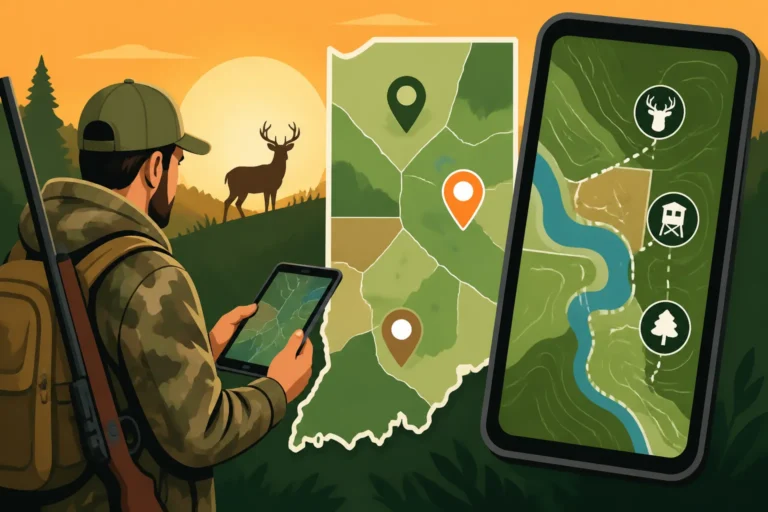
In today's age, a physical map and compass are still invaluable, but digital mapping tools have revolutionized how we access and navigate public hunting land. For Indiana hunters, apps like onX Hunt and GoHunt are absolute game-changers. These platforms offer detailed aerial and topographic maps with property ownership layers, clearly delineating public land from private. This is critical in Indiana, where a woodlot you plan to hunt might be public on one side and private on the other, or a seemingly continuous timber block might be a patchwork of ownership.
Using onX Hunt, for example, you can see exactly where you are in relation to property lines, preventing accidental trespass and giving you confidence in your location. You can also identify landowners, which can be useful if you're ever considering asking for private land permission. Furthermore, these apps allow you to mark waypoints, measure distances, and track your movements, making scouting and in-season navigation far more efficient. Knowing the precise boundaries allows you to maximize every acre of public land, ensuring you stay legal while exploring new hunting spots. Investing in one of these mapping subscriptions is arguably one of the best tools a public land hunter in Indiana can have.
Understanding Rules and Regulations by Land Type
One of the biggest pitfalls for public land hunters in Indiana is assuming that all public land operates under the same set of rules. This couldn't be further from the truth. As we've discussed, whether you're hunting in the Hoosier National Forest, a State Forest, a Fish and Wildlife Area, or a National Wildlife Refuge, the regulations can vary significantly. What's perfectly legal on one property might be a violation on another, leading to frustration or even fines.
For example, many Fish and Wildlife Areas require daily sign-in or a property access permit, and some have specific hunter check stations or special drawings for certain hunts. Indiana Property Access Permit Requirement is a real consideration. State Forests generally have more relaxed rules regarding camping and stand placement compared to FWAs, but they still have limits. National Wildlife Refuges often have the most stringent regulations, sometimes requiring specific permits, limiting caliber choices, or restricting entry to certain times. Even something as basic as Indiana Blaze Orange Requirements can have nuances depending on the season and specific location. Before you ever set foot on public land, always consult the Indiana DNR's hunting guide and any specific rules posted for that particular property. A quick online search for the property's management plan or calling the property office can save you a lot of grief and ensure a legal, enjoyable hunt.
The Hunter's Role in Public Land Stewardship
Hunting on public land isn't just a privilege; it comes with a responsibility. These lands are shared resources, and our actions as hunters directly impact their quality, accessibility, and the public's perception of hunting. Embracing the role of a steward means more than just following the rules; it means actively contributing to the health and future of these precious resources. It's about ensuring that the next generation of Hoosier hunters has the same, if not better, opportunities than we do today.
Practicing Low-Impact Hunting Ethics
When we hunt on public land, we're sharing that space with hikers, birdwatchers, mountain bikers, and other outdoor enthusiasts. Practicing low-impact hunting ethics is paramount to minimizing our footprint and fostering positive relationships with other user groups. This includes adhering to Leave No Trace principles: pack out everything you pack in, and perhaps even a little extra trash you find. Avoid creating new trails or disturbing sensitive areas. Be mindful of your scent control, not just for the deer, but for other people who might stumble upon your area.
Ethical game retrieval is another critical aspect. If you make a shot, do everything in your power to recover that animal, even if it means working late into the night. Leaving a wounded animal to go to waste reflects poorly on all hunters. Similarly, if you're using a treestand, make sure it's removed according to regulations, typically within a certain timeframe after the season closes. Treestand Rules on Indiana Public Land are there for a reason – to prevent stands from being abandoned and becoming a safety hazard or eyesore. By being conscientious, we ensure that public lands remain clean, safe, and welcoming for everyone, including future hunters.
Supporting Conservation Efforts
Every time you purchase an Indiana hunting license or a duck stamp, you are directly contributing to the conservation and management of our public lands and wildlife populations. A significant portion of these funds goes towards habitat improvement, wildlife research, law enforcement, and maintaining the very public access points we rely on. This is the cornerstone of the North American Model of Wildlife Conservation – that hunters and anglers fund conservation.
Beyond license fees, there are other ways to support conservation. Consider volunteering for habitat improvement projects at a local FWA or State Forest. Many organizations, like the National Wild Turkey Federation, Pheasants Forever, and Ducks Unlimited, actively work on public land projects and welcome volunteers. Even providing constructive feedback to the Indiana DNR about your experiences on public land can be valuable. Your observations can help inform future management decisions. By actively engaging in these efforts, we help ensure that Indiana's public lands continue to thrive, providing vital habitat for wildlife and invaluable recreational opportunities for generations to come.
Disclaimer
This article is for general informational purposes only and does not constitute professional advice. Laws, prices and regulations vary by location and change over time. Consult a qualified professional for guidance on your specific situation.