Best Rifle Caliber for Indiana Deer
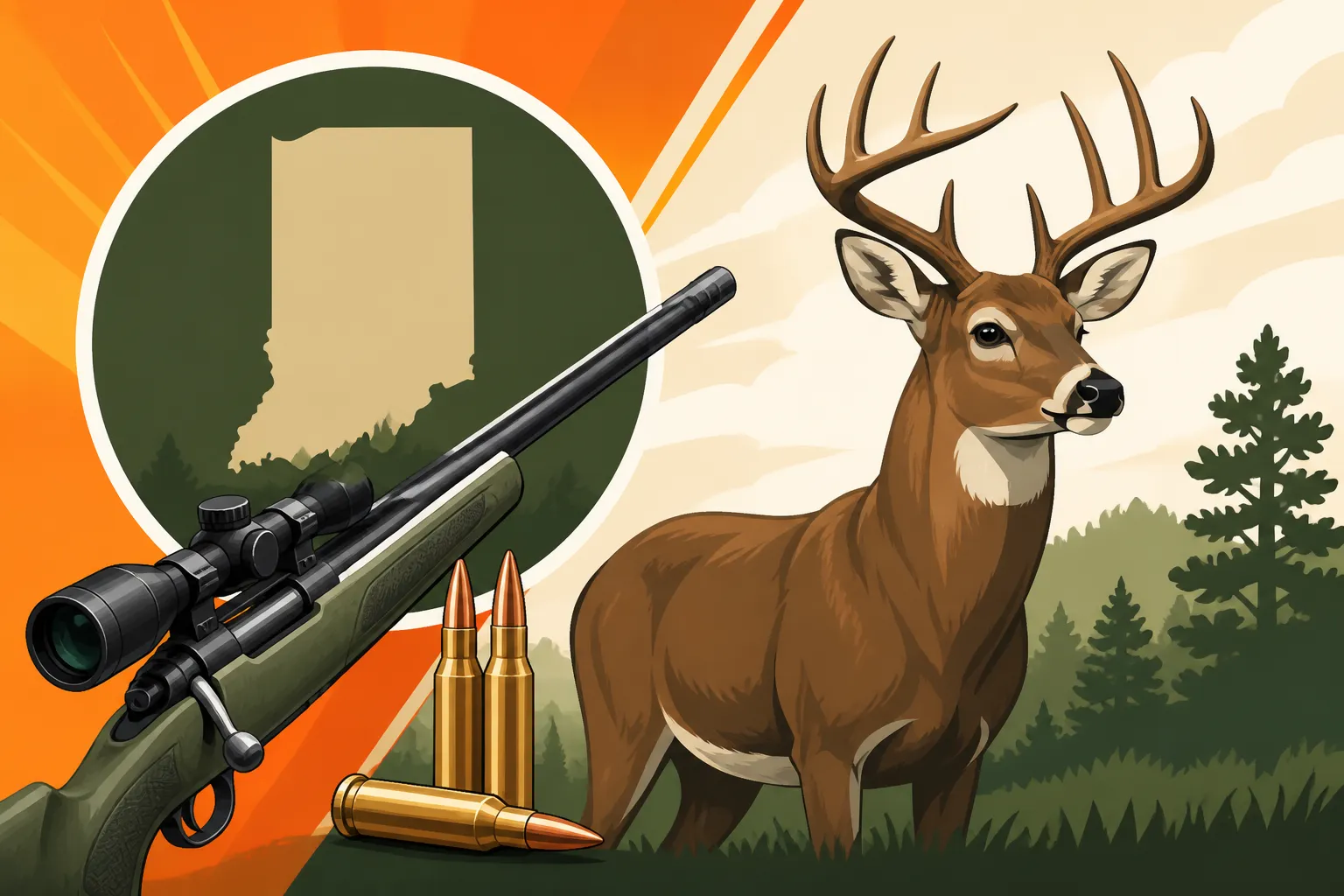
The question of the "best" rifle caliber for hunting deer in Indiana used to be a really specific one, filled with discussions around straight-wall cartridges and the limitations they imposed. For years, Hoosier hunters wrestled with a very particular set of rules that dictated what kind of rifle they could even bring into the woods for deer season. It was frustrating for many, feeling like we were missing out on modern ballistic advancements or just the freedom to choose a rifle that fit our personal preferences and hunting styles. Thankfully, those days have largely changed, and now Indiana deer hunters have a much wider array of options. This guide will dive deep into what makes a great deer caliber for Indiana's diverse terrain, explore some top contenders, and help you navigate the choices now available to you.
The Evolution of Indiana's Rifle Rules: A Game Changer
For a long time, Indiana's deer hunting regulations for firearms were famously restrictive, particularly when it came to centerfire rifles. Hunters were essentially limited to shotguns, muzzleloaders, handguns, and what were known as "straight-wall cartridge" rifles. This meant that popular, high-velocity, bottlenecked rifle cartridges like the .270 or .30-06, which many hunters across the country relied on, were off-limits here in the Hoosier State. The rationale was often tied to public safety concerns in a relatively densely populated state, aiming to limit bullet travel.
Understanding the Old Restrictions and Their Impact
Imagine heading to your deer stand knowing that your long-range shot opportunity was inherently limited, not by your skill, but by the legal ballistic capabilities of your firearm. Straight-wall cartridges, by their very design, tend to lose velocity and energy much faster than bottlenecked cartridges. This meant that shots beyond 150-200 yards, while certainly possible with some setups, required a much deeper understanding of ballistics, holdover, and often larger, heavier bullets. Hunters frequently invested in specialized slug guns or straight-wall rifle calibers like the .450 Bushmaster, .350 Legend, or .44 Magnum, which were effective but didn't offer the flatter trajectories or extended ranges of traditional deer rifle cartridges.
Many of us felt like second-class citizens in the deer woods compared to hunters in other states. We adapted, of course, becoming masters of close-quarters hunting, tracking, and understanding deer movement in thick cover. But there was always that yearning for more versatility. If you hunted open fields in northern Indiana, those straight-wall limits could feel particularly frustrating when a nice buck paused at 250 yards. If you primarily hunted deep timber, the impact was less, but still present.
What Senate Bill 280 Changed for Rifle Hunters
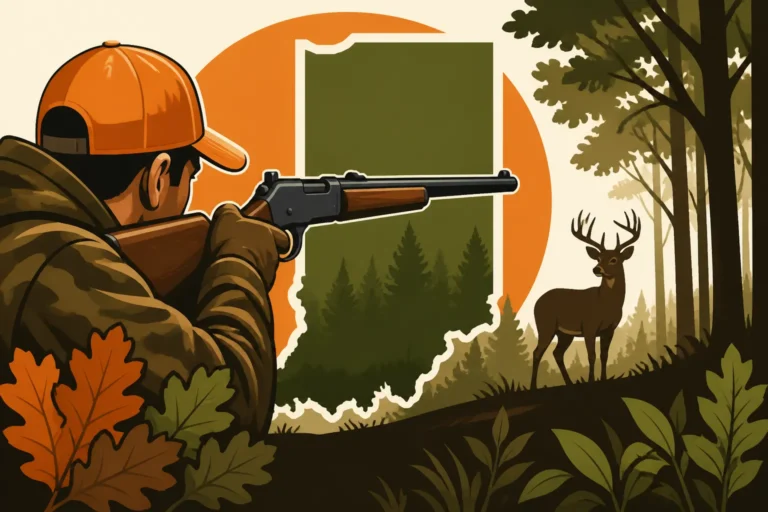
Then came Senate Bill 280, a legislative change that dramatically reshaped the landscape for Indiana deer hunters. This bill effectively lifted the long-standing straight-wall cartridge requirement, opening the door for the use of most traditional bottlenecked centerfire rifle cartridges for deer hunting statewide. This was a monumental shift, bringing Indiana's rifle regulations largely in line with many other states and giving hunters a much broader spectrum of choices.
Suddenly, calibers like the .30-06 Springfield, .270 Winchester, 6.5 Creedmoor, and .308 Winchester were legal options. This change recognized that modern ammunition technology, combined with responsible hunter education, could mitigate some of the previous safety concerns. It also reflected a desire to provide hunters with more effective tools, particularly for longer shots that might present themselves in varied terrain. For a deeper dive into the specifics of this change, check out Indiana's New Statewide Rifle Rules. This move was met with widespread enthusiasm, as it meant hunters could now choose a rifle based more on personal preference, ballistic performance, and specific hunting scenarios, rather than solely on a restrictive legal definition.
Factors Beyond Caliber: What Truly Matters for Indiana Deer
While the choice of caliber is important, it's critical to understand that it's just one piece of the puzzle when it comes to ethical and successful deer hunting. In fact, many other factors contribute far more to consistent success than the specific numbers printed on the side of a cartridge box.
Shot Placement is Paramount
No matter if you're shooting a .223 or a .300 Win Mag, a poorly placed shot can lead to a wounded animal and a difficult, if not impossible, recovery. Conversely, a well-placed shot with a smaller, legal caliber will be far more effective than a marginal hit with a magnum. The vitals of a deer – the heart and lungs – are relatively compact targets. Your primary goal as a hunter should always be to deliver a bullet to this kill zone.
This means spending time at the range, not just once before the season, but regularly. Practice shooting from various positions you might encounter in the field: standing, kneeling, off a shooting stick, or from your treestand setup. Know your rifle, know your ammunition, and know your limitations. A responsible hunter understands that proficiency with their chosen firearm trumps raw ballistic power every single time. It's about putting the work in long before opening day. You can learn more about preparing your rifle by reading Sighting In a Centerfire Rifle for Indiana Woods.
Hunter Skill and Field Craft
Beyond shooting proficiency, your overall hunting skill and field craft play an enormous role. This includes everything from scouting and understanding deer patterns to quietly moving through the woods and making a clean shot presentation. A hunter who can effectively get within 100 yards of a deer, read the wind, and get a solid rest, will be far more successful than someone relying on a super-magnum to compensate for a lack of stealth or patience.
Indiana's diverse hunting landscape, from the thick cover of southern Indiana's hills to the more open farmland of the north, demands different approaches. In the dense timber of a place like Hoosier National Forest, shot opportunities might be fleeting and close-range, making quiet movement and quick target acquisition crucial. In contrast, hunting open field edges in northern Indiana might present longer shots, requiring a steady rest and precise range estimation. Mastering these skills allows you to make the most of any legal caliber you choose. Scouting effectively, understanding wind and thermals, and knowing how deer use the terrain are skills that are entirely independent of your firearm choice.
Realistic Shot Distances in Indiana
While Indiana's new rules allow for cartridges capable of much longer ranges, the reality for most Hoosier deer hunters is that shots will still predominantly be within 200 yards, and often much closer. Whether you're hunting thick woods, brushy fencerows, or even open fields with woodlots nearby, the opportunities for ethical shots beyond that 200-yard mark are less frequent than you might think. Factors like visibility, deer movement, and dense cover quickly limit those "long bomb" opportunities.
Even in open agricultural areas, many shots occur when deer are moving between bedding and feeding areas, often at the edges of cover or within the standing crops themselves. Very few hunters routinely take shots at 300+ yards in Indiana. This is important to consider because it means you don't necessarily need the fastest, flattest-shooting magnum out there. A well-chosen, moderate caliber with good bullet construction will be more than adequate for 95% of Indiana hunting scenarios. Prioritize accuracy and confidence within realistic hunting ranges over theoretical ballistic superiority at extreme distances. Understanding Practical Range in Indiana Timber is key here.
Top Rifle Calibers for Indiana Whitetails: Tried, True, and New
With the new regulations, Indiana hunters now have a fantastic selection of rifle calibers to choose from. While the "best" is always subjective and depends on individual preference, certain calibers stand out for their effectiveness, availability, and versatility for whitetail deer.
Excellent All-Around Choices: .308 Winchester, .270 Winchester, and 6.5 Creedmoor
These three calibers represent some of the most popular and effective deer hunting rounds in North America, and for good reason. They offer a fantastic balance of manageable recoil, flat trajectory, and sufficient energy for clean deer kills.
- The .308 Winchester: This cartridge is an absolute workhorse. It's known for its inherent accuracy, moderate recoil, and excellent terminal performance on deer-sized game. Bullet weights typically range from 150 to 180 grains, offering versatility for different conditions. The .308 is a compact cartridge, making it suitable for shorter, handier rifles, which can be a real plus in thick Indiana timber where quick maneuvering is sometimes necessary. It performs exceptionally well out to 300 yards and beyond, making it a stellar choice for both deep woods and open field edges. Ammunition is widely available and usually reasonably priced. If you're weighing your options, comparing .308 Versus .270 for Whitetails is a common debate.
- The .270 Winchester: A classic for a reason, the .270 Winchester is a flatter-shooting option than the .308, known for its superb performance on deer. Typically firing 130- to 150-grain bullets at high velocities, it delivers plenty of energy and a flatter trajectory that simplifies longer shots. Recoil is a bit more pronounced than the .308 but still very manageable for most shooters. It's a fantastic choice for those who might find themselves hunting larger agricultural fields or powerline cuts where a longer shot opportunity could arise. Many hunters consider it a quintessential whitetail cartridge.
- The 6.5 Creedmoor: One of the most talked-about cartridges in recent years, the 6.5 Creedmoor has quickly gained a loyal following, and for good reason. It combines very mild recoil with exceptional accuracy and ballistic efficiency. Firing sleek, high-ballistic-coefficient bullets, often in the 120- to 143-grain range, the 6.5 Creedmoor maintains energy and resists wind drift incredibly well. While it might not have the raw "thump" of a .30-caliber, its ability to precisely deliver a bullet with ample energy makes it incredibly effective on deer. It's particularly pleasant to shoot, which can lead to better accuracy for many hunters. It shines whether you're taking a close shot in a thick woodlot or a longer shot across a ravine in southern Indiana. We have an entire article dedicated to 6.5 Creedmoor for Southern Indiana Ridges.
Time-Tested Favorites: .30-06 Springfield and .243 Winchester
These cartridges have been putting venison in freezers for generations and continue to be excellent choices for Indiana deer.
- The .30-06 Springfield: The venerable .30-06 is arguably the most versatile hunting cartridge ever developed. It can handle bullet weights from 150 grains up to 200 grains, making it suitable for anything from deer to elk (if you were hunting out west!). For Indiana whitetails, 150- or 165-grain bullets are ideal, offering plenty of knockdown power. While recoil is noticeably more than the .308 or 6.5 Creedmoor, it's still manageable for most. The .30-06 is a superb choice for hunters who want a rifle that can do it all and don't mind a bit more kick.
- The .243 Winchester: Often considered an excellent entry-level deer cartridge, the .243 Winchester is a flat-shooting, low-recoil option that is very effective when paired with good bullet placement. Typically firing 90- to 100-grain bullets, it delivers enough energy for clean kills on deer. It's also a fantastic varmint rifle, making it a dual-purpose tool for many. Some seasoned hunters might argue it's on the lighter side for deer, but with proper shot placement, it performs admirably. For younger hunters, or those sensitive to recoil, it’s an outstanding choice. Many wonder, is a .243 Enough for Indiana Whitetails?. The answer is yes, with good shot placement.
Honoring the Past: Still Relevant Straight-Wall Options
Even with the new rules, many hunters still appreciate and successfully use straight-wall cartridges. They are still perfectly legal and effective, particularly for those who hunt in very thick cover or have a rifle they've grown to love.
- The .450 Bushmaster and .350 Legend: These two cartridges, specifically designed as modern straight-wall deer rounds, remain excellent options. They deliver significant energy at shorter ranges (typically under 200 yards) and have relatively mild recoil for their impressive bullet diameters. They're fantastic for deep woods hunting, deer drives, or situations where you expect very close-range shots. Ammunition availability for both has grown significantly over the years.
- The .44 Magnum: While more commonly associated with handguns, rifles chambered in .44 Magnum are incredibly effective for deer at close ranges. Paired with a lever-action rifle, it makes for a fast-handling, powerful woods gun. It's a classic choice for still-hunting or stalking in heavy cover. For those hunting in specific limited areas or just preferring the feel of a classic lever gun, these are still perfectly viable. We also explored .30-30 in Northern Indiana Woodlots, which is a bottlenecked cartridge, but often fits into that "classic woods gun" category with similar effective ranges to many straight-walls.
When considering a new rifle, don't forget the importance of choosing the right optics. Rifle Scopes for Low-Light Timber can make all the difference during those critical dawn and dusk hours.
Making Your Choice: Matching Caliber to Your Hunting Style and Region
The "best" caliber is ultimately the one you shoot most accurately and confidently, and which is appropriate for the conditions you hunt. There's no single right answer, but rather a confluence of factors unique to each hunter.
Considering Indiana's Diverse Terrain
Indiana is surprisingly diverse in its topography and vegetation, and this can certainly influence your rifle and caliber choice.
- Southern Indiana Hill Country: The southern part of the state, particularly areas like the Hoosier National Forest, is characterized by rolling hills, thick timber, deep ravines, and winding creek bottoms. Shots here are often short, typically well within 150 yards, and frequently under 75 yards. You might only get a glimpse of a deer through dense brush. For these conditions, a fast-handling rifle in a .308 Winchester, .350 Legend, or even a .44 Magnum lever action can be incredibly effective. The ability to quickly shoulder your rifle and make a precise shot is often more valuable than ultra-long-range capability. When Hunting Southern Indiana Hill Country, stealth and quick reactions often take precedence.
- Northern Indiana Farmland: Up north, particularly in the central and northern stretches, you'll encounter more open agricultural fields, smaller woodlots, and fencerows. Here, shot opportunities can extend a bit further, sometimes reaching 200-300 yards if a deer is crossing a field. A flatter-shooting caliber like the .270 Winchester, 6.5 Creedmoor, or even a .30-06 might feel more at home. While open field shots are possible, deer still often travel and feed along the edges of standing corn or bean fields. If you're Hunting Northern Indiana Farmland Deer, you might want to be ready for slightly longer shots.
- Mixed Landscapes: Many areas of Indiana present a mix of both, with dense woods giving way to smaller fields or powerline cuts. For these situations, an all-around performer like the .308 Winchester or 6.5 Creedmoor truly shines, offering enough versatility to handle both close-in and mid-range shots effectively.
Recoil Tolerance and Personal Comfort
Perhaps one of the most overlooked factors in caliber selection is recoil. A rifle that's uncomfortable to shoot is a rifle you won't practice with, and practice is what breeds confidence and accuracy. If you flinch or anticipate recoil, your accuracy will suffer, especially under hunting pressure.
Consider starting with a milder-recoiling caliber like the .243 Winchester or 6.5 Creedmoor if you're new to centerfire rifles or sensitive to recoil. Even experienced hunters can benefit from less recoil, as it allows for quicker follow-up shots and generally more enjoyable practice sessions. Don't feel pressured to step up to a magnum caliber if you're not comfortable with it. A well-placed shot from a .243 is far more effective and ethical than a flinched shot from a .300 Win Mag. Many gun shops will let you shoulder different rifles or even try them on a range to get a feel for the ergonomics and potential recoil.
Ammunition Availability and Cost
While ammunition availability has improved significantly for many calibers, it's always wise to consider how readily available and affordable your chosen cartridge's ammunition is. Common calibers like .308, .270, .30-06, and 6.5 Creedmoor are typically stocked everywhere, from major sporting goods stores to smaller local shops. Specialized straight-wall cartridges like the .450 Bushmaster and .350 Legend are also widely available now but might be slightly more niche in some smaller retailers.
Cost can also be a factor, especially if you plan to do a lot of practice shooting (which you absolutely should!). Typically, the more common calibers tend to be more budget-friendly per box. It's a good idea to check local availability and prices before committing to a new rifle, just to ensure you'll be able to feed it without breaking the bank. You might even use a resource like GoHunt to look up ballistic information or gather gear reviews before making a purchase.
Bullet Construction: A Hidden Gem
Beyond just the caliber, the specific bullet you choose within that caliber can have a profound impact on performance. Modern hunting bullets are incredibly advanced, designed to expand reliably at various velocities and retain weight for deep penetration. For deer, look for bullets that offer controlled expansion. This means they open up to create a wide wound channel but don't fragment excessively, ensuring good penetration through the vitals.
Examples include bonded bullets, partitioned bullets, or those with interlocked cores. Manufacturers like Federal, Hornady, Winchester, and Remington offer excellent deer-specific loads in all popular calibers. Don't just grab the cheapest box; invest in quality hunting ammunition. It's a small cost compared to the overall expense of hunting, and it's what ultimately ensures a clean, ethical harvest.
Table: Popular Indiana Deer Calibers Comparison
Here’s a quick overview of some popular rifle calibers for Indiana deer hunting, highlighting their typical uses and characteristics.
| Caliber | Typical Bullet Weight (grains) | Recoil Level | Trajectory | Best For | Pros | Cons |
|---|---|---|---|---|---|---|
| 6.5 Creedmoor | 120-143 | Low | Flat | Mixed terrain, longer shots, recoil sensitive | Very accurate, mild recoil, excellent ballistics, widely available | Less raw energy than .30 calibers (though still very effective) |
| .243 Winchester | 90-100 | Very Low | Flat | Beginners, youth, varmints, open fields | Minimal recoil, accurate, effective with good placement | Less forgiving on marginal shots, lighter for larger deer |
| .308 Winchester | 150-180 | Moderate | Moderate | All-around, dense woods, open fields | Accurate, powerful, good penetration, wide ammo choice, compact rifles | Slightly more recoil than 6.5 Creedmoor, trajectory not as flat as .270 |
| .270 Winchester | 130-150 | Moderate | Very Flat | Open country, longer shots | Flat shooting, plenty of power for deer, long-standing proven performer | More recoil than 6.5 Creedmoor, less bullet weight versatility than .30-06 |
| .30-06 Springfield | 150-200 | Moderate-High | Moderate | All-around, heavy timber, larger deer | Highly versatile, powerful, wide range of bullet weights | More recoil than .308 or 6.5 Creedmoor |
| .350 Legend | 150-280 | Low-Moderate | Arced | Close-range, thick cover | Mild recoil for caliber, excellent short-range energy, fast follow-ups | Significant bullet drop at longer ranges |
| .450 Bushmaster | 250-300 | Moderate-High | Arced | Close-range, thick cover, brush busting | Impressive knockdown power at short range, good for heavy cover | Heavier recoil, significant bullet drop, heavier rifles |
Ultimately, the best rifle caliber for your Indiana deer hunt is the one you trust the most. Take advantage of the new regulations, do your research, try a few different options if possible, and most importantly, practice! Happy hunting, Hoosiers!
Disclaimer
This article is for general informational purposes only and does not constitute professional advice. Laws, prices and regulations vary by location and change over time. Consult a qualified professional for guidance on your specific situation.