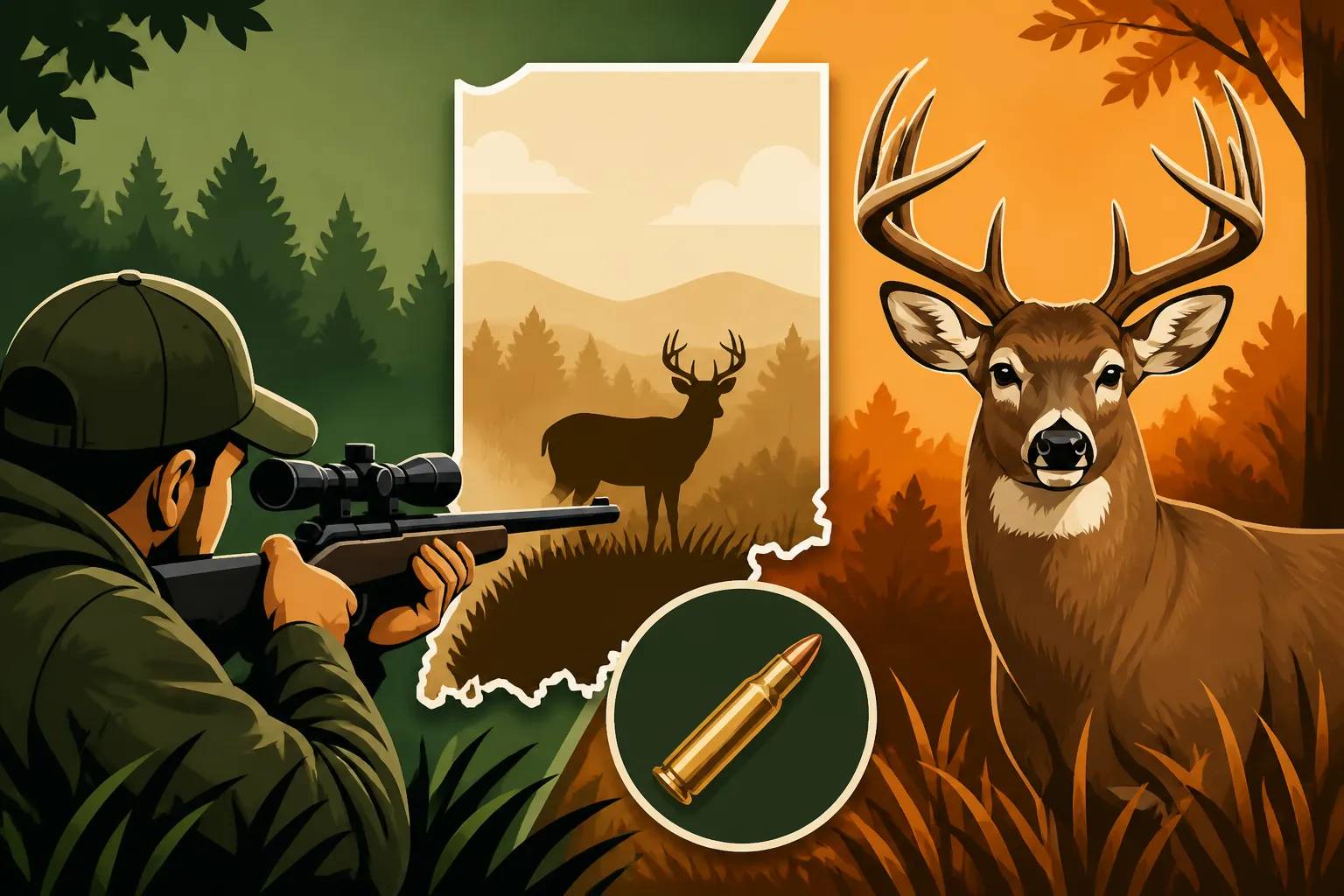
Is a .243 Enough for Indiana Whitetails?
Many Indiana deer hunters find themselves wondering if their trusty .243 Winchester is truly enough gun for the job, especially with tales of big Hoosier bucks roaming the timber and farmland. It's a common question, and frankly, a valid one, as no one wants to wound an animal or feel undergunned when the moment of truth arrives. This guide will dive deep into the .243's capabilities for whitetails, exploring its strengths, limitations, and how to maximize its effectiveness for a clean, ethical harvest right here in Indiana. If you're pondering whether to keep that .243 in the safe or reach for something larger, this article will help you make an informed decision and give you the confidence you need for the upcoming season, complementing what you might already know about Rifle Setups for Indiana Deer Hunting.
The .243 Winchester: A Closer Look at its Capabilities for Whitetails
For decades, the .243 Winchester has been a popular choice for deer hunters across North America, including right here in the Hoosier State. It's often touted for its flat trajectory, mild recoil, and inherent accuracy, making it a favorite for new hunters, youth hunters, or anyone looking for a comfortable shooting experience. However, its reputation as a "light" deer cartridge sometimes causes concern, especially when facing a large, mature Indiana whitetail. Let's break down what the .243 actually brings to the table in terms of power and performance.
Ballistics and Bullet Performance
When we talk about the .243, we're primarily discussing a cartridge that fires bullets in the 80 to 100-grain range, with 95 and 100-grain options being the most common and generally recommended for deer. These bullets leave the muzzle at impressive velocities, often exceeding 3,000 feet per second, which contributes to its very flat trajectory. This flat flight path can be a real advantage in situations where judging distance perfectly is tricky, as it minimizes vertical error over typical hunting ranges.
However, velocity alone doesn't tell the whole story. What truly matters for deer hunting is the bullet's ability to transfer energy and create a damaging wound channel once it hits the target. A lighter, fast bullet from a .243 might shed velocity quicker than a heavier, larger caliber bullet, but it can still deliver ample energy for a clean kill if the shot is placed correctly. Many hunters might feel like they need a cannon, but often, the precision of a .243 combined with the right bullet can be far more effective than a powerful cartridge used poorly. If you're comparing calibers, it's helpful to understand the nuances of Best Rifle Caliber for Indiana Whitetails.
Understanding Terminal Performance and Ethical Kills
Terminal performance refers to what the bullet does once it hits the animal. For deer, we're looking for sufficient penetration to reach vital organs (heart and lungs) and reliable expansion of the bullet to create a large wound channel, causing rapid blood loss and tissue damage. Modern bullet designs have come a long way, making the .243 much more capable than some older perceptions might suggest.
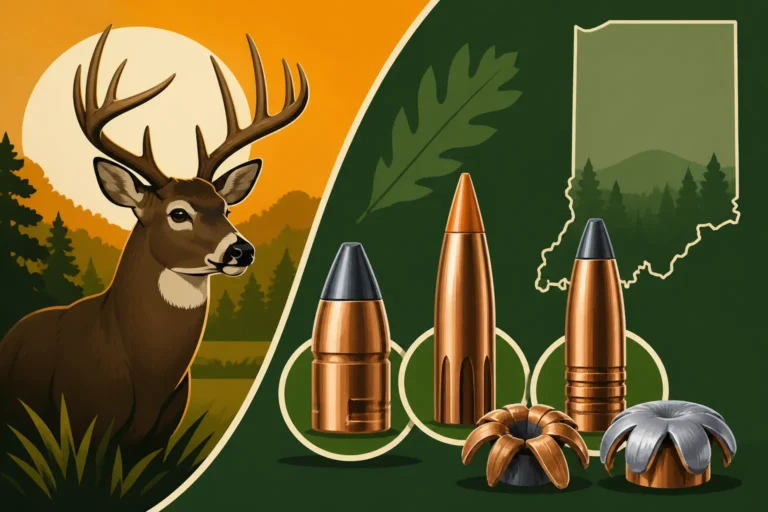
Premium hunting bullets, often featuring bonded cores, controlled expansion tips, or solid copper construction, are absolutely key with a .243. These bullets are designed to hold together at high velocities, penetrate deep, and expand consistently, even after encountering bone. A well-constructed 95-grain or 100-grain bullet placed precisely through both lungs will undeniably result in an ethical, quick harvest. The myth that a deer hit by a .243 will always run forever simply isn't true when the right bullet and shot placement are involved. A successful, ethical harvest also means understanding how to process your game, including maximizing your Deer Meat Yield From an Indiana Buck.
Maximizing Effectiveness: Shot Placement, Bullet Choice, and Practice
The discussion around whether a .243 is "enough" often boils down to factors beyond the cartridge itself. It's less about the theoretical power and more about how that power is applied in the field. This means focusing on the hunter's skill, their choice of ammunition, and their commitment to ethical hunting practices.
The Absolute Importance of Shot Placement
Let's be blunt: there's no magic bullet, and no caliber, regardless of how large, can compensate for a poorly placed shot. With a .243, this truth is amplified. A shot that hits the vitals will bring down a deer, often very quickly. A shot that hits a shoulder or gut shot with a .243 will likely result in a wounded animal and a difficult, if not impossible, recovery. This isn't unique to the .243; it's true for every hunting cartridge.
Therefore, absolute precision is paramount. You need to know your rifle, know your chosen ammunition, and understand deer anatomy inside and out. Always aim for the "kill zone" — the heart and lung area, typically just behind the shoulder. Avoid risky shots at moving deer, head shots, or shots that are quartering away too severely. Waiting for the perfect broadside or slightly quartering-to shot is always the most responsible approach. Understanding Practical Range in Indiana Timber will heavily influence your shot opportunities and confidence.
Choosing the Right Ammunition for Indiana Deer
This is where many .243 discussions go right or wrong. Not all .243 ammunition is created equal, especially when it comes to deer hunting. Forget the varmint loads with light, frangible bullets; those are designed to fragment on small animals like coyotes and won't give you the penetration needed for a deer.
For whitetails, you want a bullet specifically designed for medium game. Look for bullets in the 95-grain to 100-grain range that emphasize controlled expansion and deep penetration. Examples include bullets from Hornady (like the InterLock or ELD-X), Nosler (Partition or AccuBond), Barnes (TSX or TTSX), Federal (Fusion or Trophy Bonded Tip), or Winchester (Power-Point or Deer Season XP). These bullet types are engineered to hold together, punch through hide and bone, and expand reliably to cause maximum internal damage. Don't cheap out on ammunition; your bullet is the only part that actually touches the deer. Researching your bullet choices on platforms like GoHunt can help you compare ballistics and find the right fit. It's also wise to check Ammunition Availability Before Opening Day to ensure you can get your hands on your preferred rounds.
| Bullet Weight (grains) | Bullet Type Examples | Typical Application | Notes for Deer |
|---|---|---|---|
| 55 – 75 | Varmint, Hollow Point | Coyotes, woodchucks | Not Recommended for Deer |
| 80 – 90 | Soft Point, Ballistic Tip | Lighter deer, hogs | May lack penetration on larger deer; check design |
| 95 – 100 | Bonded, Partition, AccuBond, TSX | Whitetail deer, pronghorn | Recommended for Ethical Deer Hunting |
Practice Makes Perfect: Building Confidence
The .243's low recoil is a massive advantage here. Hunters can spend more time at the range, practicing various shooting positions without developing a flinch or shoulder fatigue. This extended practice time directly translates to increased confidence and accuracy in the field. If you're flinching with a larger caliber, your accuracy will suffer, negating any perceived power advantage.
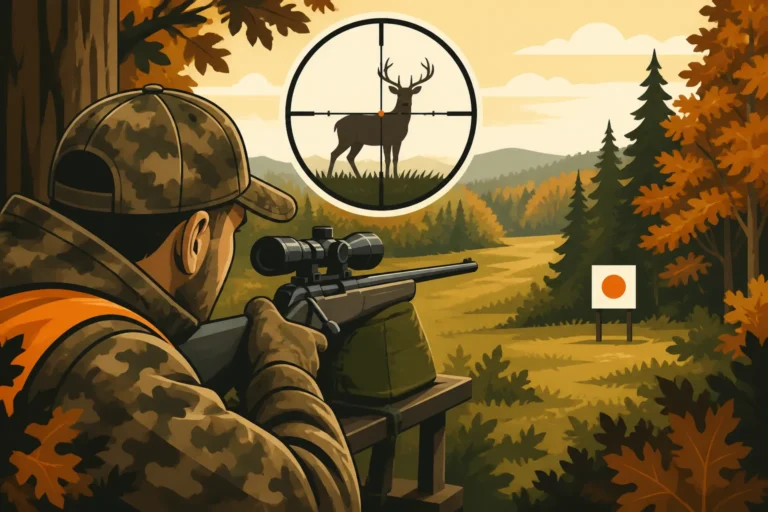
Spend time practicing from a bench rest to get your initial zero, but then move to realistic field positions: off-hand, kneeling, sitting, and using shooting sticks or tree rests. Practice at various distances you expect to encounter in your hunting area. If you're hunting thick timber, you might only get 50-yard shots. If you're watching a food plot, it could be 150 yards. Know your rifle's capabilities at these ranges. A comfortable shooter is a confident shooter, and a confident shooter is an accurate shooter, especially after you've spent the time Sighting In a Centerfire Rifle for Indiana Woods.
Practical Considerations for Hunting Indiana Deer with a .243
Now, let's bring it home to Indiana. Our deer hunting landscape varies quite a bit, from the rolling hills and thick timber of the southern parts of the state to the agricultural fields and scattered woodlots of the north. These differences influence what you can reasonably expect from your .243.
Terrain and Typical Shot Distances
In places like the Hoosier National Forest or the rugged terrain of Brown County, shots are often up close and personal. Thick cover, dense undergrowth, and elevation changes mean that 100-yard shots are common, and often, you're looking at something much closer – 30 to 75 yards. At these ranges, a well-placed .243 bullet from a quality load performs exceptionally well, often passing completely through the deer. The high velocity ensures maximum energy transfer at impact, even if it might bleed off faster downrange. Knowing how to use mapping features on apps like GoHunt can give you an edge in understanding the topography and potential shot lanes.
Conversely, in northern Indiana's vast corn and soybean fields, you might find yourself with longer shot opportunities across open spaces. While the .243's flat trajectory is beneficial here, its energy drops off at extended ranges compared to larger calibers. A 200-yard shot with a .243 requires even more precise judgment of distance and wind, and the bullet will deliver less energy than it would at 75 yards. This doesn't mean it can't be done, but it demands a higher level of confidence and practice. Whether you're Hunting Southern Indiana Ridges or Hunting Northern Indiana Farmland Deer, understanding the likely shot distance is crucial.
Hunter Skill and Confidence
Ultimately, the most critical factor is the hunter's ability to consistently place a shot where it needs to go. If you can shoot your .243 accurately, consistently placing bullets within a two-inch circle at 100 yards, and you understand deer anatomy, then yes, the .243 is absolutely enough for Indiana whitetails.
However, if you feel underpowered, lack confidence, or find yourself taking marginal shots because you're unsure if the caliber is "enough," then perhaps a different cartridge would be better for your peace of mind. Confidence breeds accuracy, and accuracy leads to ethical kills. A hunter who is proficient and confident with a .243 will always be more successful and ethical than one who struggles to shoot a .30-06 accurately due to recoil. All hunters, especially those new to the field, can benefit from reviewing Indiana Hunter Education Requirements to ensure they're up to date on best practices.
When to Consider Stepping Up in Caliber
There are scenarios where moving to a larger caliber might be a wise decision. If you frequently hunt very large-bodied deer, consistently take shots beyond 200 yards, or simply prefer the added margin of error that more kinetic energy provides, then a larger caliber like a .270, .308, or even one of the newer cartridges that became popular after Why Straight-Wall Rifles Are No Longer Required could be a good choice.
For instance, if you're frequently in areas known for exceptionally large-bodied bucks or planning to hunt dense cover where a complete pass-through and significant exit wound for tracking might be critical, a .308 Winchester or a 6.5 Creedmoor might offer a slight advantage. The 6.5 Creedmoor, for example, has gained a lot of traction, and it performs beautifully in situations like 6.5 Creedmoor for Southern Indiana Ridges, offering a bit more punch than the .243 without excessive recoil. It's not about the .243 being incapable, but about choosing the tool that best fits your specific hunting style, environment, and personal comfort level.
Disclaimer
This article is for general informational purposes only and does not constitute professional advice. Laws, prices and regulations vary by location and change over time. Consult a qualified professional for guidance on your specific situation.