Indiana Bison Before European Settlement
It’s often hard for us modern Hoosier hunters to truly grasp the scale of Indiana’s wild past. We lace up our boots, head out to the woods, and expect to see whitetail deer, maybe a squirrel, or if we’re lucky, a wild turkey. But imagine, for a moment, an Indiana where the biggest game wasn't a ten-point buck, but a shaggy, thundering behemoth that dwarfed any creature we know today. This guide aims to peel back the layers of time, helping you visualize and understand the majestic bison that once roamed our very own Indiana before European settlers reshaped its landscape forever.
The Ghost of the Prairies: Imagining Indiana's Pre-Settlement Landscape
When we think of Indiana's wildlife today, our minds naturally drift to the whitetail deer, the ubiquitous cottontail rabbit, or perhaps the cunning coyote. Our landscapes, though still wild in parts, feel domesticated compared to the vast, untamed wilderness depicted in historical accounts. It's a testament to the passage of time and the profound changes wrought by human settlement that many of us struggle to envision a truly different Indiana—one teeming with creatures far larger and more numerous than anything we regularly encounter.
It’s easy to feel a sense of loss when contemplating what once was, a landscape where the very ground vibrated with the hooves of thousands. This isn't just about missing a species; it's about acknowledging a fundamental shift in the ecological fabric of our state. The absence of these massive grazers left a void, and understanding their historical presence helps us appreciate the intricate web of life that once existed and the subtle ways it continues to influence the land we hunt today.
More Than Just Deer and Squirrels: A Land of Giants
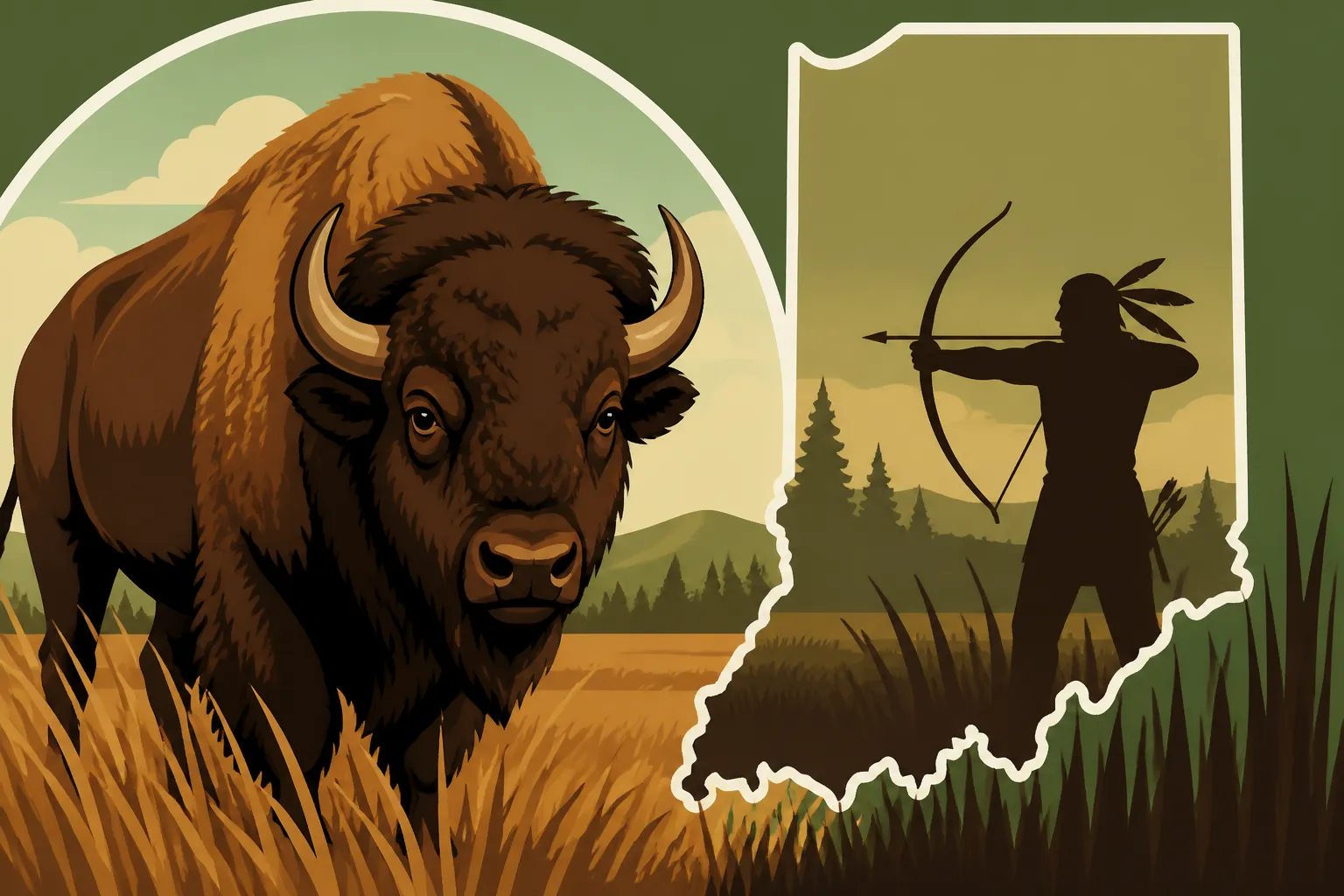
Before axes rang through the virgin forests and plows turned the deep prairie sod, Indiana was a land of true megafauna. While our deer herds are strong and healthy now, imagine a time when the dominant herbivore wasn't a deer, but a creature weighing upwards of 2,000 pounds, standing six feet tall at the shoulder. These were the American bison, often referred to as buffalo, and their presence fundamentally shaped the Indiana ecosystem. They weren't just animals; they were landscape architects, their grazing patterns, wallows, and migratory paths carving out unique habitats and influencing plant succession across vast territories.
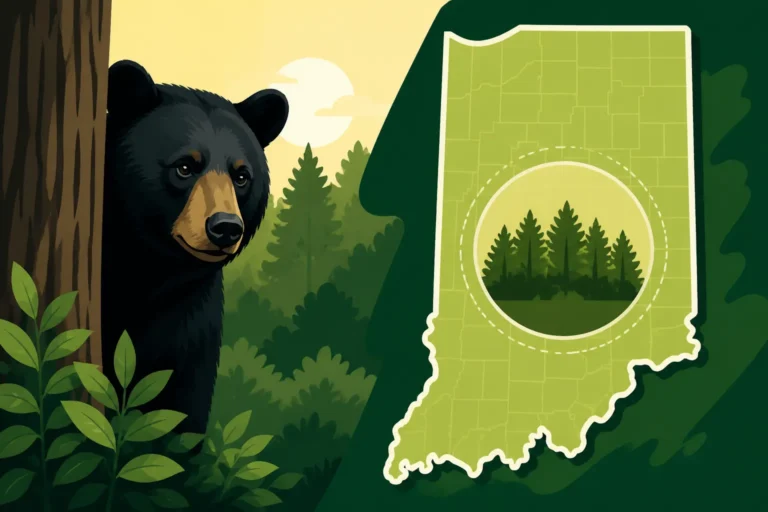
This was an Indiana where the food chain extended upwards to truly formidable predators as well. While we now see the occasional Black Bear Wanderers, historical Indiana was home to larger, more consistent populations of these bears, along with eastern cougars and wolves—all of whom would have relied heavily on the abundant bison. The thought of encountering such a predator while still-hunting Southern Indiana Ridges today might send a shiver down your spine, but it was once a very real part of the Hoosier wild. Understanding the sheer scale of these past inhabitants gives us a deeper appreciation for the resilience of the species that remain and the intricate balance that was lost.
Evidence in the Land: Place Names and Oral Histories
Even though bison no longer roam Indiana, their historical presence is etched into the very fabric of our state, albeit subtly. One of the most compelling forms of evidence comes from the numerous place names that pepper our maps. Think of "Buffalo Trace," a historical road running through southern Indiana, or countless creeks and geographical features bearing names like "Buffalo Run," "Buffalo Creek," or "Buffalo Bottoms." These names weren't chosen idly; they marked actual trails and areas where massive herds of bison once traveled, grazed, or watered. These were the superhighways of the natural world, beaten into existence by generations of migrating beasts.
Beyond the placenames, the rich oral traditions and archaeological records of Native American tribes who called Indiana home provide invaluable insights. Tribes like the Miami, Potawatomi, Kickapoo, and Shawnee lived in close proximity to bison, relying on them for sustenance, shelter, and cultural significance. Their stories often speak of the "Great Buffalo," of their movements, and the spiritual connection to these animals. Archaeological digs, though less frequent for large megafauna than for smaller, more domestic traces, occasionally unearth bison bones, sometimes scarred by ancient tools, offering tangible proof of their existence and interaction with early human inhabitants. These findings help to connect the dots, showing us that the stories are not just legends but reflections of a vibrant, interconnected past ecosystem.
Where the Buffalo Roamed: Indiana's Bison Habitats
When picturing bison, most folks immediately conjure images of the vast, treeless plains out west. And while those environments were certainly their strongholds, the American bison was far more adaptable than many realize. In Indiana, they weren't confined to a single type of landscape; rather, they exploited a mosaic of habitats, each offering different resources throughout the year. Our state's unique geographical position, straddling the eastern forests and the western prairies, meant a diverse offering of suitable ground for these massive grazers.
Understanding these historical habitats is not just an academic exercise; it helps us appreciate the complex interplay of factors that shaped Indiana's environment. It shows that even today, when you're scouting Indiana Public Land Before Season, considering the types of terrain—whether open fields, river bottoms, or forest edges—you're looking at the same fundamental features that drew in massive herds centuries ago. A modern tool like GoHunt can help visualize the topography and natural corridors that might have been ancient bison trails, even if you’re looking for deer today.
Prairie and Savanna: The Preferred Dining Grounds
Indiana, particularly its western and northern regions, once boasted significant expanses of tallgrass prairie and oak savanna. These open, sun-drenched environments, maintained by natural wildfires and grazing pressure, were the veritable cafeterias for bison. Imagine prairies stretching for miles in areas like Newton, Jasper, and Benton counties, not unlike the Great Plains, but with pockets of timber breaking the monotony. The rich, deep soils supported a phenomenal diversity of grasses and forbs—perfect forage for a herd that needed to consume hundreds of pounds of vegetation daily.
These prairies weren't static; they were dynamic ecosystems constantly being shaped by the bison themselves. The constant grazing prevented the encroachment of woody plants, maintaining the open character of the land. The bison essentially acted as natural lawnmowers and cultivators, promoting the growth of palatable grasses and preventing dense scrub from taking over. This symbiotic relationship meant healthy prairies supported healthy bison, and healthy bison, in turn, sustained the prairies, creating a robust, productive habitat unlike anything we see in our state today.
River Bottoms and Forest Edges: Unexpected Havens
While prairies were crucial, bison in Indiana were not strictly prairie dwellers. They utilized river bottoms and the edges of vast forests extensively. The fertile floodplains of major rivers like the Wabash River Valley and the White River offered lush, palatable vegetation, especially during dry spells or late season when upland forage might have been sparser. These areas provided not only abundant water but also crucial shelter from harsh winter winds or scorching summer sun, allowing the massive animals to conserve energy.
Forest edges, particularly those bordering savannas or prairies, served as important transitional zones. Bison could browse on woody vegetation, find protection from predators, and rub against trees to shed their winter coats or rid themselves of insects. The Hoosier National Forest, in its pre-settlement form, would have had more openings and savannas, allowing bison to move into these timbered areas at times. This adaptability meant that bison could be found across a broader spectrum of Indiana's landscapes than many might assume, truly shaping the entire ecosystem and demonstrating their incredible resilience.
The Migratory Giants: Movement and Herd Dynamics
The image of massive herds of bison moving across the landscape is perhaps one of the most iconic symbols of pre-settlement North America. In Indiana, these were not static populations; they were migratory giants, their movements dictated by the changing seasons, the availability of forage, and probably, to some extent, by tradition passed down through generations. Their sheer numbers and constant movement left an indelible mark on the land, creating the very "traces" that later became roads and settlements.
Trying to understand these historic movements can feel like a detective game, using what we know about geology, climate, and modern animal behavior to piece together the past. If you were to trace these ancient pathways today, a detailed mapping tool like GoHunt could illustrate the natural contours and water sources that would have influenced such movements, even if the modern landscape is dramatically altered. It’s a way to connect with the deep history of our land, seeing how it once facilitated the lives of these incredible creatures.
Seasonal Movements Across the Indiana Landscape
The exact migratory patterns of Indiana's bison herds are difficult to reconstruct with certainty, but it’s clear they were influenced by the seasons. Spring and summer likely saw them spread out across the productive prairies and savannas of central and northern Indiana, taking advantage of the abundant new growth. As autumn approached, and forage on the uplands began to cure or diminish, herds would have likely begun to concentrate in more protected areas, perhaps moving towards the rich river bottoms, particularly the expansive floodplains of the Wabash and White Rivers, where food might remain more accessible and diverse later into the year.
Winter, of course, presented the greatest challenge. While bison are incredibly hardy animals, capable of using their massive heads to clear snow for forage, finding adequate food and shelter was paramount. Deep snows would have pushed them into river valleys or areas with natural windbreaks and more readily available browse. These seasonal movements would have created natural corridors, funneling thousands of animals through specific landscapes year after year, further compacting soils and opening up areas within the forest, illustrating just how much control these animals had over their environment.
Herd Size and Social Structure
The stories from early European explorers and Native American accounts speak of bison herds numbering in the thousands, sometimes tens of thousands. Imagine encountering a group of animals so vast that it took hours for them to pass a single point, their thundering hooves shaking the very ground. These immense numbers were a critical aspect of their survival, offering protection against predators and ensuring genetic diversity. Within these massive herds, there was a complex social structure, typically organized around matriarchal lines, with older, experienced cows leading the movements and dictating grazing patterns.
Bulls, while often seen in bachelor groups for much of the year, would join the main herds during the rut, creating a spectacular and often violent display of dominance and breeding. The sheer biomass represented by these herds would have had a profound impact on the landscape, not just through grazing but also through the creation of "buffalo wallows"—depressions in the ground where bison would roll to shed hair, relieve itching, and deter insects. These wallows collected water, creating unique, temporary wetlands that supported specific plant and insect communities, adding another layer of biodiversity to the pre-settlement Indiana ecosystem.
Impact on the Ecosystem: Nature's Original Landscapers
The American bison wasn't just another animal in the ecosystem; it was a keystone species, a force of nature that profoundly shaped the landscapes it inhabited. Their massive size, gregarious nature, and continuous movement meant they were constantly interacting with and modifying their environment. To understand pre-settlement Indiana, we must understand the bison's role, as their absence today leaves a palpable ecological void.
Thinking about the impact of these animals helps us appreciate current land management practices, even if they're focused on different species. When we consider how different habitat types function for deer, or how to create optimal conditions for Spring Turkey Hunting in Indiana, we're engaging with some of the same ecological principles that were at play when bison roamed. The land’s natural rhythms, though altered, still retain echoes of these ancient interactions.
Grazing, Browsing, and Seed Dispersal
As mega-herbivores, bison were nature's original landscapers. Their primary ecological role revolved around their eating habits. By grazing vast quantities of grasses and forbs, they prevented woody vegetation from encroaching on prairies and savannas, maintaining these open habitats. Without this constant grazing pressure, many of Indiana's historical prairies would have slowly transitioned into woodlands, fundamentally altering the plant communities and the species dependent on them. Their browsing also affected forest edges, creating distinct ecotones that benefited a variety of other wildlife.
Beyond direct consumption, their digestive systems played a critical role in seed dispersal. Undigested seeds passed through their system, often germinating in new locations, sometimes far from the parent plant. Their hooves churned the soil, creating disturbed ground that allowed different plant species to establish, fostering biodiversity. The "buffalo wallows" mentioned earlier also created unique micro-habitats. These temporary pools of water served as breeding grounds for amphibians and insects, adding another layer of complexity to the ecosystem. These subtle, yet profound, impacts demonstrate how deeply integrated bison were into the natural processes of Indiana.
Predator-Prey Dynamics and Biodiversity
The presence of immense bison herds naturally supported a robust population of large predators. While Indiana today has few true apex predators, pre-settlement Indiana was different. The abundance of bison provided a stable and substantial food source for species like eastern cougars, gray wolves, and even larger numbers of bears than we see in the state today. These predators played a crucial role in maintaining the health and vigor of the bison herds, often targeting the old, sick, or weak, which in turn helped prevent the spread of diseases and maintained the genetic strength of the herd. The predator-prey balance was a delicate dance that kept the entire ecosystem humming.
The ripple effect of bison extended throughout the entire food web. Their grazing patterns created diverse plant structures, providing different types of cover and food for smaller animals. Their waste enriched the soil and supported insect populations. Scavengers, from bald eagles to various beetles, benefited from the carcasses left by predators or natural deaths. In essence, bison were the engine driving a highly diverse and dynamic ecosystem. Their disappearance didn't just remove a species; it fundamentally altered the energy flow and ecological relationships across the entire Indiana landscape, leading to shifts in population dynamics for everything from insects to the White-Tailed Deer Across Indiana.
The Decline and Disappearance: A Shifting Frontier
The story of the American bison is one of the most dramatic wildlife sagas in North American history, and Indiana's chapter is no less poignant. From being a cornerstone of the ecosystem and a vital resource for Native Americans, bison vanished from Indiana with startling speed. Their disappearance wasn't a gradual fade but a rapid, almost complete eradication driven by a confluence of factors that accompanied European settlement. It's a stark reminder of the immense power humans wield over the natural world and the consequences of unsustainable practices.
This historical decline stands in contrast to modern conservation efforts for other species, such as the Indiana River Otter Recovery or where Indiana Bobcats Are Rebounding. These successes show that with concerted effort, wildlife can sometimes return. However, for a species of bison's scale, the challenges were immense, and the loss permanent within our state's wild boundaries.
Hunting Pressure: Native Americans and European Settlers
For thousands of years, Native American tribes in Indiana utilized bison as a primary resource. Their hunting practices were generally sustainable, driven by necessity and respect for the animal. Bison provided meat, hides for clothing and shelter, bones for tools, and even dung for fuel. The cultural and spiritual significance of the bison was deeply ingrained in their way of life, fostering a hunting ethic that valued the long-term health of the herds.
However, with the arrival of European settlers, the nature of hunting dramatically changed. Market hunting, driven by the demand for hides and meat in eastern cities, became a commercial enterprise rather than a subsistence activity. Bison were slaughtered by the thousands, not just for survival, but for profit. This commercial exploitation, coupled with a broader strategy by some to undermine Native American resistance by eliminating their primary food source, proved devastating. Indiana's relatively smaller bison populations, at the eastern edge of their range, were among the first to be extinguished due to this relentless and unsustainable pressure.
Habitat Loss and Fragmentation
Even without the direct hunting pressure, the bison's fate in Indiana was sealed by the rapid and widespread transformation of their habitat. European settlers viewed the vast prairies and savannas not as intricate ecosystems, but as fertile ground for agriculture. The plows turned millions of acres of prime bison habitat into farms, dramatically shrinking the available forage and breaking up the continuous expanses these migratory animals needed. Fences, roads, and settlements further fragmented the landscape, cutting off migration routes and isolating smaller herds.
Bison, as large, wide-ranging animals, simply couldn't adapt to such rapid and extensive habitat loss. Unlike the more adaptable White-Tailed Deer Across Indiana, which thrives in fragmented landscapes, bison required vast, interconnected territories. The combination of intense hunting pressure and the wholesale destruction and fragmentation of their critical prairie and savanna habitats proved too much. By the early to mid-1800s, wild bison had largely vanished from Indiana, leaving behind only their names on maps and a ghostly presence in the collective memory of the land.
Remnants and Revival: Traces of a Bygone Era
Though the wild bison of Indiana are long gone, their story is far from complete. The echoes of their presence still resonate, from the names on our maps to the lessons their disappearance teaches us about ecology and conservation. Understanding these remnants helps us connect with a profound piece of our state's natural heritage and informs our perspective on current wildlife management and the importance of preserving wild spaces.
In many ways, the story of the Indiana bison contributes to a larger narrative about conservation, even for species that are still here. Learning about this past helps us appreciate efforts like the Indiana Deer Population Estimate surveys and managing for Chronic Wasting Disease in Indiana Deer, as we recognize the fragility of even abundant populations when faced with large-scale environmental changes.
Archaeological Finds and Historical Records
The most tangible evidence of Indiana's pre-settlement bison comes from archaeological digs and the written accounts of early explorers, missionaries, and settlers. While not as common as artifacts from human settlements, the discovery of bison bones, teeth, and sometimes even horn cores in certain parts of the state serves as undeniable proof of their former range. These finds are often made near ancient water sources or in floodplains, corroborating the understanding of their preferred habitats. For instance, remains have been found along the Wabash River and in the historically rich prairie soils of western Indiana, providing scientific verification of what folklore and place names suggest.
Beyond the physical remnants, the journals and letters of pioneers and surveyors often contain vivid descriptions of bison encounters. These first-hand accounts paint a picture of an Indiana that is almost unrecognizable to us today, detailing the vast herds, their movements, and the challenges they presented to early travelers. Reading these records, whether from a 1700s French trader or an early 1800s American settler, offers a powerful glimpse into a lost world, reminding us of the incredible biodiversity that once flourished here.
Modern Conservation Efforts and the Future of Bison
While there are no current plans for wild bison reintroduction into Indiana (the land base for truly wild, free-ranging herds simply doesn't exist anymore), the broader conservation story of the American bison is a remarkable success. From near extinction, through concerted efforts in the late 19th and early 20th centuries, primarily led by conservationists and groups like the American Bison Society, populations have rebounded across North America. Today, large wild herds thrive in places like Yellowstone National Park and other protected areas, a testament to what dedicated conservation can achieve.
In Indiana, bison are now primarily found on private farms or in zoos, serving as a powerful reminder of our natural heritage. However, the lessons learned from their disappearance continue to influence modern wildlife management. Understanding how habitat loss and uncontrolled hunting decimated populations centuries ago informs our approaches to managing species like White-Tailed Deer Across Indiana or Wild Turkeys in Indiana, ensuring sustainable harvests and protecting critical habitats. The ghost of the bison still roams our collective consciousness, urging us to be better stewards of the wild spaces we have left and to always remember the incredible past of Indiana's wilderness.
| Feature | Pre-European Settlement Indiana (with Bison) | Modern Indiana (without Wild Bison) |
|---|---|---|
| Dominant Large Herbivore | American Bison (Bison bison) | White-Tailed Deer (Odocoileus virginianus) |
| Primary Open Habitat | Extensive Tallgrass Prairies and Savannas (e.g., Grand Prairie) | Remnant Prairies, Managed Grasslands, Agricultural Fields |
| Impact on Vegetation | Bison grazing prevented woody encroachment, created diverse plant structures. | Deer browsing impacts forest understory; agricultural practices dominate. |
| Major Predators | Wolves, Eastern Cougars, Black Bears (more numerous and consistent) | Coyotes, Bobcat, occasional Black Bear Wanderers |
| Ecological Role | Keystone species, landscape architect, ecosystem engineer | Deer as primary herbivore; human land management is dominant |
| Water Features | Natural wallows created temporary wetlands; abundant river access | Man-made ponds, drained wetlands; major rivers still present |
| Migratory Patterns | Seasonal long-distance movements across the state | More localized movements for remaining wildlife |
Disclaimer
This article is for general informational purposes only and does not constitute professional advice. Laws, prices and regulations vary by location and change over time. Consult a qualified professional for guidance on your specific situation.