Indiana Disabled Hunter Permit Options
Hunting in Indiana can be incredibly rewarding, but for those with disabilities, navigating the regulations and finding suitable opportunities can often feel like an uphill battle. It's frustrating to feel excluded or face unnecessary barriers when all you want to do is enjoy the great outdoors and pursue your passion. This comprehensive guide is here to shed light on Indiana's disabled hunter permit options, outlining the specific permits available, how to apply for them, and the privileges they afford, helping to make your hunting experience as accessible and enjoyable as possible.
Understanding Indiana's Commitment to Accessible Hunting
Indiana has made significant strides in recent years to ensure that hunting remains a cherished tradition accessible to everyone, including those with physical challenges. The state recognizes the immense value of getting out into nature, and they've put policies in place to help make that a reality.
Why Special Provisions Matter
The truth is, hunting isn't always easy, even for able-bodied individuals. It often involves navigating rough terrain, enduring long periods of walking or sitting, and performing physically demanding tasks like tracking and retrieving game. For hunters with mobility impairments, chronic health conditions, or other disabilities, these challenges can be amplified to the point of making traditional hunting methods impossible. Special provisions, like dedicated permits and modified regulations, are absolutely essential to level the playing field. They don't give anyone an unfair advantage; rather, they provide necessary accommodations that allow disabled hunters to participate safely and effectively, fostering independence and connection with nature. Without these considerations, a significant portion of the hunting community would simply be unable to participate in a pastime that brings so much joy and meaning.
The Indiana DNR's Role
The Indiana Department of Natural Resources (DNR) is at the forefront of these efforts, working tirelessly to create a more inclusive environment for all outdoor enthusiasts. Their commitment extends beyond just offering permits; it involves managing public lands to be more accessible, providing clear guidance on regulations, and supporting programs that introduce individuals with disabilities to hunting. The DNR understands that hunting contributes to conservation, wildlife management, and the overall well-being of its citizens. By offering these permits, the DNR ensures that hunters with disabilities can continue to be active participants in these vital aspects of Indiana's natural heritage, fostering a sense of community and stewardship that benefits everyone. They also provide resources and information, often available through their online portals and customer service, making it easier for hunters to find the details they need.
Primary Disabled Hunter Permit Options in Indiana
Indiana offers several specific permits designed to accommodate hunters with varying degrees of disability. Understanding which permit applies to your situation is the first step toward enjoying a more accessible hunting season.
Mobility-Impaired Hunter Permit
This is one of the most common and widely utilized permits for disabled hunters in Indiana. It's designed for individuals who have a permanent physical impairment that severely restricts their mobility, making it difficult or impossible to hunt effectively under standard regulations. This doesn't necessarily mean you're wheelchair-bound; it could include conditions that require the use of crutches, walkers, or even those with severe cardiopulmonary conditions that limit exertion. The key is a documented, permanent impairment that impacts your ability to move across terrain or maintain a stationary position for extended periods, which is often required when still-hunting southern Indiana ridges.
The application for a Mobility-Impaired Hunter Permit requires certification from a licensed physician, clearly stating the nature of your disability and how it impacts your mobility. Once approved, this permit grants several significant privileges. Most notably, it allows hunters to operate a vehicle on certain designated trails or areas of public hunting lands where vehicle use is normally restricted, provided the vehicle stays on established trails. This can be a game-changer for accessing remote areas that would otherwise be out of reach. It's important to remember that these vehicle privileges are specific to the permit holder and usually cannot be extended to companions unless they also hold the same permit. When planning your hunt, tools like GoHunt's mapping features can be invaluable for identifying accessible routes and potential hunting spots on public lands that align with your permit privileges, especially on larger tracts like the Hoosier National Forest Hunting areas.
Disabled Veteran Hunting Licenses
Indiana expresses its gratitude to service members through specific hunting and fishing license benefits for disabled veterans. If you are a veteran with a service-connected disability, you might be eligible for free or reduced-cost hunting licenses, which can significantly ease the financial burden of pursuing your passion. The eligibility criteria typically revolve around the percentage of your service-connected disability as determined by the U.S. Department of Veterans Affairs.
Generally, veterans with a 100% service-connected disability are eligible for a free annual comprehensive hunting and fishing license, which covers all the necessary basic licenses and stamps, often including a deer tag and a turkey tag. For those with a lesser but still significant service-connected disability, reduced-cost options might be available. To apply for these benefits, you'll need to provide documentation from the VA verifying your service-connected disability status. This is a fantastic program that honors the sacrifices of our veterans while ensuring they can continue to enjoy Indiana's rich hunting heritage, whether they are focused on hunting Indiana's long archery season or waiting for Indiana's firearms deer season. These license options are separate from the specific mobility permits but can often be combined if a disabled veteran also meets the criteria for a Mobility-Impaired Hunter Permit.
Non-Ambulatory Hunter Permit
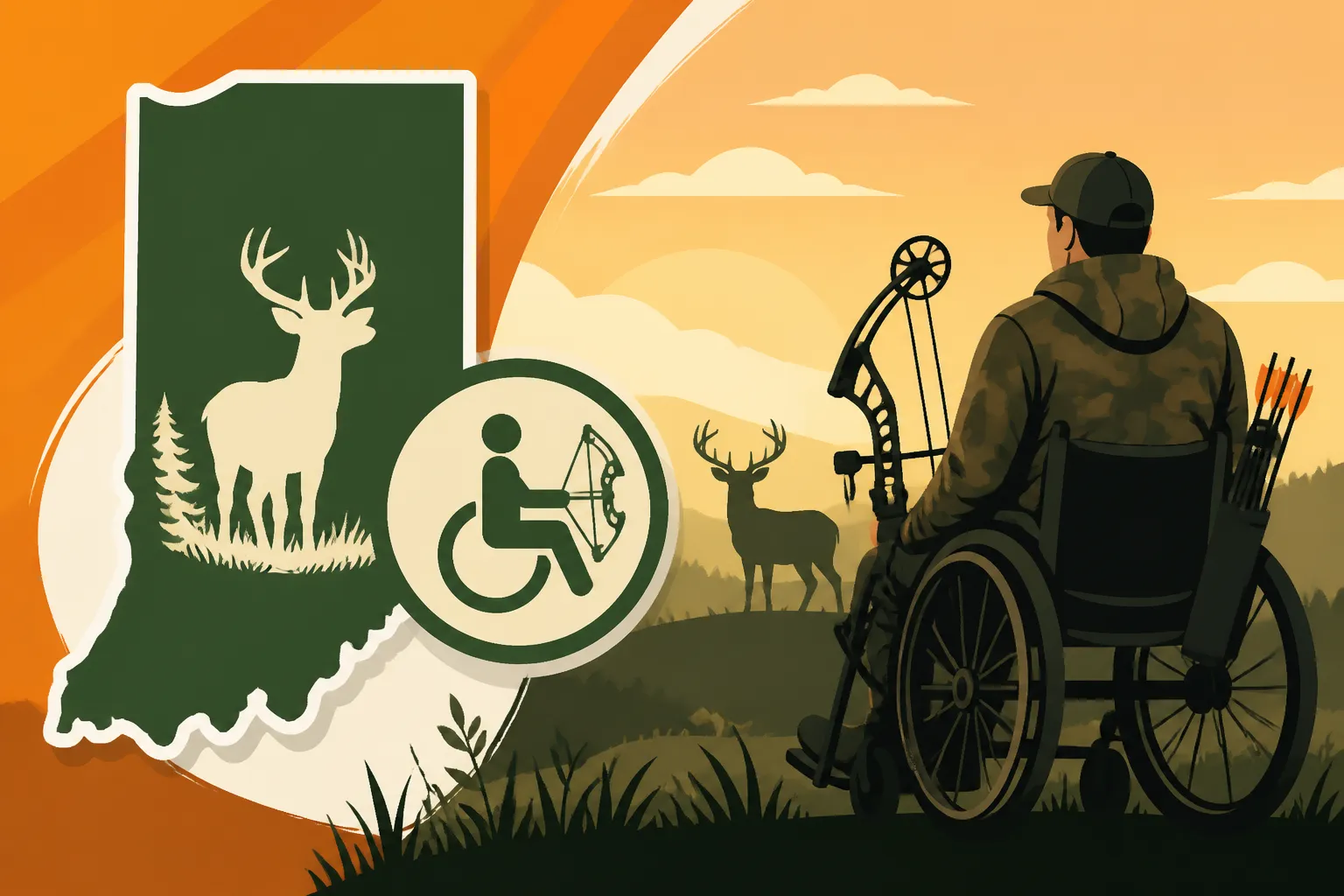
This permit is a specialized category for individuals who are entirely non-ambulatory, meaning they are permanently unable to walk, typically relying on a wheelchair or similar mobility device. While the Mobility-Impaired Hunter Permit covers a broader range of conditions, the Non-Ambulatory Hunter Permit is reserved for the most severe cases of mobility restriction. The privileges associated with this permit are similar to those for mobility-impaired hunters, but they are tailored to ensure that someone who cannot walk at all can still participate.
For instance, this permit often explicitly allows for hunting from a stationary vehicle in certain designated areas, a privilege that might have more nuanced restrictions under the broader mobility-impaired permit. The medical certification for this permit will be even more stringent, requiring clear documentation of permanent non-ambulatory status. It's a critical permit that recognizes the unique challenges faced by these hunters and provides the maximum possible flexibility within safety and conservation guidelines. Knowing your options, like these specific permits, is key to navigating hunting rules, similar to understanding Indiana's chronic wasting disease positive area regulations.
Applying for Your Indiana Disabled Hunter Permit
The application process can sometimes feel daunting, but breaking it down into manageable steps makes it much clearer. The Indiana DNR has worked to streamline this as much as possible, though medical documentation is always a critical component.
The Application Process: Step-by-Step
Applying for a disabled hunter permit in Indiana requires a few key pieces of information and documentation. First and foremost, you'll need the appropriate application form, which can usually be found on the Indiana DNR's official website or obtained at a DNR office. Make sure you select the correct form for the specific permit you're seeking, as each has slightly different requirements.
The most crucial part of the application is the medical certification. This section must be completed and signed by a licensed physician who can attest to your permanent disability and how it affects your ability to hunt under normal conditions. The physician will need to provide details about your specific condition and confirm that it meets the criteria for the permit. It's not enough to just say you have a bad knee; the certification needs to describe the permanence and severity of the limitation. Once the medical section is complete, you'll fill out your personal information on the rest of the form. You'll then submit the completed application, often along with a small fee, to the Indiana DNR. While the primary application method is typically mail, sometimes there are options to submit it in person at a DNR office. Be sure to keep copies of all your submitted documents for your records. Planning ahead for this process is essential, just as it is when trying to figure out how Indiana's archery season runs into January, which often requires permits and tags secured well in advance.
Important Considerations and Renewal
Once you receive your disabled hunter permit, it's vital to understand its validity period and renewal process. Most permits are issued for a specific duration, after which they need to be renewed. The renewal process often requires a new medical certification, especially if the initial permit was for a condition that might change over time, even if considered "permanent." It's wise to mark your calendar for renewal dates well in advance to avoid any lapse in your hunting privileges.
Another critical consideration is to always carry your permit while hunting. Just like your Indiana Hunting Licenses and What They Cost, this permit is your proof of eligibility for special accommodations. Failure to produce it if requested by a conservation officer could result in complications. Additionally, be aware that while the permit grants certain privileges, it does not exempt you from all other hunting regulations. You still need to adhere to bag limits, season dates, blaze orange requirements, and other rules that apply to all hunters. For instance, even with a mobility permit, you still need to obtain the correct Indiana Resident License Options or Indiana Nonresident License Options and appropriate tags for the game you are pursuing. Staying informed through the Indiana DNR website or using apps like GoHunt to check local regulations is always a good practice.
Specific Hunting Privileges and Restrictions
Disabled hunter permits in Indiana open up specific opportunities, but it's crucial to understand the exact scope of these privileges and where restrictions still apply. These permits aim to enable participation, not to create a free-for-all.
Expanded Vehicle Access on Public Lands
This is arguably one of the most significant privileges granted by a Mobility-Impaired or Non-Ambulatory Hunter Permit. On many public hunting lands, vehicle access is heavily restricted, often limited to designated paved or gravel roads. For hunters with severe mobility issues, this can mean vast areas of prime hunting ground are simply inaccessible. With a disabled hunter permit, you may be authorized to use an Off-Road Vehicle (ORV) or other appropriate vehicle on specific undesignated trails or service roads within certain public properties.
However, this isn't a blanket permission to drive anywhere. Vehicle use is typically restricted to marked trails or those areas specifically approved for disabled access. You cannot simply drive off-road wherever you please. It's essential to check the specific regulations for each property you plan to hunt, whether it's a state forest like Yellowwood State Forest Hunting or a Fish and Wildlife Area. Some properties might require an additional daily access pass or have a map outlining permissible routes for permit holders. Always stay on established trails, respect signage, and ensure your vehicle is clearly marked if required. This expanded access is designed to help you get closer to your hunting spot, allowing you to deploy your treestand setups in Hoosier National Forest or set up your ground blind rules on Indiana wildlife areas with greater ease.
Assistance from Non-Hunters
Hunting can be a solitary pursuit, but for disabled hunters, having a companion can be invaluable, especially for tasks that require significant physical exertion. Indiana regulations recognize this need and typically allow non-hunting companions to assist disabled hunters in certain ways. For example, a companion can often help with setting up a ground blind, carrying gear, tracking a wounded animal, or even retrieving a harvested deer.
However, the key distinction is that the companion cannot actively participate in the taking of game unless they also possess the appropriate licenses and tags for themselves and are adhering to all legal hunting methods. The disabled hunter must be the one to dispatch the animal. The companion's role is generally to assist the disabled hunter in a supportive capacity, facilitating their ability to hunt independently. For instance, a companion can help a disabled hunter move a game cart or sled out of the woods, as long as the disabled hunter was the one who lawfully harvested the animal. This aligns with principles like those found in Indiana Mentored Youth Hunting Rules, where an experienced hunter guides a novice.
Equipment Modifications and Allowances
While Indiana's general hunting regulations are quite specific about legal equipment, disabled hunter permits can sometimes open doors for certain modifications or allowances that would otherwise be prohibited. This isn't about circumventing safety or conservation, but rather about accommodating physical limitations. For example, if a hunter cannot physically operate a traditional crossbow, there might be allowances for specialized adaptive equipment that aids in drawing or firing.
The important thing here is that any significant equipment modification beyond standard adaptive accessories (like a shooting rest or specialized chair) typically requires prior approval from the DNR. It's not something you can just decide to do in the field. If you believe your disability necessitates an equipment modification not explicitly covered by the permit, it's best to contact the Indiana DNR directly to discuss your specific situation and seek explicit permission. This proactive approach ensures you remain compliant with all state laws and avoid any potential legal issues while trying out hunting methods like Rattling and Grunting in Indiana or Coyote Calling in Indiana Farm Country.
Maximizing Your Accessible Hunting Experience in Indiana
Having the right permits is just the beginning. To truly enjoy a fulfilling hunting experience, disabled hunters can employ a variety of strategies, from careful scouting to leveraging community support.
Scouting and Preparing Accessible Locations
Effective scouting is paramount for any hunter, but for those with mobility challenges, it takes on an even greater importance. You need to know not just where the game is, but also how you can realistically get there and operate once you're on site. This involves thoroughly researching public hunting land in Indiana, looking for properties known for their accessible trails, flatter terrain, or designated accessible hunting blinds. Using tools like GoHunt's robust mapping features can be a game-changer. You can overlay topographic maps, satellite imagery, and public land boundaries to identify potential access points, gentle slopes, and areas where your vehicle permit might allow you closer access.
Don't rely solely on maps; if possible, pre-season scouting trips are invaluable. Drive the accessible routes, walk the trails you can manage, and assess the suitability of potential hunting spots. Look for areas with natural cover, good visibility, and proximity to known game trails or food sources. Consider areas near logging roads or utility easements that often offer easier travel. It's also wise to check with individual property managers at Fish and Wildlife Areas or State Forests, as they often have specific information on accessible features or managed hunts for disabled individuals. Learning how to read aerial photos for southern Indiana deer, or even just scouting Indiana public land before season, becomes even more critical when accessibility is a factor.
Connecting with Support Networks
You don't have to navigate the world of disabled hunting alone. There are numerous organizations dedicated to supporting hunters with disabilities, offering everything from mentorship and adaptive equipment to organized hunts. Groups like the National Wild Turkey Federation (NWTF) or local conservation clubs often have programs or contacts that can provide invaluable assistance. These networks can connect you with experienced mentors who understand the unique challenges you face, help you find accessible hunting opportunities, or even assist with securing specialized gear.
Participating in these communities not only provides practical support but also fosters a sense of camaraderie and shared passion. It’s a chance to learn from others' experiences, share your own, and build friendships that extend beyond the hunting season. A quick online search for "disabled hunter organizations Indiana" can yield a wealth of resources and contact information. These groups often champion initiatives, sometimes even working with the Indiana DNR, to expand opportunities, much like discussions around Indiana disabled hunter permit options are an ongoing part of making hunting more inclusive.
Safety First: Essential Gear and Practices
Safety is always the top priority in hunting, and for disabled hunters, it requires an even more meticulous approach. Beyond the standard safety rules, there are specific considerations that can make a world of difference. Always inform someone of your hunting plans, including your exact location and expected return time. If you have a medical condition, ensure your hunting partners are aware of it and know how to assist in an emergency. Carrying a fully charged cell phone is a given, but also consider a satellite communication device for areas with no cell service, especially if you're exploring the more remote sections of Hoosier National Forest Hunting.
Essential gear includes a well-stocked first-aid kit, extra layers of clothing for changing weather, and ample water and snacks. For mobility-impaired hunters, this might also mean ensuring your vehicle is in top condition and carrying emergency repair kits. When hunting from a ground blind, ensure it's securely set up and accessible. For those using treestands, always use a full-body safety harness and lifeline, and practice proper climbing techniques. Tools like Using the Indiana DNR App can help you stay oriented and alert authorities in an emergency. Ultimately, being prepared, communicating effectively, and knowing your physical limits are the cornerstones of a safe and successful accessible hunt in Indiana.
Summary of Indiana Disabled Hunter Permits
To make it easy to understand the different options, here's a quick reference table outlining the primary disabled hunter permits available in Indiana:
| Permit Type | Primary Eligibility Criteria | Key Privileges | Common Application Requirements |
|---|---|---|---|
| Mobility-Impaired Hunter Permit | Permanent physical impairment severely restricting mobility. | Vehicle access on designated public land trails; other accommodations. | Physician's certification of permanent mobility impairment. |
| Disabled Veteran License | Service-connected disability (e.g., 100% disabled veteran). | Free or reduced-cost hunting/fishing licenses. | VA documentation of service-connected disability rating. |
| Non-Ambulatory Hunter Permit | Permanently unable to walk (e.g., permanent wheelchair user). | Vehicle access, potentially including hunting from a stationary vehicle in certain areas; similar to Mobility-Impaired. | Strict physician's certification of permanent non-ambulatory status. |
This table provides a concise overview, but remember that specific details and requirements can always be found on the Indiana DNR website or by contacting them directly.
Disclaimer
The information provided in this guide is intended for general informational purposes only and does not constitute legal advice. Hunting regulations, permit requirements, and eligibility criteria are subject to change. Always consult the most current Indiana Department of Natural Resources (DNR) regulations and speak directly with the DNR or a qualified legal professional for specific guidance regarding your individual situation.