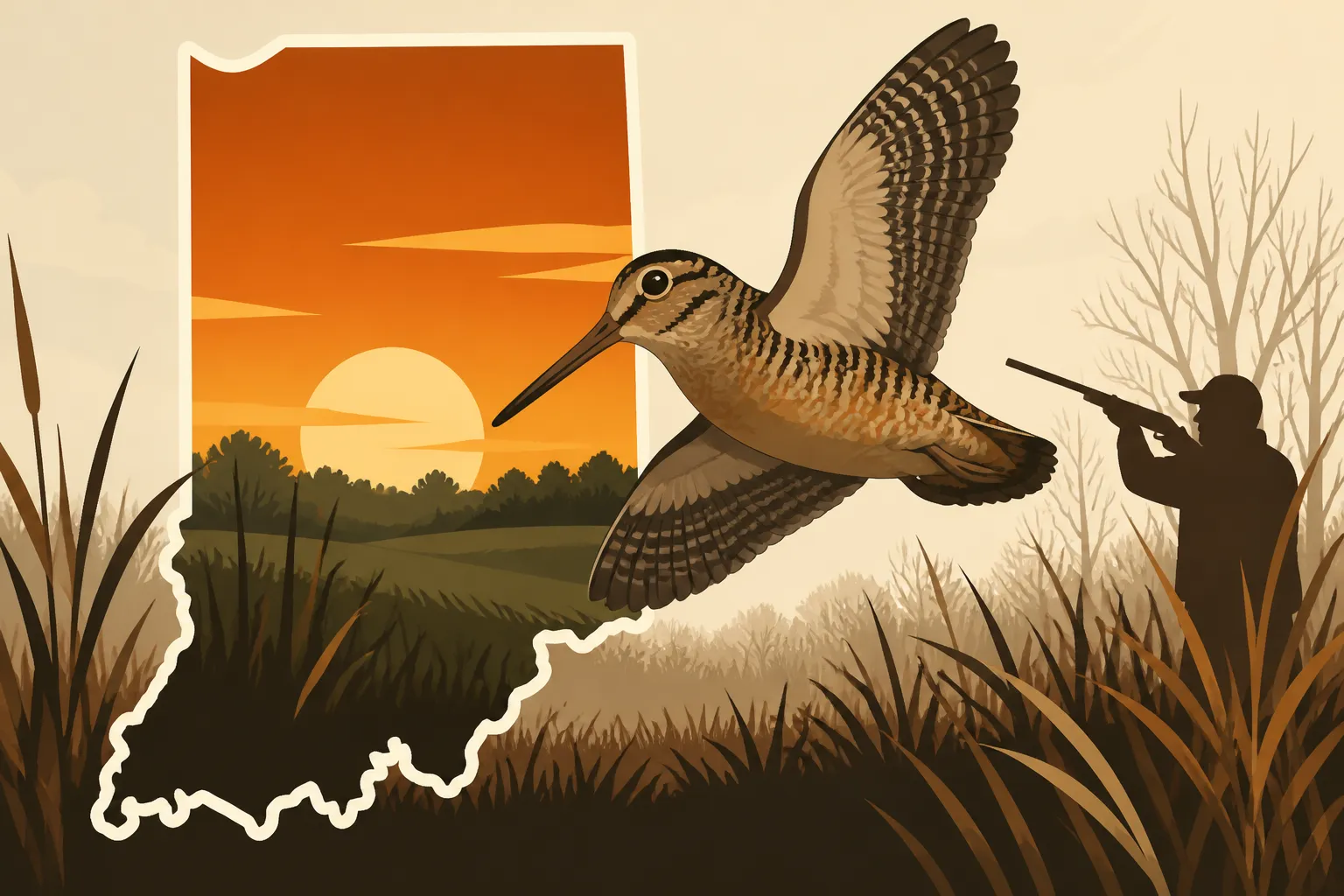
Indiana’s Place on the Woodcock Flight
For many Indiana hunters, the American woodcock is a creature of mystery and fleeting encounters, often flushed by accident while pursuing squirrels or deer. But for those in the know, the "timberdoodle" offers a unique and incredibly rewarding wingshooting experience as they pause in our Hoosier coverts during their incredible migration. This guide will explore Indiana's vital role in the woodcock's journey, delve into their preferred habitats, and share tactics to successfully pursue these remarkable migratory birds.
The Woodcock's Great Migration Through Indiana
The American woodcock undertakes one of the most remarkable migrations of any upland bird, traveling hundreds of miles between their northern breeding grounds and southern wintering areas. Indiana, sitting squarely within their migratory corridor, becomes a crucial stopover point, especially during the fall.
The Annual Journey South
Each autumn, as the days shorten and northern grounds begin to freeze, woodcock begin their southward trek. They are creatures of habit, largely following established flyways, though weather patterns can heavily influence their exact timing and routes. Unlike many migratory birds that travel in large, visible flocks, woodcock are often solitary travelers, or move in very small, loose groups, typically under the cloak of darkness. This quiet, nocturnal movement contributes to their elusive nature, making their arrival and departure feel almost magical. They aren't soaring high like geese; instead, they often fly just above the treetops, stopping in suitable coverts to feed and rest during the day.
Peak Migration Windows in Indiana
Timing is everything when it comes to intercepting the woodcock flight in Indiana. While a few resident woodcock breed here, the real action starts when the northern birds begin to pour in. Typically, the peak of the fall migration occurs from mid-October through mid-November, though it can vary by a week or two each year. Early season hunters might find a few birds, but the best opportunities coincide with the first significant cold fronts pushing down from Canada. These fronts act as a natural alarm clock, signaling to the birds that it's time to move. Knowing Indiana Small Game Season Rules for woodcock is essential to ensure you're afield during these prime windows. Keep an eye on weather forecasts for dips in temperature and northwesterly winds—these are your cues to hit the woods.
Weather's Impact on the Flight
Weather is perhaps the single biggest factor influencing the woodcock migration. A strong cold front, especially one accompanied by brisk north or northwest winds, can trigger a mass exodus from northern states, pushing a "flight" of birds into Indiana. Conversely, prolonged mild weather can delay their arrival, leading to a later season for Hoosier hunters. Rain, while not always a deterrent, can sometimes ground birds, concentrating them in specific areas as they seek shelter and moist soil for feeding. Hard freezes, however, are a woodcock hunter's nemesis. Once the ground freezes solid, woodcock, which rely entirely on soft, moist soil to probe for worms with their long bills, will quickly move on, making them disappear from our state almost overnight.
Indiana's Prime Woodcock Habitat
Understanding what woodcock look for is paramount to finding them. They are creatures of very specific habitats, often preferring areas that might seem dense and uninviting to other game.
Preferred Coverts and Wetlands
Woodcock are specialists when it comes to habitat. They thrive in early successional forests—those areas that have been recently logged, clear-cut, or are regenerating from old fields, featuring dense tangles of young trees, shrubs, and briars. Think sapling stands of aspen, alder, willow, and dogwood. What they need most are moist, rich soils where they can easily probe for earthworms, their primary food source. Areas bordering wetlands, small streams, or even just low-lying depressions in the woods often hold these conditions. These dense, brushy coverts provide both food and protection from aerial predators. Often, the best coverts are right on the edge of larger, mature timber, or near open fields where they might roost at night.
River Bottoms and Early Successional Growth
Indiana's numerous river bottoms and creek drainages are absolute magnets for woodcock. The Wabash River, the White River, the Kankakee, and countless smaller tributaries create ideal corridors of moist, rich soil and dense, regenerating vegetation. These low-lying areas, especially those prone to occasional flooding, often host the perfect mix of soft ground and thick cover that woodcock crave. Look for areas along these waterways that have seen recent timber cuts or natural disturbances, leading to a profusion of young willows, alders, and thick briar patches. These areas often attract other small game too, making it an excellent spot for Squirrel and Small Game Hunting in Indiana. Scouting these Hunting Indiana River Bottom Funnels before the season can give you a significant advantage, helping you pinpoint high-potential areas.
Public vs. Private Land Opportunities
Indiana offers ample opportunities for woodcock hunting on both public and private lands. State Fish and Wildlife Areas (FWAs), State Forests, and even portions of the Hoosier National Forest often have suitable habitat, especially those managed with an eye toward early successional growth or those with extensive river bottom access. Many of these public lands have ongoing timber management or agricultural practices that inadvertently create prime woodcock coverts. Tools like GoHunt or the Indiana DNR's online mapping resources are invaluable for identifying these areas, allowing you to zoom in and look for the tell-tale signs of young timber or wetland edges. On private land, securing permission from landowners, particularly those with neglected fields, powerline cuts, or low-lying creek bottoms, can yield fantastic results. Remember, dense, tangled cover that looks miserable to walk through is often exactly where a woodcock wants to be.
Understanding Woodcock Behavior in Indiana
To effectively hunt woodcock, it's crucial to understand their daily routines and how they react to pressure. Their unique behaviors dictate how and where you should look for them.
Feeding Habits and Ground Probing
The woodcock's entire existence revolves around its diet of earthworms. Their long, flexible bill is perfectly adapted for probing moist soil, often described as having a "touch-sensitive tip" that allows them to detect worms underground. This means they spend a significant portion of their active hours walking slowly, methodically probing the ground in areas with rich, moist soil. You'll rarely find woodcock in dry, sandy areas or on hard-packed ground. Their presence is often indicated by "borings"—small, pencil-sized holes in the ground where they've probed for food. These borings, along with distinctive white "splashes" of droppings, are clear indicators that you're in a productive covert. They tend to feed most actively at dawn and dusk, retreating to denser cover during the bright midday hours.
Roosting and Nocturnal Activity
While woodcock spend their days in dense cover, they are highly nocturnal creatures. At dusk, they'll often move from their daytime coverts to more open areas—like old fields, pastures, or even sparse woods—to perform their courtship flights (in spring) or simply to feed under the cover of darkness. This nocturnal feeding allows them to avoid diurnal predators and take advantage of worms that come closer to the surface at night. In the fall, during migration, they might utilize these more open areas as nocturnal roosting sites. This behavior explains why you might find birds in a dense covert during the day, only for them to seem to vanish by morning if you return to the same spot; they've simply moved to their night-time feeding or roosting grounds.
Flushing Characteristics and Flight Patterns
The flush of a woodcock is distinct and often startling, even for experienced hunters. They typically hold very tight, allowing a hunter (or dog) to get quite close before exploding vertically from the cover with a distinctive, twittering whistle from their wings. This vertical ascent is often followed by a brief, somewhat erratic flight before they level out and weave through the timber. Their flight can appear deceptively slow, but they are agile in dense cover. They rarely fly far, often landing within 50-100 yards, allowing for repeated flushes if you mark the bird down accurately. This tendency to make short flights is a major advantage for hunters, especially when working with a well-trained bird dog. Remember this when Choke Choice for Fast Flushes is critical, as you often only get a quick, close shot.
Hunting Woodcock in the Hoosier State
Hunting woodcock is a wonderfully unique experience, blending aspects of small game hunting with traditional upland bird pursuit. It’s often less about long-range shooting and more about precise dog work and quick reflexes in tight quarters.
Essential Gear and Shotgun Choices
For woodcock, less is often more when it comes to gear. A lightweight shotgun, typically a 20-gauge or even a 28-gauge, is ideal for carrying through dense cover and making quick, instinctive shots. Given their tight holding nature and short flight, open chokes like cylinder or improved cylinder are usually preferred. Light loads of 7 ½ or 8 shot are perfect for these delicate birds. Comfortable, briar-resistant brush pants or chaps are an absolute must for navigating the thick cover, and sturdy, waterproof boots will keep you dry in the often-soggy bottomlands. A good hunting vest with plenty of game bag capacity and shell loops is also invaluable. Don't forget a compass or GPS (like the one in the GoHunt app) as it's easy to get disoriented in dense cover. A whistle is also crucial if you're hunting with a dog. Consider patterning your chosen Upland Guns for Fencerow Cover to ensure tight patterns at close range.
Finding Productive Coverts
The secret to woodcock hunting is finding the right cover. You're looking for that trifecta: moist soil, dense young growth, and a mix of sunshine and shade. Start by focusing on river and creek bottoms, particularly areas with regenerating timber, alder thickets, or neglected old fields turning into brush. Don't be afraid to penetrate what looks like impenetrable tangles; that's often exactly where the birds are. Look for those "borings" and "splashes" mentioned earlier—they are undeniable proof of woodcock activity. Scouting before the season, perhaps when you are Scouting Indiana Public Land Before Season for deer or small game, can save you precious time once the migration is on. Use aerial maps from GoHunt or the DNR to identify potential hotspots, looking for distinct changes in vegetation or low-lying areas.
Working with Dogs and Without
While you can certainly jump-shoot woodcock, a good bird dog elevates the experience dramatically. Pointers, setters, and flushers like springer spaniels or Labrador retrievers can be incredibly effective. A dog's nose will help locate birds holding incredibly tight, allowing you to set up for a shot as they flush. A well-behaved dog will point or flush within gun range, giving you time to prepare. When a dog goes on point, approach deliberately, ready for the flush, which can happen at any moment. If hunting without a dog, you'll need to walk slowly and methodically, pausing frequently. Woodcock sometimes flush when you move, but often hold until you're completely still. Zigzagging through cover, stopping and starting, can often be more effective than a straight-line approach. Keep your gun ready, because the shot opportunity will be fast.
Conservation Efforts and Future Outlook for Woodcock
The American woodcock population is monitored closely, and various conservation efforts are in place to ensure their future, a future that hinges largely on habitat.
DNR Monitoring and Surveys
The Indiana Department of Natural Resources (DNR) plays a vital role in monitoring woodcock populations and habitat. They participate in federal surveys, such as the annual Singing-Ground Survey in the spring, which helps estimate breeding populations. They also conduct habitat assessments on public lands, looking for opportunities to enhance conditions for woodcock and other early successional species. These efforts provide crucial data that informs hunting season frameworks and habitat management decisions. Hunters contribute indirectly to this monitoring through their harvest reports, which help the DNR understand population trends and harvest success. Ensuring you have your Indiana HIP Certification for Bird Hunters is part of this broader conservation framework.
Habitat Restoration Initiatives
Because woodcock are so dependent on specific early successional habitat, restoration and maintenance are key to their long-term health. Programs by organizations like the Ruffed Grouse Society & American Woodcock Society, often in partnership with state agencies, focus on timber management practices that create and maintain these young forest conditions. This can involve strategic clear-cutting, prescribed burning, and planting native shrub species. These efforts are not just for woodcock; they benefit a wide array of wildlife that relies on young forest, from deer to many songbird species. Without these active habitat management practices, the dense, brushy coverts that woodcock love would eventually mature into unsuitable older forests.
The Role of Hunters in Conservation
Woodcock hunters are, by their very pursuit, active conservationists. The sale of hunting licenses and federal excise taxes on firearms and ammunition (through the Pittman-Robertson Act) directly fund wildlife research, habitat acquisition, and management programs, many of which benefit migratory birds like the woodcock. Furthermore, active hunters provide valuable "boots on the ground" observations to wildlife agencies, reporting changes in bird numbers or habitat conditions. By supporting organizations dedicated to upland bird habitat, and by adhering to regulations, hunters ensure that future generations will also have the opportunity to experience the unique thrill of "Indiana's Place on the Woodcock Flight". Your participation, even simply by checking regulations via GoHunt or the DNR website before you head out, contributes to the overall conservation picture.
Woodcock Hunting: An Indiana Opportunity
For hunters seeking a different challenge, the American woodcock offers a unique and engaging experience right here in Indiana. Their elusive nature, dramatic flushes, and preferred dense cover make for a demanding yet incredibly rewarding pursuit. By understanding their migratory patterns, identifying key habitats, and employing sound hunting strategies, you can unlock the magic of the "timberdoodle" and truly appreciate Indiana's vital role in their incredible journey.
| Key Woodcock Migration Factors | Description | Impact on Indiana Hunting |
|---|---|---|
| Cold Fronts | Significant drops in temperature, often with northwesterly winds. | Triggers mass southward movement, bringing birds into Indiana. |
| Moist Soil Conditions | Unfrozen, soft ground with high moisture content. | Essential for feeding (earthworms); birds will leave if ground freezes. |
| Early Successional Habitat | Dense, young trees, shrubs, and briars, often near water. | Provides critical daytime cover and feeding grounds during migration. |
| Time of Day | Primarily nocturnal feeders; active at dawn/dusk; rest in cover during the day. | Best hunting is typically midday when birds are holding tight in cover. |
| Migration Window | Mid-October to mid-November for peak flights through Indiana. | Dictates optimal hunting periods; can shift with yearly weather variations. |
Disclaimer
This article is for general informational purposes only and does not constitute professional advice. Laws, prices and regulations vary by location and change over time. Consult a qualified professional for guidance on your specific situation.