Orange County Public Land Access
Orange County, nestled in the scenic hills of Southern Indiana, offers a surprising amount of public land for hunters, but knowing where to go and how to access it can feel like a daunting puzzle. Many hunters, especially those new to the area or without private land connections, often wonder how to navigate these vast tracts and identify productive hunting spots. This guide is designed to demystify public land access in Orange County, providing you with the knowledge and strategies to confidently explore and hunt these beautiful woodlands.
Understanding Public Land Access in Orange County
Orange County is a gem in Southern Indiana, known for its rolling hills, mature hardwoods, and diverse wildlife. However, unlike some flatter, more agricultural parts of the state, accessing and hunting the public lands here comes with its own set of challenges and unique opportunities. It's not always as simple as pulling off the road and walking into the woods. Understanding the types of public land available and the general lay of the land is your first step to a successful hunt.
The Challenge of Finding Huntable Ground
Let's be honest, trying to find huntable public ground in a new area can be frustrating. You might drive past miles of forest only to realize it's private, or you might find public land that looks promising but is riddled with dense thickets or rugged terrain that makes access difficult. Orange County's landscape, while beautiful, is certainly no exception. The terrain can be steep, roads might be limited, and the sheer vastness of the Hoosier National Forest can make pinpointing a productive spot feel like searching for a needle in a haystack. There's also the element of hunting pressure, which can make deer wary and harder to locate near easily accessible areas. Many hunters feel overwhelmed by the sheer scale of the landscape and the amount of ground to cover, leading to wasted time and sometimes, empty game bags. This is why a solid understanding of the available land and strategic planning is crucial.
Key Public Land Types Available
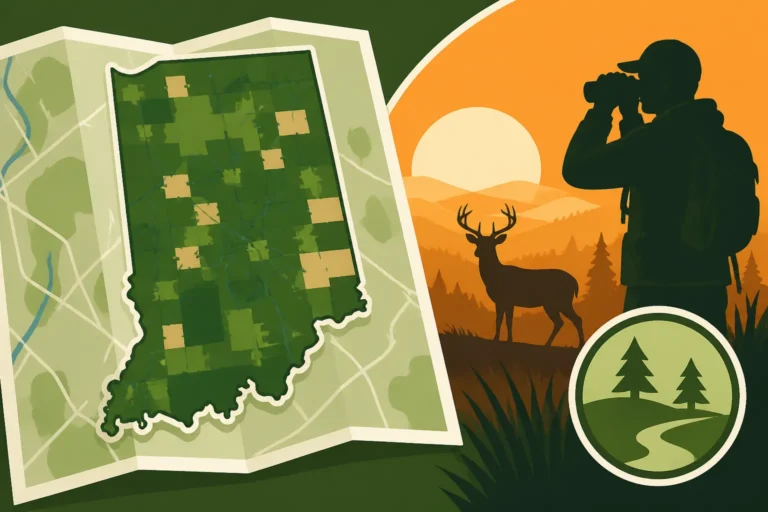
When we talk about public land in Orange County, we're primarily looking at two major categories: the Hoosier National Forest and Indiana State Forests. While both offer excellent hunting, they often differ in management, topography, and the type of hunting experience you can expect.
The Hoosier National Forest sprawls across several counties, and a significant portion of it lies within Orange County. This is federal land, managed by the U.S. Forest Service. You'll find vast stretches of mature timber, deep hollows, rugged ridge tops, and often less developed infrastructure compared to state-managed lands. This can mean more solitude but also requires greater physical exertion and navigational skills. Hunting here is generally less restrictive in terms of specific sign-in procedures, but federal regulations still apply.
Indiana State Forests, while not as extensive in Orange County itself as the National Forest, are nearby and also offer critical public access. These lands are managed by the Indiana Department of Natural Resources (DNR) and tend to have more developed trail systems, forest roads, and sometimes, more active timber management programs which can create diverse habitat. While the feeling might be a bit different from the National Forest, the hunting opportunities are just as robust. Specific state regulations for things like camping, vehicle use, and Treestand Setups in Hoosier National Forest are important to understand.
Here's a quick overview of what you can expect from each:
| Feature | Hoosier National Forest (Federal) | Indiana State Forests (State) |
|---|---|---|
| Primary Management | U.S. Forest Service | Indiana Department of Natural Resources |
| Terrain | Often more rugged, vast, deep hollows, high ridges | Can be rugged but sometimes more accessible trails |
| Vegetation | Mature hardwoods, mixed timber | Mixed timber, active timber harvest areas creating varied stages of growth |
| Access | Many roads, but some areas require long walks | More developed road/trail systems common |
| Hunting Pressure | Can be heavy near roads, but less in backcountry | Varies, can be high near access points |
| Permits/Fees | Generally no hunting permits/fees beyond state license | State license required, specific permits for activities like firewood collection |
| Campsites | Dispersed camping often allowed, designated campgrounds | Designated campgrounds, some dispersed options |
Navigating Specific Public Hunting Areas
Now that we've covered the general types, let's dive into some of the specifics within or immediately adjacent to Orange County. Knowing the characteristics of these areas can help you narrow down your scouting efforts and plan your hunts more effectively.
Hoosier National Forest Opportunities
The Hoosier National Forest is undoubtedly the largest chunk of public hunting ground in Orange County, and it presents incredible opportunities for deer, turkey, and small game. When hunting here, you're looking at vast, unbroken stretches of timber. Deer often utilize the steep ridges and deep hollows, moving between bedding areas on south-facing slopes and feeding areas in creek bottoms or oak flats. Hunting Southern Indiana Hill Country provides excellent tactics for this type of terrain.
One of the biggest advantages of the National Forest is the sheer acreage. If you're willing to walk, you can get away from the crowds that often hug the easily accessible roads. Focus your scouting on areas where terrain creates natural funnels, such as saddles between ridges or bottlenecks where two hollows converge. Look for mast crops like acorns in the fall, which are huge deer magnets. Creek bottoms, especially those with thicker undergrowth, can also be excellent travel corridors and bedding areas. The key to success here often lies in your physical fitness and your ability to navigate rough terrain, utilizing contour maps to find those out-of-the-way pockets of habitat. Remember, these lands are wild, and a good compass or GPS is your best friend.
State Forest Lands in and Around Orange County
While Orange County itself doesn't host a major Indiana State Forest, several are within a reasonable drive and offer similar Southern Indiana hunting experiences. Yellowwood State Forest, Morgan-Monroe State Forest, and Jackson-Washington State Forest are examples of state-managed lands that embody the rugged, timbered landscape ideal for hunting. These forests are managed by the Indiana DNR and often have more developed access points and trail systems, which can be a double-edged sword: easier access but potentially more hunting pressure in popular spots.
When hunting state forests, pay close attention to timber management activities. Recent clear-cuts or selective harvests can create fantastic new growth, offering both food and cover for deer and turkeys. These areas can be overlooked by hunters who prefer mature timber, but the dense regrowth provides crucial habitat. Road systems within these forests often follow ridges or valley floors, creating clear access points. Look for areas away from popular hiking trails and campgrounds, and don't be afraid to put some miles on your boots. Deer drives on Indiana public land can be very effective in these areas if you have a hunting party. Turkeys in state forests often roost in mature timber along ridge lines, and locating these roosts during the spring season is key. Roost Hunting Indiana Gobblers can offer specific strategies for this.
Tools and Strategies for Successful Public Land Hunting
Hunting public land successfully in Orange County isn't just about showing up; it's about smart planning, effective scouting, and utilizing the right tools. The more prepared you are, the better your chances of encountering game and having a safe, enjoyable experience.
Leveraging Mapping Applications
In today's age, digital mapping applications are absolutely essential for public land hunters. Gone are the days of solely relying on paper maps and compasses – though those are still vital backups! Applications like onX Hunt have revolutionized how hunters scout and navigate. With onX Hunt, you can clearly see public land boundaries, private property lines, landowner names, topo maps, aerial imagery, and even layers showing different habitat types. This is incredibly useful for finding those obscure fingers of public land that might be overlooked, or for ensuring you don't inadvertently trespass onto private property while tracking game. You can mark waypoints for potential stand locations, rub lines, scrapes, or water sources, making your scouting efforts much more efficient. Many hunters also find value in platforms such as GoHunt for broader scouting strategies and insights, complementing the detailed mapping provided by onX Hunt.
Beyond just boundaries, these apps allow you to study the terrain from your living room. You can identify ridge lines, saddles, creek drainages, and potential bedding areas without ever setting foot in the woods. This "e-scouting" saves immense time and energy. You can plot out entry and exit routes that minimize disturbance, especially crucial on pressured public ground. Using the Indiana OnX and DNR Map Tools offers a deep dive into maximizing these digital resources.
Scouting and Planning for Orange County Terrain
Scouting is the backbone of successful public land hunting, and it’s even more critical in the rugged terrain of Orange County. Don't wait until opening day to hit the woods.
- Pre-Season E-Scouting: As mentioned, start with your mapping apps. Identify potential funnels, saddles, benches along ridges, and areas with diverse vegetation. Look for small pockets of public land that might be harder to access, as these often hold less pressured game.
- Boots-on-the-Ground Scouting: Once you have a few promising spots identified on your map, it's time to put boots on the ground. Visit these areas in the off-season or well before hunting season. Look for fresh deer sign: tracks, rubs, scrapes, and bedding areas. Pay attention to game trails and how they connect different features of the landscape. In the fall, locate prime acorn-producing oak trees, as these will be key food sources.
- Understand Wind and Thermals: In hilly country like Orange County, wind and thermals play a massive role in deer movement and scent control. Thermals rise in the morning as the ground heats up and fall in the evening as it cools. Understanding how these air currents move through hollows and over ridges is vital for setting up your stand or blind effectively. Always approach your stand with the wind in your favor, and position yourself so your scent isn't blowing into potential deer travel routes. Wind and Thermals on a Southern Indiana Ridge is a great resource for mastering this.
- Entry and Exit Routes: Plan your routes carefully. You want to get to and from your stand without alerting deer. This often means walking along creek beds, down the backside of a ridge, or utilizing thick cover. Avoid walking directly through known bedding areas or feeding zones.
- Finding Water Sources: Even in the hills, deer need water. Identify springs, small creeks, or even seeps on your maps and during scouting. These can be natural congregation points, especially during dry periods.
Remember, public land hunting often means more competition. The hunter who puts in the most effort, both with technology and with legwork, is usually the one who finds success. Don't be discouraged by a few unproductive hunts; every trip into the woods is a learning experience that builds your knowledge base for future hunts.
Respecting Regulations and Fellow Hunters
Hunting public land is a privilege, and it comes with responsibilities. Understanding and adhering to regulations, as well as practicing good hunter etiquette, ensures that these precious resources remain available and enjoyable for everyone.
General Public Land Rules and Etiquette
When you step onto public land in Orange County, you're sharing it with hikers, birdwatchers, mountain bikers, and other hunters. Being a good steward and neighbor is paramount.
- Know the Rules: Always consult the Indiana DNR hunting regulations pamphlet for the current season. These regulations cover everything from season dates and bag limits to legal weapons and blaze orange requirements. Specific rules can vary between Hoosier National Forest and State Forests, so make sure you know which land type you're on. Indiana Hunting Licenses and What They Cost will cover the basics of what you need to legally hunt.
- Leave No Trace: Pack out everything you pack in, and then some. This includes all trash, spent casings, and any other litter. Public lands are not your personal dumping ground.
- Respect Boundaries: Be acutely aware of public and private land boundaries. Use your
onX Huntapp to confirm where you are. Even if you don't intend to trespass, crossing a property line, especially while pursuing game, can lead to serious legal issues and tarnish the reputation of hunters. - Manage Hunting Pressure: On public land, you're likely to encounter other hunters. Be respectful. If you see another vehicle parked near where you plan to hunt, consider finding a different spot. Spreading out helps reduce pressure on the deer herd and improves everyone's hunting experience. Avoid sky-lining yourself on a ridge where you might be mistaken for game, especially during firearms season.
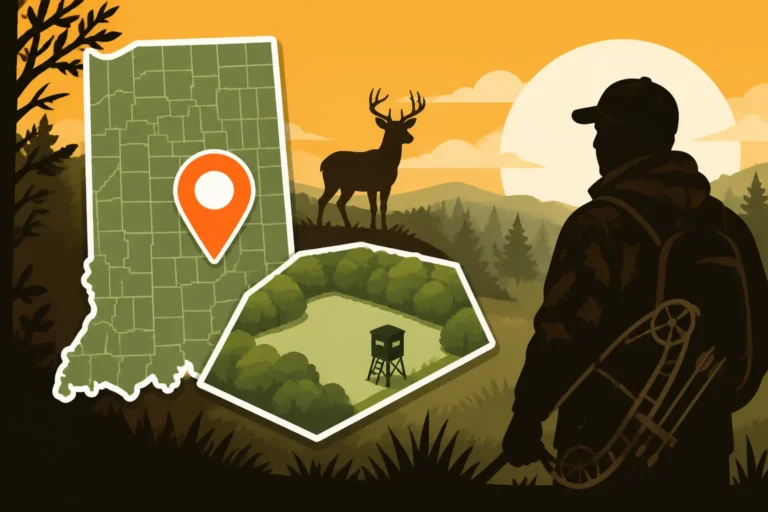
- Tree Stand and Ground Blind Rules: Many public land areas have specific rules about placing stands and blinds, including whether they can be left overnight, what materials can be used, and if they need to be clearly marked with your name and hunting license number. Always verify these rules before you hang anything.
- Retrieve Your Game: Make every effort to track and recover any animal you shoot. This is a moral and ethical obligation. If a deer crosses onto private land, you must gain permission from the landowner before pursuing it. Blood Trailing After Dark in Indiana can help with tracking strategies.
Understanding Local Nuances
While general rules apply, there can be subtle local nuances that seasoned Orange County hunters pick up on. For example, certain parts of the National Forest might see more pressure from out-of-county hunters, while other, harder-to-reach pockets remain relatively untouched. Local knowledge often comes from spending a lot of time in the woods, but also from talking to other ethical hunters (if you can find one willing to share!), or even local conservation officers.
Sometimes, roads or access points might close temporarily due to weather, timber operations, or other management activities. Checking the specific managing agency's website (Forest Service for HNF, DNR for State Forests) before your trip can save you a lot of frustration. Understanding that deer in specific areas might alter their patterns due to consistent hunting pressure is also a nuance. They might become more nocturnal, or move into thicker, less accessible cover. Adapting your tactics to these local conditions is part of becoming a truly successful public land hunter in Orange County.
Disclaimer
This article is for general informational purposes only and does not constitute professional advice. Laws, prices and regulations vary by location and change over time. Consult a qualified professional for guidance on your specific situation.