Red Dots on a Turkey Shotgun
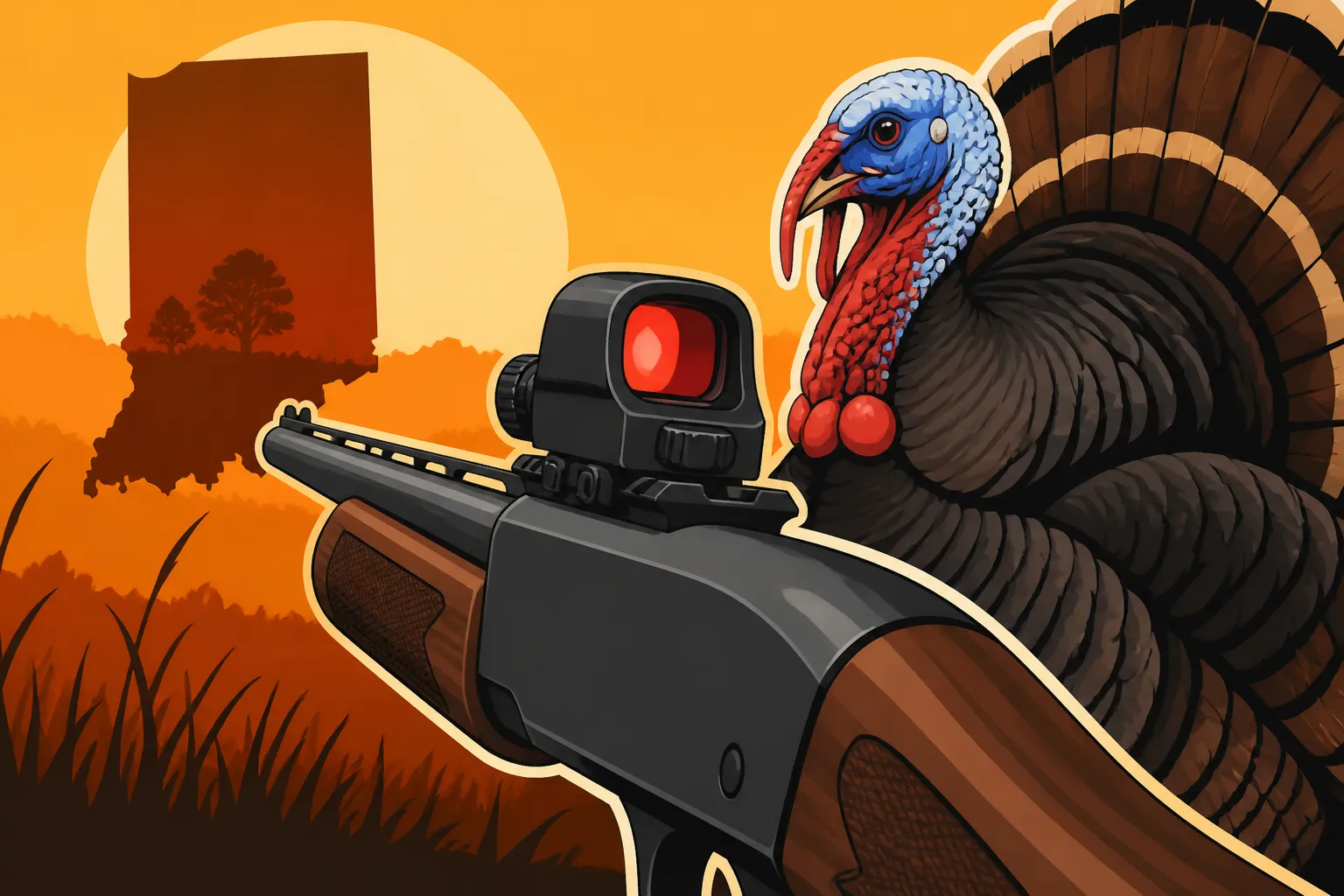
Let's be real, aiming a shotgun at a strutting longbeard can be one of the most nerve-wracking moments in the Indiana turkey woods. That little bead at the end of your barrel can seem to dance around, especially when your heart is pounding so hard it feels like it's trying to escape your chest. This guide is all about simplifying that critical aiming process by exploring the game-changing benefits of putting a red dot sight on your turkey shotgun, helping you make more confident, ethical shots when it matters most.
Why Traditional Sights Often Fall Short for Turkey Hunting
For generations, hunters have successfully taken turkeys with nothing more than a simple front bead sight on their shotgun. And there's nothing wrong with that! But as turkey hunting evolves, and we demand more precision, especially with modern tight-patterning loads, those traditional sights can sometimes leave us wanting more.
The Limitations of Bead Sights in the Turkey Woods
Think about it: you're sitting in a ground blind or nestled up against a big oak, a gobbler is circling, and the light is just starting to filter through the canopy at dawn, or maybe it's fading fast at dusk. That small front bead, often black, can easily get lost against the dark background of timber, brush, or even the turkey's own dark body. You’re trying to line up a precise shot on a turkey's head and neck — a small target, especially compared to the vitals on a deer. A bead sight requires you to align three points: your eye, the bead, and the target. In the heat of the moment, or in less-than-ideal lighting, achieving that perfect alignment consistently can be a real challenge. You might find yourself subtly lifting your head or canting the gun, throwing off your point of impact without even realizing it.
The Stress of the Shot and Aiming Consistency
We've all been there: "turkey fever" hits, and your hands might tremble a little, your breathing gets shallow, and every rustle of leaves sounds like a freight train. It’s an exhilarating moment, but it can wreak havoc on your aiming consistency. With a traditional bead, any slight shift in your head position or how you mount the gun can drastically alter where your pattern goes. A shot that feels perfect might be high or low, or off to one side. This isn't just about missing a bird; it's about making sure that when you pull the trigger, you're confident you're delivering a clean, ethical shot that puts the bird down quickly. The last thing any hunter wants is to wound a turkey and have it run off, especially after all the hard work that goes into scouting and calling.
The Game-Changing Benefits of a Red Dot Sight on Your Turkey Shotgun
Stepping into the world of red dot sights for your turkey gun can feel like a revelation. Suddenly, that aiming process that used to be a point of anxiety becomes much more intuitive and precise. It's not about making hunting easier, but about making your shots more accurate and consistent.
Enhanced Precision for Critical Head and Neck Shots
The primary advantage of a red dot sight is its unparalleled precision. Instead of aligning a front bead with your eye and the target, you simply place a bright, illuminated dot directly onto your target. This single point of aim eliminates parallax within reasonable hunting distances, meaning that no matter how your eye moves slightly behind the sight, as long as you see the dot, it's on target. For turkey hunting, where a head and neck shot is paramount, this precision is a massive advantage. You can clearly place that dot on the base of the turkey's neck or where the neck meets the head, knowing that your pattern will go exactly where that dot sits, assuming your shotgun is properly patterned.
When you're out patterning your shotgun with various loads and choke combinations, a red dot truly shines. It allows you to definitively see where your shot is going and adjust your aim accordingly. You’re not guessing if the bead was perfectly aligned; you know where the dot was sitting. This translates directly to tighter patterns on target and a greater confidence in your setup. If you're using a tool like GoHunt to research choke and load combinations, pairing that research with solid range time using a red dot will help you dial in the perfect setup for those Indiana gobblers.
Faster Target Acquisition and Wider Field of View
Another huge benefit of red dots is how quickly you can get on target. There's no fumbling to align multiple reference points. You bring the gun up, the dot appears, and you're ready to shoot. This is incredibly valuable when a gobbler suddenly appears from behind a rise or skirts through the timber and only gives you a small window for a shot. That quick target acquisition can be the difference between getting a shot off and watching the bird disappear.
Furthermore, most red dot sights are "open" or "tube-style" with a relatively large viewing window, allowing you to maintain a wide field of view. Unlike traditional magnified scopes that can narrow your vision, a red dot allows you to keep both eyes open, maintaining crucial peripheral vision. This is not only safer, allowing you to stay aware of your surroundings and any hunting partners, but also helps you track the bird's movement and identify any last-second obstacles. Whether you're trying to Calling an Indiana Gobbler Off the Roost or Run-and-Gun Turkey Tactics on Public Land, keeping both eyes open helps you see the whole picture.
Low-Light Performance and Versatility
Turkeys are most active at first light and last light, times when natural lighting can be dim and challenging for traditional sights. A red dot's illuminated reticle stands out brightly against any background, regardless of how dark or cluttered the environment is. Most quality red dots offer adjustable brightness settings, allowing you to dial it down for low light conditions to prevent glare or crank it up for bright, sunny days.
This means you can confidently aim even when that gobbler is still somewhat in the shadows of a dense woodlot or approaching from a dark creek bottom. The versatility doesn't stop there; many red dots are built to withstand the elements, being waterproof, fog-proof, and recoil-resistant, which is essential for the often unpredictable weather found across Indiana during turkey season. From a sudden spring shower to a foggy morning, your red dot will be ready when you are.
Choosing the Right Red Dot for Your Indiana Turkey Hunt
With so many red dot sights on the market, picking the right one can feel a bit overwhelming. But by focusing on a few key features, you can narrow down your choices and find a reliable optic that will serve you well in the Indiana turkey woods.
Key Features to Consider: Durability, Battery Life, and Reticle Options
When you're out in the field, whether you're navigating the thick brush of a southern Indiana ridge or crossing an open field in northern Indiana, your gear needs to be tough. A turkey gun takes a beating, and your red dot needs to match that durability. Look for sights constructed from aircraft-grade aluminum or other robust materials. Waterproofing and fog-proofing are non-negotiable for spring turkey hunting, where dew, rain, and humidity are common. You don't want your optic fogging up just as a gobbler steps into range.
Battery life is another critical factor. Many modern red dots boast incredibly long battery lives, sometimes measured in tens of thousands of hours, thanks to motion-activated on/off features or ultra-efficient designs. Always check the battery type and availability, and make it a habit to replace the battery before each season starts. Reticle options vary: some hunters prefer a simple 2-3 MOA (minute of angle) dot for precision, while others like a circle-dot reticle, which provides a fast acquisition circle with a precise dot in the center. The circle-dot can be particularly effective for quickly bracketing a turkey's head and neck.
Mounting Options and Shotgun Compatibility
Mounting a red dot to your shotgun requires careful consideration to ensure it stays put under recoil and provides a consistent sight picture. Many shotguns come drilled and tapped for an optic rail, typically a Picatinny or Weaver style, which is the most common and robust mounting platform. If your shotgun isn't drilled and tapped, you might need to explore options like saddle mounts that attach to the receiver or clamp-on rib mounts. However, direct drilling and tapping by a qualified gunsmith is often the most secure route.
Ensure the red dot you choose comes with or is compatible with a mount that fits your shotgun model. Proper installation is crucial; use thread locker on screws and torque them to the manufacturer's specifications to prevent the sight from shifting or coming loose under the heavy recoil of turkey loads. A secure mount ensures that once you zero your red dot, it stays zeroed.
Here's a quick comparison of common red dot features:
| Feature | Description | Turkey Hunting Benefit |
|---|---|---|
| Reticle Type | Single dot (e.g., 2-3 MOA), Circle-Dot, Chevron | Precision dot for head/neck, circle for fast acquisition |
| Brightness | Multiple settings, sometimes auto-adjusting | Adapt to all light conditions (dawn, dusk, bright sun) |
| Battery Life | Hours/Thousands of hours, some with motion activation | Reliability for long seasons, less frequent changes |
| Durability | Aircraft-grade aluminum, waterproof, fog-proof | Withstands harsh weather and recoil, reliable in the field |
| Mounting | Picatinny/Weaver rail, direct mount, saddle mount | Secure attachment, compatibility with various shotguns |
| Parallax Free | Maintains accuracy regardless of eye position within limits | Consistent point of aim for precise shots |
| Weight | Ounces, adds minimal bulk to firearm | Keeps shotgun maneuverable, easy to carry on long walks |
Zeroing Your Red Dot for Optimal Turkey Performance
Zeroing your red dot is perhaps the most important step once it's mounted. This isn't like zeroing a rifle for 100 or 200 yards; for turkey hunting, you're looking for a tight, consistent pattern at your maximum ethical range, typically 30-50 yards, depending on your load and choke.
- Start Close: Begin by shooting at a large target from 10-15 yards to ensure your shot is even hitting the paper. Make adjustments until the pattern is centered.
- Move to Hunting Range: Once centered close, move back to your anticipated hunting distance, say 40 yards. Use a turkey head and neck target (or draw one) and aim for the head.
- Pattern, Don't Group: With a shotgun, you're not looking for a "group" like a rifle. You're evaluating the density and consistency of your "pattern" at that range. Your goal is to have the densest part of your pattern, with enough pellets to be lethal, covering the kill zone (brain and spine).
- Adjust and Repeat: Fire several shots with your chosen turkey load and choke. Adjust the red dot's windage and elevation until the center of your pattern aligns precisely with your aiming point. Remember that different loads, even from the same manufacturer, can pattern differently, so always zero with the exact load you intend to hunt with. Tools like those found through GoHunt reviews and articles can offer insights into how specific loads might perform, helping you refine your zeroing process.
Practical Tips for Hunting with a Red Dot in the Indiana Turkey Woods
Having a red dot on your turkey shotgun is a great start, but it's really just a tool. To truly maximize its benefits, you need to integrate it into your overall hunting strategy and practice with it regularly.
Practice Makes Perfect: Drills and Scenarios
Just like any new piece of gear, a red dot requires practice to become second nature. Don't just zero it and assume you're good to go. Head to the range and practice shooting from various positions you might encounter in the field: sitting with your back against a tree, kneeling, or even from a ground blind. Practice quickly acquiring the dot and making a smooth shot.
Try drills where you shoulder the gun quickly and place the dot on a target, simulating a turkey suddenly appearing. Pay attention to how quickly you can find the dot and settle it on the target. If you're a fan of running and gunning, practice quickly shouldering your shotgun and finding the dot while moving through the woods. This type of realistic practice will build muscle memory and confidence, so when that moment of truth arrives, you're not fumbling with your new optic. Hunting the Indiana Spring Turkey Opener often means quick reactions, and practice with your red dot will pay off.
Field Considerations: Battery Checks and Backup Sights
While modern red dots have impressive battery life, it's never a bad idea to be prepared. Always start your season with fresh batteries in your red dot, and consider carrying a spare or two in your vest. Nothing sours a hunt faster than a dead battery when a gobbler is coming in hot.
Also, think about your shotgun setup. Does your red dot mount allow for cowitnessing with your traditional bead or fiber optic sights? If your red dot ever fails, can you quickly switch to using your iron sights? Some setups might have the red dot sitting high enough that your factory sights are still visible underneath, offering a valuable backup. For most dedicated turkey guns, though, the red dot is the primary aiming system, and reliability through fresh batteries is key.
Integrating with Your Calling and Setup Strategy
A red dot can subtly influence your calling and setup strategy. Because you can be so precise, you might feel more confident taking shots at the outer edges of your effective range, perhaps pushing out to 45 or 50 yards with a tightly patterned gun and load. However, remember that close range still offers the highest probability of a clean kill, especially when hunting the Indiana rut in early November. A red dot doesn't change the ethical limits of your shotgun's pattern.
When setting up, particularly in a ground blind, ensure your line of sight through the red dot isn't obstructed by the blind's windows or mesh. Practice drawing a bead while sitting in your actual hunting blind to identify any potential issues before opening day. The ease of aiming a red dot also means you can often hold on a bird longer, waiting for that perfect, clear head and neck shot without the fatigue or eye strain that can come from trying to perfectly align a bead sight. This patience, combined with the precision of a red dot, often leads to more successful and satisfying hunts.
Disclaimer
This article is for general informational purposes only and does not constitute professional advice. Laws, prices and regulations vary by location and change over time. Consult a qualified professional for guidance on your specific situation.