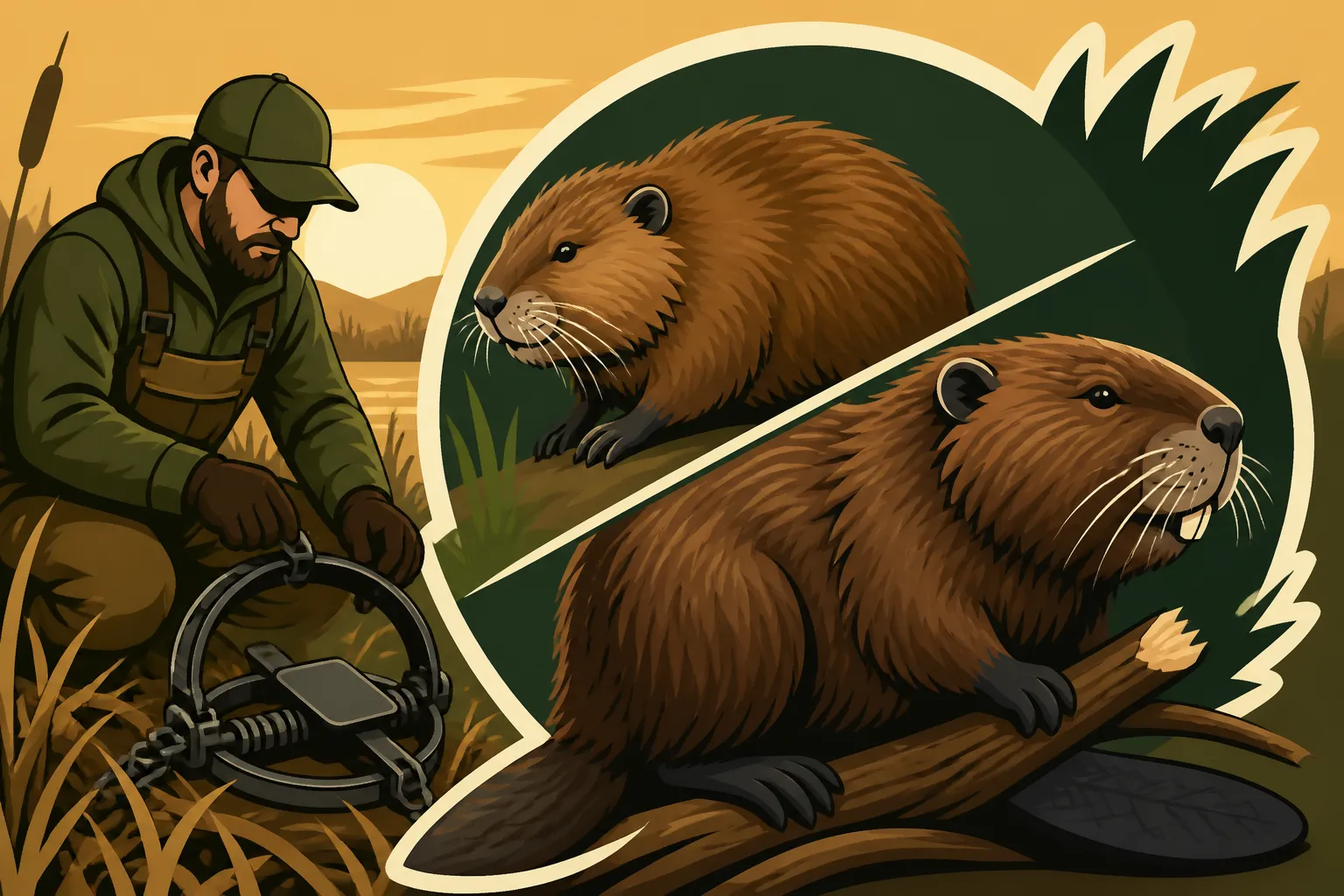
Trapping Indiana Muskrat and Beaver
Navigating the world of furbearer trapping in Indiana can feel like a maze, especially when you're targeting species like muskrat and beaver that are abundant but require specific tactics and a good understanding of the rules. Many new and even experienced trappers get frustrated trying to figure out the best sets, where to place them, and how to stay legal without getting bogged down in endless regulations. This comprehensive guide is here to untangle that process, diving deep into everything you need to know about legally and effectively trapping muskrats and beavers across Indiana's diverse waterways.
Understanding Indiana's Furbearer Regulations for Muskrat and Beaver
Before you even think about setting a trap, understanding the legal landscape in Indiana is paramount. The Indiana Department of Natural Resources (DNR) sets the rules, and they're designed to manage wildlife populations sustainably while ensuring ethical and safe practices for trappers. Skipping this step can lead to hefty fines and loss of trapping privileges, which is a headache no one wants.
Season Dates and Bag Limits
Indiana's trapping seasons are structured to align with furbearer prime times, when their pelts are in peak condition. For muskrats and beavers, these seasons typically open in mid-November and extend into late January or early February. It's crucial to check the current Indiana Hunting & Trapping Guide each year, as dates can shift slightly. There are generally no bag limits on muskrats or beavers in Indiana, which is a stark contrast to regulated game animals like deer or turkeys. This reflects their status as prolific furbearers and, in the case of beavers, sometimes a nuisance animal. This open-ended bag limit means that if you find a hot spot, you can really make the most of it, provided you adhere to all other regulations. Always confirm the most up-to-date information directly from the DNR or through resources like the Indiana DNR App.
For instance, imagine you've located a prime stretch of ditch or a beaver-choked creek on November 14th, eager to get your traps out. If the season doesn't open until November 15th, even placing an unset trap could be a violation. Conversely, if you've had a fantastic run and it's February 1st, but the season closed on January 31st, any traps still in the water need to be pulled immediately. Staying informed is your first and most important tool.
License Requirements and Reporting
Just like with hunting, trapping in Indiana requires the proper licensing. You'll need a valid Indiana hunting and trapping license. Residents and non-residents have different options, but the base trapping license is the key. Often, trappers opt for a combination license, especially if they also hunt small game or deer. It's not just about buying the license; you must carry proof of it while trapping, whether that's a physical card or on your phone through the official app.
Unlike deer or turkey, there's generally no mandatory reporting for harvested muskrats or beavers. This simplifies things greatly for trappers, as you won't be rushing to check stations or logging your catches online. However, maintaining your own detailed records of catch locations, dates, and numbers is an excellent practice. It helps you track trends, identify productive areas, and refine your strategies year after year. For those interested in the broader picture of furbearer management, understanding Indiana Trapping License Requirements is a great starting point, and it covers other species like raccoon and mink, too. While no reporting is required for muskrats and beavers, it's a good idea to stay abreast of any changes, especially if new wildlife disease monitoring efforts, such as those related to Indiana Wildlife Disease Monitoring, were ever implemented for furbearers.
Legal Trapping Methods and Restrictions
Indiana law specifies the types and sizes of traps you can use, as well as where and how they can be set. For muskrats and beavers, body-gripping traps (like Conibears), foothold traps, and cage traps are generally permitted, with specific size limits. For example, body-gripping traps with a jaw spread over a certain size might have restrictions on land sets, requiring them to be submerged or otherwise protected from non-target animals.
Foothold traps must have smooth jaws, and there are regulations on their maximum jaw spread. For beavers, larger foothold traps (often 1.5 or 2 coilsprings up to larger, purpose-built beaver traps) are common, while muskrats are frequently taken with smaller foothold traps (like a 1.5 coilspring) or body-gripping traps (like a 110 or 160 Conibear). Drowning mechanisms are highly encouraged, and often required, for foothold sets in water to ensure a quick and humane dispatch of the animal.
One critical restriction to be aware of is public land versus private land. On private land, you need permission from the landowner, and certain state-owned properties like Fish and Wildlife Areas (FWAs) or State Forests have specific rules or permit requirements. For example, some FWAs might have designated trapping zones or draw systems. Always verify the rules for the specific property you intend to trap, whether it's a small local creek or a larger system like Hunting the Wabash River Bottoms. You can often find detailed maps and regulations through online resources like GoHunt, which can help you navigate land ownership and public access.
Essential Gear and Equipment for Muskrat and Beaver Trapping
Trapping effectively isn't just about knowing the rules; it's about having the right tools for the job. You wouldn't hunt deer with a slingshot, and you shouldn't try to trap beavers with inadequate gear. The proper equipment not only increases your success rate but also ensures humane treatment of the animals and makes your time in the field much more productive and enjoyable.
Trap Types and Selection
Choosing the right trap is fundamental. For muskrats and beavers, you'll primarily be looking at two main categories: foothold traps and body-gripping traps.
-
Foothold Traps: These traps are designed to catch an animal by the foot. For muskrats, a sturdy #1.5 coilspring or longspring trap is often sufficient. They are versatile and can be set in various ways. For beavers, you'll need something more substantial, typically a #3 or #4 foothold, often a coilspring for ease of setting in tough spots, or a longspring for its reach. The key with foothold traps in water sets is to incorporate a drowning rod or wire, ensuring the animal quickly submerges and expires, preventing escape and unnecessary suffering. This is a critical component for ethical trapping.
-
Body-Gripping Traps (Conibear-style): These traps are designed to dispatch an animal quickly by striking it across the neck and chest. For muskrats, a 110 or 120 size is perfect for their runs and den entrances. For beavers, you'll need a much larger trap, typically a 330 size. These larger body-grippers are incredibly effective at beaver dam breaches, main runs, and den entrances. However, due to their power, strict safety precautions must be followed when setting and handling them. Always use a safety setter or setting tongs, and be mindful of non-target species. Remember, larger body-gripping traps may have depth requirements or restrictions on land sets to protect other wildlife or domestic animals.
-
Cage Traps: While less common for muskrats, large cage traps can be used for beavers, especially in urban or sensitive areas where lethal traps are prohibited or undesirable. These require frequent checking and often relocation services once the animal is caught. They are more labor-intensive but can be a good option in specific scenarios.
It's also worth noting that proper trap maintenance is crucial. Rust can impede a trap's function and reduce its lifespan. Cleaning, dyeing, and waxing your traps not only camouflages them but also protects them from the elements, ensuring they fire cleanly every time.
Tools for Set Building and Preparation
Beyond the traps themselves, a few other tools are indispensable for any serious furbearer trapper:
- Trapping Pliers/Wire Cutters: Essential for cutting and bending support wires, attaching drowning weights, and making quick adjustments in the field.
- Trowel or Hoe: For digging out trap beds, cutting sod, and creating dam breaches. A specialized trapping trowel designed for tough mud and roots is a worthwhile investment.
- Sledgehammer and Stakes/Rebar: For securely anchoring traps, especially beaver sets where immense pulling power can be exerted. Rebar stakes are strong, durable, and can be driven into hard ground or frozen earth.
- Gloves: Neoprene gloves are invaluable for cold, wet conditions, keeping your hands warm and somewhat dry. Latex or nitrile gloves under your work gloves can also help minimize human scent on traps, though furbearers are often less wary of human scent in water than terrestrial predators like coyotes.
- Trap Tags: Indiana law requires all traps to be tagged with the trapper's name and address or DNR-issued identification number.
- Lures and Baits: While not always necessary, especially for blind sets, specialized muskrat and beaver lures (gland lure, castor, food lures) can be highly effective at attracting animals to a specific trap location. Scents like Poplar Bud oil or Beaver Castor are widely used. Bait, such as fresh willow or aspen branches, can also be effective for beavers.
When considering your gear, think about quality over quantity. A few well-maintained, effective traps and the right support tools will serve you far better than a pile of cheap, rusty equipment. Using a mapping app like GoHunt can also help you mark your trap locations, especially when you are running a long line, making check-ins more efficient.
Waders, Boats, and Cold-Weather Necessities
Trapping muskrats and beavers often means getting wet, cold, and muddy. Appropriate attire and watercraft are not just comforts; they are safety essentials.
- Waders: Neoprene chest waders are a trapper's best friend. They allow you to access shallow water sets, cross small streams, and work in muddy banks without getting soaked. Choose a pair with good boot insulation if you're trapping in late season when water temperatures are near freezing.
- Boat or Canoe: For larger waterways, ponds, or marshes like those found when Hunting Kankakee River Marsh Waterfowl, a small jon boat, canoe, or kayak is indispensable. It allows you to check traps quickly, access remote areas, and safely transport animals and gear. Even a small inflatable might be suitable for very shallow, calm water.
- Warm, Layered Clothing: Even with waders, cold Indiana mornings can be brutal. Layering is key: moisture-wicking base layers, insulating mid-layers (fleece or wool), and a waterproof/windproof outer shell. Wool is a classic choice for trappers due to its warmth retention even when damp.
- Headlamp: For early morning trap checks or walking out after dark, a reliable headlamp is crucial.
- Safety Gear: Always carry a sharp knife, a first-aid kit, and a way to communicate (fully charged phone, satellite messenger if truly remote). When working in water, a life vest is a smart addition, especially if you're alone or in swift currents.
Having the right gear ensures you're prepared for the elements and can focus on the task at hand rather than fighting discomfort or struggling with inadequate tools.
Prime Locations and Scouting Strategies for Success
Finding where muskrats and beavers live and travel is half the battle in trapping. These animals leave clear signs, but you need to know what to look for and where to concentrate your efforts. Indiana's varied landscape, from agricultural ditches to dense river bottoms, offers a wide array of potential trapping grounds.
Identifying Muskrat Habitat
Muskrats are semi-aquatic rodents that thrive in stable, shallow water environments with abundant vegetation. Think slow-moving streams, drainage ditches, farm ponds, marshes, and the edges of larger lakes and rivers. They are creatures of habit and will often use the same runs and feeding areas repeatedly.
Key signs to look for include:
- Runs: Distinct trails in shallow water, often matted down vegetation, leading from the water's edge to feeding areas or burrow entrances. These are prime locations for body-gripping or foothold sets.
- Push-ups: Mounds of vegetation, usually cattails or sedges, that muskrats construct in open water during colder months. They serve as feeding platforms and breathing holes under the ice. Setting a 110 or 120 body-grip inside a push-up is a classic and highly effective technique.
- Den Entrances: Muskrats burrow into banks, often just below the waterline. You'll see smooth, rounded holes, typically 6-8 inches in diameter. A foothold set placed at the entrance, usually with a drowning wire, can be very productive.
- Feeding Beds: Piles of chewed vegetation (roots, stalks, leaves) found along the bank or on submerged logs. These indicate active feeding areas.
- Droppings: Small, cylindrical droppings often found on logs, rocks, or bank edges near feeding areas.
When scouting, look for stretches of water that are consistently used. A shallow, vegetated ditch flowing into a larger creek, or a marshy bay on a lake, are ideal spots. Pay close attention to pinch points, areas where muskrats are funneled into a narrower path, making trap placement more strategic. Using a mapping application can help you identify these areas and mark potential trap sites before you even hit the field, much like how many deer hunters use Scouting Indiana Public Land Before Season.
Locating Beaver Sign and Activity
Beavers are the engineers of the animal kingdom, and their presence is usually undeniable. They prefer slower-moving water, ponds, and larger streams and rivers where they can build dams and lodges. Their activity often alters the landscape, which is exactly what you're looking for.
Key indicators of beaver activity:
- Dams: The most obvious sign. Beaver dams create impoundments, flooding areas, and providing deep, stable water for their lodges and food caches. Setting traps at dam breaches or crossovers is extremely effective.
- Lodges: Large, dome-shaped structures of sticks and mud, often in the middle of a pond or along a bank. These are their homes. Never attempt to trap directly at or in a lodge, as this can be illegal and dangerous. Focus on approach routes.
- Chewed Trees and Branches: Freshly cut trees, typically aspen, willow, or sweet gum, with characteristic chisel marks, are a dead giveaway. Look for stumps or felled trees near the water's edge. This is their food source and building material.
- Slides and Runs: Beavers create distinct slides where they enter and exit the water, especially when hauling timber. These are smooth, worn paths up the bank. Underwater, they create runs, or channels, that connect feeding areas to their lodges or dams. These are prime locations for submerged body-grip or foothold sets.
- Food Caches: In colder climates, beavers will store branches underwater near their lodge for winter sustenance. These often look like a pile of submerged sticks.
- Castor Mounds: Beavers create small mounds of mud and debris near the water's edge, onto which they deposit castor (glandular secretion) to mark their territory. These are excellent spots for a lure set.
When searching for beavers, consider waterways that have a good supply of their preferred trees. Overgrown ditches, small tributaries, and even private farm ponds can hold beavers. They can cause significant damage to crops and timber, making Indiana Deer Damage Permits for Farmers sometimes relevant to nuisance beaver control efforts. Pay attention to choke points, narrow areas where beaver travel is funneled, as these offer high-probability trap locations.
Reading Waterways and Understanding Topography
Successful trapping isn't just about spotting sign; it's about understanding the flow of water and how the land affects animal movement. Using topographical maps and aerial imagery (readily available through tools like GoHunt or the Indiana DNR App) is incredibly helpful.
- Currents and Eddies: Beavers and muskrats prefer slower currents. Look for natural eddies, backwaters, and bends where the current slows down, creating calm areas for them to build and feed.
- Depth: Muskrats prefer shallower water (1-3 feet), while beavers will utilize deeper areas, especially for their lodges and underwater runs. Knowing the general depth helps you decide on trap placement and whether a drowning set is feasible.
- Choke Points and Funnels: These are critical. Any natural constriction in a waterway, like a narrow culvert, a shallow riffle, or a sharp bend, will funnel animal movement. Beavers might create dam breaches at these spots, and muskrats will use them as travel corridors. These are high-traffic areas perfect for traps.
- Vegetation: Thick vegetation (cattails, sedges, reeds) is ideal muskrat habitat. For beavers, look for stands of their preferred trees. Understanding the plant life around a waterway tells you a lot about the potential for furbearers.
- Bank Structure: Steep, eroding banks are less ideal for muskrats than gently sloping, stable banks where they can easily burrow. Beavers, however, can adapt to many bank types as long as they have access to water and building materials.
By combining visual scouting with map analysis, you can develop a comprehensive understanding of where muskrats and beavers are likely to travel, feed, and den, allowing you to place your traps with surgical precision. This is similar to how a deer hunter might use Reading Aerial Photos for Southern Indiana Deer to find buck bedding areas.
Effective Trapping Techniques and Set Construction
Once you've scouted your locations and gathered your gear, it's time to put theory into practice. Proper set construction is crucial for humane, effective, and legal trapping. Each species has preferred methods, but the underlying principles of stealth, security, and good placement remain constant.
Muskrat Sets: Drowning, Bank, and Feed Beds
Muskrats are relatively easy to trap once you locate their activity. The key is to make sets that target their natural movements and feeding habits.
-
Drowning Wire Foothold Set: This is a classic and highly effective method. Locate a muskrat run in shallow water, usually 4-8 inches deep. Place a #1.5 coilspring or longspring trap directly in the run. Attach the trap chain to a wire (or cable) that extends out into deeper water (at least 3 feet deep) and is securely anchored with a heavy weight (like a brick or heavy rebar) or staked at the far end. When the muskrat is caught, it will dive into the deeper water, slide down the wire, and drown quickly. This is considered the most humane method for foothold sets in water. You can often make a small "guidance stick" on either side of the trap to ensure the muskrat steps directly onto the pan.
-
Bank Den Entrance Set: Find a muskrat burrow entrance just below the waterline. Set a 110 or 120 body-grip trap directly inside the entrance or just outside of it, ensuring it's fully submerged. Anchor it securely to a stake on the bank. The muskrat will swim through the trap as it enters or exits its den. This is a very high-percentage set when a den is active.
-
Feed Bed Set (Push-up Set): In marshes or ponds, muskrats build "push-ups" of vegetation in open water. During colder months, they use these as feeding stations. Carefully cut an opening into the side of the push-up, just large enough to insert a 110 or 120 body-grip trap. Position the trap so the muskrat must swim through it to get into the feeding chamber. Anchor the trap securely. These sets are often productive under the ice, too, requiring an ice chisel to open the push-up.
-
Floating Log or Platform Set: Muskrats love to climb onto floating logs or small platforms to feed or groom. Place a small foothold trap on such a platform, partially submerged, or hidden under a thin layer of moss. This is a more subtle set but can be effective in the right location.
Stealth is important for muskrat sets. Try to make your sets look as natural as possible, blending them into the environment. Avoid leaving large amounts of human scent or disturbing the surrounding vegetation excessively.
Beaver Sets: Submerged Runs, Dam Breaches, and Lures
Beavers are powerful animals, and your sets need to be robust and strategically placed. Safety is paramount when working with large traps for beavers.
-
Submerged Run/Channel Set: Locate a well-used underwater run or channel that beavers use to travel between their lodge, feeding areas, or dam. Set a 330 body-grip trap, fully submerged, directly in this run. Use two stout stakes driven firmly into the bottom, one on each side of the trap, to hold it securely in place and guide the beaver through the jaws. The top of the trap should be at least 2-3 inches under the water surface. This is one of the most effective beaver sets.
-
Dam Breach Set: Beavers are constantly repairing their dams. If you carefully make a small, shallow breach in a beaver dam, they will almost always come to repair it. Set a 330 body-grip trap directly in the breach, again fully submerged and securely staked. You can also place a large foothold trap in the breach with a drowning wire running into deeper water. This set capitalizes on the beaver's strong instinct to maintain its dam.
-
Castor Mound/Lure Set: Identify a natural or create an artificial castor mound (a small mound of mud and debris) at the water's edge. Apply a high-quality beaver castor lure or similar attraction to the top of the mound. Place a large foothold trap, offset slightly from the water's edge, 6-8 inches into the water and 4-6 inches in front of the mound. The beaver will approach the mound from the water, investigate the scent, and step into the trap. Ensure a drowning wire extends into deep water. You can also combine this with fresh cuttings of aspen or willow as visual bait.
-
Slide Set: Where beavers slide from the bank into the water, you can often place a foothold trap (with a drowning wire) right at the water's edge, partially submerged, to catch them as they enter or exit. Ensure the trap is blended into the slide.
When setting beaver traps, always think about anchoring. A caught beaver can generate incredible force, and a poorly anchored trap means a lost animal. Heavy rebar stakes, driven deep, or stout cable anchored to a submerged log, are essential. Use setting tools for body-gripping traps to protect yourself. Remember that Indiana Feral Hog Regulations often deal with nuisance animals, and similar considerations for trap strength and placement apply when targeting these powerful animals.
Trap Placement, Anchoring, and Stealth
Regardless of the species or specific set, these three principles are universal for successful and ethical trapping:
- Strategic Placement: Place traps where animals will travel, not just where they might. Identify natural pinch points, primary runs, and areas of concentrated activity. Think like the animal. Where would you go?
- Secure Anchoring: This cannot be overstressed. An unsecured trap is a lost trap and potentially a suffering animal. Use strong stakes, heavy weights, and solid cables or chains. Double-check all connections.
- Stealth and Blending: Animals are wary. Minimize human scent by wearing gloves (especially when handling traps for the first time or setting them). Blend your set into the natural environment. Cover bare ground, make sure support stakes don't stick out like a sore thumb, and remove any debris that could foul the trap. A well-blended set is more likely to make a catch.
Following these guidelines will not only increase your success rate but also uphold the highest standards of ethical trapping, ensuring a clean, humane catch. For those looking to expand their furbearer knowledge, understanding tactics for other species, such as Running a Trapline in Rural Indiana for various furbearers, can offer valuable insights.
| Feature | Muskrat | Beaver |
|---|---|---|
| Average Size | Small rodent, 1-4 lbs | Large rodent, 30-70 lbs (or more) |
| Preferred Habitat | Shallow, slow water with dense vegetation (marshes, ditches, ponds, creek edges) | Deep, slow water, ponds, rivers with trees for building (dams, lodges) |
| Primary Diet | Aquatic vegetation (roots, stems, leaves) | Bark, cambium, leaves, buds (especially aspen, willow, sweet gum) |
| Typical Sign | Narrow runs in water, push-ups, small bank burrows, chewed vegetation piles | Dams, lodges, large chewed trees/stumps, slides, castor mounds, underwater runs |
| Ideal Trap Types | #1.5 foothold, 110/120 body-grip | #3 or #4 foothold, 330 body-grip |
| Key Set Locations | Water runs, push-ups, den entrances, feeding beds | Dam breaches, underwater runs, slides, castor mound sets |
| Anchoring Need | Moderate (drowning wires crucial) | High (stout stakes, heavy cables for powerful animals) |
Disclaimer
Trapping regulations can change, and interpretations may vary. This guide is intended for informational purposes only and should not be considered legal advice. Always consult the most current Indiana Hunting & Trapping Guide published by the Indiana Department of Natural Resources (DNR) or contact a conservation officer for clarification before setting any traps. The trapper is solely responsible for knowing and adhering to all applicable laws and regulations.