Waterfowl Gear for Kankakee Marshes
Hunting the Kankakee Marshes for waterfowl is a truly unique experience, but it comes with its own set of brutal challenges. The vastness of the water, the thick cattail stands, the unpredictable mud, and Indiana's notoriously volatile weather can turn a promising morning into a miserable slog if you're not properly equipped. This comprehensive guide is here to cut through the confusion and help you select every piece of gear you'll need to stay warm, dry, safe, and successful when chasing ducks and geese in the legendary Kankakee.
Understanding the Kankakee Marsh Environment
The Kankakee River system, particularly its marshlands, is a jewel in Indiana's waterfowl hunting crown, but it's far from a tame environment. This is a place where nature still calls the shots, and hunters need to respect its power by coming prepared.
The Unique Challenges of the Kankakee
Picture this: you've woken up well before dawn, driven for hours, and now you're standing at the edge of the Kankakee, the morning mist still clinging to the water. What lies ahead is a vast, often confusing expanse of open water, winding sloughs, and dense stands of cattails that can feel like an impenetrable maze. It's not uncommon to scout a spot one day and find it completely changed after a heavy rain or a sudden cold front. Water levels can fluctuate dramatically, revealing hidden stumps and submerged obstacles, or turning familiar pathways into impassable mud flats.
The Kankakee's current, while generally slow, can be a factor, especially when you're trying to set a decoy spread or retrieve a downed bird. And then there's the mud. Oh, the mud! It's legendary for good reason. It can be knee-deep, hip-deep, sometimes even deeper, with a consistency that tries its best to steal your waders and leave you stranded. This isn't your grandma's duck pond; it demands gear that can stand up to constant abuse and conditions that range from icy winds to surprisingly mild, rainy days, all within the span of a single hunt. The constant pressure from other hunters, particularly on public access points, also means you'll often have to push further, wading through more challenging terrain to find undisturbed birds.
Key Considerations for Gear Selection
Given these challenges, your gear choices for the Kankakee aren't just about comfort; they're about safety and success. First and foremost, durability and waterproofing are paramount. If it can't withstand being submerged, dragged through mud, scraped against frozen reeds, or hammered by an unexpected downpour, it won't last a season here. Forget anything flimsy; you need equipment built like a tank. Secondly, warmth without bulk is critical. You'll be doing a lot of moving, paddling, pushing, and wading, so gear that offers insulation without restricting your movement is a game-changer. Think layers that breathe when you're working hard but trap heat when you're sitting still.
Reliability in harsh conditions is another non-negotiable. Whether it's your shotgun, your boat motor, or your headlamp, you need to trust that it will perform when you need it most, especially when the temperature drops, and things get icy. The Kankakee has a way of exposing weaknesses in equipment. Finally, consider the weight and portability of everything you bring. You might have a long walk or a strenuous paddle just to get to your spot, and a heavy, cumbersome setup will drain your energy before the hunt even begins. Every item should earn its place in your load, offering maximum utility for minimum bulk.
Essential Waterfowl Shotguns and Ammunition
Your shotgun is your primary tool in the marsh, and choosing the right one, along with appropriate ammunition, is critical for success and safety. The Kankakee environment is tough on firearms, so durability and reliability are key.
Choosing the Right Shotgun for the Marsh
When you're out on the Kankakee, facing a flock of mallards committed to your spread or a high-flying honker, you need a shotgun you can depend on. Semi-automatic shotguns are often the preferred choice for many waterfowl hunters due to their ability to cycle rounds quickly and reduce felt recoil, allowing for faster and more accurate follow-up shots. Brands like Browning, Benelli, and Beretta are popular for their proven reliability in adverse conditions. Pump-action shotguns, while requiring manual cycling, are known for their ruggedness and simplicity, making them a solid, budget-friendly option that can take a beating.
The 12-gauge remains the dominant choice for waterfowl, offering the widest range of ammunition options and payloads necessary for both ducks and geese. However, a 20-gauge can be a viable option for those who prefer a lighter carry and lighter recoil, especially when primarily targeting ducks. Barrel length is also a consideration; while longer barrels (28-30 inches) offer a smoother swing for pass shooting, shorter barrels (24-26 inches) can be more maneuverable in a cramped blind or thick cover. Finally, look for shotguns with synthetic stocks and corrosion-resistant finishes. Wood stocks can swell and warp in the constant moisture, and blued finishes can quickly rust when exposed to marsh conditions.
Non-Toxic Ammunition is a Must
Indiana, like all states, requires non-toxic shot for waterfowl hunting. Steel shot is the most common and affordable option, and modern steel loads are highly effective. However, steel is lighter than lead, so you often need to go up a shot size or two to get the same knockdown power. For instance, if you'd typically use lead #4s for ducks, you might opt for steel #2s or #3s. For geese, steel BB or BBB shot is a good starting point.
Beyond steel, there are premium non-toxic alternatives like bismuth, tungsten-matrix, and other tungsten-based alloys. These materials are denser than steel, offering better energy retention, tighter patterns, and increased killing power, allowing you to use smaller shot sizes that mimic lead performance more closely. While they come at a higher cost, they can significantly extend your effective range and increase clean kills, especially on tough birds or at longer distances. Always match your choke to your ammunition to ensure optimal patterns. You'll definitely want to read up on Where Nontoxic Shot Is Required in Indiana to ensure you're compliant.
Maintenance and Care in a Wet Environment
The Kankakee is notoriously brutal on firearms. Constant exposure to moisture, mud, and sometimes even brackish water can lead to rapid corrosion and mechanical failures if you're not diligent. After every single hunt, no matter how tired you are, your shotgun needs attention. Break it down, wipe away all visible moisture and mud, and thoroughly clean and oil the barrel, action, and all metal components. Pay special attention to the choke tubes, as they can seize in the barrel if not regularly removed, cleaned, and greased.
Consider investing in a good quality rust preventative spray or wipe for all external metal surfaces. Even a light coat can offer significant protection against the elements. If your shotgun gets fully submerged (it happens!), field strip it as much as possible, dry it out completely, and re-lubricate it as soon as you can. A quick-drying oil can be a lifesaver in these situations. Proactive maintenance isn't just about preserving your investment; it's about ensuring your gun functions flawlessly when that big flock sails over the cattails.
Waders, Outerwear, and Layering Systems
Staying warm and dry is arguably the biggest challenge for Kankakee marsh hunters. The right waders and a smart layering system aren't just about comfort; they're essential for safety and enduring long hours in unpredictable conditions.
The Critical Role of Quality Waders
For hunting the Kankakee, chest waders aren't just recommended; they are an absolute non-negotiable piece of gear. You'll be slogging through knee-deep mud, pushing through waist-high water, and stepping into hidden sloughs that could easily swallow you whole. Quality waders provide the crucial barrier between you and the cold, wet, often filthy marsh. When choosing, consider the material: neoprene waders offer excellent insulation and warmth, making them ideal for bitter cold late-season hunts. However, they can be bulky and hot during warmer early-season days or when you're exerting a lot of energy. Breathable waders, often made from Gore-Tex or similar materials, offer better moisture management and reduce sweat, providing more comfort for active hunts or warmer weather, but they require heavier insulating layers underneath for cold conditions.
The boot type on your waders is equally important. Insulated boots are critical for keeping your feet warm in icy water, preventing frostbite and discomfort. Look for good quality insulation like Thinsulate. The sole pattern is also vital; cleated or lug soles provide much-needed traction in the slick, muddy bottoms of the Kankakee, preventing slips and falls that could lead to a dangerous dunking. Don't cheap out on waders; a good pair is an investment that will pay dividends in comfort, safety, and longevity. Make sure they fit well, allowing for layers underneath without being overly baggy or restrictive, which can lead to chafing or tripping. For a deep dive, check out Waders for Cattail Marsh Hunting.
Layering for Indiana's Volatile Weather
Indiana weather is notoriously fickle, and the Kankakee amplifies every wind chill and dampness. A smart layering system is your best defense against rapidly changing conditions. Start with a moisture-wicking base layer – synthetics like polyester or natural fibers like merino wool are excellent choices. These layers are designed to pull sweat away from your skin, keeping you dry even when you're working hard. Staying dry is the first step to staying warm. Avoid cotton at all costs; once wet, it loses its insulating properties and will actively cool you down.
Your mid-layers provide the bulk of your insulation. This could be a fleece jacket, a synthetic insulated vest, or even a lightweight down jacket. The key is to choose pieces that can be easily added or removed as your activity level or the temperature changes. On a warm early-season morning, you might only need a thin mid-layer, but come December, you'll want something substantial. Finally, your outer shell is your fortress against the elements. This should be a truly waterproof, windproof, and breathable jacket. It needs to keep rain, sleet, and biting winds out while allowing internal moisture vapor to escape, preventing you from getting clammy. A good shell is crucial for protecting your insulating layers and keeping you comfortable throughout the hunt. Learning to adapt your layers is essential for any prolonged hunt, whether you're deer hunting or sitting in a marsh. You might find some transferable strategies in Layering for an Indiana Deer Stand.
Head, Hands, and Feet Protection
You lose a significant amount of body heat through your head, and your extremities are the most vulnerable to cold and frostbite. Proper protection for these areas is absolutely vital in the Kankakee. For your hands, skip the flimsy gloves. You need insulated, waterproof gloves that still allow you enough dexterity to operate your shotgun, calls, and retrieve decoys. Many hunters opt for a thinner, waterproof glove liner with an outer shell that can be easily pulled on or off. Some even use neoprene gloves, similar to those used by divers, for extreme wet conditions. Keeping a spare dry pair in your blind bag is always a good idea.
For your head, a warm, insulated beanie or stocking cap is essential. Look for options made from wool or fleece that cover your ears. On really windy days, a balaclava or neck gaiter can provide crucial protection for your face and neck, preventing windburn and further heat loss. Finally, your feet. Even with insulated wader boots, the cold can seep in. Invest in high-quality wool socks, which retain warmth even if they get damp. Some hunters double up on socks or use insulated boot liners for added warmth. Make sure your wader boots aren't too tight with these layers, as restricted circulation will only make your feet colder.
Decoys, Blinds, and Concealment
Bringing birds into range on the Kankakee requires not just calling prowess, but also a convincing spread of decoys and effective concealment. Hunters need to adapt their strategies to the specific species they're targeting and the terrain they find themselves in.
Decoy Spreads for Different Waterfowl
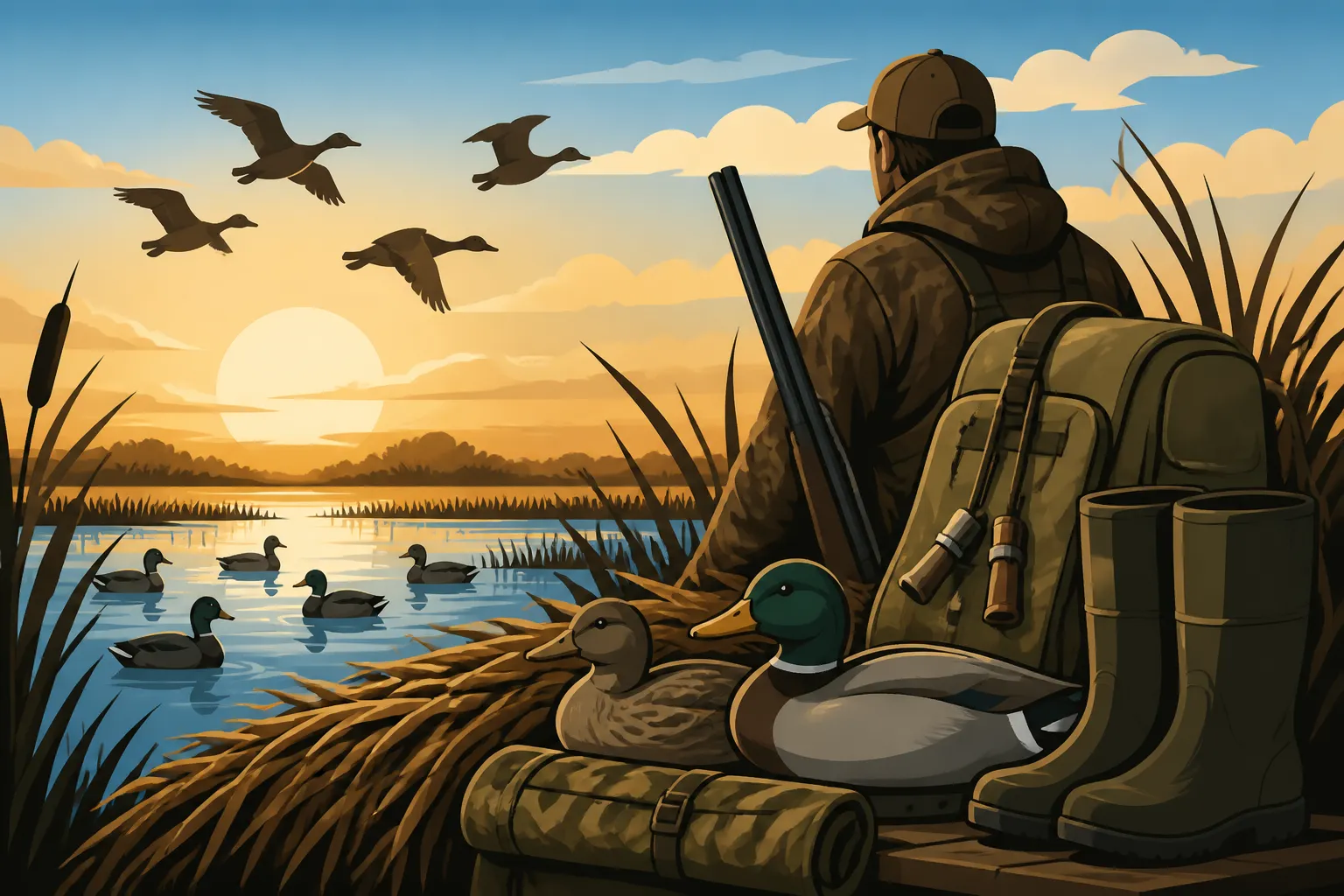
Decoys are your visual invitation to passing birds, telling them it's safe to land. For the Kankakee, a mix of mallard and Canada goose decoys forms the backbone of most spreads. Mallards are arguably the most common and sought-after ducks, so having a good contingent of standard or oversized mallard decoys is crucial. For geese, a spread of full-body or shell goose decoys, strategically placed on nearby land (if applicable and accessible) or floating in shallow water, can pull in honkers. Don't be afraid to experiment with other dabbler decoys like pintails, wigeon, or wood ducks if those species are prevalent in your area.
However, the Kankakee also hosts significant numbers of diver ducks, especially in its more open water sections. If you're targeting birds like canvasbacks, redheads, or bluebills, you'll need dedicated diver decoys. These typically sit lower in the water and often feature bolder patterns. Setting up a dedicated diver rig, often in a "J" or "V" shape in open water, is a different art form. For more specific tactics on this, check out Decoy Spreads for Kankakee Divers. Adding motion decoys, like spinning-wing decoys (mojo ducks) or jerk rigs, can add life to your spread, mimicking the movement of live birds and often being the final trigger for a cautious flock. Confidence decoys, like coots or even swans, can further enhance the illusion of a safe haven for weary travelers. When it comes to rigging, Texas rigs with heavy weights are popular for their tangle-free storage and quick deployment, which is a huge benefit in the often-deep, muddy Kankakee.
Effective Blinds and Concealment Strategies
Once you have your decoys set, the next challenge is hiding yourself. The Kankakee's diverse terrain offers several concealment options. If you're hunting shallow edges or fields adjacent to the marsh, a layout blind can be incredibly effective. These low-profile blinds allow you to lie flat, disappearing into stubble fields or short cover, and spring open for a clean shot. If you find yourself hunting nearby agricultural fields, reading up on Layout Blind Hunting a Cut Cornfield could give you some excellent ideas.
However, within the marsh itself, you'll often be building or utilizing more traditional marsh blinds. This could mean enhancing natural cover like cattail clumps, weaving in local vegetation, or using portable panel blinds that can be brushed in. The key is to blend in completely. Think about your silhouette against the sky, the sun's angle, and the shadows you cast. Many hunters use camouflage patterns specifically designed for marsh environments, featuring browns, tans, and dull greens that mimic reeds and dry grasses. Always brush in your blind thoroughly, filling in any gaps where birds might spot movement or a tell-tale reflection.
Calling and Attracting Birds
A well-placed decoy spread gets birds' attention, but expert calling brings them in close. For ducks, mastering the basic mallard quack, greeting call, and feeding chuckle is fundamental. Practicing these calls until they sound natural and can be performed without much thought is crucial. Adding calls for other species like pintail whistles or wigeon "chitters" can further enhance your realism. For geese, short, sharp honks and clucks are your bread and butter, especially for close-in work.
The art of calling isn't just about making the right sounds; it's about timing and knowing when not to call. Over-calling can spook wary birds, while under-calling might let an interested flock pass by. Learn to read the birds' reactions. Are they cupping their wings and dropping? Go soft, or even stop. Are they flaring or passing by? A series of aggressive hail calls might turn them. Understanding the cadence of calling and knowing when to use loud, attention-grabbing calls versus soft, seductive finishing calls is a skill that comes with practice and experience on the water.
Boats, Transportation, and Navigation
The Kankakee is a vast, interconnected system of waterways and marshes, making some form of watercraft almost essential for accessing prime hunting spots and safely retrieving birds. Getting around reliably is half the battle.
Choosing the Right Watercraft
Navigating the Kankakee requires careful consideration of your vessel. For larger, more open sections of the river and deeper sloughs, a sturdy jon boat (typically 12-16 feet) powered by an outboard motor is a popular choice. These boats offer good stability, capacity for decoys and gear, and the ability to cover distance quickly. However, they can be limited in very shallow water or dense vegetation. This is where marsh boats come into their own. Designed with a flatter bottom and often paired with a mud motor, these specialized boats can traverse incredibly shallow water and literally push through thick cattails and mud where a traditional outboard would bog down. For an in-depth look, consult Marsh Boats and Push Poles.
Canoes and kayaks are excellent options for those seeking a more minimalist, quiet approach, especially for accessing smaller, more secluded pockets of marsh. They are lightweight, maneuverable, and can get into places larger boats simply can't. However, they have limited capacity and can be less stable, especially when loaded with gear or when retrieving downed birds. Regardless of your choice, ensure your boat is robust enough to handle encounters with submerged stumps, ice, and constant abrasion from vegetation. Consider the material: aluminum is durable and lighter, while fiberglass can offer a smoother ride but might be more prone to damage from impacts. Always check local regulations regarding motor size and type on specific sections of the Kankakee.
Push Poles and Oars
Even with a motor, a push pole and a good set of oars are indispensable tools on the Kankakee. Mud motors are fantastic, but they can still get hung up in certain conditions, or you might need stealth to sneak into a blind unnoticed. A sturdy push pole, typically 10-15 feet long, allows you to quietly propel your boat through shallow water, over submerged obstacles, and through dense vegetation without disturbing the birds. Look for poles made of fiberglass or aluminum, with a wide, flared foot that won't sink too deep into the mud.
Oars provide another reliable form of backup propulsion, especially in deeper water if your motor fails or when you need to quietly maneuver short distances. They are also crucial for controlling your boat when setting decoys or picking up downed birds, allowing you to maintain position in a current or against the wind. Having these manual propulsion options ensures you're never truly stranded and allows for more flexible and stealthy hunting tactics.
Navigation Tools for the Vast Marsh
The Kankakee Marshes, especially in low light or fog, can quickly become disorienting. A reliable GPS unit, whether a dedicated handheld device or a robust app on your smartphone, is not just helpful but absolutely crucial for safe navigation. Apps like GoHunt, along with the Indiana DNR's mapping tools, offer detailed satellite imagery, topo maps, and the ability to mark waypoints for your put-in, blind location, and any hazardous areas. Learning to use the Indiana OnX and DNR Map Tools is invaluable for this very reason.
Always download offline maps before you head out, as cell service can be spotty or nonexistent in remote marsh areas. While a digital GPS is primary, carrying a traditional compass and a waterproof physical map as a backup is a smart safety measure. Technology can fail, and knowing how to read a map and compass could be your ticket home. Before each hunt, use your mapping tools to plan your route, identify channels, note potential obstacles, and mark landmarks. This pre-hunt preparation, combined with marking your exact blind location and boat drop-off point, will save you immense stress and prevent getting lost in the pre-dawn darkness or after a successful hunt.
Optics and Scouting Tools
Waterfowl hunting, especially in a large system like the Kankakee, isn't just about shooting; it's heavily reliant on observation and scouting. Quality optics can be the difference between finding birds and finding empty water.
Binoculars for Waterfowl Scouting
A good pair of binoculars is an essential scouting tool for any Kankakee waterfowl hunter. They allow you to spot distant flocks, identify species, and observe bird behavior from afar without disturbing them. For most waterfowl hunting, an 8x or 10x magnification is ideal. This offers a good balance between magnification and a wide field of view, making it easier to track flying birds or scan large expanses of marsh. Look for binoculars with excellent low-light performance; you'll often be glassing at dawn and dusk when birds are most active.
Crucially, your binoculars must be waterproof and fogproof. The damp, often cold environment of the Kankakee will quickly render non-sealed optics useless. Rubber armor provides a durable, non-slip grip and extra protection against bumps and drops. While not as critical as for deer hunting, some waterfowl hunters appreciate rangefinding binoculars to gauge distances for decoy spreads or to estimate shot range, though they are often a significant investment. Brands like Vortex, Leupold, and Steiner offer robust options that stand up to harsh conditions.
Spotting Scopes for Long-Distance Observation
While binoculars are great for general scanning, a spotting scope can be incredibly beneficial for long-distance observation, particularly when trying to identify subtle species characteristics or observing large rafts of birds on open water. If you're trying to figure out if that distant blob of ducks is mostly mallards or a mix of divers, a good spotting scope with a stable tripod will provide the clarity you need. This is especially useful for scouting during the off-season or a few days before a hunt, allowing you to locate undisturbed roosting or feeding areas without having to motor or wade directly into them.
Pairing a spotting scope with your GoHunt mapping app can create a powerful scouting system. You can use the scope to pinpoint concentrations of birds, then immediately mark those locations on your digital map, noting access points, potential blind sites, and any obstacles. This allows you to plan your approach meticulously, often without even needing to step foot in the area until hunt day.
Understanding Waterfowl Behavior Through Observation
Scouting isn't just about finding birds; it's about understanding them. Using your optics to observe waterfowl behavior will dramatically improve your success. Pay attention to their flight paths – where are they coming from, and where are they going? What are their preferred feeding areas (often shallow vegetated flats) versus loafing spots (more open, calm water)? Note how they react to wind, light, and other hunters. A clear understanding of Reading a Kankakee Marsh for a Morning Flight will equip you to make the most of your scouting efforts.
For example, a strong north wind might push birds into more sheltered sloughs, while a calm, clear day might see them using large open water areas. Consistent scouting, not just before the season but throughout, helps you identify patterns and anticipate bird movements. Waterfowl are creatures of habit, and careful observation will reveal these routines, allowing you to set up in the right place at the right time.
Safety and Emergency Gear
Hunting the Kankakee Marshes carries inherent risks, especially in cold weather and challenging terrain. Prioritizing safety and carrying appropriate emergency gear is not just smart; it's potentially life-saving.
Personal Flotation Devices PFDs
Regardless of your comfort level in the water, a personal flotation device (PFD), or life jacket, is an absolute must when hunting the Kankakee. Even strong swimmers can quickly succumb to the effects of cold water immersion if they unexpectedly fall out of a boat or step into a deep hole. Cold water saps your strength and coordination rapidly, making it incredibly difficult to stay afloat without assistance. Always wear your PFD, especially when traveling in a boat, and have readily accessible PFDs for any passengers.
There are two main types of PFDs suitable for waterfowl hunting: traditional foam-filled vests and inflatable PFDs. Traditional vests offer reliable flotation and often have pockets for gear, but they can be bulky. Inflatable PFDs are less restrictive and more comfortable for active hunting, deploying automatically or manually when needed. However, they require periodic inspection and rearming. Familiarize yourself with Indiana's boating regulations regarding PFD requirements, especially for cold water. This isn't a piece of gear to skimp on; your life could literally depend on it.
Communication and Signaling Devices
Getting lost or encountering an emergency in the vastness of the Kankakee Marshes can be a terrifying experience. A fully charged cell phone in a waterproof, floating case is your primary communication tool, but be aware that service can be spotty in remote areas. Always tell someone your hunting plan, including your intended location and expected return time.
Beyond a phone, consider additional signaling devices. A loud whistle, attached to your PFD, can alert nearby hunters or searchers if you're in distress. For more remote areas or if you're hunting alone, a handheld VHF radio can provide a reliable way to contact other boaters or emergency services, even without cell signal. In extreme emergencies, carrying flares or a strobe light can help rescuers pinpoint your location after dark or in foggy conditions. Even a small, high-powered flashlight or headlamp can be used to signal. GoHunt's apps might also have emergency contact or location sharing features that can be activated in a pinch.
First Aid and Survival Essentials
Accidents happen, even to the most careful hunters. A comprehensive, waterproof first aid kit is crucial for treating minor injuries like cuts, scrapes, and blisters, but also for more serious issues. Ensure it contains essentials for trauma care, pain relief, and any personal medications you might need. Beyond medical supplies, a small survival kit can make a huge difference if you get stranded or have an unexpected overnight stay.
This kit should include an emergency blanket (Mylar types are compact and effective for retaining body heat), a reliable fire starter (waterproof matches, lighter, or ferro rod), and a multi-tool. Pack high-energy snacks like granola bars, nuts, and jerky, along with plenty of water, especially if you're out for an extended period. Most importantly, have a basic understanding of how to treat hypothermia, frostbite, and cold water immersion, as these are real dangers in the Kankakee environment. Knowing the symptoms and how to respond can be critical for yourself or a hunting partner.
Packs, Bags, and Organization
Efficient organization is paramount for a successful Kankakee marsh hunt. From keeping your shells dry to transporting dozens of decoys, the right bags and carrying systems make all the difference in comfort and functionality.
Blind Bags and Decoy Bags
Your blind bag is your personal command center in the marsh. It needs to be rugged, waterproof, and capacious enough to hold all your essential items: extra shells, calls, snacks, a thermos of coffee, spare gloves, your phone, and any small emergency gear. Look for blind bags made from durable, waterproof materials with plenty of internal pockets and compartments to keep everything organized and easily accessible, even in the dark. A stiff, waterproof bottom is a huge plus, preventing your gear from soaking up marsh water when you set it down. Many modern blind bags also feature padded shoulder straps, allowing them to be carried like a backpack, freeing up your hands for your shotgun or push pole.
Decoy bags are designed for one purpose: protecting and transporting your valuable decoy spread. They come in various styles, from large mesh bags that can hold dozens of decoys to slotted bags that protect individual decoys from scuffing and tangling. For the Kankakee, look for bags made from durable, rot-resistant materials like heavy-duty mesh or coated polyester. Some decoy bags have backpack straps, making the often-long haul to your boat or blind much easier. Don't underestimate the number of decoys you might need; a good spread can often include 2-3 dozen ducks and a half-dozen geese, which adds up to a lot of bulk to carry.
Gear Sleds and Carts
When you're dealing with heavy loads of decoys, a blind, or other substantial gear, especially across muddy, uneven, or frozen terrain, a robust gear sled or cart can be a game-changer. Dragging a heavy decoy bag or a boat through thick mud is exhausting, and a sturdy sled can significantly reduce the effort. Look for sleds made from durable, slick plastic that glides easily over mud, snow, or ice. Many come with integrated rope handles for pulling. Some hunters even modify them with a harness for easier pulling, or attach a sturdy frame to create a makeshift cart.
For shorter distances over firmer ground, a two-wheeled game cart can also be useful, especially if your gear is too heavy for a sled. These carts often feature large, pneumatic tires that can roll over rough terrain. However, they can struggle in deep mud or very soft ground. The choice between a sled and a cart often depends on the specific terrain of your access point and the amount of gear you're hauling, but having one or both can dramatically improve your efficiency and save your energy for the hunt itself.
Dry Storage and Electronics Protection
The Kankakee is a wet environment, and protecting sensitive electronics and other items that absolutely must stay dry is critical. Investing in small, waterproof dry boxes or dry bags for items like your cell phone, GPS unit (even if it's waterproof, extra protection is good), extra batteries, car keys, and important documents is essential. These don't take up much space in your blind bag but provide peace of mind that your critical items will function when you need them.
Consider the importance of redundancy for critical items. For example, carrying a physical map and compass even if you have a GPS app on your phone. Or having a backup headlamp with fresh batteries, not just relying on one. The marsh has a way of finding the weakest link in your gear chain, so being prepared for equipment failures, especially concerning dry storage, can prevent a minor inconvenience from becoming a major problem.
Waterfowl Gear Comparison Chart
To help visualize some key gear decisions for the Kankakee, here's a quick comparison of common choices:
| Gear Type | Common Kankakee Choice | Pros | Cons |
|---|---|---|---|
| Shotgun | 12ga Semi-Auto | Fast follow-ups, reduced recoil, reliable | Higher cost, more parts to clean |
| Waders | Insulated Neoprene Chest Waders | Excellent warmth, durable | Bulky, can be hot if active or warm weather |
| Outerwear | 3-in-1 Waterproof/Windproof Shell | Versatile for changing conditions | Can be expensive, bulkier than single layers |
| Decoys | Texas Rig Mallards/Geese | Quick deploy/retrieve, tangle-free | Weights can be heavy to carry |
| Boat | Marsh Boat with Mud Motor | Access very shallow/vegetated areas | Slower, specialized, can be noisy |
| Navigation | GoHunt/OnX on Smartphone | Detailed maps, GPS, easy to use | Battery life, signal loss, water damage risk |
| PFD | Inflatable PFD | Comfortable, low profile | Requires rearming, needs regular checks |
| Blind Bag | Waterproof, Backpack-Style | Hands-free, keeps gear dry/organized | Can be heavy when fully loaded |
Disclaimer
This article is for general informational purposes only and does not constitute professional advice. Laws, prices and regulations vary by location and change over time. Consult a qualified professional for guidance on your specific situation.