Layout Blind Hunting a Cut Cornfield
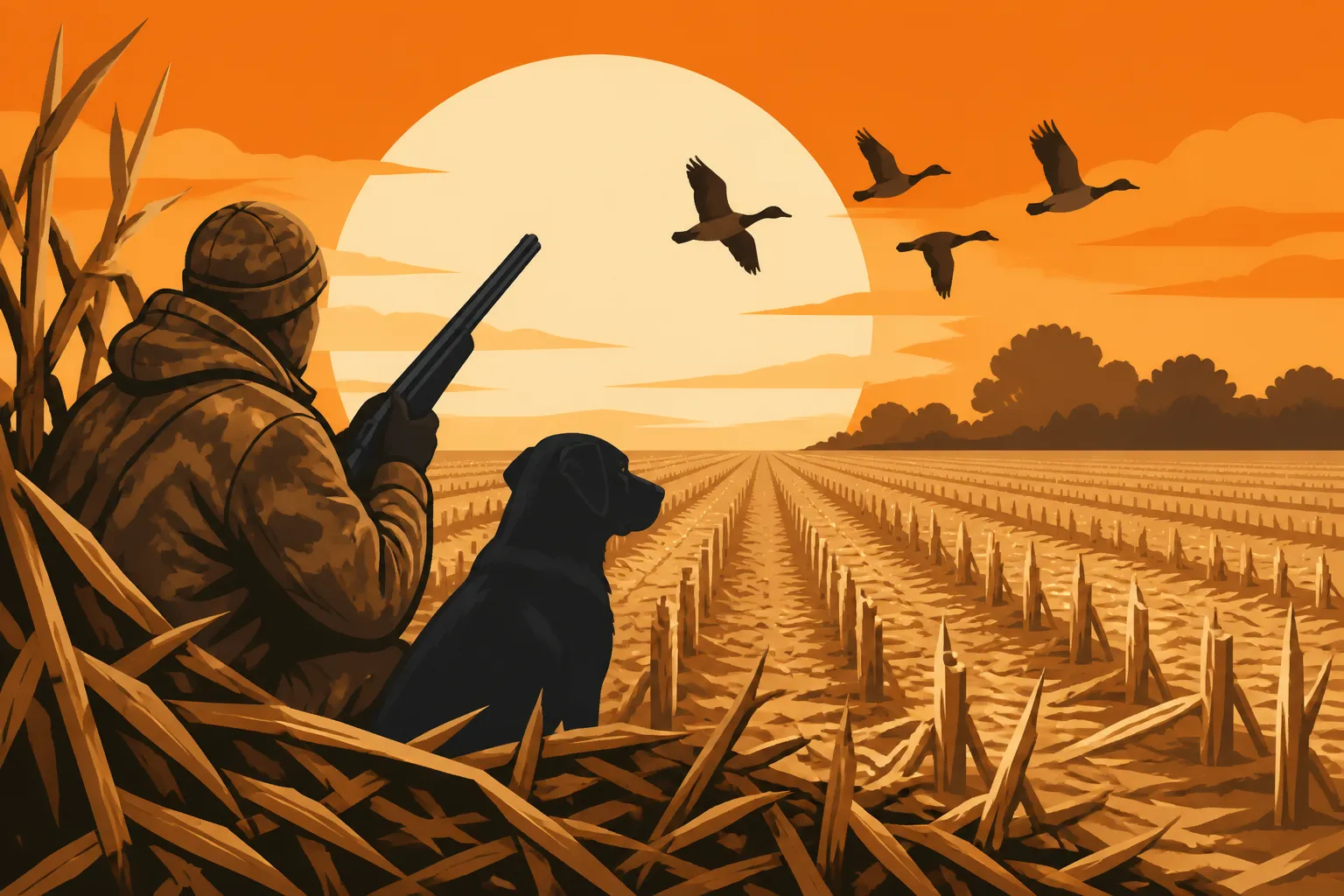
There's nothing quite like the sight of ducks or geese cupping their wings, committing to your spread, and pitching down into a cut cornfield. Yet, many hunters shy away from field hunting, intimidated by the wide-open spaces and the seemingly complex setup required. The truth is, hunting cut cornfields from a layout blind can be one of the most productive and thrilling ways to chase waterfowl in Indiana, offering incredible opportunities if you understand the strategy. This guide will walk you through everything you need to know to transform those sprawling golden stubble fields into your personal waterfowl paradise.
Understanding the Allure of Cut Cornfields for Waterfowl
When the combines roll through Indiana, they leave behind more than just rows of stubble. They leave a veritable smorgasbord for migrating ducks and geese. These fields become critical feeding grounds, drawing birds from miles around. Ignoring these prime locations means missing out on some of the best hunting Indiana has to offer.
Why Ducks and Geese Flock to Corn
It’s pretty simple, really: calories. Ducks and geese are preparing for or recovering from long migrations, and they need a high-energy diet to fuel their journeys and survive the cold Indiana winters. Waste grain from harvested cornfields provides exactly that. Think of it as their favorite buffet line. During the peak of migration, and especially in colder weather, birds will prioritize these fields. You’ll often see flocks of Canada geese, often the resident birds that call Indiana home year-round, along with migrating mallards, pintails, and even specklebellies or snow geese, all eager to fill up on fallen kernels. The abundance of food means they'll return day after day, sometimes multiple times a day, making these fields predictable hotspots once you've identified their patterns.
Reading the Field for Prime Spots
Not all cut cornfields are created equal, and not every inch of a productive field will hold birds. The key is observation and scouting. Before you even think about setting up a blind, spend time watching. Get out before dawn or in the late afternoon and observe where the birds are actually feeding and loafing. Are they hugging a specific tree line, or are they out in the wide-open center? Do they prefer a particular dip or rise in the terrain? Often, birds will favor areas where water collects after rain, or where there might be a slightly higher concentration of waste grain. Look for areas with fresh droppings, disturbed stubble, and actual feathers. These are undeniable signs of recent activity. A good mapping tool, like the features found on GoHunt, can help you identify potential access points and terrain features from your phone, saving you countless steps. Pay close attention to wind direction during your scouting trips; birds almost always land and take off into the wind, so understanding their preferred approach is critical for decoy placement. If you're focusing on geese, their feeding patterns can be particularly predictable, often returning to the same exact spot day after day until the food source is depleted or hunting pressure pushes them elsewhere.
Essential Gear for Layout Blind Success
Layout blind hunting requires specialized gear designed for concealment and comfort in open fields. Don't skimp on these items; your success and enjoyment depend on them.
Choosing the Right Layout Blind
A good layout blind is your mobile hideaway, your fortress of solitude in the middle of a barren field. The market offers a variety of options, but they generally fall into a few categories. You have low-profile models, often called "coffins," that are great for extreme concealment but can be a bit more restrictive. Then there are slightly larger, more comfortable blinds with more head and shoulder room, which might have a slightly higher profile but are often worth it for long, cold sits. Look for blinds that offer excellent stubble straps, which are critical for brushing in your blind effectively. Brands like Avery, Final Approach, and Rogers Sporting Goods offer excellent choices that hold up to the rigors of field hunting.
When choosing, consider the following:
- Concealment: Can you effectively brush it in with local vegetation?
- Comfort: Will you be able to sit for hours without excessive strain, especially if you're a bigger hunter?
- Portability: How easy is it to carry and set up by yourself?
- Durability: It will be dragged, stomped, and exposed to the elements. Quality materials matter.
Having a good, comfortable blind means you'll spend more time in the field, which directly translates to more opportunities. A common mistake is buying a blind that’s too small or uncomfortable, leading to fidgeting and broken concealment. For more specific details on brands and models, you might want to check out information on Layout Blinds for Indiana Cut Corn.
Decoy Strategies for Cut Corn
Decoys are your silent callers, your invitation to the birds. In cut cornfields, you're primarily mimicking feeding birds. This means a spread dominated by full-body goose decoys and flat field duck decoys (often called shells or silhouettes) is usually most effective.
Here’s a breakdown of common decoy types and strategies:
- Full-Body Goose Decoys: These are the backbone of any field spread. Their realistic size and three-dimensional appearance are excellent for drawing in distant geese. Arrange them in family groups, rather than perfect lines, to create a natural, relaxed look. Some hunters prefer to create a "hole" or "landing strip" in their spread, leaving an open area directly in front of their blinds for birds to commit to.
- Shells and Silhouettes: These are a more affordable and portable alternative to full-bodies, especially when you want to bulk up your numbers. While not as realistic up close, they add mass and the illusion of a larger flock. Place them on the fringes or mix them in with full-bodies.
- Motion Decoys: Flappers, spinners, and Sentry-style full-bodies add crucial movement to your spread, especially on calm days. A few motion decoys can make a static spread come alive. Be mindful of regulations on motorized decoys in some areas or specific seasons.
- Duck Decoys: If you're hunting ducks over corn, use flat field duck decoys, usually mallards. Place them closer to the "kill hole" or near any puddles.
A general rule of thumb is to use as many decoys as you can manage effectively, especially for geese. Big numbers create confidence. However, placement and realism trump sheer volume. Always set your decoys so that incoming birds will approach them, and your blinds, into the wind. This puts them in the perfect position for a shot. For insights into larger spreads, consider reading about Decoy Spreads for Kankakee Divers, as many principles apply.
Clothing and Comfort Considerations
Hunting in open fields, especially in Indiana, means you're exposed to the elements. What you wear (and bring for comfort) can make or break your hunt.
- Layered Clothing: Start with a good moisture-wicking base layer, add insulating layers (fleece, down, wool), and finish with a waterproof and windproof outer shell in a camo pattern that matches the field stubble. Think corn camo, brown, or khaki tones. Layers allow you to adjust to changing temperatures throughout the day.
- Warmth is Key: Your hands and feet are the first to get cold. Invest in high-quality insulated, waterproof boots, and consider chemical hand warmers or even a small propane heater designed for blinds (use with extreme caution and ventilation!). A warm hat and neck gaiter are also essential.
- Blaze Orange/Pink: Remember that during firearms deer season, waterfowl hunters on public lands or while moving to and from a blind must still adhere to blaze orange or pink requirements. Check current DNR regulations to ensure compliance. For example, specific guidance on Indiana Blaze Orange Requirements can clarify these rules.
- Food and Drink: Long sits demand fuel. Pack snacks, a thermos of coffee or hot chocolate, and plenty of water.
- Other Essentials: A comfortable blind bag to keep calls, ammo, and other necessities organized and within reach is invaluable. Don't forget a good headlamp for setting up in the dark and packing out after legal shooting hours.
| Item Type | Purpose | Key Considerations |
|---|---|---|
| Layout Blind | Concealment and comfort | Low-profile, stubble straps, durability, size |
| Decoys | Attracting birds, creating confidence | Full-body geese, shells, motion decoys, ducks |
| Camouflage | Blending into the field | Corn/stubble patterns, dark brown, khaki, layers |
| Warm Clothing | Protection from elements | Layering system, insulated boots, hat, gloves |
| Calls | Communicating with birds | Goose calls (flute/short reed), duck calls |
| Shotgun/Ammo | The business end | Nontoxic shot, appropriate gauge, Waterfowl Loads for Kankakee Divers for guidance on types |
| Essentials | Safety, convenience, sustenance | Headlamp, snacks, water, hand warmers, blind bag |
Mastering the Hunt from Your Layout Blind
Once you've done your scouting and gathered your gear, it's time to put it all into action. Field hunting is a dynamic game, and success often hinges on adaptability and attention to detail.
Setting Up Your Blind for Concealment
The absolute most critical aspect of layout blind hunting is concealment. Birds have incredible eyesight, and a poorly hidden blind will send them flaring every time.
- Match the Surroundings: Position your blind in an area that naturally breaks up its outline. A slight rise, a subtle depression, or alongside a fencerow can all help. If possible, avoid placing it on the very top of a ridge where it will silhouette.
- Brush, Brush, Brush: This is where the stubble straps come in. Gather cornstalks, grass, weeds, and anything else from the immediate area. Weave it into the straps, completely covering the blind. Don't just throw it on top; make it look like part of the field. Break up the hard lines of the blind. Even cover your face with a face mask or paint.
- Wind is Your Friend: Always set up with the prevailing wind at your back, or at least quartering to your back. This forces birds to land into the wind, bringing them directly over your decoy spread and presenting broadside shots as they descend.
- Hide Your Vehicle: Birds can spot a vehicle from miles away. Park your truck or ATV well out of sight, ideally in a distant tree line or behind a hill. If that's impossible, cover it with a camo net.
Remember that even a small amount of glare from an uncamouflaged face or a shiny phone screen can send a flock packing. Take your time, be meticulous, and don't rush the brushing-in process. This is where you truly earn your birds.
Calling Tactics in Open Fields
Calling is essential in field hunting, perhaps even more so than in timber or marsh hunting, because you often need to draw birds from greater distances.
- Geese: For Canada geese, loud, confident honks and clucks are your bread and butter. Use a short-reed goose call or a flute call to mimic the sounds of a feeding flock. Don't be afraid to be aggressive, especially when birds are far out. As they get closer, transition to softer clucks and murmurs, replicating contented feeding sounds. If hunting Canada Geese on Indiana Farmland, you'll find they often respond well to consistent, realistic calling.
- Ducks: For ducks, especially mallards, a good cut cornfield is a high-reward spot. Use a mallard call to broadcast a loud hail call to get their attention, then transition to a series of reassuring quacks and feeding chuckles as they approach. A confident feeding chuckle can often be enough to pull a wary flock the last hundred yards.
- Timing is Everything: Call sparingly when birds are directly over your spread, or "on a string." Let the decoys do the work. Overcalling can spook birds. Observe their reaction to your calls; if they turn away, try a different sequence or volume. Sometimes, silence is the best call of all.
Safety and Ethics in Field Hunting
Safety is paramount in any hunting endeavor, and layout blind hunting comes with its own set of considerations.
- Situational Awareness: Always be aware of other hunters in the field, even if you think you’re alone. Never shoot at low-flying birds or if you don't have a clear shot and safe background.
- Firearm Safety: Keep your shotgun unloaded until you are in the blind and ready to hunt. Always keep the muzzle pointed in a safe direction, even when exiting the blind.
- Nontoxic Shot: In Indiana, federal regulations mandate the use of nontoxic shot for all waterfowl hunting, regardless of whether you're on public or private land. Steel, bismuth, or tungsten alloys are common choices. This is not just a suggestion; it's the law. For detailed regulations on required shot types, consult information on Where Nontoxic Shot Is Required in Indiana.
- Hunting Hours and Bag Limits: Know the legal hunting hours (usually from 30 minutes before sunrise to sunset) and adhere strictly to all Indiana Duck and Goose Bag Limits. Enforcement is serious, and ignorance of the law is no excuse.
- Respect Private Land: If you're hunting private land, ensure you have explicit permission from the landowner. Always leave the field cleaner than you found it, picking up all spent shells, trash, and leaving no trace of your presence beyond successful hunting stories. Maintaining a good relationship with landowners is crucial for future access.
Overcoming Common Challenges
Layout blind hunting can be incredibly rewarding, but it's not without its challenges. Dealing with these head-on will increase your odds of success.
Dealing with Changing Weather Conditions
Indiana weather is notoriously fickle, and open fields offer little shelter. A warm, sunny morning can quickly turn into a freezing, windy, or rainy ordeal.
- Wind: Wind can be your best friend or your worst enemy. A good breeze helps your decoys move naturally and helps birds commit. However, strong, gusty winds can make calling difficult and uncomfortable. If the wind shifts significantly from your initial setup, you might need to adjust your blinds and decoys to ensure birds are still landing into it. Birds typically fly lower and slower in strong winds, offering different shot opportunities.
- Rain and Snow: Waterproof clothing is essential. Rain can make blinds muddy and uncomfortable, but ducks and geese often fly well in light rain or snow. Heavy downpours, however, can ground birds. Snow can provide excellent camouflage for your blinds if you brush in properly, but it also means colder conditions. Be prepared for ice formation on decoys and keep your calls clear of moisture.
- Temperature Swings: Early season hunts can be surprisingly warm, even in a cut cornfield. Later in the season, temperatures can plummet below freezing. Layering is key, as discussed earlier. A small, portable blind heater can be a lifesaver in extreme cold, but always ensure proper ventilation to avoid carbon monoxide buildup.
Remember, the weather that makes you miserable often makes the birds move. Embrace the elements, stay prepared, and you'll often be rewarded.
Handling Pressure and Shy Birds
Waterfowl, especially geese, get educated quickly. If your hunting spot is getting hammered, or if you're targeting birds that have already been shot at, they become incredibly wary.
- Scout Smarter: If birds are shy, they're likely going to less pressured areas. Use mapping apps like those from GoHunt to identify smaller, out-of-the-way fields that might be overlooked. Look for obscure corners or fields accessible only by long walks.
- Reduce Pressure: If you're hunting private land, try to rest the field for a day or two after a successful hunt. This allows birds to return and feel secure again.
- Go Minimalist: Sometimes, less is more. Instead of a massive spread, try a smaller, more realistic spread of a dozen full-body decoys and focus on perfect concealment. Wary birds are looking for reasons not to commit; don't give them one.
- Silence is Golden: With heavily pressured birds, aggressive calling can be a red flag. Try softer, more contented clucks and murmurs. Let the realism of your setup do the heavy lifting, only calling to turn birds or give them a final nudge.
- Adapt Your Approach: If birds are consistently landing just out of range, try moving your spread further out or adjusting your "kill hole." Observe how they react and adapt. Perhaps they're shying away from a particular piece of equipment or an unbrushed corner of your blind. Always be willing to learn and adjust. This adaptability is what separates consistently successful hunters from those who just hope for luck.
Hunting cut cornfields from a layout blind offers some of Indiana's most exhilarating waterfowl action. With diligent scouting, the right gear, meticulous concealment, and adaptable tactics, you’ll be calling ducks and geese into your spread like a seasoned pro. Good luck, be safe, and enjoy the thrill of the migration!
Disclaimer
Hunting is an inherently dangerous activity. Always prioritize safety, understand and follow all local, state, and federal hunting regulations, and respect private property. The information provided in this guide is for informational purposes only and should not replace proper hunter education or professional guidance. The author and publisher are not responsible for any accidents, injuries, or legal infractions that may occur.