Do You Need a Separate Crossbow License?
It’s easy to get lost in the sea of hunting regulations, and one common question that pops up for both new and seasoned archers in Indiana is whether a crossbow requires a completely separate license. The good news is, you’re not alone in wondering! This guide is here to untangle the specifics of Indiana’s crossbow licensing, clarifying what you need to legally carry your crossbow afield during deer season and beyond.
Understanding Indiana's Archery License Structure
When it comes to hunting with archery equipment in Indiana, the state has a pretty straightforward approach. Unlike some other states that might differentiate between traditional bows, compound bows, and crossbows with separate permits or stamps, Indiana groups all these into one overarching category: archery equipment. This means your standard archery license covers whatever bow type you choose to wield.
Think of it this way: your archery license is your ticket to participate in the archery season. It doesn't discriminate based on whether you're pulling back a recurve, letting down a compound, or cocking a crossbow. This simplifies things immensely for hunters who might switch between different types of bows, or for those just starting out and exploring their options. You don't have to worry about buying multiple specific permits for each piece of equipment in your arsenal. It’s all rolled into one, making it easier to prepare for the season.
The main distinction with the archery license is that it allows you to hunt deer during the designated archery season. If you're planning to pursue other game, like turkey, during their respective archery seasons, you'd need the appropriate turkey license in addition to your base hunting license, but the archery privilege itself remains the same across equipment types. This consistency helps prevent confusion, letting you focus more on scouting and less on paperwork.
What an Indiana Archery License Covers
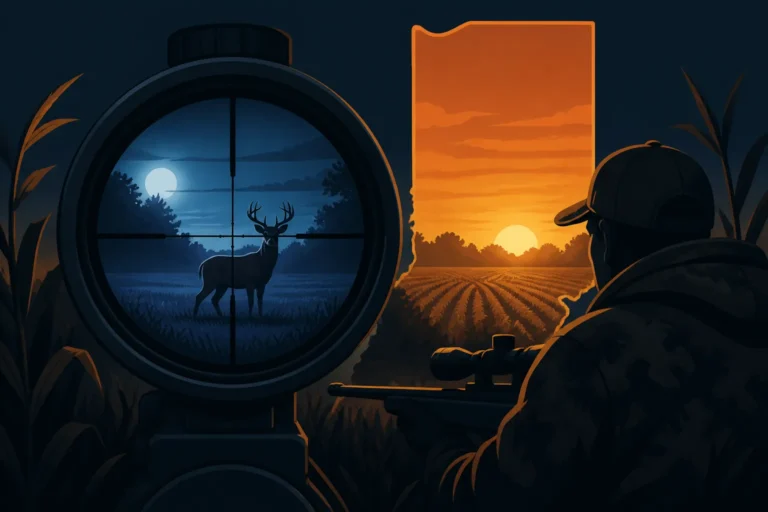
Your Indiana archery license is a powerful tool, granting you the privilege to hunt deer during the long archery season, which traditionally stretches from early October well into January. This generous season length provides ample opportunity for hunters, whether they prefer the crisp days of fall or the quiet stillness of late winter. The key takeaway here is that a crossbow is explicitly included under this general archery umbrella.
This means you can carry your favorite crossbow into the woods, whether you're perched in a treestand overlooking a cornfield in northern Indiana or still-hunting the ridges of Hoosier National Forest. The license also allows for the harvest of both antlered and antlerless deer, depending on the specific tags you've purchased and the county regulations (like deer reduction zones). It's important to remember that while the archery license covers the method of take, you still need the proper deer tags (e.g., antlered deer tag, bonus antlerless tags) to actually harvest an animal. Think of the license as your driver's license, and the tags as your vehicle registration – both are necessary to legally operate.
Many hunters appreciate this inclusive approach, as it allows them to choose the equipment that best suits their physical capabilities, hunting style, or personal preference without jumping through extra hoops. Perhaps you've had a shoulder injury that makes drawing a compound bow difficult, or maybe you simply prefer the stability and precision a crossbow offers. Indiana's regulations recognize these varied needs, ensuring that a broad range of hunters can enjoy the archery season. The flexibility is truly a benefit to the hunting community.
Base Hunting License is Still Required
Before you can even think about an archery license, you'll need to secure your Indiana Base Hunting License. This is the foundation upon which all other specific game permits, like your deer archery license, are built. It's akin to needing a general fishing license before you can buy a trout stamp. The Base Hunting License confirms that you've met the state's basic requirements for hunting, such as completing hunter education if you fall within the age requirements, and understanding the general rules of ethical and safe hunting.
You can purchase your Base Hunting License and your Archery Deer License conveniently online through the Go Outdoors Indiana portal. It's a pretty straightforward process, letting you handle everything from the comfort of your home. Many hunters like to check the online portal a few weeks before the season starts to make sure their licenses are up-to-date and they have all the necessary tags. This proactive approach helps avoid any last-minute stress.
Without the Base Hunting License, your archery deer license isn't valid. It’s important not to overlook this foundational requirement. Many states operate this way, ensuring that all hunters have a fundamental understanding of safety and conservation before pursuing specific game. It's a small but critical detail that every Indiana hunter needs to keep in mind, whether they're after a trophy buck or just looking to fill the freezer.
Archery Deer License vs. Combination Licenses
Indiana offers a few different ways to purchase your hunting privileges, and understanding the options can save you some money and hassle. While you can buy the Base Hunting License and an Archery Deer License separately, many resident hunters opt for the Resident Deer Bundle. This bundle typically includes your Base Hunting License, an Archery Deer License, a Firearms Deer License, and a Muzzleloader Deer License, all at a reduced price compared to buying them individually.
For nonresident hunters, a similar option exists with the Nonresident Deer Bundle, which provides equivalent privileges. This bundle approach is incredibly popular because it covers all the major deer seasons, giving you maximum flexibility to hunt with various methods throughout the year. If you plan to hunt deer with a crossbow during archery season, but also enjoy hunting with a rifle during Indiana's Firearms Deer Season or a muzzleloader in December, then a bundle is often the most economical choice.
It's worth noting that these bundles are designed to simplify the purchase process. They don't change the underlying rules for how you hunt with each equipment type, but rather consolidate the permits. So, whether you buy a standalone Archery Deer License or get it as part of a bundle, your crossbow is legally good to go during the archery season. This flexibility is a huge plus for those of us who like to hunt throughout the various seasons, maximizing our time in the woods.
Crossbow-Specific Rules and Considerations in Indiana
While your standard Indiana archery license covers crossbow hunting, there are still a few specific rules and practical considerations unique to crossbows that you need to be aware of. These aren't about licensing, but about legal use and ethical hunting practices. It’s always best to be informed, especially with equipment that has seen evolving regulations over the years.
One important aspect to remember is that crossbows are indeed considered archery equipment in Indiana, and thus the rules for archery season apply. This means you must adhere to legal hunting hours (generally half-hour before sunrise to half-hour after sunset), blaze orange requirements (which differ based on the season and whether firearms hunters are afield), and all other regulations that govern archery hunting. For instance, you can't hunt from a moving vehicle, or spotlight deer at night, regardless of your equipment choice. These are fundamental principles of ethical hunting that transcend specific gear.
Another common question revolves around what crossbows are not permitted. Generally speaking, Indiana regulations focus more on the arrow (bolt) and broadhead requirements than on the specific mechanical features of the crossbow itself. As long as your crossbow meets the definition of archery equipment and is used in a safe and ethical manner, you're usually in the clear. However, modifications that make a crossbow function more like a firearm (e.g., adding a pistol grip that allows it to be fired with one hand, or altering the firing mechanism significantly) could potentially move it outside the realm of legal archery equipment, so always exercise caution and consult official DNR guides if you're considering unconventional modifications.
Crossbow Equipment Requirements
Indiana's regulations for crossbows are fairly straightforward, focusing on safe and effective hunting. There aren't a myriad of highly technical specifications to memorize, which again, simplifies things for hunters. The primary focus is on the bolt (arrow) and the broadhead.
Here's a quick breakdown of what you need to know:
| Equipment Aspect | Indiana Requirement/Guidance |
|---|---|
| Broadhead Type | Must be a barbless, non-expanding broadhead. This means no mechanical broadheads that expand upon impact, and no barbed broadheads that prevent easy withdrawal. The cutting edge must be 7/8 inch wide. |
| Bolt Length | No specific minimum length is stated, but typically crossbow bolts are shorter than traditional arrows. The key is that the broadhead meets the above specs. |
| Nock | The nock end of the bolt should be designed for crossbow use. Many crossbows require specific flat nocks or half-moon nocks for proper string engagement. |
| Draw Weight | No specific minimum draw weight is defined for crossbows, unlike some states which might have a minimum for vertical bows. The focus is on the broadhead's effectiveness. |
| Sights | Any sighting system, including scopes and red dots, is permitted. This allows for precision aiming, which is a major benefit of crossbows. |
It’s that "barbless, non-expanding broadhead with a 7/8-inch cutting width" rule that often surprises new crossbow users, as many popular mechanical broadheads are designed to expand. So, if you're using a crossbow for deer, make sure your broadheads comply. Fixed-blade broadheads are generally the safest bet to ensure compliance. Before you head out, always double-check the latest Indiana DNR hunting guide for any updates, which you can often find linked through your Go Outdoors Indiana account.
Why Crossbows are Popular in Indiana
Crossbows have truly surged in popularity among Indiana hunters, and for good reason! They offer a unique blend of advantages that appeal to a wide array of individuals. One of the most significant benefits is their ease of use. The learning curve for accurate shooting is generally much shorter than with a compound or traditional bow, making them an excellent entry point for new hunters or those transitioning from firearms. The ability to cock a crossbow, then wait for the perfect shot opportunity without the strain of holding a draw, is a game-changer for many.
Furthermore, crossbows can be a fantastic option for hunters with physical limitations. For those recovering from injuries, dealing with arthritis, or simply finding it harder to draw and hold a heavy compound bow, a crossbow allows them to continue participating actively in the archery season. This inclusivity is a huge win for keeping more hunters in the field and connected to the outdoors. The precision offered by a scoped crossbow also instills confidence, leading to more ethical shots at common hunting distances in Indiana timber.
The expanded archery season is another big draw. With a crossbow, you can be out chasing whitetails from October through January, often overlapping with key deer movement periods like the rut. This extended opportunity, combined with the reliability and accuracy of modern crossbows, makes them a very effective tool. Whether you're hunting small private tracts near suburban areas or venturing deep into public lands like Hoosier National Forest, a crossbow can be a versatile and rewarding choice.
Common Misconceptions About Crossbow Hunting in Indiana
Despite clear regulations, a few common misconceptions about crossbow hunting in Indiana tend to persist. Clearing these up can save you from unnecessary worry and ensure you're fully confident in your hunting approach. It's easy to hear something from a buddy or on a forum and assume it's true, but when it comes to licenses and rules, always go straight to the source.
One persistent myth is that crossbows are only for "disabled" hunters or those with special permits. This is simply not true in Indiana. Crossbows are legal for all licensed archery hunters during the regular archery season. There's no requirement to have a disability or a doctor's note to use one. This misconception often comes from a time when crossbows had more restricted use, but Indiana has since embraced them as a legitimate and widely accepted form of archery equipment. This inclusivity reflects a broader understanding that hunting should be accessible to as many people as possible, regardless of physical prowess.
Another mistaken belief is that crossbows have a shorter hunting season than traditional bows. Again, this is incorrect. As defined under Indiana's archery equipment umbrella, crossbows enjoy the full, entire archery season, which is one of the longest deer seasons we have. There are no separate start or end dates for crossbow users. If you've got your archery license and appropriate tags, you can hunt the full Indiana Archery Season Dates. This extended timeframe provides ample opportunity to scout, set up stands, and patiently wait for a shot, whether you're focused on Reading a Ridge for Hoosier Forest Deer or finding the perfect Entry Routes Through Standing Corn.
Differences from Other States' Crossbow Rules
It’s easy to get confused when hunting across state lines, as crossbow regulations can vary significantly from one state to the next. What's perfectly legal and standard in Indiana might be restricted or require a special permit just a short drive away. This is why always checking the local DNR regulations is paramount, even if you’re a seasoned hunter.
For example, some states might limit crossbow use to specific portions of their archery season, or only allow them for hunters holding a special disability permit. Other states might have different broadhead restrictions, minimum draw weights, or even different definitions of what constitutes a legal crossbow. This patchwork of regulations can be frustrating, especially for non-resident hunters who might be used to a different set of rules back home. However, in Indiana, the broad inclusion of crossbows under the general archery license is a refreshing simplification.
This is why our simple answer – no separate license needed beyond a standard archery license – is so important for Indiana hunters. You don't have to wade through complex flowcharts or apply for special stamps. Just get your Base Hunting License and your Archery Deer License (or the Deer Bundle), make sure your broadheads are compliant, and you’re ready to hit the woods. This consistency helps streamline the hunting experience and encourages more participation, which is a great thing for wildlife conservation in the long run.
Choosing the Right Crossbow Setup for Indiana Hunting
Once you've got your licensing sorted, the next exciting step is choosing or optimizing your crossbow setup for Indiana's diverse terrain and hunting scenarios. The right gear can make all the difference in your comfort, confidence, and ultimately, your success in the field. There are so many great options out there, it can feel a little overwhelming to pick the "best."
When selecting a crossbow, consider the kind of hunting you'll primarily be doing. Are you mostly still-hunting through thick timber in southern Indiana, where maneuverability and quiet operation are key? Or will you be sitting long hours in a treestand overlooking open fields in the northern part of the state, where longer range accuracy might be more important? The size, weight, and speed of the crossbow can all play a role in how well it performs in different situations. For example, a more compact crossbow might be easier to handle in a tight ground blind or when navigating dense brush.
Optics are another crucial component. Many crossbows come with a basic scope, but upgrading to a higher-quality model can greatly improve your low-light performance and precision. Given that prime hunting times often occur at dawn and dusk, a clear, bright scope that can gather light effectively is a huge asset. Don't forget accessories like quivers, slings, and a good cocking device, which can significantly enhance your hunting experience. Even something as simple as a comfortable sling can make a long walk into your stand much more enjoyable. Make sure to check out guides like Crossbow Scopes for Indiana Timber Ranges to help make an informed decision.
Essential Crossbow Accessories
Beyond the crossbow itself, a few key accessories can truly enhance your hunting experience and ensure you're prepared for anything the Indiana woods throw at you. These aren't just "nice-to-haves"; many are essential for safety, efficiency, and ethical hunting.
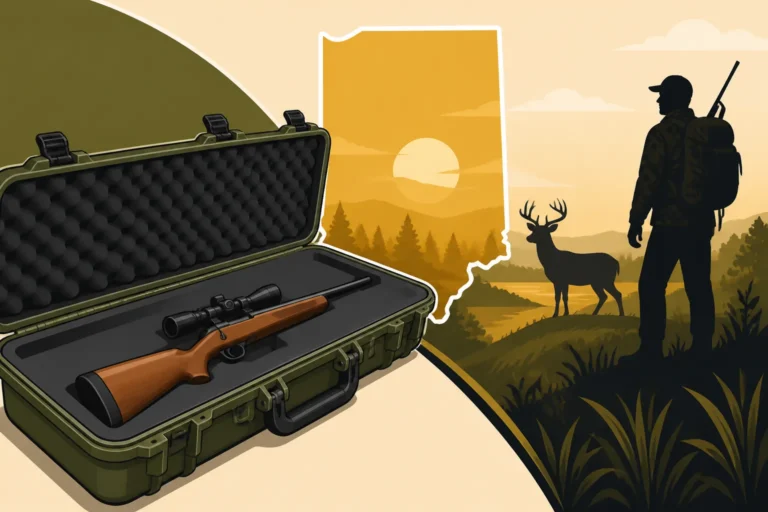
Firstly, a reliable cocking device is almost a must-have. Whether it's a rope cocker or an integrated crank system, these devices make cocking your crossbow easier, safer, and more consistent, which directly impacts accuracy. Trying to hand-cock a high-draw-weight crossbow in cold weather or when you're tired can be a real struggle and potentially dangerous. Secondly, a quality case for transport is vital. It protects your crossbow from damage and keeps it secure when traveling to and from your hunting spot. A good case is an investment that pays dividends in protecting your primary hunting tool.
Next, a sufficient supply of bolts and compliant broadheads is non-negotiable. Don't just buy a few; practice extensively with the exact broadheads you plan to hunt with to ensure they fly true from your setup. Also, consider a quiver that keeps your bolts secure and readily accessible. Finally, a rangefinder is an indispensable tool for crossbow hunters. Knowing the exact distance to your target is crucial for accurate shot placement, especially with a crossbow's flatter trajectory compared to a vertical bow. You can integrate mapping tools like those from GoHunt to mark known distances in your hunting area, making quick range estimations easier. This combination of gear helps ensure you're not only legal but also prepared for a clean, ethical harvest.
Practice Makes Perfect
No matter what equipment you choose, whether it's a traditional recurve or a modern crossbow, consistent practice is the ultimate key to success and ethical hunting. It's not enough to simply buy the gear and assume you're ready for the field. The unique mechanics of a crossbow still require a disciplined approach to shooting and understanding your equipment's capabilities.
Take the time to truly learn your crossbow's trajectory and how different ranges affect your point of aim. Practice shooting from various positions you might encounter in the woods—sitting in a blind, from a treestand, or even offhand if that's a scenario you anticipate. The goal is to build muscle memory and confidence so that when a deer steps into your shooting lane, you can execute a clean shot under pressure. Don't forget to practice with the actual broadheads you'll be using for hunting, as they can sometimes fly differently than field points.
This commitment to practice is what separates a prepared hunter from one who's just hoping for the best. Ethical hunting demands that we do everything in our power to make a clean, quick kill, and proficiency with your weapon is a massive part of that responsibility. So, head to the range, set up a target, and put in the work. It will pay off when that moment of truth arrives during Indiana's archery season.
Disclaimer
This article is for general informational purposes only and does not constitute professional advice. Laws, prices and regulations vary by location and change over time. Consult a qualified professional for guidance on your specific situation.