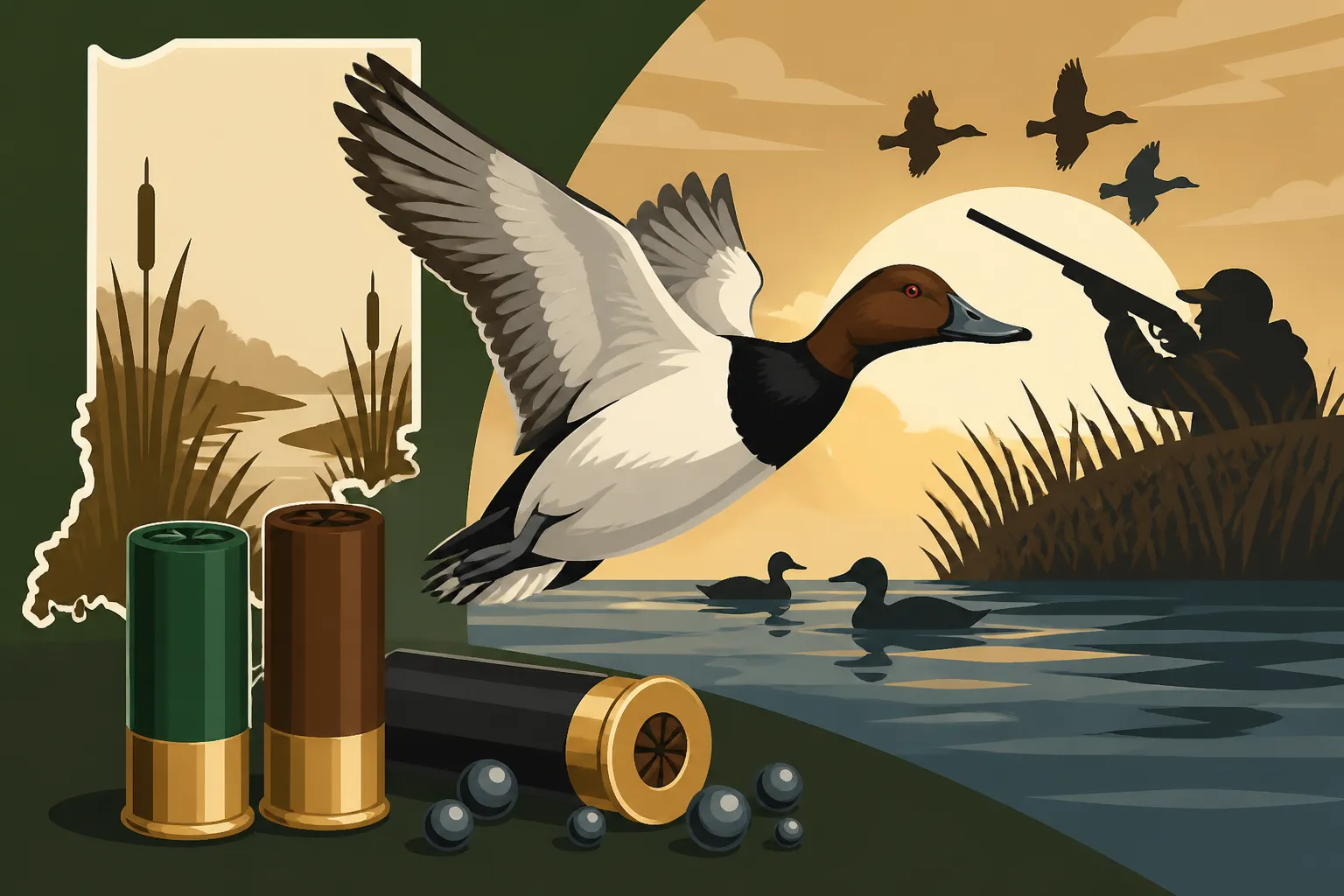
Waterfowl Loads for Kankakee Divers
Hunting diver ducks on the Kankakee River marshes can be one of the most exciting, and often frustrating, experiences a waterfowl hunter can have in Indiana. These birds are fast, resilient, and they often present challenging shots, especially when they're rocketing in over the open water. You've likely been there – that moment when a flock of bluebills or ringnecks buzzes your spread, you shoulder your shotgun, and despite feeling like you made a good swing, they keep on flying. It leaves you scratching your head, wondering if it's your aim, your choke, or perhaps, what you're actually putting in your shotgun. This guide is all about diving deep into the world of waterfowl loads specifically designed to bring down those hardy Kankakee divers, helping you stack the odds in your favor for a more successful hunt.
The Unique Challenge of Kankakee Divers
Hunting diver ducks isn't like hunting mallards over a flooded timber hole. Divers are a different breed of bird, both in their flight characteristics and their physical makeup, which demands a different approach when it comes to ammunition. If you’ve spent any time at all on the Kankakee, you know exactly what I’m talking about.
Speed and Flight Patterns
First off, divers are fast. Think about a canvasback or a goldeneye streaking across the water at what feels like warp speed. These birds are built for open water, designed to cover long distances quickly, often flying low to the water's surface or high overhead with incredible velocity. Unlike dabblers that might circle a few times before committing to a landing, divers often come in hot, make a pass, and if they don't like what they see, they're gone in a flash. This means you have a very narrow window for a shot, and that shot needs to be decisive. You're often swinging hard and leading birds that are moving at incredible speeds, sometimes with the wind at their backs making them even faster.
The Kankakee marshes, with their wide-open spaces and large bodies of water, give divers plenty of room to operate. You might encounter them buzzing a point, ripping down a main channel, or dropping into a hidden pocket of open water. Each scenario presents a different shooting angle and distance challenge. A load that might be adequate for a slower, closer shot on a puddle duck might simply not have the retained energy to effectively drop a diver at the same perceived range. It's a humbling experience to watch a bird take a hit and keep flying, and often, the culprit isn't your shooting, but a lack of pattern density or pellet energy.
Hardiness of Diver Species
Beyond their speed, diver ducks are notoriously tough birds. They're compact, densely feathered, and built like little feathered tanks. Species like canvasbacks, redheads, and scaup (bluebills) have robust bodies that can take a lot of punishment, especially compared to their dabbling cousins. A single pellet might be enough to bring down a teal, but a diver often requires multiple pellets with sufficient energy to penetrate those thick feathers, break bone, and reach vital organs.
This means you can't just throw any old steel shot at them and expect consistent results. You need a load that delivers a dense pattern of heavy, energetic pellets to ensure enough hits on the bird for a clean, ethical kill. A marginal hit on a diver often results in a crippled bird that dives, swims away, and is rarely recovered, which is something every ethical hunter wants to avoid. When you're Waterfowl Hunting the Kankakee Marshes, or even Diver Hunting on Northern Indiana Lakes, you'll quickly learn that shot selection is paramount.
Key Characteristics of Effective Waterfowl Loads for Divers
So, what exactly makes a waterfowl load effective for Kankakee divers? It boils down to a combination of pellet material, size, and muzzle velocity, all working together to deliver a potent payload downrange.
Non-Toxic Shot Requirements
First and foremost, let's get this out of the way: you must use non-toxic shot for waterfowl hunting. This isn't just a suggestion; it's a federal law. Lead shot is prohibited for all migratory bird hunting, including ducks and geese, to protect the birds and the environment from lead poisoning. So, when we talk about "waterfowl loads," we're automatically talking about steel, bismuth, or tungsten-based shot. If you're ever in doubt about where this applies, remember that Where Nontoxic Shot Is Required in Indiana is essentially everywhere you'd be waterfowl hunting.
This requirement changes the ballgame significantly compared to hunting upland birds with lead. Steel shot, being lighter than lead, retains less energy and has a different ballistic profile. This is why many hunters size up their steel shot compared to what they might use in lead for a similar game bird. Bismuth and tungsten alloys offer densities closer to or exceeding lead, which translates to better energy retention and knockdown power, but they also come at a higher cost.
Pellet Material and Its Impact
The material of your shot plays a massive role in its performance. Here’s a quick breakdown:
-
Steel Shot: This is the most common and most affordable non-toxic option. Steel is lighter than lead, which means it loses velocity faster and has less energy per pellet downrange. To compensate, hunters often use larger steel shot sizes than they would lead. The upside is that steel holds a tighter pattern due to its rigidity, and it's less prone to deforming. However, you need to be mindful of its limitations, especially on longer shots or very tough birds like divers. For many of us, steel is the workhorse of our waterfowl season, but it's crucial to pick the right size and velocity.
-
Bismuth Shot: Bismuth is heavier than steel, with a density much closer to lead. This means bismuth pellets carry more energy and maintain their velocity better than steel, delivering more knockdown power, especially at moderate ranges. It's also softer than steel, making it safer for older shotguns or those with fixed chokes not rated for steel. If you find steel isn't quite cutting it, or you appreciate a bit more forgiveness in your range estimation, bismuth is a fantastic intermediate step. It’s more expensive than steel, but often worth it for the improved performance.
-
Tungsten-Based Shot (e.g., Hevi-Shot, TSS): These are the kings of non-toxic shot. Tungsten is significantly denser than lead, meaning even small pellets carry an incredible amount of energy. Loads using tungsten alloys deliver devastating knockdown power and penetration, often allowing you to drop down a shot size or two compared to steel while achieving superior results. The patterns are incredibly dense, and the effective range is extended. The main drawback is the cost – tungsten loads are substantially more expensive. For those dedicated diver hunts where every shot counts, or if you're consistently taking longer shots, these can be a game-changer. Think of them as specialty ammunition for specialty situations, perfect when you absolutely need to bring down those fast Mallards and Geese on Kankakee Marshes that are just on the edge of range.
Shot Size and Pellet Count
Choosing the right shot size is a balancing act between pellet energy and pattern density. Larger pellets carry more energy and penetrate deeper, but you get fewer of them in a given load. Smaller pellets give you a denser pattern, increasing the likelihood of multiple hits, but each pellet carries less individual energy.
For divers, you typically want a balance that favors energy and penetration. Divers require heavier pellets to break through their tough bodies. This means you'll generally be looking at larger shot sizes than you might use for smaller puddle ducks.
| Shot Type | Recommended Sizes for Kankakee Divers | Notes |
|---|---|---|
| Steel | #2, #1, BB, BBB | #2 is a good all-around choice. #1 offers more energy, and BB/BBB are excellent for larger divers like canvasbacks or longer shots. Consider larger sizes if your shots are consistently beyond 35-40 yards. |
| Bismuth | #3, #2, #1 | Because bismuth is denser, you can often drop down one shot size from steel and still get comparable or better performance. #3 is effective, #2 is excellent, and #1 provides serious punch. |
| Tungsten | #4, #3, #2 | Due to extreme density, even small tungsten pellets hit incredibly hard. #4 or #3 tungsten can be devastating on divers, offering penetration far exceeding larger steel pellets. This allows for incredibly dense patterns. |
The specific size also depends on the bird. If you're primarily targeting scaup (bluebills) or ringnecks, #2 or #1 steel might be perfect. But if you expect to encounter canvasbacks, redheads, or even goldeneyes, bumping up to BB or even BBB steel, or moving to a denser material like bismuth or tungsten, will yield far better results. Remember, the goal is always a clean kill.
Velocity and Choke Selection
High velocity helps flatten trajectory and delivers pellets to the target faster, reducing lead estimation errors and retaining more energy. Most modern waterfowl loads are already pushing good velocities, but comparing different brands and offerings can sometimes reveal a significant difference. A load advertised at 1550 fps will carry more energy to the target than one at 1450 fps, all else being equal. However, don't sacrifice pattern density just for raw speed; a few extra feet per second won't matter if your pattern is blown.
Choke selection is also critical. For steel shot, which patterns tightly, a Modified or Improved Modified choke is often ideal for divers, providing a good balance of pattern density and spread at typical shooting distances. Full chokes with steel can sometimes create excessively tight patterns or even damage older barrels not rated for steel, though modern chokes designed for steel are much more robust. For bismuth or tungsten, which are softer or extremely dense, you can often use tighter chokes (like a Full or even Extra Full) to achieve incredible pattern density, but always check your choke's rating for the specific shot material. It’s important to match your choke to your load and target distance. My buddies and I are always discussing the best choke setups, especially after a tough morning out Hunting Kankakee River Marsh Waterfowl.
Practical Considerations and Tips for Hunting Kankakee Divers
Beyond the ballistic characteristics of the loads themselves, there are some practical tips and considerations that can significantly improve your success rate when chasing Kankakee divers.
Shotgun Gauge and Shell Length
While you can hunt divers with a 12-gauge, many dedicated diver hunters opt for a 3-inch or even 3.5-inch shell in a 12-gauge, or even a 10-gauge. The reason is simple: more payload. A longer shell can hold more shot, translating to more pellets downrange and denser patterns. While some hunters find the recoil of a 3.5-inch 12-gauge to be significant, the extra payload can make a real difference, especially with steel shot, providing that critical margin for error when a flock of bluebills zips by at 40 yards. If you're considering a new setup, think about what you want to achieve. Many modern 12-gauge shotguns are built to handle 3.5-inch shells, giving you maximum flexibility.
A 20-gauge can certainly be effective, especially with high-density bismuth or tungsten loads, but you'll have less margin for error due to the smaller payload. If you're comfortable with a 20-gauge, prioritize those premium loads.
Patterning Your Shotgun
This is probably the most overlooked, yet most crucial, step in preparing for any waterfowl hunt. You must pattern your shotgun with the specific loads and choke you plan to use. Don't just assume. Different guns, chokes, and even different batches of ammunition can produce wildly different patterns.
Take your shotgun to the range and shoot at large paper targets (like 30×30 inches or bigger) at realistic hunting distances – say, 30, 40, and 50 yards. You're looking for two things:
- Pattern Density: Is there an even distribution of pellets across the target? Are there any gaping holes a duck could fly through? You want at least 120-150 pellets in a 30-inch circle for consistent kills on ducks.
- Point of Impact: Is the center of your pattern where you're aiming? Some shotguns, or specific loads, might shoot a little high or low.
This exercise will tell you exactly what your effective range is with your chosen setup and allow you to adjust your choke or even your ammunition choice. I've seen too many hunters go afield without patterning, and they wonder why they're missing or crippling birds. It's a critical step, and one you shouldn't skip. Some of my buddies even use apps from brands like GoHunt to track their patterning results, making it easy to compare different loads and chokes over time.
Range Estimation and Shot Discipline
Divers often appear closer than they are, especially over open water. They fly so fast that they cover ground quickly, leading to misjudgments of distance. An ethical hunter knows their effective range and sticks to it. For most steel shot loads, that's typically within 45-50 yards, though with larger shot or premium materials, you might stretch it a bit.
Shooting at birds beyond your effective range is a recipe for crippled birds. It's better to pass on a marginal shot and wait for a closer opportunity. Decoy Spreads for Kankakee Divers can help bring birds in closer, but even then, you need to be honest about the distance. Invest in a good laser rangefinder and use it until your eyes are calibrated to judge distances accurately. Knowing your limit and having the discipline to wait for birds to commit will dramatically increase your recovery rate.
Retrievers and Recovery
Speaking of recovery, divers, when hit, often dive immediately. A strong, well-trained retriever is an invaluable asset when Hunting Kankakee River Marsh Waterfowl. Even a stone-dead bird can disappear underwater if not retrieved quickly. If you don't have a dog, be prepared to get wet. Good Waders for Marsh Hunting are essential, and a Marsh Boats and Push Poles can be a lifesaver in certain situations on the Kankakee.
Even if you make a perfect shot, a diver can still dive and swim a surprising distance underwater, often using their strong legs to propel them away. A dog's nose and perseverance can mean the difference between recovering your bird and losing it. For those long days in the field, a reliable companion can make all the difference, and it ensures that your efforts and ethical shot selection are not wasted.
Conclusion
Choosing the right waterfowl loads for Kankakee divers is a critical component of successful and ethical hunting. It's not just about buying "duck loads" off the shelf; it's about understanding the specific challenges these tough, fast-flying birds present and matching your ammunition to those challenges.
Whether you opt for heavy steel, denser bismuth, or the ultimate performance of tungsten, remember to pattern your shotgun, understand your effective range, and prioritize shot discipline. The Kankakee marshes offer incredible opportunities for diver hunting, but they demand respect and preparation. By carefully selecting your loads and practicing your shooting, you'll be well-equipped to enjoy the thrill of watching those fast-flying divers commit to your spread, knowing you have the right stuff to bring them down cleanly. Don't forget to review the Waterfowl Gear for Kankakee Marshes for a complete setup to ensure you're ready for everything the season throws at you. Happy hunting!
Disclaimer
This article is for general informational purposes only and does not constitute professional advice. Laws, prices and regulations vary by location and change over time. Consult a qualified professional for guidance on your specific situation.