Diver Hunting on Northern Indiana Lakes
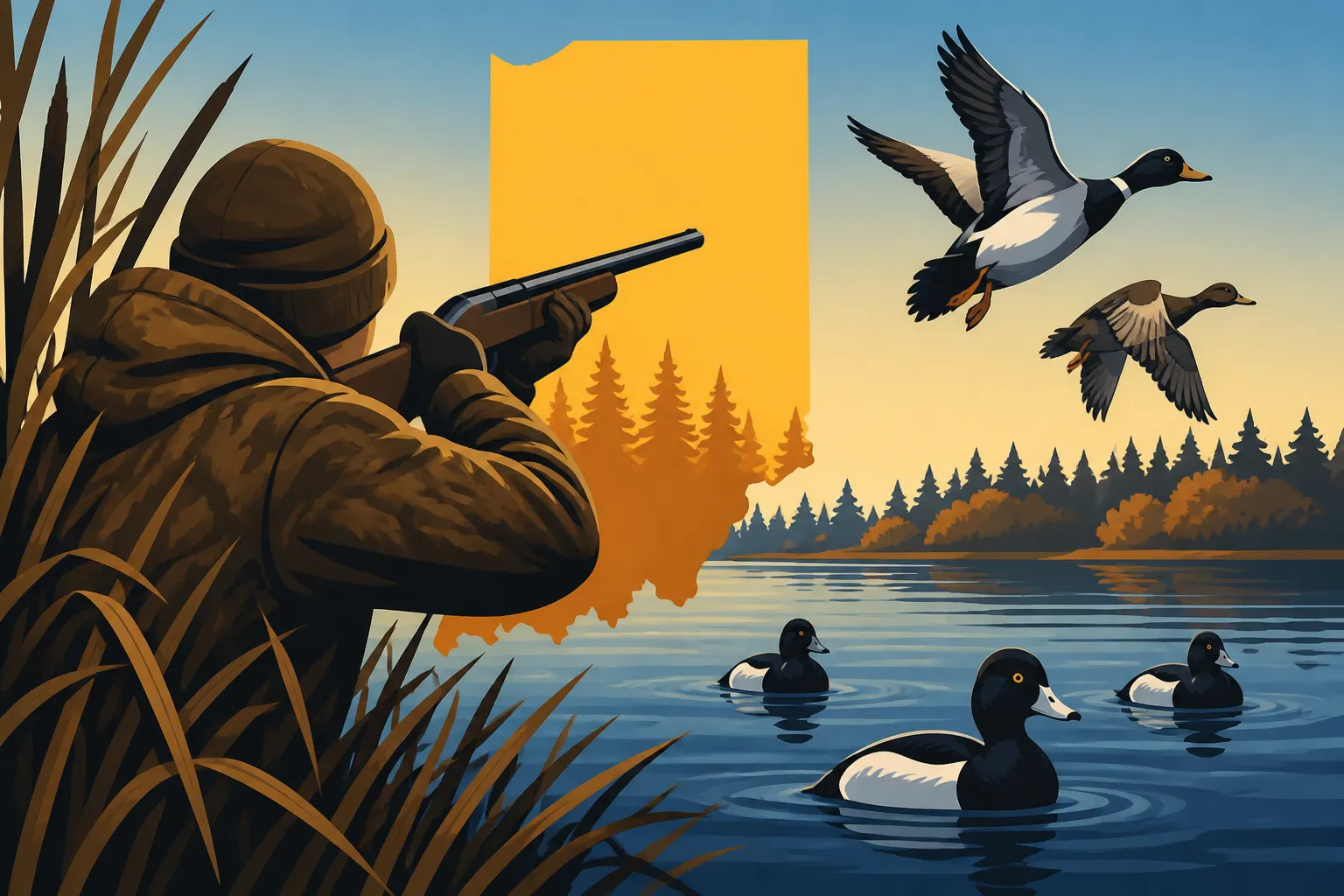
Chasing diver ducks on the vast, often windswept northern Indiana lakes presents a unique set of challenges compared to the more sheltered marsh hunting most waterfowlers are used to. The sheer scale of these waters, coupled with unpredictable weather and the specific habits of these fast-flying birds, can make finding and decoying them a real puzzle for many hunters. This guide is here to unravel that puzzle, offering practical strategies and gear insights to help you navigate these big waters and put more diver ducks in your strap.
Understanding Northern Indiana's Diver Duck Habitat
Diver ducks are a fascinating group of waterfowl, often overlooked by hunters focused solely on mallards in flooded timber or geese in cut fields. But if you know where to look, and how to approach them, northern Indiana offers some incredible opportunities for these birds. Their preference for larger, deeper bodies of water with specific food sources makes them a distinct quarry.
Key Lakes and Water Bodies
Northern Indiana is blessed with a diverse array of water bodies, from the vast expanse of Lake Michigan to numerous smaller, natural glacial lakes and even some larger reservoirs. Each offers unique characteristics that attract various diver species.
Take Lake Michigan, for instance, particularly near the Indiana Dunes National Park. Its sheer size and depth create ideal conditions for certain divers, especially during severe weather when other waters freeze up. The powerful currents and open water here demand a completely different approach and a much more robust boat than you might use elsewhere. Then you have the natural glacial lakes like those found in Steuben, LaGrange, and Noble counties. Lakes such as Lake James, Lake Wawasee, or Crooked Lake often have deep basins and expansive areas of submerged vegetation, making them magnets for ring-necked ducks, canvasbacks, and scaup. These lakes can still get choppy, but they're generally more forgiving than Lake Michigan. Reservoirs like those found further south but still considered "northern" in terms of habitat, such as Mississinewa or Salamonie, also hold divers, especially in their deeper sections or where old river channels provide a ready food source. The common thread for all these spots is the presence of ample submerged aquatic vegetation, which is a primary food source for many diver species, or a rich invertebrate population. Understanding the specific topography of these lakes, including depth changes, points, and humps, is crucial for success.
Species of Diver Ducks You'll Encounter
When you head out onto northern Indiana's big water, you're likely to encounter a variety of diver species, each with its own characteristics and preferences. Knowing what you're looking for, both in terms of identification and behavior, can significantly improve your chances.
Ring-necked ducks are probably the most common diver you'll see. They often frequent shallower sections of lakes than other divers, favoring areas with dense submerged vegetation like pondweed and wild celery. You'll recognize them by their distinctive "ring" on their bill (though the namesake neck ring is hard to see in the field) and a peaked head. They're fast flyers but tend to decoy well. Lesser Scaup, often called "bluebills," are another frequent visitor. They prefer larger, deeper lakes and feed heavily on mollusks and insects, often found in beds of aquatic invertebrates. Identifying them can be tricky, as they look very similar to Greater Scaup, but Lesser Scaup typically have a smaller head and a purple sheen on their head in good light, compared to the green sheen of a Greater. They often fly in large, tight flocks.
Canvasbacks are the kings of the divers for many hunters, prized for their size and beauty. These majestic birds are strongly tied to areas with abundant wild celery and sago pondweed, which are often found in specific, clean-water lakes. They have a distinctive sloped profile from their forehead to the tip of their bill. Canvasbacks are powerful, fast flyers, often streaking past a spread at incredible speeds. Redheads, with their striking red heads and blue bills, are also common. They often feed on submergent vegetation but are more adaptable and will also consume seeds and invertebrates. They tend to be a bit more gregarious and often mix with other diver species. Finally, you might encounter Goldeneyes and Buffleheads. Goldeneyes are hardy birds, often found in colder waters, and feed on aquatic insects and mollusks. Buffleheads are tiny, fast-flying divers, often called "butterballs" for their plump appearance. They're typically found closer to shore or in protected bays, and while small, they offer exciting shooting. Understanding these species' flight patterns, preferred foods, and typical flocking behaviors will inform your scouting and setup.
| Species | Size | Diet Preference | Key ID Feature (Male) |
|---|---|---|---|
| Ring-necked Duck | Medium | Submerged vegetation, seeds, insects | Black back, white ring on bill |
| Lesser Scaup (Bluebill) | Medium | Mollusks, insects, submerged vegetation | Purple sheen on head, peaked crown |
| Canvasback | Large | Wild celery, pondweed, mollusks | Red head, sloping forehead, white body |
| Redhead | Medium-Large | Submerged vegetation, seeds, mollusks | Red head, gray body, blue bill |
| Common Goldeneye | Medium | Mollusks, crustaceans, aquatic insects | Green head, white spot below eye |
| Bufflehead | Small | Aquatic insects, crustaceans, mollusks | Large white patch on black head |
Essential Gear and Setup for Diver Hunting
Diver hunting on northern Indiana lakes isn't just about showing up with a shotgun. It demands specialized gear and a methodical approach to setup, primarily due to the open water, the diving habits of the birds, and the often-challenging weather conditions.
Decoy Spreads for Open Water
When it comes to diver hunting, especially on expansive lakes, your decoy spread is your primary magnet. These birds are used to seeing large rafts of their own kind, so bigger is generally better. You're trying to create a visible, inviting landing zone in a vast, featureless environment.
Many seasoned diver hunters aim for spreads of 50, 100, or even more decoys if they can manage it. Divers are attracted to numbers. For open water, a common and effective setup is a "J-hook" or "U-shape" spread. The long arm of the "J" or one side of the "U" points into the prevailing wind, with the pocket or hook forming downwind. This creates an open landing zone where the ducks can cup their wings and settle in, ideally right in front of your blind. You want to make it look natural, like a resting or feeding flock. Mix in various diver species you expect to encounter – canvasbacks, scaup, redheads, and ring-necks. Sometimes, adding a few confidence decoys, like a handful of coots or even a lone goose decoy on the edge of the spread, can make it appear even more realistic and inviting. The depth of these northern Indiana lakes means you'll need robust anchor systems. Individual weights for each decoy are common, but longer gang lines or texas rigs with heavy weights are often preferred to manage large numbers of decoys in deep water and potentially strong currents. Imagine trying to retrieve 100 individually weighted decoys in 15-foot deep water on a choppy morning; gang lines simplify deployment and retrieval immensely. You might also find that using magnum-sized decoys, or even oversized silhouettes, helps with visibility on large bodies of water, ensuring your spread can be seen from a distance.
Boat and Blind Considerations
The type of boat and blind you use is paramount for safety and effectiveness when diver hunting on big water. These aren't small creeks or sheltered ponds; you need equipment that can handle choppy conditions and cold water.
For serious diver hunting, especially on larger glacial lakes or Lake Michigan itself, a stable, seaworthy boat is non-negotiable. Many hunters opt for larger Jon boats (16-18 feet minimum), V-hull boats, or specialized layout boats. Layout boats, like those made by Bankes or similar designs, are purpose-built for open-water duck hunting. They sit low to the water, making them virtually invisible to incoming birds, and are extremely stable. However, they require a separate tender boat to ferry hunters and gear and pick up downed birds. If you're using a more conventional boat, consider a robust boat blind that offers concealment without compromising stability. These blinds attach to the gunwales and can be brushed in with natural vegetation or camouflage netting. In shallower areas or on points and islands, you might be able to use a portable layout blind on shore, but the vast majority of diver hunting involves being on the water. Regardless of your chosen setup, safety should always be your top priority. Cold water can be deadly. Always wear a U.S. Coast Guard-approved Personal Flotation Device (PFD), even if you're an experienced swimmer. Carry throw cushions, a whistle, a reliable marine radio or fully charged cell phone (in a waterproof case), a spotlight, and a first-aid kit. Checking the weather forecast meticulously, using tools like a detailed marine forecast app or even a dedicated hunting app like GoHunt which often integrates weather data, is critical before launching. It's far better to stay home than risk life and limb for a duck.
Shotguns, Loads, and Chokes
Your choice of firearm and ammunition is crucial for bringing down fast-flying, often heavily-bodied diver ducks at varying ranges on open water.
Most diver hunters rely on a 12-gauge shotgun, though a 10-gauge can also be an excellent choice, particularly if you're looking for extra punch at longer ranges. The key is to ensure your shotgun can handle the rigors of cold, wet conditions and reliably cycle heavy loads. Semi-automatic shotguns are popular for quick follow-up shots, but a pump-action is also perfectly capable. When it comes to ammunition, remember that nontoxic shot is required in Indiana for all waterfowl hunting. Steel shot is the most common and affordable option, but many hunters prefer bismuth or tungsten-iron blends for their superior knockdown power and performance, especially on tough birds like canvasbacks. For shot size, 2s or 3s are generally excellent choices for most divers, offering a good balance of pellet count and energy. If you're consistently getting longer shots or hunting larger divers like canvasbacks, some hunters will even step up to 1s or BBs in steel, or even larger in more dense non-toxic options. As for chokes, a modified or improved modified choke is a versatile choice for diver hunting. It provides a dense enough pattern at typical decoying ranges (25-45 yards) without being too tight for closer shots. Some hunters might even use a light modified or improved cylinder if birds are consistently working very close, but the modified is usually a good all-around choke for the variety of shots you'll encounter on the big water. Patterning your shotgun with your chosen load and choke before the season is absolutely essential to know your effective range and ensure consistent performance.
Proven Tactics for Diver Success on Big Water
Hunting divers on northern Indiana lakes is as much about strategy and understanding the birds as it is about gear. Successfully bringing these wary ducks into range requires careful planning and observation.
Reading the Wind and Weather
On large, open water, wind and weather are not just factors; they are the factors that dictate diver movement and your hunting success. Divers, like most waterfowl, are slaves to the wind. They take off and land into the wind, using its lift to become airborne and to slow their descent.
This behavior is your biggest clue for setting up your spread and blind. You always want to position your spread so that the ducks will approach it and land into the wind, creating that natural landing zone right in front of your shooting position. If the wind shifts throughout the morning, you might need to adjust your setup, which is easier said than done on big water. A good tactic is to set up with the wind quartering slightly over your shoulder, allowing birds to approach and settle without flying directly over your head before committing. Beyond wind direction, temperature, precipitation, and barometric pressure all play a role. Cold fronts often push new birds into the area, while stable, high-pressure systems can lead to slower hunting. Heavy fog or snow can disrupt their flight patterns but can also bring them down lower. Monitoring weather forecasts continuously, perhaps even with an advanced hunting app that tracks real-time changes and integrates with mapping data like those provided by GoHunt, is not just a good idea, it's essential for both safety and success. Always err on the side of caution when dealing with strong winds or approaching storms on big lakes; a duck isn't worth capsizing for.
Scouting and Location Selection
You can have the best gear and the most elaborate spread, but if you're not where the ducks want to be, you won't kill divers. Pre-season and in-season scouting are paramount.
Begin your scouting long before the season even opens. Use aerial maps and bathymetric charts (available through various online sources, including many hunting apps) to identify potential feeding flats, depth changes, points, and humps on the lake bottom. Look for areas with historical submerged aquatic vegetation growth. Divers feed primarily by diving for these plants or the invertebrates living within them. Identifying travel lanes—the routes ducks take between resting areas, feeding grounds, and smaller bodies of water—is also key. You might find that birds consistently fly a certain path along a shoreline or across a bay. As the season progresses, spend time simply observing. Use good binoculars to glass distant rafts of ducks. Pay attention to where they are feeding, where they are resting, and how they react to wind and light. Do they congregate in certain bays? Are they using specific points? The best spots often have an ideal combination of depth, cover, and food source, and are out of the main boat traffic lanes. Don't be afraid to try different locations on different days, especially if conditions change. Some days the ducks might prefer a shallower flat, other days a deep-water hummock. Remember, what makes for great Hunting Northern Indiana Farmland Deer is vastly different from what attracts divers.
Working the Birds and Ethical Shooting
Once the ducks are working your spread, the real test of your patience and shooting skill begins. Diver hunting often involves minimal calling, or at least a different approach than puddle duck calling.
Unlike mallards that respond aggressively to loud hailing calls and pleading quacks, divers are generally less vocal. A soft purr or cluck, or even a few contented mallard or pintail calls mixed in, can sometimes add confidence to a hesitant flock, making your spread seem even more natural. But often, silence is golden. The most important thing is to let the birds commit to your spread. This means allowing them to drop their feet, set their wings, and truly settle into the landing zone you've created. It's incredibly tempting to shoot early, especially when a big flock of scaup barrels through, but waiting for them to fully commit drastically increases your chances of clean kills. Once they're in range, rise quickly and decisively. Focus on one bird at a time, aiming for the head or neck for a swift, humane kill. Ethical shooting also means knowing your limits and the limits of your gear. If a bird is beyond your effective range (which you determined when patterning your shotgun), don't take the shot. Wounding birds on big water makes for difficult and often impossible retrieves. Speaking of retrieves, always have a plan for retrieving downed birds quickly. Divers can dive and swim incredibly fast, and a wounded bird can disappear in an instant, especially in choppy water. A well-trained retriever is invaluable for this type of hunting. If you're hunting without a dog, a good push pole or trolling motor on your boat, along with keen eyes, will be essential. This is a very different game from Squirrel Hunting Indiana Bottomland Hardwoods, where a downed squirrel isn't going to swim away in open water! Be sure you understand all relevant regulations, including Indiana Duck and Goose Bag Limits and Indiana Duck Daily Bag Limit, to stay legal.
Diver Duck Quick Identification Guide
For quick reference in the blind:
| Species | Flight Pattern | Typical Flock Size | Diving Style |
|---|---|---|---|
| Ring-necked Duck | Fast, erratic, often in lines | Small to medium | Quick, shallow dives |
| Lesser Scaup | Very fast, tight groups | Medium to large | Energetic, long dives |
| Canvasback | Extremely fast, V-formation | Small to medium | Deep, prolonged dives |
| Redhead | Fast, often irregular | Small to medium | Medium depth, methodical |
| Common Goldeneye | Fast, powerful, low over water | Small | Deep, long dives, active |
| Bufflehead | Erratic, darting, wing whistle | Small | Very active, shallow dives |
Disclaimer
Hunting is an activity with inherent risks. Always prioritize safety, follow all local, state, and federal regulations, and obtain proper licensing and hunter education. This guide is for informational purposes only and should not replace professional instruction or official DNR guidelines. Remember to always consult the current Indiana hunting regulations pamphlet before heading afield.