Minimum Bullet Diameter Under Indiana’s New Law
For years, hunters in Indiana faced a convoluted and often frustrating set of rules when it came to choosing a rifle for deer season. The old straight-wall cartridge requirement, born from a desire for safety in a relatively flat state, created confusion and limited options for many. This guide is here to untangle the legalities surrounding the minimum bullet diameter under Indiana's new law, helping you confidently pick the right rifle for your next hunt.
The Old Days: A Look Back at Indiana's Straight-Wall Cartridge Rule
For decades, Indiana hunters were bound by what many considered one of the most restrictive rifle laws in the nation. If you wanted to hunt deer with a centerfire rifle, you were limited to "pistol cartridges," commonly referred to as straight-wall cartridges. This meant cartridges like the venerable .45-70 Government, .44 Magnum, .357 Magnum, and more recently, the popular .450 Bushmaster and .350 Legend.
The intent behind this rule was rooted in public safety. With a largely flat landscape and a significant population spread, lawmakers believed that straight-wall cartridges, which typically lose energy and drop velocity faster than bottlenecked rifle cartridges, would reduce the risk of bullets traveling long distances and injuring non-hunters. While the concern was valid, the execution created a unique hunting landscape and forced manufacturers to develop specialized cartridges to meet Indiana's specific demands, leading to a sort of "Indiana exception" in the firearms world.
This restriction, however, came with its own set of frustrations. Hunters felt limited in their choices, especially those coming from other states where standard bottlenecked rifle cartridges were the norm. Many also argued that the safety benefits were exaggerated, pointing out that shotguns with slugs, also legal, could carry a projectile just as far, if not further, than some straight-wall rounds. The clamor for more freedom and simpler rules grew louder with each passing season, culminating in a significant legislative shift.
Understanding the Former Cartridge Limitations
Under the old rules, a legal rifle cartridge had to meet specific criteria, primarily focused on its case design. It had to be a "straight-wall" or "tapered-wall" cartridge, meaning the diameter of the cartridge case at the base was essentially the same as at the mouth, or tapered very gradually. This effectively excluded almost all traditional rifle cartridges like the .30-06, .270 Winchester, .308 Winchester, or 6.5 Creedmoor, which feature a distinct bottleneck where the case narrows significantly to hold a smaller diameter bullet.
Beyond the straight-wall nature, there were also limits on case length and bullet diameter. For a time, the regulations specified a minimum case length of 1.16 inches and a maximum of 1.8 inches, along with a minimum bullet diameter of .357 inches. This meant that while a .357 Magnum pistol cartridge was legal, a standard rifle cartridge even if it looked straight-walled (which few do), might not fit the specific dimensions. The constant changes and specific dimensions required hunters to stay vigilant and consult the Indiana DNR's often-updated guide to Indiana Legal Firearms for Deer Hunting.
The Impact on Indiana Hunters and Gear
The straight-wall cartridge rule significantly influenced the types of firearms and calibers popular in Indiana. Brands like Ruger, Savage, and Winchester saw an uptick in sales of lever-action rifles chambered in traditional pistol calibers. Newer cartridges like the .450 Bushmaster, developed specifically for states with straight-wall restrictions, became incredibly popular for their increased range and power compared to older pistol calibers.
Hunters often invested in dedicated "Indiana deer rifles" — often a bolt-action chambered in .450 Bushmaster or .350 Legend — in addition to their more traditional rifles for out-of-state hunts. This meant extra expense, extra gear, and a learning curve for new calibers. While many hunters grew to love their straight-wall setups, the underlying sentiment for many was a desire for simpler, less restrictive options that aligned more with hunting norms across the rest of the country. This era truly highlighted the need for change, paving the way for the legislative action that would redefine Indiana's hunting landscape.
Senate Bill 280: Ushering in a New Era for Rifle Hunting
The frustration with Indiana's rifle laws didn't go unnoticed by lawmakers. After years of advocacy from hunter's rights groups and individual citizens, Senate Bill 280 was introduced and ultimately passed, fundamentally changing the landscape of deer hunting in the Hoosier State. This legislation represented a monumental shift, moving Indiana away from its unique straight-wall cartridge requirement and embracing a more standardized approach to rifle hunting.
The passage of Senate Bill 280 was a huge win for Indiana hunters. It acknowledged the advancements in bullet technology, the effectiveness of modern sporting rifles, and the desire for simpler, more accessible hunting regulations. The new law has made it significantly easier for both resident and non-resident hunters to utilize a wider array of effective calibers, reducing the need for specialized "Indiana-only" firearms. This change aligns Indiana more closely with the hunting regulations of many other states, making it less confusing for hunters moving to or visiting the state.
Core Changes Introduced by the New Law
The most significant change brought by Senate Bill 280 was the removal of the confusing "case length" restriction and the "straight-wall" or "tapered-wall" cartridge definitions. These were the arbitrary barriers that prevented common bottlenecked rifle cartridges from being legal. Now, the focus is squarely on the bullet itself, rather than the cartridge case design. This simplification immediately opened the door for a vast number of popular and effective hunting calibers.
Specifically, the new law states that a legal rifle for deer hunting must fire a projectile of a specific minimum diameter. This means that if your bullet meets or exceeds this diameter, and your firearm is otherwise legal, you're good to go. This legislative change has been a game-changer, removing a major hurdle for hunters and allowing them to use cartridges that are often more common, less expensive, and offer better ballistic performance for deer hunting across various terrains in Indiana. Many hunters are now re-evaluating their firearm choices and considering options outlined in guides like Choosing a Rifle Now That Cartridge Limits Are Gone.
Minimum Bullet Diameter Under the New Rules
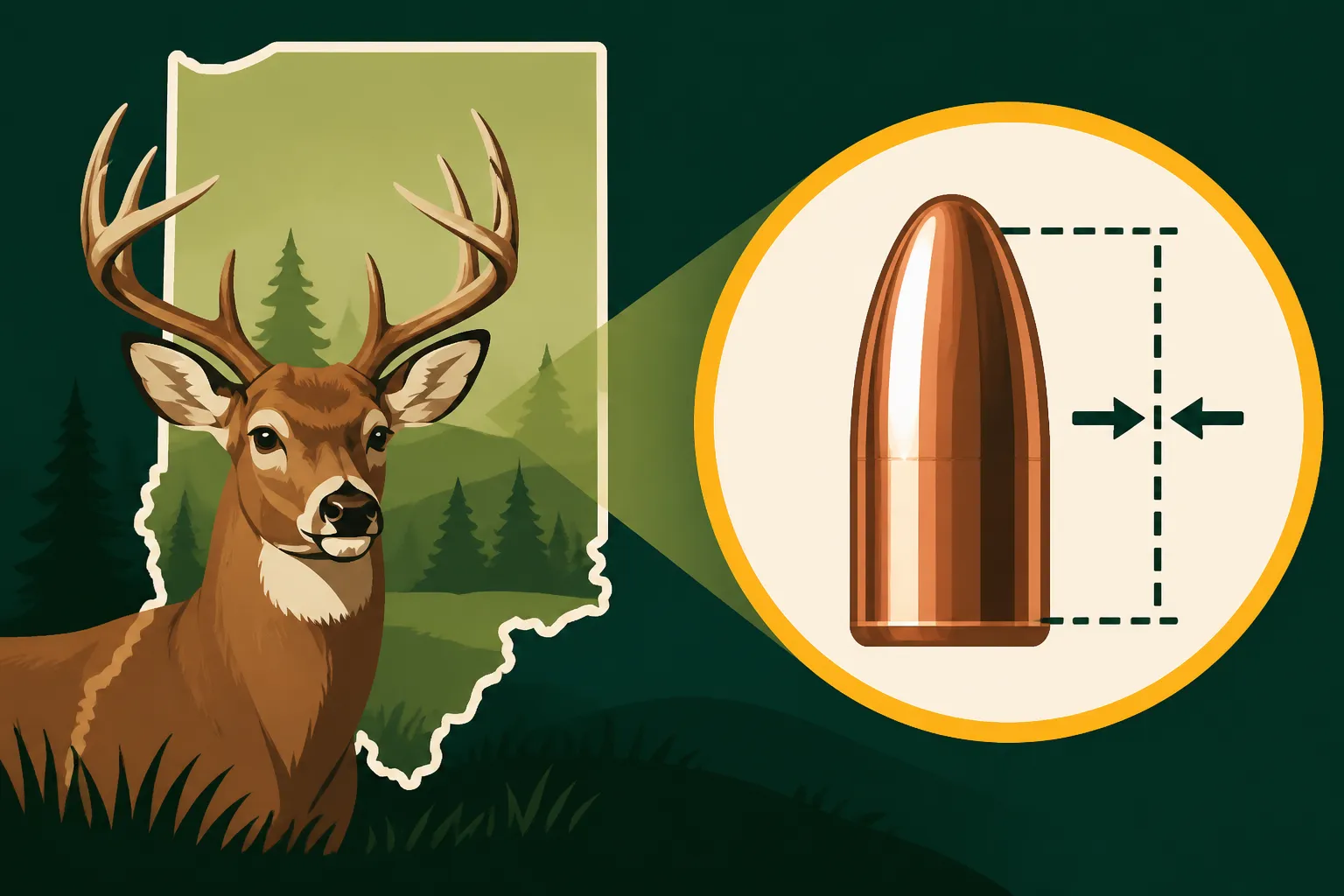
The core of the new law centers on a single, clear requirement: a minimum bullet diameter of 0.243 inches (or 6mm). This means any centerfire rifle cartridge that fires a bullet with a diameter of .243 inches or larger is now legal for deer hunting in Indiana. This is a crucial distinction from the old rules that focused on case shape and specific case lengths.
This seemingly small change has massive implications. It means popular calibers like the .243 Winchester, .270 Winchester, .30-06 Springfield, .308 Winchester, 6.5 Creedmoor, and many others, are now perfectly legal for taking deer in Indiana. This simplifies equipment choices for hunters and allows them to use rifles they may already own for hunting in other states, or to purchase new rifles with confidence that they will comply with Indiana law. Understanding this new minimum is key to navigating the new landscape of Indiana's New Statewide Rifle Rules.
Decoding the 0.243 Inch Minimum Bullet Diameter
The transition from a complex straight-wall cartridge rule to a simple minimum bullet diameter of 0.243 inches has been a breath of fresh air for Indiana hunters. However, like any new regulation, it's important to understand exactly what that 0.243-inch minimum means in practice, and how it impacts your choice of ammunition and firearms. This change simplifies things immensely, but a clear understanding is still paramount to ensure you're hunting legally and ethically.
Many hunters are now taking advantage of this clarity to upgrade their gear or rethink their approach to hunting certain areas, like considering new tactics for Hunting Northern Indiana Farmland Deer where longer shots might be possible, or ensuring their rifle is properly zeroed for mixed distances, a topic covered in Sighting In a Centerfire Rifle for Indiana Woods.
What Exactly Does 0.243 Inches Mean?
When the law specifies a minimum bullet diameter of 0.243 inches, it's referring to the actual measurement across the widest part of the projectile itself, not the cartridge case. This is a standard measurement in the firearms industry, often expressed in fractions of an inch or in millimeters. For example, a 6mm bullet is typically 0.243 inches in diameter. This means cartridges like the .243 Winchester (which fires a .243-inch bullet) are now legal, as are any cartridges firing a larger diameter bullet.
This minimum diameter criterion is quite common in many other states for deer hunting. It's generally considered the smallest practical and ethical bullet diameter for cleanly taking deer-sized game, assuming proper bullet construction and shot placement. The shift to this metric signals a move towards nationally recognized standards of ethical hunting rather than localized safety concerns about projectile travel distances, which are largely addressed through safe hunting practices regardless of caliber.
Distinguishing Bullet Diameter from Caliber and Weight
It's easy to get confused by firearm terminology, so let's clarify the difference between bullet diameter, caliber, and bullet weight, especially in the context of the new Indiana law.
- Bullet Diameter: This is the actual physical measurement of the bullet across its widest point, expressed in inches (e.243, .308, .277) or millimeters (6mm, 7mm, 7.62mm). The new Indiana law focuses exclusively on this measurement: minimum 0.243 inches.
- Caliber: This term is often used interchangeably with bullet diameter, but it technically refers to the nominal internal diameter of a gun barrel or the approximate diameter of a bullet. For instance, a ".30-caliber" rifle fires a bullet that is approximately .30 inches in diameter (specifically .308 inches for most US cartridges). A "6.5mm caliber" rifle fires a bullet that is approximately 6.5mm in diameter (often .264 inches). While related, "caliber" can be less precise than the exact bullet diameter stated in the law.
- Bullet Weight: This refers to how much the bullet weighs, typically measured in grains (gr). For example, a .308 Winchester cartridge might fire a 150-grain, 165-grain, or 180-grain bullet. Bullet weight is crucial for ballistic performance (trajectory, energy, penetration) but is not a factor in the Indiana law's minimum diameter requirement. As long as the bullet diameter is 0.243 inches or greater, the bullet's weight can vary based on your hunting preferences and specific cartridge.
| Caliber Name | Nominal Bullet Diameter (inches) | Meets Indiana 0.243" Minimum? | Common Bullet Weights (grains) | Notes |
|---|---|---|---|---|
| .223 Remington | 0.224 | NO | 55-77 | Too small; generally considered for varmints, not deer in most states. |
| .243 Winchester | 0.243 | YES | 80-100 | Legal and a popular choice for deer, especially with lighter recoil. |
| 6mm Creedmoor | 0.243 | YES | 80-108 | Modern 6mm option, gaining popularity. |
| 6.5 Creedmoor | 0.264 | YES | 120-147 | Excellent modern deer cartridge, low recoil, good ballistics. |
| .270 Winchester | 0.277 | YES | 130-150 | Classic deer and elk cartridge, widely available. |
| 7mm-08 Remington | 0.284 | YES | 120-160 | Efficient cartridge, good for deer. |
| .308 Winchester | 0.308 | YES | 150-180 | Very popular, versatile, effective on deer. |
| .30-06 Springfield | 0.308 | YES | 150-200+ | American classic, highly versatile for all North American game. |
| .350 Legend | 0.357 | YES | 145-280 | Formerly popular straight-wall, still legal and effective. |
| .450 Bushmaster | 0.452 | YES | 250-300 | Formerly popular straight-wall, known for significant knockdown power. |
| .50 Beowulf | 0.500 | YES | 300-400 | Large caliber, generally used for specialty AR platforms. |
Popular Rifle Calibers Under the New Indiana Law
With the passage of Senate Bill 280, Indiana hunters now have a dramatically expanded list of legal rifle calibers for deer hunting. This change brings Indiana in line with much of the rest of the country, allowing for a wider selection of firearms that many hunters may already own or prefer. No longer are you strictly limited to straight-wall cartridges, opening up a world of versatile and effective options for both new and seasoned hunters.
This newfound freedom allows hunters to select a rifle setup that is truly optimized for their personal preferences and the specific conditions they encounter in Indiana's diverse hunting grounds, from the open fields of the north to the dense timber of the Hoosier National Forest. Whether you're interested in the modern efficiency of the 6.5 Creedmoor or the timeless power of the .30-06, there's now a legal caliber that fits your hunting style.
Excellent Choices That Now Meet the Standard
The 0.243-inch minimum bullet diameter means a host of tried-and-true rifle calibers are now perfectly legal and highly effective for deer in Indiana.
- 0.243 Winchester: As the namesake implies, this caliber fires a .243-inch bullet, making it perfectly legal. It's a fantastic choice for deer due to its flat trajectory, moderate recoil, and excellent accuracy. It's especially popular for younger hunters or those sensitive to recoil, while still delivering plenty of punch for whitetails.
- 6.5 Creedmoor: This modern darling of the shooting world fires a .264-inch bullet, well above the minimum. The 6.5 Creedmoor is renowned for its mild recoil, exceptional accuracy, and ballistic efficiency, making it a stellar choice for a wide range of hunting scenarios, from open fields to timber. It offers a great balance of performance and shootability.
- 0.270 Winchester: A classic big game cartridge, the .270 Winchester fires a .277-inch bullet. It's known for its flat trajectory and plenty of power for deer and even larger game. It's a versatile choice that has been proving its worth in hunting camps for generations and remains a top-tier option.
- 0.308 Winchester: Firing a .308-inch bullet, the .308 Winchester is incredibly popular and for good reason. It's compact, efficient, offers moderate recoil, and is highly effective on deer. Ammunition is widely available, and it's suitable for various rifle platforms, including bolt-actions and AR-10 style rifles.
- 0.30-06 Springfield: The quintessential American hunting cartridge, the .30-06 Springfield also fires a .308-inch bullet. It offers a significant power advantage over the .308, making it suitable for any deer in Indiana and even larger North American game. It does have more recoil, but its versatility and performance are legendary.
These are just a few of the many excellent choices now available. Hunters can also consider 7mm-08 Remington, .25-06 Remington (firing a .257-inch bullet), or even the powerful .300 Winchester Magnum for those who prefer more horsepower. The key is that as long as the bullet diameter is .243 inches or greater, it's fair game. This opens up discussions like those found in Rifle Setups for Indiana Deer Hunting to a much broader range of options.
Still-Legal Straight-Wall Options and Their Continued Relevance
While the new law has opened the door to bottlenecked rifle cartridges, it's important to remember that the straight-wall cartridges that were formerly mandatory are still perfectly legal to use. Many hunters have invested in firearms chambered in these calibers and are quite happy with their performance, and there's no reason to abandon them if they suit your needs.
- 0.450 Bushmaster: This powerful cartridge, firing a .452-inch bullet, remains a formidable choice for Indiana deer. It delivers substantial energy transfer and has a proven track record. For hunters who appreciate its knockdown power and relatively mild recoil in a heavier rifle, the .450 Bushmaster is still an excellent option.
- 0.350 Legend: Firing a .357-inch bullet, the .350 Legend was designed to be a low-recoil, high-performance straight-wall option. It continues to be a great choice, particularly in AR-style platforms, offering good velocity and energy for deer-sized game without punishing recoil.
- Other Pistol Calibers: Traditional straight-wall pistol calibers like the .44 Magnum (firing a .429-inch bullet) and .357 Magnum (firing a .357-inch bullet) remain legal. While their effective range is more limited compared to dedicated rifle cartridges, they can be excellent choices for close-quarters hunting in thick cover or for those who prefer the versatility of a rifle that can also use pistol ammunition.
These straight-wall options continue to provide effective and ethical means of taking deer. The new law simply adds more choices, rather than eliminating existing ones. Hunters might stick with their trusted .450 Bushmaster for public land hunts where shorter ranges are common, or opt for a .308 Winchester for more versatility. The choice is now truly yours, allowing for a more personalized approach to your hunting gear based on your specific needs and the terrain you'll be covering, such as when you are Hunting the Indiana Rut in Early November.
Practical Considerations for Indiana Deer Hunters with the New Laws
The new rifle laws in Indiana are fantastic, but simply knowing what's legal is only the first step. To be a truly effective and ethical hunter, you need to think about how these changes impact your practical approach to deer season. From zeroing your new rifle to understanding public land dynamics, there are several key considerations that will help you make the most of this expanded freedom.
This expanded range of legal rifles will undoubtedly influence hunting strategies across the state. Hunters might now feel more confident in taking longer shots on wide-open crop fields in northern Indiana or threading a bullet through a tight lane in the thick timber of the southern hills. Regardless of your chosen caliber, sound hunting practices and a deep understanding of your equipment are more important than ever.
Zeroing and Practice with Your New Caliber
One of the most critical steps after selecting a new rifle caliber is to properly zero it and practice extensively. With the ability to use calibers like the 6.5 Creedmoor or .308 Winchester, many hunters will now have rifles capable of much longer effective ranges than their previous straight-wall firearms. This potential needs to be matched with skill and confidence.
Start by zeroing your rifle at a practical distance, usually 100 or 200 yards, depending on your chosen caliber and typical hunting environment. Understand your rifle's trajectory out to your maximum ethical shooting distance. This means knowing your bullet's drop at 200, 300, and even 400 yards. Invest in a good rangefinder and learn to use it quickly and accurately. Tools like GoHunt apps often include ballistic calculators that can help you understand your rifle's performance. Consistent practice from various field positions—off-hand, kneeling, prone, or from your treestand — is vital. Don't just shoot from a bench; simulate real hunting scenarios to build muscle memory and confidence, ensuring that when the moment of truth arrives during Indiana's Firearms Deer Season, you're prepared.
Ethical Shot Placement and Bullet Performance
Regardless of how powerful your rifle is, ethical shot placement is paramount. A smaller, well-placed bullet is always more effective than a larger, poorly placed one. With the new freedom to use calibers like the .243 Winchester, some hunters might worry about its "light" reputation. However, a modern .243 with a quality bullet placed correctly is more than capable of taking deer cleanly.
Research different bullet constructions and choose one appropriate for deer. Expanding bullets, designed to mushroom upon impact, transfer energy efficiently and create a wider wound channel, leading to quick, humane kills. Understand the anatomy of a deer and aim for the vital organs (heart and lungs). Avoid "Texas heart shots" or shots at running deer unless you are absolutely certain of your ability to make an ethical kill. While the new laws make it easier to choose a rifle, they don't lessen your responsibility as a hunter to ensure a humane harvest.
Ammunition Availability and Cost
While the new law opens up more choices, it's also worth considering the practicalities of ammunition availability and cost. Many of the newly legal calibers, such as .308 Winchester, .30-06 Springfield, and .270 Winchester, are among the most common hunting cartridges in the country. This generally means they are widely available at sporting goods stores and gun shops across Indiana, even in rural areas.
In contrast, some of the more specialized straight-wall cartridges, while still legal, might have slightly less consistent availability or potentially higher costs, especially for specific loads. This isn't always the case, but it's a factor to consider, particularly if you plan on shooting a lot for practice. Before Opening Weekend Tactics for Firearms Season, make sure to secure enough ammunition for hunting and practice. Stocking up well before the season is always a good idea, as popular calibers can sometimes be hard to find close to opening day. Checking online retailers and local shops several months in advance can save you a lot of hassle and ensure you're not scrambling for essential supplies.
Public Land Regulations and Safety
Even with the new statewide rifle rules, it's crucial to remember that local regulations, especially on public land, can vary. Always check the specific rules for any state park, state forest, or Fish and Wildlife Area you plan to hunt. While the DNR has updated its statewide regulations, individual property managers might have unique requirements regarding hunting methods, firearms, or even specific safety zones. Using mapping tools, such as those integrated into GoHunt or the Indiana DNR's own apps, can help you navigate these nuances.
Furthermore, general hunting safety principles remain paramount. Always know your target and what's beyond it. Be aware of your surroundings, especially when hunting in areas that might have other hunters or hikers. The expansion of legal calibers means bullets might travel further, reinforcing the need for extreme caution and responsible shot selection. Wear appropriate blaze orange during firearms season as required by law. By combining the flexibility of the new laws with unwavering commitment to safety and ethical hunting, you can ensure a successful and enjoyable season in Indiana's diverse hunting landscapes.
Disclaimer
Please note: Hunting regulations can change. While every effort has been made to provide accurate and up-to-date information, it is the hunter's responsibility to review the most current Indiana Department of Natural Resources (DNR) hunting regulations prior to participating in any hunting activity. This guide is for informational purposes only and should not be considered legal advice.