Why Noble County Expanded the CWD Positive Area
It's incredibly frustrating, isn't it? Just when you think you've got a handle on the ever-changing landscape of Indiana deer hunting regulations, a new development comes along that shifts the boundaries and responsibilities for all of us. The detection of Chronic Wasting Disease (CWD) is a serious concern for Indiana's deer herd, and the recent expansion of the CWD positive area due to a case in Noble County has understandably left many hunters with questions. This guide aims to clear up the confusion, explaining exactly what CWD is, why the Noble County detection led to an expanded management zone, and what this means for you as an Indiana hunter moving forward.
Understanding Chronic Wasting Disease and Its Threat
For those of us who spend countless hours in the Indiana woods, the health of the deer herd is paramount. Chronic Wasting Disease represents one of the most significant threats to white-tailed deer, and frankly, it's something that keeps wildlife managers and serious hunters up at night. It's a disease that doesn't just impact a single animal; it has the potential to devastate local populations and fundamentally alter the future of deer hunting.
What is CWD and How Does It Spread?
CWD is a fatal, neurological disease that affects cervids, which include deer, elk, moose, and caribou. It's caused by abnormal proteins called prions. Unlike bacteria or viruses, prions aren't living organisms; they're misfolded proteins that cause normal proteins in the brain and nervous system to also misfold, leading to progressive degeneration. This results in symptoms like drastic weight loss (wasting), stumbling, listlessness, and other neurological signs, eventually leading to death.
The insidious nature of CWD lies in its transmission. Prions can be shed by infected animals through saliva, urine, and feces, contaminating the environment. This means that deer can contract the disease by directly interacting with an infected animal or by ingesting prions from contaminated soil, plants, or water. Carcasses of CWD-positive deer can also harbor prions for years, making proper disposal critical. What's particularly concerning is the long incubation period; a deer can be infected for months or even years without showing any outward signs, silently spreading the disease before it becomes apparent.
Why CWD is Such a Concern for Indiana Hunters
The spread of CWD is a grave concern for Indiana's hunting community because it's always fatal for the deer. There's no cure, no vaccine, and once it takes hold in an area, it's incredibly difficult to eradicate. For us hunters, this directly impacts the long-term health and sustainability of our cherished deer herd. Imagine a future where deer populations decline, where the animals you pursue are visibly sick, or where hunting opportunities become severely restricted. That's the nightmare scenario CWD presents.
Beyond the immediate impact on deer, there are broader ecological and economic implications. A healthy deer herd supports a complex ecosystem, and their decline can have ripple effects. Economically, deer hunting generates significant revenue for the state, supporting local businesses, conservation efforts, and the overall outdoor recreation industry. The thought of losing this vibrant aspect of our Indiana heritage is a tough pill to swallow. While current research suggests no known cases of CWD transmission to humans, the Centers for Disease Control and Prevention (CDC) advises caution and recommends not consuming meat from CWD-positive animals. This adds another layer of concern for those of us who rely on venison as a food source. Understanding Chronic Wasting Disease in Indiana Deer is crucial for all ethical hunters.
Indiana's Initial CWD Detection and Response
Indiana had been one of the few states in the Midwest without a confirmed CWD case for a long time, and we all hoped it would stay that way. Unfortunately, that changed, and the Indiana Department of Natural Resources (DNR) quickly swung into action to address the challenge head-on. Their proactive stance, while sometimes inconvenient for hunters, is essential in managing such a serious disease.
The First Cases and Establishing the Original Positive Area
The unfortunate news arrived in 2021 when Indiana confirmed its first-ever CWD positive deer. This initial detection occurred in LaGrange County, a part of northern Indiana known for its agricultural land and pockets of dense timber. The deer, an adult male, was discovered through the DNR's ongoing surveillance efforts, which include testing hunter-harvested deer and those found sick or deceased. Upon confirmation, the Indiana DNR acted swiftly, establishing a CWD Management Zone. This initial zone included LaGrange and Steuben counties, recognizing the high potential for deer movement between these adjacent areas.
The establishment of this zone wasn't just a lines-on-a-map exercise; it triggered a series of enhanced surveillance and management protocols. The goal was to understand the prevalence and distribution of the disease in these counties, collect as much data as possible, and implement strategies to slow or stop its spread. This included increased CWD testing efforts, public outreach, and direct communication with hunters in the affected areas.
Mandatory Testing and Carcass Movement Restrictions
One of the most immediate and impactful changes for hunters within the initial CWD Management Zone was the implementation of mandatory CWD testing. Any deer harvested in LaGrange or Steuben counties during deer seasons was required to be submitted for testing. This wasn't just a suggestion; it was a critical component of the DNR's strategy to gather enough samples to accurately assess the disease's presence and spread. Hunters were directed to specific drop-off locations or check stations where DNR staff could collect lymph node samples, which are essential for CWD diagnosis.
Accompanying the mandatory testing were strict carcass movement restrictions. To prevent the inadvertent spread of CWD prions to new areas, hunters were prohibited from moving certain parts of deer carcasses out of the CWD Management Zone. This meant that whole carcasses, brains, spinal cords, and other high-risk materials had to remain within the zone or be properly disposed of. Only deboned meat, antlers (with brain tissue removed), capes (without brain tissue), and cleaned skulls could be transported. While these rules required adjustments for many hunters, they were put in place for a vital reason: to protect the rest of the state's deer herd. You can learn more about Indiana Carcass Movement Restrictions to ensure you're always compliant.
| CWD Management Zone Rules Comparison | Original Zone (LaGrange & Steuben) | Expanded Zone (Adds Noble & DeKalb) |
|---|---|---|
| Mandatory Testing | Yes, for all harvested deer | Yes, for all harvested deer |
| Carcass Movement Restrictions | Applied to zone counties | Applied to all expanded zone counties |
| Affected Counties | LaGrange, Steuben | LaGrange, Steuben, Noble, DeKalb |
| Enhanced Surveillance | Yes | Yes |
| Hunter Education Focus | Primarily zone-specific | Broadened to include new counties |
The Noble County Incident: What Happened?
For a while, it seemed like the CWD situation in Indiana was contained to those initial two counties. Hunters in other parts of the state watched with concern, but the immediate impact wasn't widespread. Then came the news from Noble County, a game-changer that underscored just how persistent and challenging CWD can be to manage. This single detection caused a ripple effect, forcing the DNR to re-evaluate and expand its management efforts.
Detection of a CWD-Positive Deer in Noble County
In late 2023, the Indiana DNR confirmed another CWD-positive deer, this time an adult male harvested in Noble County. This wasn't just another number; it was a significant event because Noble County sits adjacent to the original CWD Management Zone but was not initially included. The deer was harvested by a hunter during the firearms season and submitted for testing as part of the DNR's ongoing statewide surveillance program. Every year, even outside the CWD zones, the DNR collects thousands of samples to monitor for the disease, and this system proved its value by catching the Noble County case.
The confirmation of CWD in Noble County was particularly concerning because it indicated that the disease had jumped the established boundary. While deer are free-ranging animals and can travel considerable distances, a confirmed case outside the initial zone signaled a need for a broader approach. It demonstrated that even with strict management, the disease could spread, often silently, within the deer population, making proactive measures all the more critical for the health of our deer and the longevity of Indiana's Firearms Deer Season.
How a Single Case Triggers Zone Expansion
When a CWD-positive deer is detected outside an existing management zone, the Indiana DNR doesn't just react; they follow a carefully considered scientific protocol. The decision to expand the CWD positive area isn't made lightly, as it has direct implications for hunters and landowners. The primary driver for expansion is the understanding of deer biology and disease epidemiology. Deer don't recognize county lines, and a positive case in an adjacent county strongly suggests that deer movement has carried the prions beyond the previous boundary.
The DNR's rationale for expanding the zone to include Noble and DeKalb counties was based on several factors. First, the proximity of Noble County to the existing LaGrange/Steuben zone. Second, the assessment of deer movement patterns within the region, considering habitat connectivity and migration corridors. Third, the goal of enacting consistent management regulations across the new high-risk area to facilitate more effective surveillance and control. By expanding the zone, the DNR aims to contain the disease, prevent further spread, and increase the chances of early detection in a broader area, even if that means more inconvenience for us hunters.
Impact of the Expanded CWD Positive Area
The expansion of the CWD positive area isn't just a technical change; it's a very real shift in how hunting must be approached in northeastern Indiana. Hunters who previously thought they were outside the CWD management efforts suddenly found themselves within its boundaries, with new rules and responsibilities. It’s important to understand these changes completely, as non-compliance, even accidental, can lead to issues.
Geographic Changes and Affected Counties
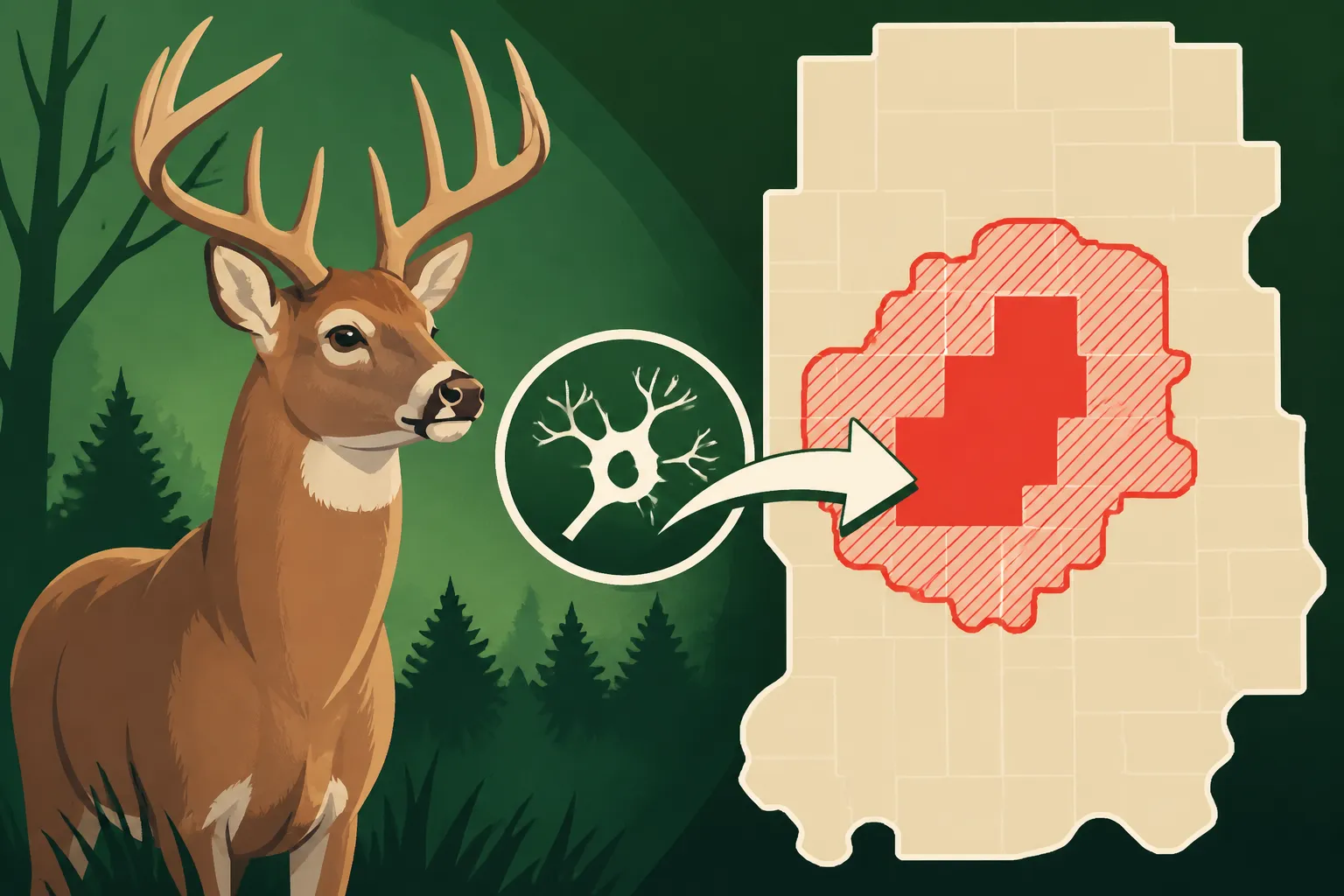
With the confirmation of CWD in Noble County, the Indiana DNR made the critical decision to expand the CWD Management Zone. This expansion now officially includes Noble County and DeKalb County, joining the previously designated LaGrange and Steuben counties. This means that four counties in northeastern Indiana are now under enhanced CWD surveillance and management protocols. This geographic shift significantly broadens the area where hunters need to be aware of and comply with specific regulations.
For hunters who primarily operate in or near Noble and DeKalb counties, this change is substantial. It means that areas where they might have hunted for years without specific CWD concerns are now subject to mandatory testing and carcass movement rules. It’s vital to consult the latest maps provided by the Indiana DNR to understand the exact boundaries. Tools like GoHunt can be invaluable here, offering updated boundary information layered over property lines and terrain features, helping you quickly identify if your hunting spot falls within the expanded zone. Knowing Which Six Counties Sit in Indiana's CWD Positive Area is a common question, and as you can see, the list keeps growing based on new detections.
New Regulations and Hunter Responsibilities
The primary regulatory changes for hunters within the expanded CWD Management Zone are consistent with what was already in place for LaGrange and Steuben counties, but they now apply to Noble and DeKalb as well. This means:
- Mandatory CWD Testing: Any deer harvested within LaGrange, Steuben, Noble, or DeKalb counties must be submitted for CWD testing. This isn't optional; it's a legal requirement designed to gather crucial data on disease prevalence.
- Carcass Movement Restrictions: The rules regarding carcass movement now apply to all four counties. Hunters cannot transport certain high-risk parts (like the brain, spinal column, or entire carcass) out of the CWD Management Zone. Deboned meat, cleaned skulls, capes, and antlers are generally permitted. This is to prevent any accidental spread of prions to previously unaffected areas of the state.
These regulations mean hunters need to plan their hunts more carefully. If you harvest a deer in one of these four counties, be prepared to get it tested and to process it appropriately if you intend to take meat or antlers outside the zone. The DNR has established designated CWD sampling stations and self-serve drop-off sites throughout the affected area to make compliance as straightforward as possible. These stations typically involve cutting out the lymph nodes from the harvested deer's jaw, a process that staff or even hunters themselves can perform following clear instructions. Understanding these regulations is key to avoiding penalties and, more importantly, to doing your part in managing CWD.
What Hunters Need to Know Moving Forward
The presence and expansion of CWD in Indiana is a stark reminder that hunting is more than just a pastime; it's an active partnership in wildlife management. As hunters, we have a vital role to play in monitoring the health of the herd and complying with regulations designed to protect it. Adapting to these new realities is essential for the future of Indiana hunting.
Navigating Mandatory Testing and Reporting
If you're hunting in LaGrange, Steuben, Noble, or DeKalb counties, submitting your harvested deer for CWD testing is a mandatory part of the process. The Indiana DNR has made significant efforts to facilitate this, providing numerous options for hunters. You can find staffed check stations during peak hunting periods, or utilize self-service drop-off locations where you can collect the lymph node sample yourself following detailed instructions. Detailed information, including maps of sampling locations and instructional videos, is readily available on the DNR's website and through their mobile app.
The process for Getting Free CWD Testing for Your Deer is straightforward and critical. Once you harvest a deer in the CWD zone, locate your nearest sampling station. If it's a self-service station, you'll be guided on how to properly collect the lymph nodes. Be sure to fill out all required information accurately, including your harvest location, date, and contact details. This data is vital for the DNR to track the disease. You'll typically receive results within a few weeks, which will inform you if your deer tested positive or negative. It's crucial to understand these results, especially regarding the safe consumption and transport of venison.
Adapting Hunting Strategies in the CWD Zone
Hunting within a CWD Management Zone often requires a shift in mindset and strategy. While the thrill of the hunt remains, there's an added layer of responsibility. One common recommendation in CWD areas is to consider increased antlerless harvest. This isn't about eliminating deer, but about managing population density. Lower deer densities can potentially reduce the rate of CWD transmission by decreasing deer-to-deer contact and environmental contamination. This strategy can often align with opportunities for filling Indiana Bonus Antlerless Tag Purchase Rules in applicable areas.
Beyond population management, hunters should remain vigilant for any signs of sick deer. If you observe a deer exhibiting CWD-like symptoms (extreme weight loss, listlessness, neurological issues, excessive salivation), do not harvest it if possible. Instead, report the sighting to the Indiana DNR immediately, noting the exact location and time. This information is invaluable for surveillance efforts. Also, always remember to practice good field hygiene. Wear gloves while field dressing, and properly dispose of all high-risk parts within the CWD zone. Utilizing resources like GoHunt can help you scout and plan your hunt more effectively, ensuring you're aware of boundaries and regulations specific to your hunting area.
Staying Informed and Contributing to CWD Management
The CWD situation is dynamic, and regulations can change. It's paramount for all Indiana hunters, especially those in or near the expanded CWD Management Zone, to stay informed. Regularly check the official Indiana DNR website for the latest updates, maps, and regulatory changes. Subscribe to their newsletters or follow their social media channels for real-time announcements. Platforms like GoHunt also often integrate these regulatory updates, providing another convenient way to access current information.
Ultimately, CWD management is a collaborative effort, and hunters are at the forefront. By complying with mandatory testing and carcass movement restrictions, reporting sick deer, and adapting your hunting practices, you are directly contributing to the long-term health of Indiana's deer herd. Your commitment to ethical hunting and responsible stewardship is our best defense against this formidable disease. Remember, every action we take, from proper field dressing to carcass disposal, plays a role in protecting our wildlife heritage.
Disclaimer
Please be aware that hunting regulations, including those pertaining to Chronic Wasting Disease, can change. This guide is intended for informational purposes based on current knowledge. Always consult the most up-to-date official regulations published by the Indiana Department of Natural Resources (DNR) before participating in any hunting activities.