The Indiana Nonresident Deer Bundle
Hunting in a new state can feel like navigating a maze, especially when it comes to understanding all the different licenses and tags. For nonresident deer hunters looking to experience the Hoosier State's incredible whitetail opportunities, figuring out the most economical and straightforward way to get properly licensed is often the first, and sometimes most frustrating, hurdle. This comprehensive guide will break down everything you need to know about the Indiana Nonresident Deer Bundle, helping you understand its benefits, costs, and how it fits into your hunting plans so you can focus on the woods, not the paperwork.
Understanding Indiana's Nonresident Deer Bundle
Indiana offers a variety of hunting licenses, and for out-of-state deer hunters, the "Nonresident Deer Bundle" is often the most practical and cost-effective solution. It’s designed to simplify the process, giving you the core components you need to pursue whitetails across Indiana's diverse landscapes, from the rolling hills of the south to the flat farmlands up north.
What the Bundle Actually Includes
The Indiana Nonresident Deer Bundle, as of the most recent seasons, is more than just a single tag; it's a package deal. When you purchase this bundle, you're getting three essential items rolled into one convenient transaction:
- The Annual Nonresident Hunting License (Base License): This is your fundamental permission slip to hunt any legal game species in Indiana. Think of it as your entry ticket to the state's hunting grounds. Without this base license, no other specific game tags are valid. It's the foundation upon which all your other hunting privileges rest.
- One Antlered Deer Tag: This tag allows you to harvest one antlered deer during any open deer season, regardless of whether you're using archery, firearms, or muzzleloader equipment. This flexibility is a huge advantage, letting you adapt your hunting method to the season or your personal preference.
- One Antlerless Deer Tag: Similar to the antlered tag, this tag allows you to take one antlerless deer (a doe) during any open deer season. This tag is also versatile, valid for archery, firearms, or muzzleloader seasons.
It’s crucial to understand that these two deer tags (one antlered, one antlerless) are "any method" tags that can be used during their respective open seasons. They are not specific to archery, firearms, or muzzleloader seasons in terms of the type of tag, but rather the method you choose to use when the season allows. For instance, if you're an archer from Ohio planning to hunt the early archery season, you can use these tags with your bow. If you also plan a trip during Indiana's Firearms Deer Season, you can use the same tags with your rifle, provided they haven't been filled.
Why the Bundle is the Go-To for Nonresidents
For many nonresident hunters, the bundle simply makes the most sense. The primary reason is often cost savings, but convenience plays a huge role as well. Imagine trying to piece together all the necessary licenses individually from another state; it can be confusing and lead to unnecessary expenses or even missed opportunities if you accidentally overlook a requirement.
Let's consider a hypothetical hunter from Michigan, planning a trip to the Hoosier National Forest for a week in October and then a return trip in November for the firearms opener. If this hunter were to purchase everything separately, they would need the Nonresident Annual Hunting License, a Nonresident Deer Archery Tag (for an antlered or antlerless deer, or both), and potentially a Nonresident Deer Firearms Tag. Individually, these costs add up quickly. The bundle wraps the essential base license and those two crucial deer tags into a single, discounted price. This allows our Michigan hunter to cover both an antlered and an antlerless deer for a full season of opportunity, whether they're flinging arrows or shooting a rifle. It eliminates the guesswork and ensures you have the fundamental tags covered.
Moreover, the versatility of the tags included means you're not locked into a specific weapon type if your plans change or you want to maximize your time in the woods during different phases of the season. Maybe you fill your antlered tag during the early archery season, but still want to pursue a doe with a rifle during the later part of Indiana's Firearms Deer Season. With the bundle’s antlerless tag, you’re set.
Cost and Purchase Logistics
Understanding the exact cost and the steps involved in purchasing your Indiana Nonresident Deer Bundle is critical for a smooth hunting trip. There's nothing worse than showing up ready to hunt only to find out you've missed a step in the licensing process.
Breaking Down the Price Tag
As mentioned, the Indiana Nonresident Deer Bundle offers a clear financial advantage over buying its components separately. Let’s look at the typical breakdown, using recent season pricing as an example:
| Item | Individual Cost (Approx.) | Included in Bundle? |
|---|---|---|
| Annual Nonresident Hunting License | $90.00 | Yes |
| Nonresident Antlered Deer Tag (any method) | $100.00 | Yes |
| Nonresident Antlerless Deer Tag (any method) | $100.00 | Yes |
| Total Individual Purchase Cost | $290.00 | N/A |
| Nonresident Deer Bundle Cost | $240.00 | Yes |
| Savings with Bundle | $50.00 |
Note: Prices are approximate and subject to change by the Indiana Department of Natural Resources (DNR). Always check the official Go Outdoors Indiana website for the most current information.
As you can see, the bundle saves you a significant chunk of change. This $50 savings could go towards gas for your trip, new broadheads, or even a nice meal after a successful hunt. It’s a straightforward way for the Indiana DNR to encourage nonresident participation while also simplifying the process for hunters. If you plan to harvest at least one antlered and one antlerless deer, and need the base hunting license, the bundle is undeniably the most economical choice.
Navigating the Go Outdoors Indiana System
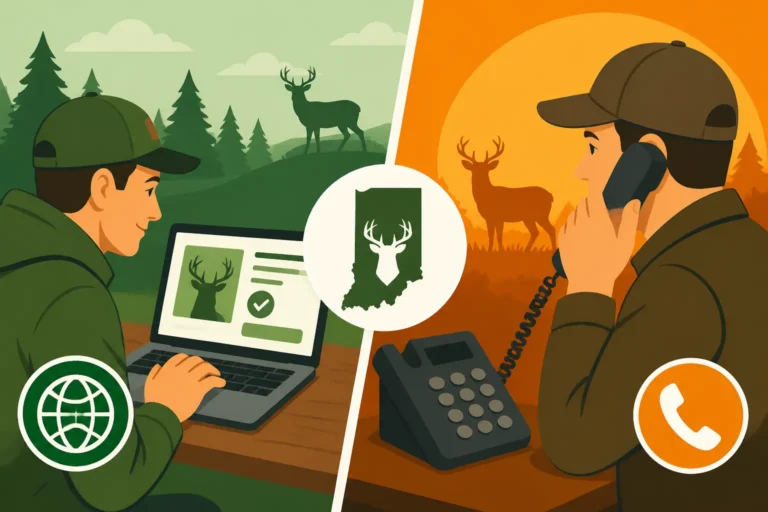
Purchasing your Nonresident Deer Bundle is a fairly simple process thanks to the state's online licensing system, Go Outdoors Indiana. This platform is your one-stop shop for all things licenses and permits.
Here’s a step-by-step guide to help you through the process:
- Visit Go Outdoors Indiana: Head to the official Go Outdoors Indiana website. You can usually find it with a quick search for "Indiana DNR licenses."
- Create an Account (or Log In): If you're a first-time user, you'll need to create a customer profile. This typically involves providing personal information like your name, address, date of birth, and possibly a hunter education number (more on that later). If you've purchased licenses in Indiana before, simply log in with your existing credentials.
- Select Licenses: Once logged in, navigate to the "Purchase Licenses" or "Buy Licenses" section. You'll see a list of available licenses.
- Find the Nonresident Deer Bundle: Look for the specific "Nonresident Deer Bundle" option. It should clearly state what it includes. Add it to your cart.
- Review and Checkout: Double-check your cart to ensure you've selected the correct bundle. The system will guide you through the payment process. You'll typically pay with a credit or debit card.
- Print or Save Your License: After a successful transaction, you'll usually be given the option to print your license or save a digital copy to your phone. Indiana allows you to carry proof of your license on your phone, which is incredibly convenient for hunters out in the field. Having a backup physical copy, however, is never a bad idea, especially if you hunt areas with spotty cell service. For hunters who like to keep all their state-specific regulations and license info organized, tools like
GoHuntcan be incredibly helpful for managing details and staying compliant.
Remember that Indiana's license year runs from April 1st to March 31st. So, if you're planning a deer hunt in the fall, make sure you're purchasing a license that's valid for the current hunting year. If you find yourself having trouble or have specific questions about your purchase, don't hesitate to contact the Indiana DNR directly; their customer service is generally very helpful.
Deer Tags Included in the Bundle
The beauty of the Nonresident Deer Bundle lies in the flexibility it provides. It's not just about saving money; it's about giving you options for how and when you want to pursue deer within the legal framework of Indiana's seasons.
Archery, Firearms, and Muzzleloader Options
The antlered and antlerless tags included in your bundle are truly versatile. This means you aren't forced to choose a specific weapon type when you buy the bundle itself. Instead, these tags can be applied to deer harvested during any of the open deer seasons – archery, firearms, or muzzleloader – as long as you're using legal equipment for that specific season.
Let's imagine you're an avid bowhunter and plan to spend the entire month of October in Indiana. You can use your bundle's antlered and antlerless tags with your archery gear. Maybe you tag out early on both, or perhaps you only fill your antlered tag. Then, your buddy invites you back for the peak of Hunting the Indiana Rut in Early November, which coincides with the firearms season. You can still use your remaining antlerless tag with your rifle during that season. This flexibility prevents you from needing to purchase separate "archery-specific" or "firearms-specific" tags for your first two deer.
This is particularly useful for hunters who enjoy pursuing deer through various methods or whose travel plans might be fluid. You might start with a crossbow during the early archery season, then switch to a modern sporting rifle for Indiana's Firearms Deer Season, and even consider a traditional muzzleloader for Muzzleloader Deer Hunting in Indiana. The bundle’s tags seamlessly transition with you through these methods, covering your first antlered and first antlerless deer without extra purchases for those primary tags. If you decide you want more tags beyond the two included in the bundle, you would then purchase individual Archery, Firearms, or Muzzleloader antlered or antlerless tags as needed.
Antlered Versus Antlerless Tags
Understanding the distinction and utility of the antlered and antlerless tags is crucial for effective deer management and successful hunting.
- Antlered Deer Tag: This tag is for a male deer with at least one antler that is three inches or longer. Indiana has specific regulations regarding antler size and points, but the general rule for an antlered deer is a visible antler of at least three inches. Harvesting an antlered deer is often the primary goal for many hunters, and this tag allows you to do just that.
- Antlerless Deer Tag: This tag is for any deer without antlers, typically a doe. Harvesting antlerless deer is vital for population control and herd health. In many areas, especially those near agricultural fields or suburban developments, reducing the doe population helps prevent overbrowsing, vehicle collisions, and the spread of disease.
The bundle provides one of each, offering you the opportunity to take both an antlered buck and an antlerless doe. This aligns with responsible wildlife management practices. For instance, if you’re hunting near a farm field in northern Indiana, filling your antlerless tag can be a valuable contribution to reducing crop damage. If you’re deep in the Hoosier National Forest, harvesting an antlered buck might be your primary objective. The bundle ensures you have the tags to pursue both types of deer, giving you maximum flexibility to meet your personal hunting goals while contributing to the state's wildlife management efforts.
It's important to keep track of which tag you use for which deer. Once you harvest an animal, you must immediately validate and tag it according to Indiana DNR regulations. This typically involves completing the tag information and attaching it to the deer before moving it.
Maximizing Your Hunt with the Nonresident Bundle
Having the Nonresident Deer Bundle in hand is just the first step. To truly make the most of your Indiana deer hunting experience, you need to think strategically about season timing, scouting, and adhering to reporting requirements.
Strategic Season Planning
The inherent flexibility of the bundle's tags allows for a highly strategic approach to your hunting season. With tags valid for archery, firearms, and muzzleloader seasons, you can adapt your plans to take advantage of different deer behaviors and hunting conditions throughout the fall and early winter.
- Early Archery Season: Consider using your tags during the early archery season when deer patterns are often tied closely to food sources like acorns. If you’ve done your Scouting Indiana Public Land Before Season and located a prime white oak flat, an early archery tag can put you on a feeding deer before hunting pressure escalates.
- The Rut: The middle to end of October and early November is prime time for the whitetail rut in Indiana. Having flexible tags means you can schedule your trip around this period, when bucks are most active and vulnerable, cruising for does. This is often when hunters capitalize on their antlered tags.
- Late Season: Don’t discount the late season, especially in December and January. While colder, deer are often concentrated on specific food sources, and snow can reveal fresh tracks. Your antlerless tag can be particularly effective during this period, helping you fill the freezer when hunting pressure has waned. For detailed tactics during this period, you might find valuable information in our guide on Hunting the Late-Season January Lull.
By purchasing the bundle, you're not just buying tags; you're investing in a season of possibilities. It frees you up to choose your hunting dates based on optimal conditions, personal availability, and deer behavior, rather than being restricted by tag type. For example, a nonresident hunter might plan a two-week trip, starting with archery for a week, then transitioning to firearms for the second week, knowing their bundle tags are valid for both.
Understanding Bag Limits and Reporting
While the bundle provides you with specific tags, it’s vital to understand Indiana's overall bag limits and mandatory reporting requirements to stay legal and ethical.
- Statewide Bag Limits: Indiana’s general statewide bag limit allows a hunter to take one antlered deer per license year. The antlered tag in your bundle covers this. For antlerless deer, the statewide bag limit is often generous, and you can usually purchase additional antlerless tags beyond the one included in your bundle. These additional tags are usually method-specific (e.g., "Archery Antlerless Tag" or "Firearms Antlerless Tag") and are purchased separately from the bundle. Always check the current Indiana DNR Hunting and Trapping Guide for precise bag limits, as these can vary by county or specific Deer Reduction Zones.
- Mandatory Reporting: This is non-negotiable. Every deer harvested in Indiana, regardless of method or tag type, must be reported to the Indiana DNR within 48 hours of harvest. Failing to report a deer is a violation. The good news is that reporting is incredibly easy thanks to modern technology. You have a few options:
- Online: The Go Outdoors Indiana website has a dedicated harvest reporting portal.
- DNR Mobile App: Indiana DNR offers a fantastic mobile app (available on iOS and Android) that allows you to report your harvest directly from your smartphone, often right from the field. This is the most popular method for many hunters and an essential tool for any nonresident.
- Phone: You can also report via phone, but the online and app methods are generally quicker and more convenient.
When reporting, you'll need information from your tag (license number, tag number) and details about your harvest (date, time, county, sex of the deer, antler points if applicable). Accurate and timely reporting is crucial for the DNR to monitor deer populations, manage herd health, and make informed decisions about future hunting seasons. Tools like GoHunt can also integrate with your state's reporting mechanisms, making it easy to comply with regulations.
Important Considerations for Nonresident Hunters
Beyond the licenses themselves, there are a few other critical aspects that nonresident hunters need to be aware of to ensure a safe, legal, and enjoyable experience in Indiana.
Hunter Education and Blaze Orange Requirements
Coming from out of state, it’s easy to assume regulations are uniform across state lines. However, requirements for hunter education and visibility can differ significantly.
- Hunter Education: Indiana requires anyone born after December 31, 1986, to complete a hunter education course to hunt legally. The good news for nonresidents is that Indiana reciprocates hunter education certifications from other states. This means if you completed a certified hunter education course in your home state (or any other state or Canadian province), your certification is recognized in Indiana. You'll typically need to provide proof of this certification when purchasing your first Indiana hunting license. If you've been hunting for years and completed a course decades ago, make sure you know where to find your certification number or card. For those who still need to complete a course, options like taking Indiana Hunter Education Online are available.
- Blaze Orange/Pink: During specific hunting seasons, especially firearms season, Indiana has strict blaze orange (or pink) requirements for visibility and safety. All hunters, including archers and muzzleloader hunters, must wear outer garments of solid blaze orange or pink. This means a hat AND an outer garment, such as a vest or jacket. The specific amount required is 500 square inches above the waist, including a visible head covering. This rule applies even to archery hunters when firearms seasons are open concurrently, which is often the case during late archery. Always check the current regulations, but a good rule of thumb is to wear it anytime firearms are permitted in the woods. This is especially important for safety on Public Hunting Land in Indiana where many hunters might be afield.
It's not just about avoiding a ticket; it's about staying safe in the woods. Make sure you pack appropriate blaze orange or pink gear, especially if your hunt overlaps with the popular firearms season.
CWD Zone Rules and Carcass Movement
Indiana, like many states, is actively managing Chronic Wasting Disease (CWD), a fatal neurological disease affecting deer and other cervids. As a nonresident, it's particularly important to be aware of the CWD Positive Area and the rules that come with it.
- Indiana's CWD Positive Area: Certain counties in northeastern Indiana have been designated as a CWD Positive Area, where the disease has been detected in wild deer. These counties include LaGrange, Steuben, Noble, DeKalb, Allen, and Whitley. If you plan to hunt in or near these areas, there are enhanced surveillance efforts and specific rules you must follow. You can find detailed information on Indiana's Chronic Wasting Disease Positive Area to understand which counties are impacted.
- Mandatory Testing: In the CWD Positive Area, deer harvested during specific seasons (often the opening weekend of firearms season) may be subject to mandatory CWD testing. Hunters might be required to present their deer at designated CWD sampling stations. These stations are free and play a vital role in monitoring the disease's spread. Even if testing isn't mandatory for your specific harvest, voluntary testing is encouraged and often free at these stations.
- Carcass Movement Restrictions: This is perhaps the most critical rule for nonresident hunters. To prevent the spread of CWD to unaffected areas, there are strict rules about moving deer carcasses out of Indiana’s CWD Positive Area. Generally, you cannot transport whole carcasses, spinal columns, brains, or lymph nodes out of these counties. What can be moved are:
- Deboned meat
- Antlers attached to a clean skull plate (no brain tissue)
- Clean hides
- Finished taxidermy products
This means if you harvest a deer in one of the CWD Positive Area counties, you must either process it down to legal components within that county or region before leaving, or utilize a local meat processor or taxidermist. This can significantly impact your hunting trip logistics. It’s a good idea to research local processors or taxidermists in the area you plan to hunt if it falls within the CWD zone. Planning ahead can save you a huge headache and ensure you comply with Indiana Carcass Movement Restrictions. Ignorance of these rules is not an excuse, and violations can lead to serious penalties. Stay informed, stay prepared, and help Indiana manage this serious wildlife disease.
Disclaimer
The information provided in this article is for general guidance only and is based on typical regulations. Hunting laws and regulations in Indiana are subject to change by the Indiana Department of Natural Resources (DNR). It is the hunter's sole responsibility to consult the most current Indiana Hunting and Trapping Guide and any official DNR updates before engaging in any hunting activity. Always confirm season dates, bag limits, license requirements, and any special zone restrictions directly with the Indiana DNR.