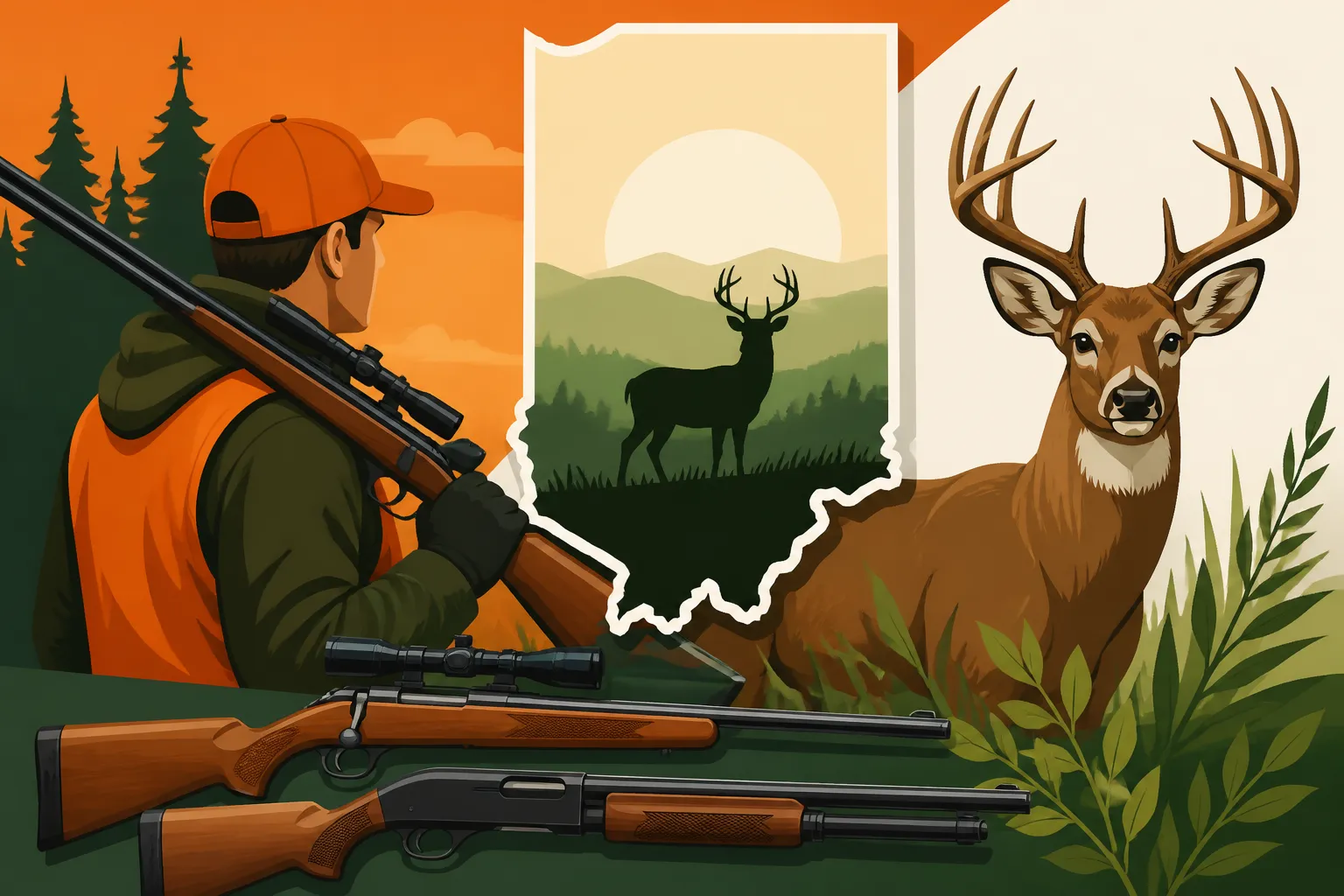
Indiana Legal Firearms for Deer Hunting
For years, Indiana deer hunters faced a unique set of restrictions when it came to their choice of firearms, often leading to frustration and confusion, especially for those new to the state or seasoned hunters accustomed to more liberal regulations elsewhere. The days of being strictly limited to shotguns, muzzleloaders, handguns, and very specific straight-wall cartridge rifles are behind us. This comprehensive guide will walk you through the exciting changes to Indiana's firearm laws for deer hunting, clarifying what's legal now and how you can best equip yourself for success in the Hoosier State's diverse deer woods.
Understanding Indiana's Evolving Firearm Regulations
The landscape of deer hunting in Indiana has seen some pretty significant shifts over the last few years, particularly regarding the firearms we can legally carry into the field. If you’ve been hunting here for a while, you know the conversations at deer camp often revolved around what cartridges were "straight-wall" enough or why we couldn't just use a regular rifle like folks in other states. It was a rule set that felt, to many, a bit archaic and limiting.
The Historic Straight-Wall Cartridge Mandate
Before the recent changes, Indiana's firearm regulations for deer hunting were notably restrictive. The core of this restriction was the "straight-wall cartridge" mandate for rifles. This rule essentially meant that if you wanted to hunt deer with a rifle, the cartridge case had to be straight-walled, meaning it didn't taper from the base to the mouth of the case. Think of cartridges like the .45-70 Government, .44 Magnum, .350 Legend, or .450 Bushmaster. These were the darlings of Indiana deer hunters for a long time, celebrated for their effectiveness within the legal parameters.
The reasoning behind this mandate was often cited as a safety measure, particularly given Indiana's relatively flat terrain and the close proximity of populated areas in many parts of the state. The idea was that straight-wall cartridges, typically lower velocity and heavier bullets, would pose less risk of long-range over-penetration compared to high-velocity, bottlenecked rifle cartridges common in other states. For hunters, this meant a specific gear selection. You couldn’t just grab your grandpa’s .30-06 or a popular .270 Winchester and head to the woods. This often led to hunters investing in specialized firearms or sticking to shotguns, which were, and still are, highly effective. The frustration was real, especially for those who felt the rule unnecessarily constrained their choice of hunting tools, making them feel like second-class citizens in the wider hunting community. Many also felt that the "safety" argument was a bit of a stretch when modern slug guns could achieve similar ranges to some straight-wall rifles.
Senate Bill 280 and the Statewide Rifle Rule
Then came Senate Bill 280. This piece of legislation truly revolutionized deer hunting in Indiana, and for many, it was a long-awaited change. Going into effect on July 1, 2023, SB 280 fundamentally altered the game by eliminating the archaic case length restrictions for centerfire rifles. What this means for you, the Indiana deer hunter, is a massive expansion of legal firearm options. The requirement for a straight-wall cartridge is gone. Poof. Vanished.
The impact of this change is profound. No longer are hunters confined to a select list of straight-wall options. Now, almost any common centerfire rifle cartridge that meets the minimum bullet diameter requirement (which we’ll get to in a moment) is fair game. This opens the door to a huge array of calibers that many hunters already own or have always wanted to use. We’re talking about the classics, the workhorses, the calibers that have taken deer across North America for decades. This change finally puts Indiana on par with many other states regarding rifle regulations, offering hunters more flexibility and choice. If you want a deeper dive into how this specific legislation impacted us, you can find more information in our guide on What Senate Bill 280 Changed for Rifle Hunters.
Currently Legal Centerfire Rifle Cartridges
With the shackles of straight-wall cartridges finally off, Indiana hunters can now consider a vast new world of centerfire rifle calibers. This freedom allows for a more tailored approach to hunting, matching the firearm to the specific terrain, shot distances, and personal preferences.
Embracing Traditional Deer Calibers
The most exciting aspect of the new law is the ability to use many of the traditional, bottlenecked rifle cartridges that have been mainstays in deer camps across the country. We’re talking about calibers that offer flatter trajectories, higher velocities, and excellent terminal performance on whitetails.
Consider some of these popular choices:
- ** .30-06 Springfield:** A timeless classic, incredibly versatile, capable of handling anything in North America, including our Indiana whitetails. It offers great bullet weight options and plenty of power, though with a bit more recoil.
- ** .270 Winchester:** Another iconic cartridge, known for its flat shooting capabilities and moderate recoil. It’s an excellent choice for open fields and longer shots, but still performs well in the timber.
- ** .308 Winchester:** A compact powerhouse, offering similar performance to the .30-06 but in a shorter action. It's incredibly popular due to its accuracy, manageable recoil, and wide availability of ammunition.
- 6.5 Creedmoor: This modern darling has taken the hunting and shooting world by storm. Known for its mild recoil, exceptional accuracy, and ballistic efficiency, it’s a fantastic choice for deer hunters who appreciate precision and a comfortable shooting experience.
- 7mm-08 Remington: A fantastic cartridge that delivers great ballistic performance with less recoil than many larger calibers, making it a favorite for many, especially youth and smaller-framed hunters.
When thinking about these calibers, consider the terrain you typically hunt. If you're chasing deer across the sprawling, open ridges and valleys of Southern Indiana hill country, a flat-shooting caliber like the .270 or 6.5 Creedmoor will give you confidence for those potentially longer shots. On the flip side, if you're navigating the dense woodlots and fencerows of Northern Indiana farmland deer, a .308 or a classic .30-06 will still perform admirably, even if the longer range capability isn't as critical. These calibers truly shine when you need that extra reach and precision. To explore some of the top contenders in this new era, check out our guide on Best New Rifle Calibers for Indiana's Statewide Rule.
The Enduring Appeal of Straight-Wall Options
While the straight-wall mandate is no longer in effect for rifles, that doesn't mean these cartridges have suddenly become obsolete or undesirable. Far from it! Many Indiana hunters have invested heavily in firearms chambered for these cartridges and, frankly, they perform exceptionally well within the typical ranges of deer hunting in our state. There's a lot to be said for familiarity and confidence in your gear.
Cartridges like the:
- ** .350 Legend:** This newer cartridge quickly became a favorite due to its mild recoil, decent ballistics out to 200 yards, and affordability. It's still an excellent choice for many Indiana hunting scenarios.
- ** .450 Bushmaster:** Delivering a significant punch, the .450 Bushmaster is a formidable deer stopper at medium ranges. It’s popular for its power, especially in dense cover where deer might not offer a long shot.
- ** .44 Magnum:** A classic handgun cartridge adapted for rifles, the .44 Mag offers moderate recoil and is very effective at shorter ranges, particularly in brushy areas.
- ** .45-70 Government:** A venerable, hard-hitting cartridge with a long history. It’s known for its ability to anchor deer reliably, especially in heavy cover.
Many hunters will continue to use these straight-wall options for a few key reasons. First, they are often perfectly suited for the close-to-medium range encounters common in Indiana's thick timber and small woodlots. Second, the heavy, slower-moving projectiles tend to expend their energy quickly within the animal, reducing the chance of over-penetration and increasing confidence in safety for those hunting near residential areas or on smaller properties. They're still incredibly effective tools for the job. For those who appreciate the proven track record of these rounds, our article on Straight-Wall Cartridges Still Worth Considering dives deeper into why they remain a solid choice.
Important Legal Nuances for Rifles
Even with the expanded freedom, there are still a couple of critical legal points to keep in mind when selecting your deer rifle in Indiana. These aren't meant to be restrictive, but rather to ensure safety and ethical hunting practices.
First and foremost, minimum bullet diameter. The law still stipulates that the projectile used must be at least .243 inches (6mm) in diameter. This means calibers like the .223 Remington, .22-250, or similar smaller diameter cartridges are still not legal for deer hunting in Indiana, even though they are centerfire rifles. This is a common regulation in many states, ensuring that cartridges possess sufficient energy and bullet mass to humanely harvest a deer. So, while you can use your .308, you still can’t use your AR-15 chambered in .223 for deer. If you’re ever unsure, always err on the side of caution or consult the Indiana DNR regulations directly. For a full breakdown, check out Which Bullet Diameter Indiana's New Law Requires.
Secondly, there are no specific magazine capacity limits for rifles used in deer hunting in Indiana. While some states have such restrictions, Indiana does not. However, responsible hunting always dictates that you carry only the ammunition you need and maintain proper firearm control. Ethical hunting is about a clean kill, not how many rounds you can carry.
Lastly, and this goes without saying but always bears repeating, all general firearm safety rules, blaze orange requirements during certain seasons, and hunter education mandates remain firmly in place. These aren't just rules; they're fundamental principles for a safe and responsible hunting experience.
Other Legal Firearms for Indiana Deer
While centerfire rifles are the newest, most talked-about option, it's crucial to remember that they are not the only legal firearms for deer hunting in Indiana. The state has a rich tradition of hunters using shotguns, muzzleloaders, and even handguns, all of which remain perfectly viable and effective choices. In fact, depending on your hunting style, location, or personal preference, these options might still be your go-to.
Shotguns and Slug Guns
The shotgun has long been the quintessential Indiana deer hunting firearm, and for very good reason. They are incredibly effective at typical woods ranges and remain a popular choice, especially in areas with dense cover or on smaller private tracts where over-penetration with a rifle might be a concern.
- Gauge Options: The vast majority of deer hunters will opt for a 12-gauge or 20-gauge shotgun. Both are highly capable, with the 20-gauge often preferred by youth or recoil-sensitive hunters for its lighter kick while still delivering plenty of energy for deer.
- Ammunition Types: When it comes to deer, we’re talking about slugs. You have two main types:
- Rifled Slugs (or Foster slugs): These are designed to be used in smoothbore shotgun barrels. The "rifling" on the slug itself is meant to impart some spin, though their accuracy drops off significantly beyond about 75-100 yards. They are effective and widely available.
- Sabot Slugs: These are aerodynamic projectiles encased in a plastic "sabot" that falls away after leaving the barrel. Sabot slugs are designed specifically for rifled shotgun barrels, which impart true spin on the projectile, drastically improving accuracy and extending effective range out to 150-200 yards or even further with modern slug guns.
For many, a modern slug gun with a rifled barrel and a good scope is still a formidable deer hunting tool, often matching the practical range of a straight-wall rifle. If you're looking to dive deeper into these versatile tools, take a look at our guide on Shotgun Slug Guns for Indiana Deer.
Muzzleloaders
For those who appreciate tradition, a challenge, or simply want to extend their hunting opportunities, the muzzleloader remains a beloved choice in Indiana. Muzzleloaders have their own dedicated season, but are also legal to use during the general firearms season, offering flexibility.
- Types: Muzzleloaders come in various forms, from traditional flintlock and percussion rifles that harken back to pioneer days, to modern inline muzzleloaders. Inline muzzleloaders, with their more modern ignition systems and often scoped barrels, are far more popular for deer hunting today due to their ease of use, reliability, and improved accuracy.
- Projectiles: Hunters typically use either conical bullets or sabot bullets (similar in concept to shotgun sabots, but for specific rifle calibers like .50 or .54).
- The Appeal: The appeal of muzzleloading goes beyond just the hunting itself. It's about slowing down, connecting with history, and experiencing the deer woods in a different way. While they require more attention to detail in terms of loading, cleaning, and keeping powder dry, the dedicated season offers a unique opportunity to be in the woods when fewer hunters are afield. Modern muzzleloaders can be surprisingly accurate and effective out to 150 yards or more. If you're considering this traditional yet effective method, our article on Muzzleloaders for an Indiana December offers some great insights.
Handguns
Yes, you can absolutely hunt deer with a handgun in Indiana, provided you meet the specific legal requirements. This is truly a short-range affair and demands a high level of proficiency and discipline, offering a unique and often more challenging hunting experience.
The key legal stipulations for handguns in Indiana are:
- Caliber: It must be a .357 Magnum or larger. This means popular calibers like .44 Magnum, .41 Magnum, .45 Colt (when loaded to appropriate pressures for hunting), .454 Casull, and .500 S&W Magnum are all legal.
- Case Length: The cartridge case must have a minimum length of 1.16 inches or longer.
- Bullet Type: You must use expanding bullets. Full metal jacket (FMJ) ammunition is not legal for deer hunting.
Handgun hunting is not for the faint of heart. It requires excellent marksmanship, strict adherence to shot placement, and a thorough understanding of the handgun's limitations. Your effective range will be significantly shorter than with a rifle or even a slug gun, typically within 50-75 yards at most. However, for those who master it, handgun hunting offers an incredibly rewarding challenge. When you're considering a handgun setup, resources like GoHunt can be incredibly useful for checking current regulations or finding specialized holsters and ammunition designed for hunting. You might also find our specific guide on Handgun Hunting Rules in Indiana helpful for all the details.
Planning Your Hunt with the Right Firearm
Now that you understand the full spectrum of legal firearms for deer hunting in Indiana, the next step is to choose the right tool for your specific hunt. This isn't a one-size-fits-all decision; it depends heavily on where and how you intend to hunt, as well as your own skills and preferences.
Matching Your Firearm to the Terrain and Hunt Style
Indiana's diverse landscape means that what works perfectly in one region might not be the optimal choice in another. Tailoring your firearm to your hunting environment is key to success and ethical shot opportunities.
- Southern Indiana Hill Country: This region, with its steep ridges, deep hollers, and expansive timber, often presents opportunities for longer shots across valleys or down clear-cut lanes. Here, the flatter trajectories and extended range of traditional bottlenecked centerfire rifles like the .270 Winchester, .308 Winchester, or 6.5 Creedmoor can be a significant advantage. While you'll still have close encounters, having the capability for a 150-200 yard shot can be crucial. Our piece on Still-Hunting Southern Indiana Ridges offers more context on the hunting conditions here.
- Northern Indiana Farmland: In contrast, much of Northern Indiana is characterized by agricultural fields interspersed with smaller woodlots, thick fencerows, and creek bottoms. Shots here are often much closer, frequently within 100 yards. In these situations, any legal firearm—including straight-wall cartridge rifles, slug guns, or even muzzleloaders—will be highly effective. The emphasis here might be on a firearm that is quick to shoulder, handles well in thick cover, and offers good terminal performance at closer ranges. For tips on navigating this terrain, check out Hunting Northern Indiana Farmland Deer.
- Public vs. Private Land: On public lands, especially in areas with high hunting pressure, deer can be jumpy, and shot opportunities may be fleeting or at odd angles. The ability to make a quick, accurate shot with a reliable rifle is paramount. On smaller private land parcels, where houses might be closer, or property lines are critical, a shotgun with slugs, a straight-wall rifle, or a muzzleloader might still be a more prudent choice due to perceived (and sometimes real) safety advantages regarding bullet travel.
Ultimately, think about the typical shot distance you expect, the density of the cover, and any safety concerns related to your specific hunting property.
| Firearm Type | Best for Terrain Type | Typical Shot Range | Key Advantage |
|---|---|---|---|
| Centerfire Rifles (.308, 6.5 CM, .270) | Open timber, Southern hills, larger tracts | 75-300+ yards | Long-range accuracy, flat trajectory |
| Straight-Wall Rifles (.350 Legend, .450 BM) | Dense timber, Northern woodlots, medium tracts | 50-200 yards | Excellent for thick cover, moderate recoil |
| Shotgun (Slug) | Thick cover, small private parcels, brushy areas | 40-150 yards | Versatile, good for close-quarters |
| Muzzleloader | General woods, traditional hunting, extended seasons | 40-150 yards | Unique challenge, separate season, effective |
| Handgun | Very dense cover, personal challenge, extreme close range | 25-75 yards | Compact, ultimate challenge, highly skilled |
Practice and Familiarity is Key
No matter which legal firearm you choose, your proficiency with it is far more important than the specific caliber or model. A hunter who is intimately familiar with their 20-gauge slug gun and practices regularly will be far more effective and ethical than someone who buys a brand-new .30-06 and only shoots it once before opening day.
- Range Time is Non-Negotiable: Spend time at the shooting range. Get comfortable with the recoil, the trigger pull, and the sight picture.
- Zeroing at Appropriate Distances: Zero your rifle or slug gun for the distances you realistically expect to shoot. For most Indiana deer hunting, a 100-yard zero is an excellent starting point, giving you plenty of flexibility for closer and slightly longer shots. If you're planning on pushing longer distances with a rifle, understanding your bullet drop at 200 and 300 yards is crucial. Our guide on Sighting In a Centerfire Rifle for Indiana Woods offers detailed advice on this.
- Practice from Hunting Positions: Don't just shoot from a bench. Practice shooting from a kneeling position, sitting, or even standing, if those are positions you might encounter in the field. Simulating real hunting scenarios will build your confidence.
Ammunition Selection and Ethics
The type of ammunition you choose also plays a critical role in ethical hunting. While any expanding bullet is legal, not all bullets are created equal.
- Ethical Shot Placement: Regardless of caliber, bullet design, or firearm, a well-placed shot is the most critical factor in a quick, humane harvest. Practice to ensure you can consistently place your shots in the vital zone.
- Bullet Construction for Deer: For deer, you want a bullet designed for controlled expansion. This means it expands to create a larger wound channel but doesn't fragment excessively, ensuring good penetration and energy transfer. Modern hunting bullets from manufacturers like Hornady, Federal, Winchester, and Remington are all excellent choices. Avoid bullets designed primarily for varmints or target shooting, as they may not perform reliably on deer.
- Ammunition Availability: With the changes to Indiana’s regulations, some of the more traditional rifle calibers might be easier to find on store shelves. However, it’s always wise to stock up on your preferred hunting ammunition well before the season. Check with local sporting goods stores or even online retailers through platforms like
GoHuntto ensure you have enough for practice and your hunt.
Disclaimer
Please remember that hunting regulations can change. While every effort has been made to provide accurate and up-to-date information based on current Indiana DNR regulations, it is your responsibility as a hunter to consult the most recent official Indiana Hunting and Trapping Guide published by the Indiana Department of Natural Resources (DNR) before heading into the field. This guide is for informational purposes only and should not be considered a substitute for official regulations.