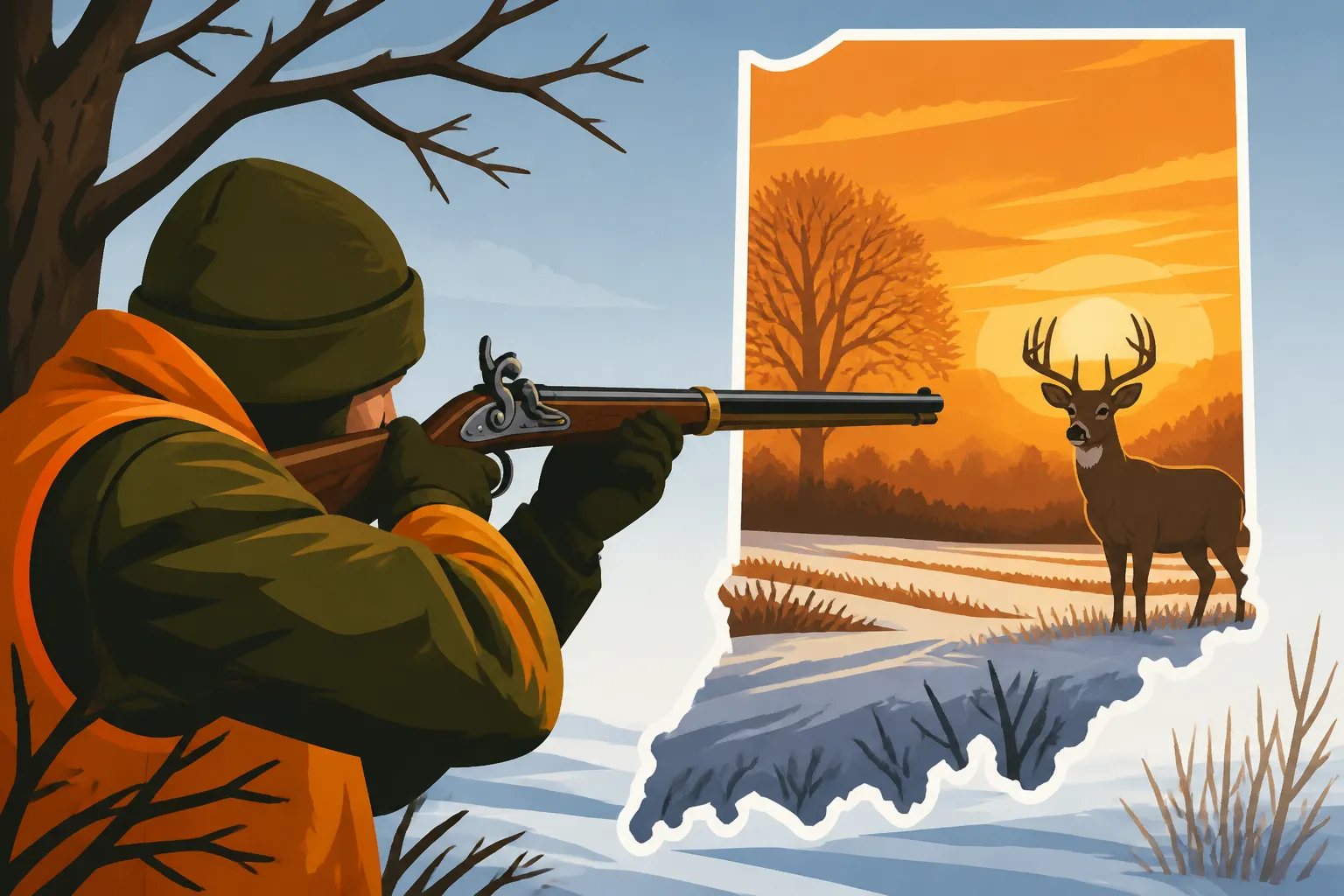
Muzzleloaders for an Indiana December
As the crisp bite of December settles over Indiana, many deer hunters might feel like the prime opportunities have already passed. The rut is largely over, gun season has closed for modern firearms, and the woods can feel awfully quiet, not to mention cold. But if you're a seasoned hunter or looking for a new challenge, the muzzleloader season offers a fantastic, often overlooked chance to extend your time afield and fill those late-season tags. This guide is all about equipping you with the knowledge and confidence to make your Indiana December muzzleloader hunt a success, from understanding the regulations to choosing the right gear and executing effective tactics in the chilly, often snowy woods.
Why Muzzleloaders Shine in Indiana's December Woods
December in Indiana can be a truly magical time to be in the woods, but it also presents its own set of challenges. For many, the deer season effectively ends after the firearms portion. However, the dedicated muzzleloader season offers a fantastic extension, giving hunters a unique opportunity to pursue whitetails when the landscape has changed dramatically. This period can be less crowded than the earlier seasons, and deer patterns shift in predictable ways, making it a prime time for those willing to brave the cold.
Understanding the Late Season Advantage
By December, the madness of the rut has largely subsided. Bucks are no longer cruising frantically for does, and their focus has shifted from breeding to survival. This means their movements become more predictable, revolving primarily around food and bedding. For the savvy muzzleloader hunter, this change in behavior is a distinct advantage. You're no longer trying to intercept a love-struck buck; you're looking for a hungry one. Deer are often concentrated in specific areas where reliable food sources remain, making scouting even more critical.
Furthermore, the woods often quiet down considerably after the initial firearms rush. Many hunters hang up their gear, thinking the season is over. This reduction in pressure can make deer less wary, especially if you venture a bit deeper into public land or have a well-managed private tract. Imagine slipping into a snow-covered woodlot, the only sounds being the crunch of your boots and the distant call of a crow. It's a serene, almost primal hunting experience that the muzzleloader season delivers in spades. The single-shot nature of these firearms also forces you to slow down, be more deliberate, and truly connect with the tradition of the hunt.
The Unique Challenge of December Hunting
While the late season offers advantages, it also brings unique challenges, primarily the weather. Indiana Decembers can swing from mild, rainy days to bitter cold, heavy snow, and strong winds. Staying warm, dry, and comfortable is paramount for safety and success. Hypothermia is a real concern, and proper layering, quality boots, and hand/foot warmers are not luxuries – they're necessities. The short daylight hours also mean you have less time to hunt effectively, and tracking a deer after dark in the cold is a difficult, if not dangerous, proposition.
Beyond the weather, deer themselves are often in survival mode. While they need to eat, they've also been pressured for months. This means they're acutely aware of their surroundings and will often move primarily during low-light hours. Their senses are on high alert, and any mistake in scent control, movement, or noise can send them spiraling into thick cover. The single-shot limitation of a muzzleloader adds another layer of challenge; you have one chance, making shot placement and target identification even more critical. It’s a test of patience, skill, and resilience, which is precisely why many hunters find it so rewarding.
Navigating Indiana's Muzzleloader Regulations
Before you even think about stepping into the December woods with your muzzleloader, it's absolutely crucial to understand Indiana's specific regulations. These rules govern what kind of muzzleloader you can use, the ammunition allowed, and the season dates. Ignorance of the law is never an excuse, and a simple oversight could lead to fines or the loss of your hunting privileges. The Indiana Department of Natural Resources (DNR) website is your best friend here, always check it for the most current information, as rules can sometimes change.
Legal Muzzleloader Types and Restrictions
Indiana's regulations are pretty clear about what constitutes a legal muzzleloader for deer hunting. Generally, you're looking at firearms that load from the muzzle, meaning the bullet and powder are loaded down the barrel from the front. This includes both traditional flintlock and percussion cap rifles, as well as the more modern "inline" muzzleloaders that use 209 shotgun primers. Unlike firearms season, there's no longer a distinction regarding case length for rifles, but for muzzleloaders, the definition centers on the loading method.
The key takeaway is that your firearm must truly be a muzzleloader. This means no breech-loading "muzzleloaders" or anything that doesn't load from the front of the barrel. Most commercially available muzzleloaders from reputable brands will be compliant, but if you have an older or custom-built rifle, always double-check the specifics. The rule emphasizes the historical method of loading, which is part of the tradition and challenge of muzzleloader hunting. Make sure your chosen muzzleloader fits this definition, and you'll be on solid ground.
Ammunition Rules and Considerations
When it comes to projectiles, Indiana allows a variety of options for muzzleloaders. You can use single projectiles, which include round balls, conical bullets, or saboted bullets. The critical point is that these must be .44 caliber or larger. This ensures sufficient knockdown power for deer. While the state relaxed many of its rules on rifle cartridges in recent years, Why Straight-Wall Rifles Are No Longer Required, these changes largely apply to modern centerfire firearms during the firearms season and don't alter the specific .44 caliber minimum for muzzleloaders.
Many hunters favor saboted bullets for their improved accuracy and ballistic performance, particularly at longer ranges (for a muzzleloader). These typically consist of a smaller caliber bullet (like a .40 or .45) encased in a plastic sabot that peels away after leaving the barrel. Conical bullets, which are solid lead projectiles that match the bore diameter, are also popular, especially in traditional muzzleloaders. Round balls, while historically accurate, have a more limited effective range. When selecting your ammunition, consider the range you expect to shoot, the accuracy of your particular firearm, and the ethical responsibility to make a clean kill. Sabot Versus Conical for Deer provides a deeper dive into these options. Always carry enough pre-measured powder charges and bullets to reload quickly and safely in the field, keeping them dry and accessible.
Season Dates and Bag Limits
Indiana's muzzleloader season typically runs for a specific period in December, often bridging the gap between the close of the firearms season and the archery-only late season. It's a dedicated window for these traditional arms, and checking the exact dates each year is non-negotiable. These dates are published annually by the Indiana DNR, and you can usually find them in the current hunting and trapping guide or on their Go Outdoors Indiana website.
During this season, hunters are typically allowed to harvest one antlered deer and any additional antlerless deer for which they hold a valid tag. This means if you still have an antlered tag from your Indiana Deer Season Structure Explained bundle and an antlerless tag, you could potentially fill both during the muzzleloader season. Always review the specific bag limits for the current year and be aware of any special regulations for deer reduction zones or chronic wasting disease (CWD) management areas, which might have different antlerless opportunities. Proper deer reporting is also mandatory, usually within 48 hours of harvest, which can be done easily via the Indiana DNR's online system or mobile app.
Choosing the Right Muzzleloader for Cold Weather
Selecting the right muzzleloader isn't just about what's legal; it's about what will perform reliably in the freezing temperatures, damp conditions, and sometimes snowy environment of an Indiana December. You need a rifle that’s accurate, durable, and easy to handle when your fingers are cold and your breath is fogging up.
Inline vs. Traditional: What Suits Your Style?
The primary choice for most modern muzzleloader hunters comes down to inline versus traditional.
Traditional Muzzleloaders
These are the flintlocks and percussion cap rifles that evoke images of frontier hunters. They are beautiful, steeped in history, and incredibly satisfying to hunt with.
- Flintlocks: Require a flint to strike a frizzen, creating a spark to ignite powder in a pan, which then ignites the main charge. They are highly susceptible to moisture; a damp pan or a wet flint can lead to misfires. While challenging, some purists swear by them.
- Percussion Cap Rifles: Use a small, brass cap placed on a nipple that, when struck by the hammer, ignites the powder charge. They are generally more reliable in damp conditions than flintlocks but can still be finicky in heavy rain or snow if the cap or nipple gets wet.
Inline Muzzleloaders
These are the workhorses of modern muzzleloader hunting. The "inline" refers to the straight-line ignition system, where a 209 shotgun primer is directly behind the powder charge.
- Reliability: Their sealed ignition system makes them far less susceptible to moisture, offering a significant advantage in unpredictable December weather. You're much less likely to have a misfire due to dampness.
- Accuracy: They often feature modern rifling, robust actions, and can be scoped, leading to superior accuracy at longer distances compared to most traditional options.
- Ease of Use: Loading is typically simpler, and cleaning can be less arduous, especially with removable breech plugs.
For an Indiana December, especially if reliability in adverse weather is a top priority, the inline muzzleloader is often the most practical choice. However, if you're drawn to the historical experience and willing to manage the quirks, a traditional percussion cap rifle can be incredibly rewarding. Think about your hunting style, your tolerance for potential challenges, and how much "traditional" experience you truly desire.
Ignition Systems: 209 Primers vs. Percussion Caps
The ignition system is the heart of your muzzleloader's reliability.
- 209 Shotgun Primers (Inline): These are small, powerful primers designed for shotgun shells, and they provide a very hot, consistent spark. When used in an inline muzzleloader, they sit in a breech plug that often seals against the elements, protecting the powder from moisture. This robust ignition is a huge benefit when temperatures drop and humidity rises. Even with a light drizzle or heavy snow, a well-maintained inline with fresh 209 primers will typically fire without a hitch. This reliability is why many choose an inline for Hunting Into the Muzzleloader Close in December.
- Percussion Caps (Traditional): These small copper or brass caps fit over a nipple on the breech. When the hammer falls, it crushes the cap, igniting the priming compound within, which then sends a flame down the nipple into the powder charge. While effective, they are more exposed to the elements. Rain, snow, or even heavy fog can dampen the cap or powder around the nipple, leading to a hangfire or misfire. Many traditional hunters will place a piece of electrical tape over the cap and nipple to offer some protection from moisture, or carry a capper that protects fresh caps from being exposed too soon. This is a critical consideration for Keeping Powder Dry in Wet Snow.
For consistency and peace of mind in late-season conditions, the 209 primer system in an inline muzzleloader is hard to beat. If you choose a percussion cap rifle, be extra diligent about protecting your ignition system from moisture.
Caliber and Barrel Considerations
Most Indiana muzzleloader hunters will opt for a .50 caliber rifle. While .44 caliber is the minimum legal requirement, .50 caliber is widely available, offers excellent energy transfer, and has a broad range of projectile options. A heavier bullet in a larger caliber tends to retain more energy and buck wind better, which can be an advantage on longer shots or in blustery December conditions.
Barrel length and twist rate are also important.
- Barrel Length: Longer barrels generally offer a longer sight radius (for open sights) and can contribute to higher velocities, but they also add weight and can be cumbersome in thick timber. A 24-28 inch barrel is a common sweet spot for balance and performance.
- Twist Rate: This refers to how quickly the rifling inside the barrel rotates. Slower twist rates (e.g., 1:60 or 1:66) are often ideal for round balls. Faster twist rates (e.g., 1:28 or 1:48) are generally better for stabilizing longer, heavier conical bullets or saboted projectiles. If you plan to primarily shoot sabots or heavy conicals, a faster twist rate will likely give you better accuracy. This is a crucial factor when Choosing a Muzzleloader for December Cold, as accuracy diminishes significantly in freezing temperatures and high winds.
When considering a purchase, research what others recommend for specific bullet types and calibers. Online forums and shooting ranges are great places to gather anecdotal evidence on what works best for different firearms. Look for a rifle that feels comfortable to shoulder and aim, as a good fit can significantly improve your accuracy, especially when shivering slightly from the cold.
Powering Your Muzzleloader: Propellants and Projectiles
The choice of propellant and projectile is just as critical as the muzzleloader itself. These components directly influence your rifle's accuracy, power, and reliability in cold, damp conditions. Getting this combination right is key to ethical and successful hunting.
Black Powder vs. Substitutes: The Pros and Cons
The traditional propellant for muzzleloaders is, of course, black powder. It's an explosive mixture of charcoal, sulfur, and potassium nitrate.
- Black Powder: It ignites easily, produces a lot of smoke, and has a distinctive smell. However, it's also highly corrosive, meaning your rifle must be cleaned thoroughly and immediately after every use, or it will rust quickly. It's also more sensitive to moisture than modern substitutes. True black powder is typically sold in FFFFg (for priming pans), FFFg (for pistols/smaller calibers), and FFg (for rifles/larger calibers).
- Black Powder Substitutes: These modern propellants are designed to burn cleaner, be less corrosive, and often offer higher velocities than traditional black powder. Brands like Hodgdon's Triple Seven, IMR White Hots, and Pyrodex are popular choices. They come in granular form or pre-formed pellets.
- Pros of Substitutes: Less fouling, easier cleanup (often with just water or specialized solvents), more stable in varied temperatures, and generally less sensitive to moisture. Pellets offer consistent charges and convenience, especially in cold weather when measuring loose powder can be clumsy.
- Cons of Substitutes: Some substitutes are still corrosive, just less so than true black powder. They can also be less forgiving with improper loading techniques. Some hunters report a slightly different recoil or sound.
For December hunting, the reduced fouling and increased moisture resistance of black powder substitutes, especially in pellet form, can be a significant advantage. This can simplify loading in the field and reduce the need for meticulous cleaning between shots, though cleaning after the hunt remains essential. Always refer to your muzzleloader's manual for recommended propellants and maximum charges.
Sabots, Conicals, and Round Balls
The projectile you choose will dictate your muzzleloader's effective range and terminal performance.
- Round Balls: These are simple lead spheres. They are inexpensive, easy to load, and historically accurate. However, their ballistic coefficient is poor, meaning they lose energy quickly and are very susceptible to wind drift. Their effective range on deer is typically limited to 50-75 yards. They are best suited for traditional rifles with slower twist rates.
- Conical Bullets: These are solid lead bullets, shaped like a modern rifle bullet, that fit snugly into the bore. They offer better ballistic performance and energy retention than round balls, making them effective out to 100-125 yards, sometimes a bit more depending on the specific projectile and rifle. Popular examples include PowerBelt AeroLite or traditional minie balls. They are a good choice for those who want a heavier hitting, bore-sized projectile without the plastic sabot.
- Saboted Bullets: These are often the most accurate and popular choice for inline muzzleloaders. A smaller caliber bullet (e.g., .40 or .45) is cradled in a plastic sabot that engages the rifling. The sabot falls away shortly after leaving the barrel, sending the bullet accurately downrange.
- Pros: Excellent accuracy, flatter trajectory, and good energy retention. They allow for the use of modern bullet designs (like hollow points or bonded cores) designed for expansion and penetration. Effective range can extend to 150-200 yards with a well-practiced shooter and a scoped rifle.
- Cons: Can be more expensive, and the plastic sabot can sometimes cause fouling in the bore. Some rifles simply don't shoot certain sabot/bullet combinations well.
For Indiana's varied terrain, from dense timber to open fields, saboted bullets generally offer the most versatility and confidence in making ethical shots at typical hunting distances. If you're hunting thick woods with short shot opportunities, a conical might be a good, simpler option. Regardless of your choice, make sure you practice extensively with your chosen combination of powder and projectile.
Consistency in Loading and Ballistics
Consistency is the absolute key to accuracy with a muzzleloader. Every single step of the loading process, from wiping the bore to seating the bullet, needs to be done the exact same way, every time.
- Powder Charge: Use a precise powder measure, not a volume dispenser, especially with loose powder. Pellets eliminate this variable, but ensure they are seated firmly against the breech plug.
- Bullet Seating: The bullet must be seated firmly, with consistent pressure, against the powder charge. Any air gap between the bullet and powder is extremely dangerous and can cause catastrophic failure. Many hunters mark their ramrod to ensure consistent seating depth.
- Bore Condition: While black powder substitutes reduce fouling, some still accumulate. A lightly fouled bore can actually improve accuracy for subsequent shots, but excessive fouling will degrade it. Experiment at the range to find your rifle's sweet spot. Some hunters will run a lightly damp patch down the bore between shots to maintain consistency, especially during a long range session.
Remember, a muzzleloader isn't like a modern centerfire where you just pop in a new magazine. Each shot is a meticulous process. Practice this process until it becomes second nature, especially in cold conditions where dexterity might be limited.
Achieving Accuracy: Sighting In and Practice
Accuracy is paramount for ethical hunting, and with a muzzleloader, it requires dedication to sighting in and consistent practice. The unique characteristics of muzzleloaders, combined with the challenges of December weather, demand a thorough approach to ensure your shot goes where you intend.
Range Time in Cold Conditions
Sighting in a muzzleloader isn't a "one and done" affair. The point of impact can shift with different temperatures, humidity, and even the type of powder or projectile.
- Mirror Hunting Conditions: Whenever possible, practice in conditions that mimic what you'll encounter in December. If you plan to hunt when it's 20 degrees Fahrenheit, try to sight in when it's 20 degrees Fahrenheit. If it's windy, practice in the wind. Shooting from a warm indoor range, then expecting perfect accuracy in freezing outdoor conditions, is a recipe for disappointment.
- Layer Up: Dress in your hunting clothes, including your heavy jacket, gloves, and hat. This helps you get a feel for how your gear affects your shooting posture and sight picture. You might find your cheek weld is different with a thicker jacket, or your gloves make manipulating the trigger guard awkward. Better to discover this on the range than when a deer is standing broadside.
- Multiple Shots: Don't just fire one perfect group and call it good. Muzzleloader barrels can heat up, affecting accuracy. Practice your full loading sequence for each shot. Fire a group, then clean your rifle if that's what you'd do in the field, then fire another. This gives you a true understanding of your rifle's cold-bore accuracy and consistency. Use tools like a GoHunt mapping system to mark your exact shooting positions and target distances, helping you replicate scenarios.
Remember that muzzleloaders have a rainbow trajectory compared to high-velocity modern rifles. Know your effective range and don't push it beyond what you've confidently practiced. For most hunters, this means keeping shots under 100-150 yards, especially in dense Indiana timber. Sighting In a Centerfire Rifle for Indiana Woods offers good general principles that can be adapted to muzzleloaders, emphasizing precision and understanding your weapon's capabilities.
Cleaning Regimen for Muzzleloader Accuracy
Muzzleloaders, particularly those using black powder or certain substitutes, foul quickly. This fouling can dramatically affect accuracy if not managed.
- Between Shots: During a range session, you might need to run a damp patch (water or a specialized muzzleloader solvent) down the bore every 1-3 shots to maintain accuracy, depending on your propellant. Pay attention to how your groups change as fouling builds up. This helps you understand what your rifle prefers.
- In the Field: If you make a shot and need to reload, a quick swab with a damp patch and then a dry patch can help clear some fouling and ensure your next projectile seats properly and consistently. This is especially important for Keeping Powder Dry in Wet Snow as moisture can compound fouling issues.
- Post-Hunt Cleaning: This is non-negotiable. As mentioned earlier, black powder and some substitutes are highly corrosive. Your muzzleloader must be thoroughly cleaned as soon as possible after every shooting session, even if you only fired one shot. Hot soapy water, specialized muzzleloader solvents, and a good bore brush are your friends. Follow up with a dry patch and then a light coat of rust preventative oil. Neglecting this will lead to rust and ruin your barrel.
A consistent cleaning regimen is not just about maintenance; it's about maintaining accuracy and reliability when it counts. It's part of the responsible ownership that comes with muzzleloader hunting.
Effective Range and Ethical Shots
Understanding your muzzleloader's effective range is critical for ethical hunting. Unlike centerfire rifles that can reach out to several hundred yards, most muzzleloaders are best utilized within 100-150 yards.
- Practice, Practice, Practice: The only way to truly know your effective range is through consistent practice at various distances. Can you consistently put a group of shots into a six-inch circle at 100 yards? What about 125 or 150? Be honest with yourself about your capabilities and your rifle's limitations.
- Shot Placement: The goal is always a clean, ethical kill. For deer, this means targeting the vital organs (heart and lungs). A well-placed bullet from a .50 caliber muzzleloader delivers ample energy for a quick harvest. Avoid marginal shots, especially in cold conditions where tracking might be difficult.
- Environmental Factors: Wind, snow, and rain can all affect bullet trajectory and visibility. If conditions are poor, shorten your self-imposed maximum range. A deer standing at 120 yards in a blizzard is a much different shot than one at 75 yards on a calm, clear day. Always err on the side of caution. Remember, you only get one shot. Make it count.
Essential Muzzleloader Accessories for a December Hunt
Muzzleloader hunting, especially in the challenging conditions of an Indiana December, requires more than just a rifle and ammunition. A well-prepared hunter brings a suite of essential accessories to ensure safety, reliability, and success in the field. Don't skimp on these items; they can make or break your hunt.
Loading and Field Supplies
Having your loading components organized and protected is vital for a smooth reload in the field, should you get a second opportunity or need to clear a misfire.
- Pre-Measured Charges: Never measure loose powder in the field, especially not directly from a flask or bottle into the barrel. This is extremely dangerous. Use pre-measured charges stored in waterproof tubes or speed loaders. These tubes keep your powder dry and allow for quick, consistent loading. For pelletized powder, simply ensure your pellets are protected from moisture in a secure container.
- Primers/Caps: Keep your 209 primers or percussion caps in a waterproof dispenser or tin. Cold, wet fingers can fumble with small items, so having them readily accessible and dry is key. A specialized capper for percussion caps can be a lifesaver for protecting and easily applying caps.
- Loading Jags and Patches: Carry a short starter to get the bullet seated properly without damaging the ramrod. A loading jag and patches (or a bullet starter if using sabots/conicals) are necessary to push the projectile all the way down. Make sure your ramrod is sturdy and has a good handle for cold hands. Some hunters carry a compact, sectioned cleaning rod for field use as well.
- Powder Measure/Flask: While pre-measured charges are recommended for field use, a powder measure is essential for precise loading at home or at the range. A powder flask can be used to transport loose powder, but again, never load directly from it into the barrel in the field.
Imagine you've just taken a shot, and another deer presents itself. Fumbling with wet powder or trying to measure a charge with numb fingers is not only frustrating but dangerous. Organization and preparation are key.
Keeping Your Gear Dry and Functional
December weather is brutal on gear. Moisture is the enemy of muzzleloaders.
- Waterproof Protection: Beyond your powder and primers, ensure your entire muzzleloader is protected from moisture. A good rifle case or sleeve for transport, and a waterproof cover or even a large plastic bag over the muzzle and breech while in your stand, can prevent snow or rain from getting into the barrel or action. A small piece of electrical tape over the muzzle is a simple but effective way to keep debris and moisture out when walking or waiting.
- Anti-Fog Treatments: Cold air meeting warm optics (scopes, binoculars) leads to fogging. Apply anti-fog solutions to your lenses before heading out. Keep your binoculars tucked inside your jacket until needed to keep them warm and reduce fogging. A clear sight picture is vital for accurate shot placement.
- Maintenance Kit: A small, lightweight cleaning kit for the field can save your hunt. This might include a few patches, a small bottle of solvent, a bore snake, and a wiping cloth. A quick wipe-down can prevent rust and keep your rifle operating smoothly, especially if you get caught in a downpour or heavy snow.
- Battery Management: If your scope has an illuminated reticle or you're using a rangefinder, cold weather drains batteries quickly. Carry spare batteries in a warm, inside pocket. Check battery levels before each hunt.
Using a mapping app like GoHunt on your phone is invaluable for navigating public lands or large private tracts, especially in snowy conditions where familiar landmarks might be obscured. Make sure your phone is charged, has a protective, waterproof case, and consider carrying a portable power bank, as cold weather can drain phone batteries rapidly.
Safety Gear and Best Practices
Safety should always be your top priority, even more so when dealing with a single-shot firearm that can be unforgiving if mishandled.
- Eye and Ear Protection: Always wear eye and ear protection when shooting your muzzleloader, even at the range. The loud bang and flash from the muzzle can cause permanent damage.
- Blaze Orange: Indiana law requires hunters to wear hunter orange during specific seasons. Even if it's not strictly required during muzzleloader season (check current regulations), wearing blaze orange or blaze pink is a wise choice for visibility, especially on public land. How Much Blaze Orange Indiana Requires gives specific details.
- First Aid Kit: Always carry a compact, well-stocked first aid kit suitable for treating cuts, blisters, and minor injuries that can occur in the field.
- Communication Device: A fully charged cell phone is a must for emergencies. Consider a satellite communicator if you'll be in areas without cell service, such as deep within the Hoosier National Forest Hunting or large Fish and Wildlife Areas.
- Knife and Game Bags: After a successful harvest, you'll need a sharp knife for field dressing. Game bags are essential for protecting the meat, especially if you need to quarter the animal for a long pack out. Field Dressing a Deer in Cold Weather has some specific considerations for handling venison in winter.
- Tracking Supplies: A headlamp, flagging tape, and a compass/GPS are crucial for tracking a deer, especially as daylight fades or snow falls. Tracking a Deer in Fresh Indiana Snow can be challenging, so having the right tools is key.
Table: Inline Muzzleloader vs. Traditional Percussion Cap Muzzleloader
| Feature | Inline Muzzleloader (209 Primer) | Traditional Percussion Cap Muzzleloader |
|---|---|---|
| Ignition System | Sealed 209 shotgun primer, direct to powder | Exposed percussion cap on nipple |
| **Moisture Res. ** | High; very reliable in wet/damp conditions | Moderate; susceptible to misfires if cap/nipple gets wet |
| Accuracy | Generally higher; modern rifling, scope-ready | Variable; often good but more sensitive to technique and projectile |
| Projectile Type | Best with saboted bullets or heavy conicals | Best with round balls or lighter conicals |
| Effective Range | ~100-200 yards (depending on setup/skill) | ~50-100 yards (depending on setup/skill) |
| Cleaning | Easier with substitutes; often removable breech plug | More intensive; corrosive fouling, delicate parts |
| Ease of Use | Higher; simpler loading, fewer components exposed | Lower; more steps, exposed ignition, can be finicky |
| Aesthetics | Modern, functional | Classic, historical |
December Muzzleloader Hunting Tactics in Indiana
Hunting in December demands a shift in strategy. The deer are focused on survival, and the weather dictates much of their movement. Your tactics need to adapt to these realities to be successful with a muzzleloader.
Targeting Late-Season Food Sources
By December, many of the natural food sources that deer gorged on during earlier seasons are gone or depleted. Acorns might be buried under snow, and early season browse is scarce. This makes finding reliable, concentrated food sources absolutely critical.
- Standing Agriculture: If you're hunting near farmland, standing corn or unharvested soybeans are magnetic to deer in December. These fields provide both high-energy food and thermal cover from cold winds. Deer will often bed down in standing crops during the day and feed there too.
- Browse and Evergreens: In timbered areas, look for green browse like honeysuckle, greenbriar, or new growth in clear-cuts. Cedar thickets or stands of pine/hemlock not only offer thermal protection from the cold but sometimes provide digestible browse. South-facing slopes that get more sun can sometimes hold patches of green longer.
- Food Plots: On private land, well-maintained food plots planted with winter-hardy forage like brassicas, winter wheat, or clover will be major drawcards. Deer will hit these plots aggressively, especially during the last hour of daylight.
- Scouting is Key: Spend time scouting before your hunt. Look for tracks in the snow leading to and from these food sources. Use your binoculars to glass fields from a distance. A service like GoHunt can help you analyze satellite imagery for potential food sources and bedding areas, especially on larger tracts of public land like the Hoosier National Forest Hunting or Indiana State Forest Hunting. Finding these food-rich pockets is critical for your Late-Season Food Sources for Indiana Whitetails strategy.
Deer movement patterns in December are highly driven by the need to conserve energy and find sustenance. Setting up between a reliable food source and a thick bedding area, particularly on a travel corridor or funnel, can be incredibly effective.
Dealing with Cold Weather and Snow
Cold weather isn't just uncomfortable; it affects your hunting strategy and safety.
- Layering System: Dress in layers. A good base layer wicks moisture, a mid-layer provides insulation, and an outer layer offers wind and waterproof protection. Avoid cotton, which holds moisture. Wool and synthetics are your friends. Layering for an Indiana Deer Stand is essential for staying out longer.
- Hand and Foot Warmers: These are invaluable. Place chemical warmers in your gloves, boots, and even pockets. Keeping your extremities warm helps keep your core warm.
- Hydration and Nutrition: Stay hydrated, even if you don't feel thirsty. Carry a thermos of hot coffee, tea, or broth. Pack high-energy snacks like nuts, trail mix, or energy bars. These keep your metabolism working and generate body heat.
- Stand Location: Consider the wind and sun. A stand on a sunny, south-facing slope can feel surprisingly warmer. Block bitter winds with natural cover. Think about a ground blind that offers more protection from the elements than an open treestand, especially if you plan an all-day sit. Cold-Weather Sitting Strategy in Indiana means staying still, warm, and attentive.
- Snow as an Advantage: Fresh snow can be your best friend. It quiets the woods, making it easier to stalk. More importantly, it reveals fresh tracks, telling you exactly where deer are moving. Pay attention to track size, stride, and freshness to gauge the deer's age, sex, and how recently it passed. This can guide your still-hunting efforts on Still-Hunting Southern Indiana Ridges.
The beauty of December hunting with a muzzleloader is the challenge it presents. Embrace the cold, prepare diligently, and you'll find immense satisfaction in harvesting a deer under these conditions.
Tracking and Recovery in Winter
One of the most critical skills in late-season muzzleloader hunting is tracking, especially when snow is on the ground.
- Blood Trailing in Snow: Fresh snow makes blood trailing significantly easier. Even a small speck of blood will stand out. Pay attention to the color, consistency, and amount of blood. Bright red, frothy blood indicates a lung hit; darker, thicker blood can indicate a liver or muscle hit.
- Understanding Tracks: Fresh tracks in new snow are clear indicators of recent deer activity. Pay attention to the depth of the track (indicating weight), the spacing between tracks (stride length, indicating gait), and any drag marks (potential injury). This helps you interpret what the deer was doing and if it's wounded. Tracking a Deer in Fresh Indiana Snow is an art, and snow is your canvas.
- Patience is Key: After the shot, especially if you didn't see the deer fall, give it time. With a muzzleloader, your one shot must count. If you suspect a less-than-ideal hit, wait at least an hour, or even longer (3-4 hours or more for gut shots, if temperature allows) before taking up the trail. This allows the deer to bed down and expire. Pushing a wounded deer too soon can cause it to run further, making recovery much harder.
- Marking the Trail: Use flagging tape or brightly colored toilet paper to mark the last known blood or tracks. This prevents you from getting lost or losing the trail, especially if you have to back out and return with help. For tracking after dark, a powerful headlamp is essential.
- Getting Help: Don't be afraid to call a friend or family member for help, especially if you're on public land or a large private tract. A fresh pair of eyes can spot a faint blood trail or a hidden deer that you might have missed. Plus, dragging a deer out of a snowy, cold Indiana woodlot is much easier with an extra set of hands!
A successful recovery is the culmination of your entire hunt. Be diligent, patient, and prepared, and you'll greatly increase your chances of finding your hard-earned December deer.
Post-Hunt Care and Maintenance
After a successful (or even unsuccessful) muzzleloader hunt in December, the job isn't over. Proper post-hunt care of your firearm is critical for its longevity, continued accuracy, and safety. Neglecting this step, especially in cold, damp conditions, can quickly lead to rust and irreparable damage.
Immediate Field Cleaning
While not a full deep clean, some immediate attention in the field, or as soon as you get back to your vehicle or camp, can make a huge difference, particularly if you've been in wet conditions.
- Wipe Down Exterior: Use a cloth to wipe down all external metal surfaces, removing any snow, rain, or condensation. Pay special attention to areas where metal meets wood or synthetic stocks, as moisture can collect there. A light coat of oil on exposed metal parts (if you have it handy) can offer temporary protection.
- Clear the Bore (If Not Fired): If you carried a loaded muzzleloader all day but didn't fire, it's a good practice to discharge it safely or carefully unload it as soon as your hunt is over. Then, run a dry patch or two down the bore to remove any condensation that might have formed internally. If you used black powder, consider a quick swab with a patch dampened with rubbing alcohol (which evaporates quickly) to displace moisture if you can't get to a full clean immediately.
- Remove Primers/Caps: Always remove any spent or unfired primers/caps from the breech plug or nipple immediately. Leaving them on can trap moisture and corrosive residues.
This quick, initial care helps mitigate the immediate corrosive effects of powder residue and moisture, buying you time before you can perform a thorough cleaning.
Deep Cleaning for Longevity
This is the most crucial step for any muzzleloader owner. It needs to be done thoroughly after every shooting session, typically within hours, not days.
- Disassembly: Follow your manufacturer's instructions for safe and proper disassembly. This usually involves removing the barrel from the stock and taking out the breech plug (for inlines). Be careful not to cross-thread the breech plug when removing or reinstalling it.
- Bore Cleaning: Use a specialized muzzleloader solvent (or hot soapy water for black powder/some substitutes), a bore brush, and plenty of patches. Scrub the bore thoroughly from the breech end (if possible) until patches come out clean. Pay extra attention to the rifling.
- Breech Plug and Nipple: These components collect a significant amount of fouling. Use a small wire brush, picks, and solvent to thoroughly clean all carbon and residue from the breech plug's flash channel and the nipple's vent hole. A clogged flash channel or nipple is a primary cause of misfires.
- Action and Exterior: Clean any powder residue from the action, hammer, and trigger assembly. Wipe down all exterior metal surfaces with solvent, then dry thoroughly.
- Lubrication and Protection: Once completely clean and dry, apply a thin coat of rust-preventative oil to all metal parts, inside and out. Use a good quality gun grease on breech plug threads to prevent seizing. Reassemble your muzzleloader carefully.
A well-maintained muzzleloader is a reliable muzzleloader. This meticulous cleaning regimen will ensure your firearm performs year after year, ready for your next Indiana December adventure.
Storage for the Off-Season
Once your muzzleloader is sparkling clean and lightly oiled, proper storage is the final step to protect your investment.
- Climate Control: Store your muzzleloader in a climate-controlled environment, away from extreme temperature swings and high humidity. A gun safe with a dehumidifier is ideal. Avoid storing it in a basement or garage where humidity can be an issue.
- Gun Socks/Cases: A silicone-treated gun sock can provide an additional layer of protection against rust, wicking away residual moisture. If storing in a hard case, ensure the case material does not trap moisture. Some foam liners can retain moisture, so always ensure the firearm is thoroughly dry and oiled before placing it in a case for extended periods.
- Unloaded: Always store your muzzleloader unloaded, with the breech plug removed or the action open, and the hammer at rest. Keep powder and primers stored separately in their original containers, according to manufacturer recommendations.
By dedicating time to proper post-hunt care, you ensure your muzzleloader remains a trustworthy companion for many Indiana seasons to come, ready for the crisp challenge of a December hunt.
Disclaimer
This article is for general informational purposes only and does not constitute professional advice. Laws, prices and regulations vary by location and change over time. Consult a qualified professional for guidance on your specific situation.