Sabot Versus Conical for Deer
Choosing the right projectile for your muzzleloader can feel like a real head-scratcher, especially when you're gearing up for Indiana's deer season. You've got this incredible, traditional hunting tool, but then you're faced with a dizzying array of bullet options – sabots, conicals, different weights, different materials. It's frustrating to invest your time, money, and effort, only to wonder if your bullet choice is holding you back from consistent accuracy or clean deer harvests. This guide is here to help you cut through the confusion, breaking down the strengths and weaknesses of sabot and conical bullets so you can make an informed decision for your next Hoosier hunt.
The Core Muzzleloader Challenge: Sabots vs. Conicals
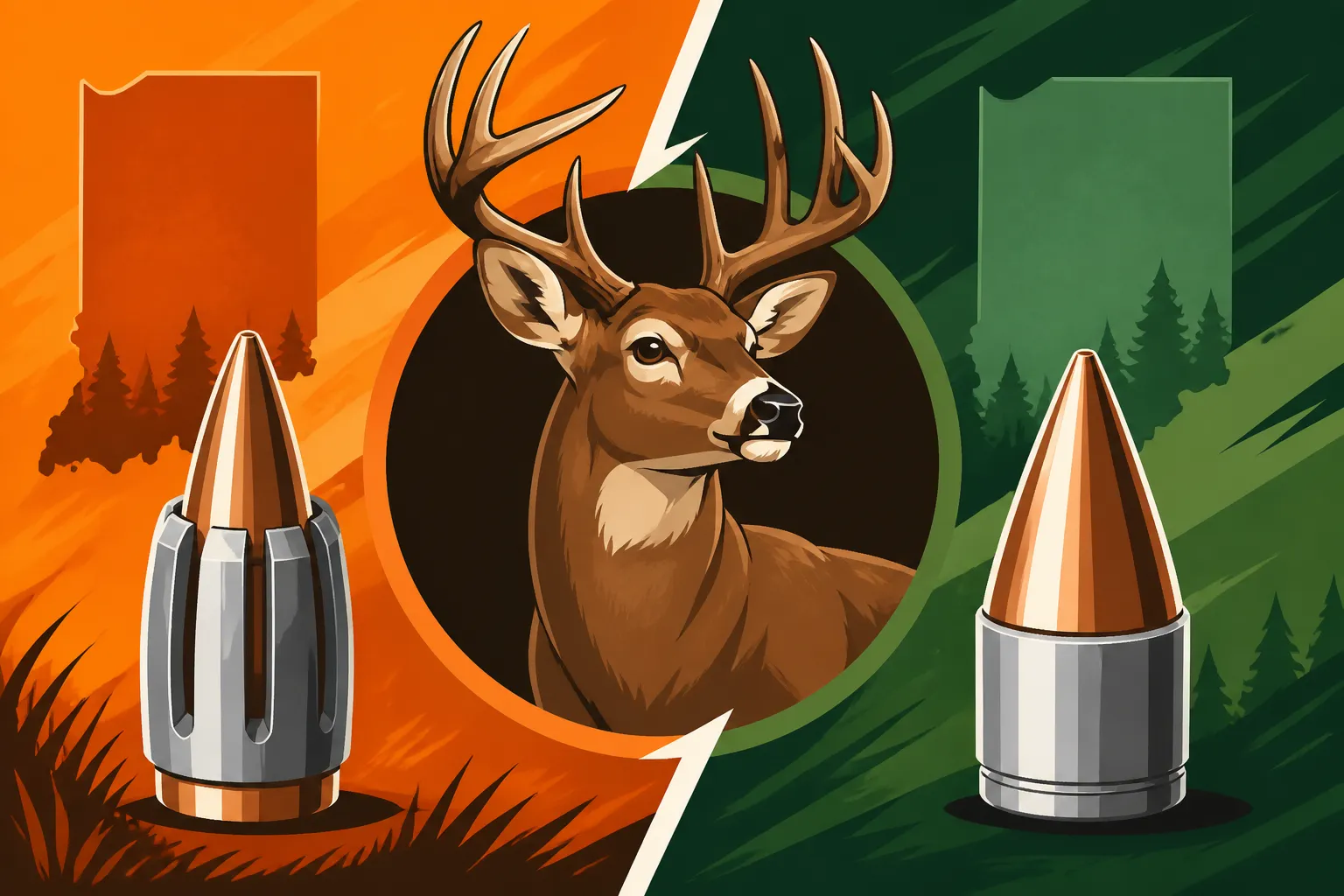
For many Indiana deer hunters who embrace the muzzleloader season, the biggest debate often boils down to two main projectile types: sabots and conicals. Each has its loyal proponents, and for good reason, as both can be incredibly effective. However, they are designed for different performance characteristics and often perform best in specific muzzleloader setups. Understanding these fundamental differences is crucial, because what works wonderfully for your buddy's rifle might not be the best fit for yours, or for the kind of hunting you do in Indiana.
The heart of the matter lies in how these projectiles interact with your rifle's barrel and rifling. A muzzleloader's rifling—the helical grooves cut into the barrel—is designed to impart a spin on the projectile, stabilizing it in flight and making it accurate. The twist rate of this rifling (e.g., 1:28", 1:48", 1:60") dictates how quickly the projectile spins. This twist rate is a critical factor in determining whether a sabot or a conical will perform optimally.
Understanding Muzzleloader Ballistics for Indiana Hunts
When we talk about ballistics in a muzzleloader context, we're really looking at how the bullet travels from the barrel to the target, and then how it performs upon impact. For Indiana deer hunters, this means considering trajectory over typical woodland ranges, how well the bullet holds together, and its ability to transfer energy effectively to ensure a humane kill. We're generally not talking about 300-yard shots in wide-open country; rather, we're focused on those 50 to 150-yard opportunities in the timber or along field edges.
A key aspect of muzzleloader ballistics is consistency. Unlike modern cartridge rifles, where ammunition is factory-loaded to precise specifications, muzzleloading involves a lot more variables that the hunter controls—powder charge, projectile fit, priming, and even the way the bullet is seated. Every one of these factors can influence accuracy and terminal performance. Finding a consistent load combination, whether it's with a sabot or a conical, is paramount for success during the Indiana Muzzleloader Season Dates.
Barrel Twist Rates and Projectile Compatibility
This is where the rubber meets the road. Most modern inline muzzleloaders, which are popular for their ease of use and accuracy, typically feature faster twist rates, often in the 1:28" to 1:32" range. These faster twists are generally optimized for stabilizing shorter, lighter, high-velocity projectiles, which is exactly what many sabots are. The plastic sabot itself engages the rifling, imparting spin to the smaller, often jacketed bullet nested inside. Once the projectile leaves the barrel, the sabot separates, and the bullet continues to spin toward the target.
Traditional sidelock or "traditional" muzzleloaders, on the other hand, often have slower twist rates, like 1:48" or even 1:60". These slower twists are typically better suited for stabilizing longer, heavier, all-lead conical bullets. A conical bullet is designed to engage the rifling directly, without a plastic sabot. Its length and weight are matched to the slower twist rate to ensure stable flight. Trying to shoot a sabot out of a slow-twist barrel, or a heavy conical out of a fast-twist barrel, can lead to poor accuracy and frustration because the projectile isn't stabilizing properly.
Delving into Sabot Performance for Indiana Deer
Sabot bullets have really revolutionized muzzleloader hunting for many, offering performance characteristics that mirror modern centerfire rifles more closely than traditional lead balls or conicals. If you've got a newer inline muzzleloader, chances are you've at least considered, if not already used, sabots.
The Advantages of Sabots: Speed, Accuracy, and Expansion
One of the biggest draws of sabots is their potential for increased velocity and flatter trajectory. Because the actual bullet inside the sabot is often smaller in diameter (e.g., a .452" or .400" bullet inside a .50 caliber sabot) and can be made from harder materials like copper or lead alloys with jackets, it can be driven faster. This means less bullet drop over typical Indiana hunting distances, which can be a real confidence booster when that buck steps out at 100 yards.
Modern sabot designs often incorporate advanced bullet technology, similar to what you'd find in centerfire rifle cartridges. This means you can get bullets designed for controlled expansion, high weight retention, and deep penetration—all critical for anchoring a deer quickly and humanely. Companies like Hornady, Barnes, and Nosler make fantastic sabot projectiles that are incredibly accurate in the right muzzleloaders. When you pair a good sabot with the right powder charge in a fast-twist barrel, you can achieve impressive groups at the range, which translates directly to higher confidence in the deer woods. The plastic sabot itself also helps keep the bore cleaner, as it's the plastic, not the lead or copper bullet, making direct contact with the rifling. This can mean more shots between cleanings, which is a nice perk during a long day of hunting or target practice.
Potential Drawbacks and Considerations for Sabots
However, sabots aren't without their quirks. One common issue is that they can sometimes be difficult to load, especially in a dirty barrel or if the sabot is a very tight fit. This can be a real problem when you need a quick follow-up shot or if you're trying to load in cold weather with numb fingers. The plastic sabot can also be affected by extreme temperatures, potentially becoming brittle in the cold or too soft in the heat, which can impact accuracy.
Another consideration is bullet jump. Once the sabot separates from the bullet after leaving the barrel, there's a moment where the bullet is essentially "on its own." If the bullet isn't perfectly balanced or if the sabot separation is inconsistent, it can lead to flyers or less-than-stellar accuracy. Cleaning is also different; while the bore might stay cleaner from lead fouling, you'll still have plastic residue from the sabot that needs to be removed. A specialized plastic fouling remover can be a good investment.
Finally, sabot bullets are generally more expensive than conicals. While you might not shoot as many muzzleloader rounds as you do centerfire, the cost can add up, especially if you're doing a lot of range time to dial in your load. It's important to test several brands and bullet weights with your specific muzzleloader to find what shoots best. Remember, every muzzleloader is a law unto itself, and what's deadly accurate in one might be mediocre in another.
Embracing Conical Bullets for Hoosier Muzzleloader Hunts
While sabots get a lot of attention for their modern performance, traditional all-lead conical bullets remain a formidable and often preferred choice for many Indiana muzzleloader enthusiasts. They embody the classic muzzleloading experience, offering distinct advantages, especially for certain rifles and hunting styles.
The Power and Simplicity of Conicals: Knockdown and Bore Fit
Conical bullets, often made entirely of lead, are known for their exceptional knockdown power. Being heavier and having a larger surface area in contact with the deer, they tend to transfer a significant amount of energy upon impact, creating large wound channels. Many hunters attest to the "thump" a conical delivers, often dropping deer right where they stand or resulting in very short blood trails. This is particularly appealing in thick Indiana woods where tracking can be a challenge. Blood Trailing After Dark in Indiana can be significantly easier when the deer doesn't run far.
Another major benefit of conicals is their simple design and the direct engagement with the rifling. There's no sabot to separate, no plastic residue. The lead bullet itself expands slightly upon firing, "obturating" to fill the rifling grooves, creating a good gas seal and imparting a consistent spin. This direct engagement can sometimes lead to more consistent accuracy, particularly in traditional-style muzzleloaders with slower twist rates (1:48" or 1:60"). They are also generally easier to load, especially when using a bore-sized conical that fits snugly without excessive force, though this depends heavily on the specific bullet and barrel combination. If you're Hunting a Ridge-Top Saddle for Rutting Bucks and need a quick reload, the simpler loading of a conical can be a real benefit.
Navigating the Challenges of Conical Projectiles
Despite their advantages, conicals do come with their own set of considerations. The primary trade-off is often trajectory. Being heavier and typically slower than sabot-loaded bullets, conicals usually have a more pronounced bullet drop at longer ranges. This means you need to be acutely aware of your distances and practice at various ranges to know your bullet's flight path. For shots out past 100-125 yards, the drop can become significant, requiring more precise range estimation and holdover.
Accuracy can also be a challenge if you don't find the right conical for your rifle. Fit is everything. A conical that's too loose will wobble down the barrel, leading to poor accuracy. One that's too tight will be incredibly difficult to load, potentially deforming the bullet and again impacting accuracy. You might need to experiment with different brands, weights, and even diameters (some conicals are made in .500", .503", etc., for nominally .50 caliber barrels) to find the "sweet spot" for your rifle. This experimentation is part of the muzzleloader journey, but it can be time-consuming.
Furthermore, being all-lead, conicals can sometimes lead to more lead fouling in the barrel, which will necessitate more frequent cleaning. If you're shooting multiple shots at the range or doing a lot of practice, you'll want to have your cleaning rod and patches handy. Keeping Powder Dry in Wet Snow and a clean bore are equally important for consistent performance.
Making Your Best Muzzleloader Choice in the Indiana Woods
So, how do you decide between a sabot and a conical for your Indiana deer hunting adventures? It really comes down to matching the projectile to your specific muzzleloader, your hunting style, and the conditions you expect to encounter. There's no single "best" option, but there's definitely a best option for you.
Matching Your Muzzleloader's Twist Rate
This is the golden rule. Take the time to find out your muzzleloader's twist rate. It's often stamped on the barrel or listed in the owner's manual.
| Muzzleloader Twist Rate | Recommended Projectile Type | Typical Scenario / Advantage | Considerations |
|---|---|---|---|
| 1:28" to 1:32" (Fast) | Sabots | Flatter trajectory, modern bullet performance for longer shots. | May struggle with very heavy conicals; plastic fouling. |
| 1:48" (Medium) | Both (test extensively) | Most versatile, but requires careful load development for either. | Often a compromise, might not excel with either out-of-the-box. |
| 1:60" to 1:66" (Slow) | Conicals (round balls) | Excellent with heavy, traditional lead projectiles; deep penetration. | Significant bullet drop; limited sabot accuracy. |
As you can see from the table, if you have a fast-twist inline muzzleloader, sabots are generally going to give you the best performance in terms of accuracy and flat trajectory. If you're sporting a classic side-lock with a slower twist, heavy conicals are likely to be your best bet. A 1:48" twist is often called a "compromise" twist and can sometimes shoot both, but you'll need to do significant testing to find a load that works well. Don't be afraid to experiment with different powder charges and bullet manufacturers.
Considering Your Hunting Environment and Shot Distances
Think about where you hunt in Indiana. Are you typically in the dense southern Indiana hills, where shots are often under 75 yards? Or are you hunting northern Indiana farmland, where a longer shot across a small food plot or field edge might be more common? If your shots are consistently close, the flatter trajectory of a sabot might not be as critical, and the robust knockdown power of a conical could be highly appealing.
However, if you anticipate shots stretching out to 100-150 yards, a sabot with a flatter trajectory will offer more forgiveness for minor range estimation errors. The key is to know your limits and the limits of your chosen projectile. Practice at the range at varying distances that mimic your actual hunting scenarios. If you usually hunt thick timber and expect to be Hunting a Funnel Between Two Woodlots, a hard-hitting conical might give you confidence for those close-range, quick shots. If you're sitting a field edge, a sabot's range advantage might be more useful.
Reloading Speed and Terminal Performance
Finally, consider the practicalities in the field. How easy is your chosen projectile to load, especially if a follow-up shot is needed? Some sabots can be a tight fit, requiring more force to seat, which can be difficult under pressure. Conicals, if sized correctly for your bore, can often be loaded with relative ease.
When it comes to terminal performance, both can be excellent. Modern sabot bullets are designed to expand reliably, creating significant damage. Heavy lead conicals, due to their mass and diameter, create a large wound channel, even without dramatic expansion. For deer, both are usually more than sufficient if placed correctly. The real difference often boils down to how they fly out of your gun and how confident you are in that shot. Don't just pick one because it's popular; pick the one that gives you the best accuracy and confidence with your specific setup.
Ultimately, the journey to finding the ideal muzzleloader projectile for your Indiana deer hunting is a personal one, filled with range time and experimentation. There are so many great options available today, but taking the time to truly understand your rifle, test different loads, and practice diligently will lead to greater success and enjoyment in the field. Muzzleloaders for an Indiana December can be a fantastic way to extend your deer season, and having confidence in your projectile choice makes all the difference.
Disclaimer
This article is for general informational purposes only and does not constitute professional advice. Laws, prices and regulations vary by location and change over time. Consult a qualified professional for guidance on your specific situation.