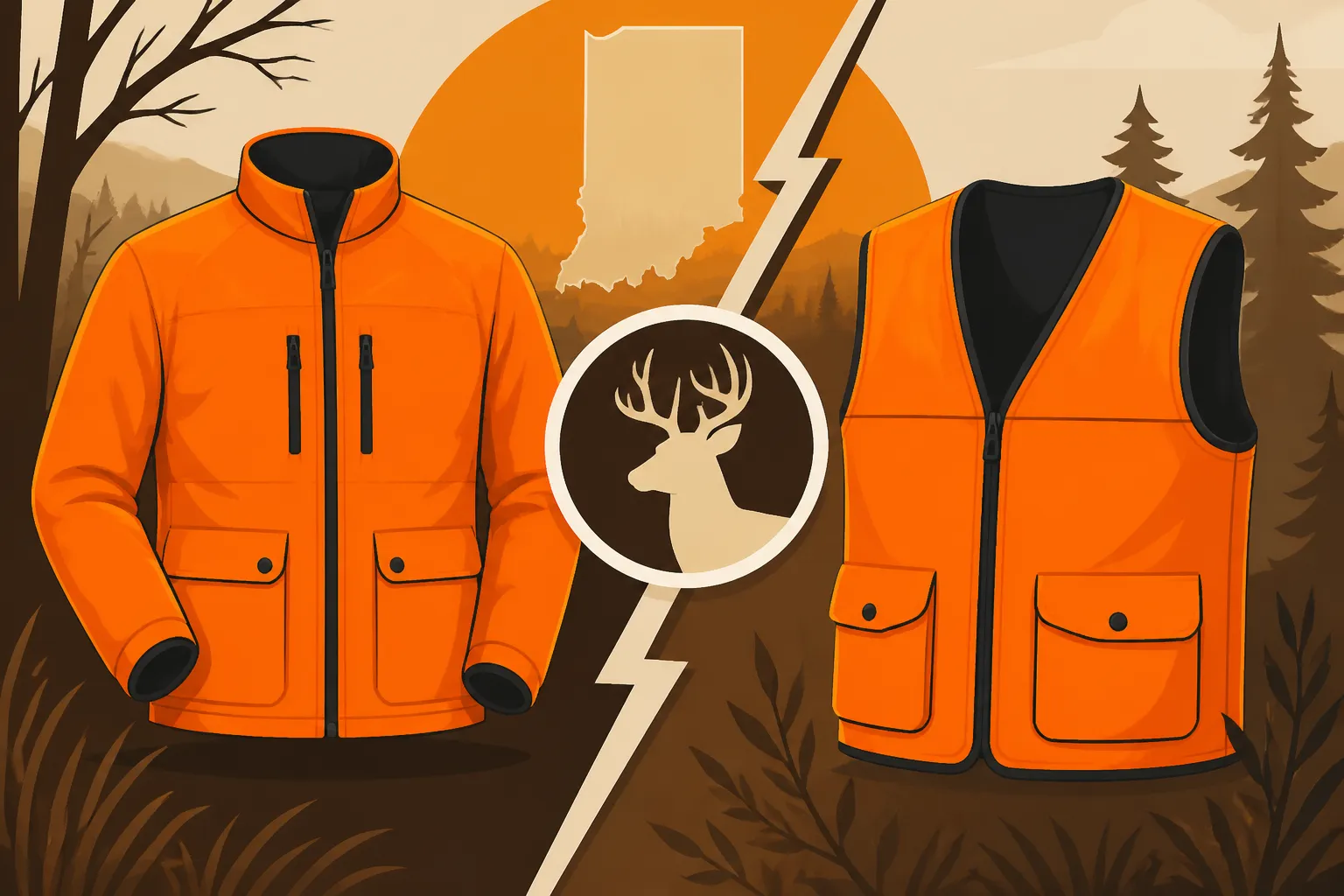
Blaze Orange Jackets Versus Vests
Choosing the right outer layer for visibility when you're out in the Indiana woods can feel like a constant juggle, especially as the seasons change and the weather decides to be, well, Indiana weather. You’re trying to stay warm, stay mobile, and most importantly, stay safe and legal. It’s not just about throwing on any orange; it's about understanding whether a full blaze orange jacket or a lighter vest is the smarter call for your specific hunt. This guide will help you navigate those choices, ensuring you're both compliant and comfortable, no matter what Indiana throws at you.
The Imperative of Hunter Safety Orange in Indiana
Let's face it, nobody wants to get a ticket, but beyond that, nobody wants to be mistaken for a deer. The regulations around blaze orange or pink in Indiana aren't just arbitrary rules; they're designed with your safety and the safety of your fellow hunters in mind. Understanding these requirements is the first step in making an informed decision between a jacket and a vest.
Understanding Indiana's Blaze Orange/Pink Regulations
Indiana's regulations for hunter orange are pretty straightforward, but they can still cause a bit of head-scratching, especially for new hunters or those accustomed to rules in other states. Generally, during the firearms deer season and any other open hunting season for deer, you're required to wear hunter orange or blaze pink. This isn't just a suggestion; it's a legal mandate to ensure you are highly visible to other hunters. The law specifies that you need to wear at least 400 square inches of hunter orange or blaze pink material, which must be visible from all directions. This typically means an outer garment, like a hat, vest, or jacket, that covers your torso.
Now, this can get a little tricky when you're layering up for warmth or trying to stay quiet. During the early portions of archery season, particularly before the firearm seasons kick in, the rules might relax slightly. However, once those guns come out, whether it's for deer, turkey, or even certain small game, that orange or pink becomes non-negotiable. For instance, if you're bowhunting during the regular firearms season, you still need to adhere to the blaze orange/pink requirements. And while Orange Requirements for Archery Hunters might offer some nuance, the safest bet when in doubt is always to be highly visible. It’s important to remember that these rules are in place for a reason – to prevent accidents.
Why Visibility Matters Beyond the Law
Beyond simply avoiding a citation, the real reason we wear hunter orange or blaze pink is for safety. Imagine yourself still-hunting through thick timber in southern Indiana, or perhaps walking a fencerow during rabbit season. The cover can be incredibly dense, and it's all too easy for another hunter, especially one moving through the brush, to not see you clearly. Deer, with their keen eyesight, typically see in a more limited color spectrum than humans, meaning that vibrant orange or pink doesn't alarm them in the same way it stands out to us. This is where the magic happens: you're highly visible to other people, but not necessarily to your quarry.
The stakes are especially high during Indiana's Firearms Deer Season, when more hunters are in the woods, and rifles are being used. A flash of brown or grey can quickly be misinterpreted, but a solid block of blaze orange or pink immediately signals "human." This visual distinction is crucial in low light, foggy conditions, or simply in dense cover where visibility is naturally limited. It creates a necessary safety buffer, allowing other hunters to clearly identify you as a person and not an animal. Without it, you're relying purely on sound and movement, which are far less reliable indicators in a busy forest.
Blaze Orange Vests: Lightweight Versatility for Hoosier Hunters
When you think of hunter orange, a vest is often the first thing that comes to mind. They’re ubiquitous in the woods, and for good reason. Vests offer a lot of flexibility, especially when you’re dealing with Indiana’s unpredictable weather patterns that can swing from chilly mornings to surprisingly warm afternoons, even in late fall.
Advantages of Wearing a Blaze Orange Vest
One of the biggest advantages of a blaze orange vest is its incredible layering flexibility. You can throw it on over virtually anything you're wearing – a light shirt on a warm archery morning, a fleece jacket in mid-season, or even your heavy insulated parka during the biting cold of the late season. This means you don't need a separate warm orange garment; your vest simply adapts to your existing system of Layering for an Indiana Deer Stand. This adaptability is fantastic for hunters who experience a wide range of temperatures throughout the day or across different hunts. Plus, vests are typically much lighter and more packable than a full jacket. If you're walking a long distance into your hunting spot, say into the Hoosier National Forest, a vest can be easily stowed in your pack until you get closer to your setup, or if you shed layers as the day warms up.
Another significant benefit is breathability. Vests cover your torso but leave your arms free, which can be a huge comfort when you're actively moving, like still-hunting through a creek bottom or participating in a deer drive. The open sides allow for better air circulation, preventing you from overheating and getting sweaty, which can quickly lead to feeling cold later on. For hunters who are constantly on the move, this can make a world of difference in comfort and stamina. Lastly, vests are generally more cost-effective. You can often pick up a basic, compliant vest for a very reasonable price, making it an accessible option for every hunter. Many hunters use their vests for years, showing they can be a durable option too, especially if you get one made from a tougher material. When looking for gear, platforms like GoHunt can be helpful for comparing different types and materials of vests, ensuring you get something that meets both your budget and your hunting needs.
Downsides and When a Vest Falls Short
Despite their advantages, blaze orange vests aren’t a one-size-fits-all solution. One obvious limitation is their lack of warmth. A vest offers zero insulation for your arms and provides only a minimal barrier against the wind and cold for your core. If you’re planning an all-day sit in a treestand during Hunting the Late-Season January Lull, relying solely on a vest over your other layers, without an adequate insulating jacket underneath, you'll find yourself shivering within an hour or two. Your arms will be exposed to the elements, and any heat generated by your core will quickly dissipate.
Another potential issue is coverage. While most vests are designed to meet the 400 square inches of visible material requirement, some flimsy, ill-fitting vests might fall short, especially if they ride up or get bunched under a backpack. You need to ensure the vest is sufficiently large to be visible from all angles. Furthermore, cheaper vests, while economical, can sometimes be less durable. They might snag easily on briars and thorns as you push through thick Indiana undergrowth, leading to rips and tears over time. This can be frustrating, especially if you hunt in areas known for dense cover. If your hunting style involves a lot of bushwhacking, a flimsy vest might not stand up to the abuse.
Blaze Orange Jackets: Integrated Protection for Tougher Conditions
Sometimes, a vest just won't cut it. For those colder, wetter, or more abrasive days in the Indiana woods, a dedicated blaze orange jacket steps up to the plate, offering a more comprehensive solution.
Benefits of a Dedicated Blaze Orange Jacket
The most apparent benefit of a dedicated blaze orange jacket is its integrated warmth and weather protection. Many hunting jackets designed with blaze orange are insulated, windproof, and often waterproof or highly water-resistant. This is a game-changer when you're facing a frigid December morning during Indiana Muzzleloader Season Dates or an unexpected cold rain. Instead of needing multiple layers underneath a vest to achieve warmth and weather resistance, a good jacket provides it all in one garment, streamlining your hunting attire. This all-in-one approach means less bulk overall, even though the jacket itself is heavier than a vest.
Beyond warmth, these jackets are typically built for durability. They feature tougher fabrics designed to withstand the rigors of the hunt – brushing through thickets, climbing over downed logs, or rubbing against tree bark. This robust construction means they're less prone to tearing and will last through many seasons of hard use, especially important if you're hunting in dense cover like the briar patches in southern Indiana. The full coverage of a jacket also almost guarantees compliance with the blaze orange square inch requirements without any guesswork, as it covers your entire torso and arms. Plus, many hunting jackets come with specialized pockets for calls, gloves, rangefinders, and other gear, adding a level of utility that a simple vest often lacks. When considering a significant investment in a jacket, browsing reputable outdoor gear sites or platforms like GoHunt can help you compare features and read reviews to find the best fit for Indiana conditions.
When a Jacket Might Be Overkill or Inconvenient
While a blaze orange jacket offers superior protection, there are situations where it might be overkill or simply inconvenient. Their bulk and weight are the primary drawbacks. A fully insulated, waterproof jacket can be heavy and restrictive, making long treks or highly active hunting styles, like deer drives with Deer Drives With Three or Four Hunters, more tiring. If you’re constantly on the move, you might find yourself overheating quickly, even in colder temperatures, leading to discomfort and potentially shedding layers, which then compromises your visibility.
Cost is another factor. High-quality blaze orange hunting jackets, especially those with advanced waterproofing and insulation technologies, can be a significant investment compared to a simple vest. If you only hunt during milder parts of the season or have an excellent layering system already, spending extra on a heavy jacket might not be necessary. Furthermore, in warmer conditions, even during late archery season when combined with other methods, a full jacket will be far too hot. Imagine a mild October day in Indiana – a heavy blaze orange jacket would leave you sweating profusely, making for an uncomfortable and potentially scent-disrupting hunt. In these scenarios, the breathability and versatility of a vest clearly win out.
Making the Right Choice for Your Indiana Hunt
Deciding between a blaze orange jacket and a vest isn't about one being inherently better than the other; it's about matching your gear to the specific demands of your hunt. Indiana's diverse hunting landscape, from the farmlands of the north to the rugged hills of the south, means you'll encounter a wide array of conditions, and your outer layer needs to adapt.
Considering Season, Weather, and Activity Level
Your choice should always start with the time of year and the prevailing weather conditions. For early and mid-season hunts, especially during the overlap periods where archery might still be open before firearms season is in full swing, a lightweight vest is often ideal. If you're primarily Bowhunting Indiana's Long Archery Season, a vest allows maximum flexibility for drawing your bow and keeps you from overheating. As the mercury drops and the firearms season takes over, especially during the peak of the rut in early November or the colder days of December's muzzleloader season, a well-insulated blaze orange jacket becomes a far more sensible choice. It provides critical warmth and often wind/water protection that a vest simply can't. Think about a biting wind coming off an open field in northern Indiana – a jacket is your best friend there.
Your activity level also plays a huge role. If you plan on sitting in a stand for hours, a warm jacket will keep you comfortable and focused. However, if you're actively covering ground, still-hunting, or participating in a deer drive, a vest might be preferred for its lighter weight and better ventilation. Many seasoned hunters even own both options and choose based on the forecast and their hunting plan for the day. Before heading out, always check the local weather, and consider using resources like GoHunt's weather tools to get precise conditions for your specific hunting area. This information can be critical in making the right gear decision that morning.
Practical Tips for Maximizing Visibility and Safety
Regardless of whether you choose a jacket or a vest, proper fit is paramount. Your garment should allow a full range of motion without being excessively baggy or too tight. You need to be able to shoulder your firearm, draw your bow, or raise your binoculars easily. For jackets, ensure the sleeves aren't too long or bulky, which could interfere with shooting. For vests, make sure they fit snugly over your base layers but still cover the required areas, even when you're moving around.
Consider supplementing your primary orange garment with other blaze orange or pink accessories. A blaze orange hat, for instance, adds another layer of visibility, especially when you're looking down or your back is turned. Some hunters also use blaze orange backpack covers or small strips of material tied to their pack or treestand to increase their visible footprint. The goal is to present as much of that unmistakable safety color as possible. Finally, always check the latest Indiana DNR regulations annually, as rules can occasionally be updated. Staying informed ensures you’re always hunting legally and safely. For general gear questions, including details on specific blaze orange and Blaze Pink Options Under Indiana Law, resources like GoHunt can provide valuable insights and product comparisons to help you gear up effectively for your next Indiana adventure.
Disclaimer
This article is for general informational purposes only and does not constitute professional advice. Laws, prices and regulations vary by location and change over time. Consult a qualified professional for guidance on your specific situation.