How Many Coyotes Indiana Has
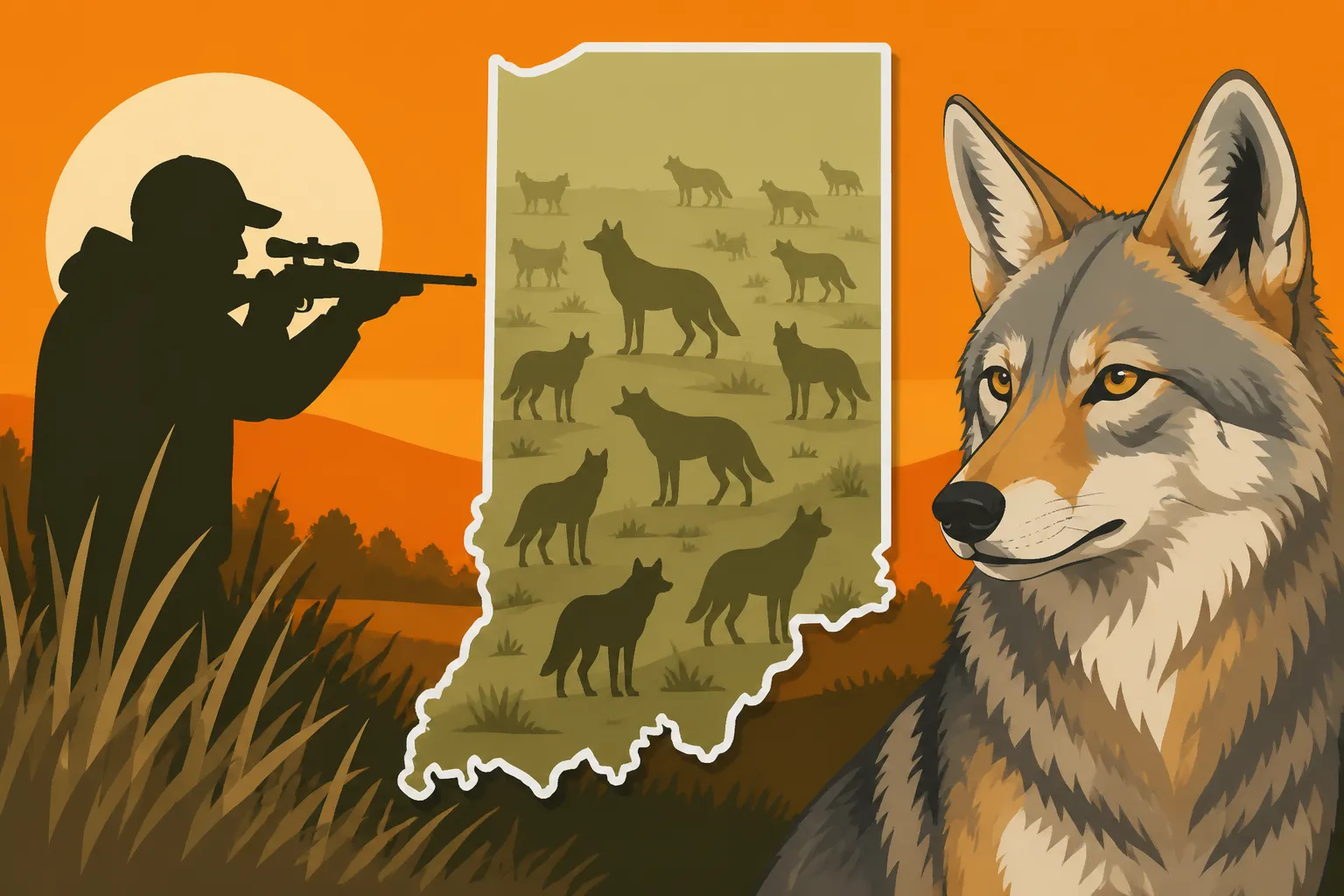
It's a question many Indiana hunters, farmers, and even homeowners have pondered: just how many coyotes are roaming the Hoosier State? If you've ever heard their eerie chorus at night, or spotted one slinking across a field in broad daylight, you know they're out there. But getting a solid, verifiable number on their population is far trickier than you might imagine, and that uncertainty can be a real source of frustration when you're trying to understand their impact or plan a hunt. This guide is going to peel back the layers on Indiana's coyote population, exploring why an exact count is so elusive, what we do know about their numbers, and how they've become such a ubiquitous part of our landscape.
Understanding Coyote Populations in Indiana
Coyotes are an incredibly adaptable species, which is precisely why they've thrived across Indiana and much of North America. They're smart, opportunistic, and can make a home in just about any habitat, from the deepest woods to suburban fringes. This very adaptability, however, makes them notoriously difficult to count. Unlike deer, which can often be estimated through spotlight surveys or harvest data, coyotes are much more secretive.
Why an Exact Number is Elusive
Think about trying to count shadows in the moonlight. That's essentially the challenge with coyotes. They are primarily nocturnal, incredibly wary of humans, and their territories can overlap significantly, making traditional census methods like visual counts highly unreliable. If you've spent any time in the woods, you know how hard it can be to even see a coyote, let alone count every single one in an entire state. The idea of getting an exact, statewide tally is simply unrealistic due to their elusive nature and the vast, varied terrain of Indiana.
Furthermore, their movements are not always predictable. A coyote might range over many square miles, making it difficult to avoid double-counting if different survey methods are used. They don't typically congregate in large, visible groups like some other species, and they're masters of concealment. This means wildlife biologists have to rely on indirect methods and estimations, which provide valuable insights into trends and relative abundance, but not a precise, one-to-one population figure. It's a common frustration for anyone who wants a definitive answer, but it's the reality of dealing with such a wily animal.
Regional Differences in Coyote Density
While we can't pinpoint an exact statewide number, we absolutely see regional variations in coyote density across Indiana. It's not a uniform blanket of coyotes from Lake Michigan down to the Ohio River. Generally, you'll find higher concentrations of coyotes in areas where there's a mix of agricultural land and fragmented woodlots. These are places that offer plenty of prey – rodents, rabbits, even deer fawns – alongside good cover for denning and travel.
Northern Indiana, with its vast stretches of farmland interspersed with fencerows and small woodlots, often provides prime habitat. The same can be said for many central Indiana counties where development meets rural areas, creating a mosaic of suitable habitat. These transition zones, sometimes called the "wildland-urban interface," can support surprisingly robust coyote populations. In contrast, the deep, unbroken forests of the Hoosier National Forest in southern Indiana might have coyotes, but their density might be lower compared to the more diverse habitats found elsewhere. Even within regions, a property with standing corn next to a creek bottom could hold more coyotes than an adjacent, unmanaged timber stand.
Historical Context and Coyote Expansion in Indiana
The presence of coyotes in Indiana is a relatively recent phenomenon in terms of their widespread establishment. While they've likely been here for a long time in small numbers, their significant expansion across the state, and indeed much of the eastern U.S., is a testament to their incredible ability to adapt and capitalize on ecological changes. They are true survivors and opportunists.
When Coyotes First Arrived in Indiana
Coyotes are not native to Indiana in the same way deer or turkeys are. Their historical range was primarily the open plains and western regions of North America. However, as European settlers moved westward, they systematically eliminated large predators like wolves, opening up a vacant ecological niche. At the same time, deforestation and habitat fragmentation in the east created more edge habitat, which coyotes prefer. Indiana saw coyotes begin to truly establish themselves as the 20th century progressed, expanding their range eastward.
Initially, sightings were rare, and many people mistook them for domestic dogs or even wolves, which had long been extirpated from the state. By the mid-to-late 1900s, it became clear that coyotes were here to stay, steadily pushing into every county. They moved efficiently along river systems, through agricultural corridors, and adapted quickly to new food sources and covers. Their arrival effectively filled the role of a top predator that had been missing from Indiana's ecosystem for a considerable time. You can learn more about When Indiana Coyotes First Arrived in our dedicated piece.
Factors Contributing to Their Success
Several key factors have propelled the coyote's success and widespread distribution in Indiana. First and foremost is their incredible dietary flexibility. Coyotes are omnivores, meaning they'll eat just about anything – mice, voles, rabbits, squirrels, fruits, berries, insects, and even carrion. This diverse diet allows them to thrive even when specific prey species might be scarce. They aren't reliant on a single food source, which makes them incredibly resilient.
Second, their breeding success is remarkable. They typically have larger litter sizes than wolves, and the pups have a good survival rate in varied conditions. They can also breed at a relatively young age, contributing to rapid population growth and expansion. Furthermore, the absence of apex predators like wolves or cougars, which would typically compete with or predate on coyotes, means they effectively sit at the top of the food chain in most Indiana ecosystems. Humans are their primary mortality factor, but even hunting pressure rarely impacts overall populations on a large scale due to their high reproductive potential. This combination of adaptability, reproductive success, and limited competition has allowed them to become a permanent fixture in our Indiana landscape.
Estimating Indiana's Coyote Population
Given the challenges, the Indiana Department of Natural Resources (DNR) and other wildlife agencies don't provide a single, fixed number for the state's coyote population. Instead, they focus on monitoring trends, relative abundance, and distribution. This allows them to understand how the population is behaving over time, which is far more useful for management purposes than an impossible-to-get exact count.
DNR's Approach to Population Monitoring
The DNR uses a variety of indirect methods to estimate coyote populations and track their health. These methods are designed to give them a reliable index of population changes, rather than a precise census. Common techniques include scent station surveys, where a small patch of ground is prepared with an attractant (like a scent lure) and then monitored for tracks. The frequency of coyote tracks at these stations provides an index of their relative abundance. Camera surveys are also increasingly used, with trail cameras deployed in strategic locations to capture images of passing wildlife, including coyotes.
Additionally, data from hunter harvest reports, roadkill statistics, and public sightings contribute to the overall picture. While no single data point is perfect, when combined, they create a robust dataset that helps biologists understand if coyote numbers are increasing, decreasing, or remaining stable. They also use this data to inform their Indiana Wildlife Disease Monitoring efforts, which can sometimes provide insights into population health and density in specific areas. It’s important to remember that these methods are designed for trends and relative numbers, not a census like we might do for humans.
What the Trends Suggest
Based on these ongoing monitoring efforts, the general consensus among wildlife biologists is that Indiana's coyote population is well-established across the entire state. There's no indication of a significant decline, and in many areas, their numbers appear stable or even slightly increasing, particularly in urban and suburban fringes where they often go undetected and face fewer direct threats. They've found ways to coexist with humans, even in densely populated areas.
The trends suggest that coyotes have successfully colonized every county in Indiana. While you might not see them every day, they are likely present in any suitable habitat. For hunters, this means that opportunities for predator hunting are virtually statewide and year-round, which is a significant draw for many. If you're scouting for coyotes, understanding these trends helps you realize that you're not looking for a needle in a haystack; you're looking for signs of a pervasive and successful predator. Tools like GoHunt can provide detailed topographical maps and land ownership information, which, while not direct coyote counters, can help you identify ideal habitat—like connecting woodlots or dense creek bottoms—where coyotes are likely to be present, giving you a valuable edge in your scouting.
Impact of Coyotes on Indiana's Ecosystem and Hunters
Coyotes play a significant, albeit sometimes controversial, role in Indiana's ecosystem. As the primary wild canine predator, their presence affects many other species, and their year-round huntable status offers unique opportunities for sportsmen and women. Understanding this impact is crucial for both ecological appreciation and responsible hunting.
Role as a Top Predator
In Indiana, coyotes effectively serve as the top canine predator. This means they influence populations of many smaller animals. Their diet primarily consists of small mammals like rabbits, mice, and voles, which can actually benefit agricultural areas by helping to control rodent populations. They also predate on ground-nesting birds and their eggs, and unfortunately, can sometimes take livestock or domestic pets, especially if given the opportunity. This is a real concern for farmers and rural homeowners, leading many to seek methods of control.
Among deer hunters, there's often a vigorous debate about the coyote's impact on deer populations, particularly fawns. While coyotes certainly do prey on fawns, especially during their vulnerable first few weeks of life, the extent of their impact on the overall deer herd is complex and varies by region and fawn survival rates. Healthy deer populations can typically withstand some level of fawn predation. Nevertheless, coyotes contribute to natural selection, helping to keep deer herds strong by culling weak or diseased individuals. Their presence is a powerful reminder of the delicate balance in nature, and how one species can exert influence across an entire food web.
Opportunities for Hunters
For hunters, coyotes represent a challenging and engaging pursuit that is available year-round in Indiana. Unlike most game animals, there are no closed seasons or bag limits on coyotes, which makes them an excellent target for staying sharp in the off-season or for those who simply enjoy predator hunting. Their wary nature makes them a true test of skill, requiring careful scouting, stealth, and effective calling techniques. Many hunters see it as a way to contribute to game management, especially in areas where they believe coyotes are impacting deer or small game numbers.
Calling coyotes can be incredibly exciting, whether you're using distress calls to mimic an injured rabbit or pup, or more aggressive challenge howls during breeding season. It demands a deep understanding of coyote behavior, wind direction, and cover. Coyote Calling in Indiana Farm Country is a fantastic resource if you're looking to get started or refine your tactics in those specific landscapes. For those hunting in more rugged terrain, Predator Calling Southern Indiana Ridgelines offers tailored advice. Using a mapping application like GoHunt can be invaluable for finding suitable locations on public or private land, identifying travel corridors, and setting up an ambush with the wind in your favor. It allows you to visualize terrain and plan your approach, maximizing your chances of success against these intelligent predators. The sustained presence of coyotes statewide means there's always an opportunity to pit your wits against one of Indiana's most cunning creatures.
Here's a quick overview of Indiana's coyote characteristics:
| Characteristic | Description | Implications for Hunters/Wildlife |
|---|---|---|
| Population Status | Widespread and well-established across all Indiana counties; stable to slightly increasing. | Abundant hunting opportunities. |
| Primary Habitat | Highly adaptable; prefers fragmented woodlots, agricultural edges, and suburban fringes. | Can be found nearly anywhere. |
| Diet | Opportunistic omnivore; small mammals, carrion, insects, fruits. | Controls rodent populations. |
| Activity | Mostly nocturnal, but active during daylight, especially when food is scarce or less pressured. | Requires varied hunting tactics. |
| Hunting Season | Year-round, no bag limits. | Excellent off-season pursuit. |
| Primary Threats | Humans (hunting, trapping, vehicle collisions), disease (mange, rabies). | Hunting is key management tool. |
So, while we can't give you a precise number like "Indiana has exactly 175,322 coyotes," we can confidently say they are abundant and have successfully made Indiana their home from one corner of the state to the other. Their numbers are healthy, their presence is felt ecologically, and they provide an endless, exciting challenge for those of us who enjoy the thrill of predator hunting. If you hear that howl tonight, know it's a testament to their enduring success in the Hoosier State.
Disclaimer
This article is for general informational purposes only and does not constitute professional advice. Laws, prices and regulations vary by location and change over time. Consult a qualified professional for guidance on your specific situation.