Frame Packs for Boning Out a Deer
There's a moment every Indiana deer hunter faces that quickly turns excitement into a true test of grit: you've successfully harvested a beautiful whitetail, but it's down in a thick river bottom, a deep hollow in the Hoosier National Forest, or a mile back in a sprawling public land tract. Getting that animal out, especially if it's a big mature buck, can feel like an impossible task, turning what should be a proud moment into an exhausting struggle. This guide is here to unravel the mystery and stress of deer recovery, specifically focusing on how a frame pack can transform a daunting, all-day drag into a manageable, efficient process of boning out your deer and packing it out with greater ease and respect for your venison.
The Reality of Backcountry Deer Recovery in Indiana
Indiana's diverse landscape, from the steep, rugged hills of the south to the sprawling farm fields and river bottoms of the north, presents unique challenges to deer hunters. While some lucky hunters might drop a deer within sight of a two-track or field edge, more often than not, a successful hunt means figuring out how to get a substantial amount of weight from remote timber back to the truck. This is where the rubber meets the road, or rather, where your back meets a boned-out deer.
Why Boning Out is Often the Best Option for Indiana Hunters
Dragging a whole deer, even a smaller doe, can be an absolutely brutal experience, especially if you're hunting solo. Imagine navigating through a tangle of multiflora rose, over downed logs, and across muddy creek beds – all while pulling 150-200 pounds of dead weight. The reality is, many prime hunting spots in Indiana, particularly on public lands like the Hoosier National Forest or sprawling Fish and Wildlife Areas, are far from easy access.
Warm weather during the early archery season is another critical factor. A deer left whole in temperatures above 40-50 degrees Fahrenheit can spoil quickly, especially if you're facing a long drag or can't get it to a cooler immediately. Boning out in the field drastically reduces the amount of animal that needs to be cooled and makes it far more portable. You're removing all the non-meat weight – the hide, head, bones, and entrails – which often accounts for more than half the animal's total body weight. This lightens your load significantly, allowing you to make multiple, more manageable trips if necessary, or carry it all out in one shot if you have a robust frame pack. It's a game-changer for preserving the quality of your venison and your own physical well-being. Trying to muscle a deer out of a deep ravine after a successful hunt in the unseasonably warm early fall, say when you're trying to figure out How Indiana's Archery Season Runs Into January, makes boning out an almost non-negotiable step.
Consider the dense cover and elevation changes if you're Hunting Southern Indiana Hill Country. A full deer drag here is a brutal undertaking, often requiring multiple people or hours of back-breaking work. Contrast that with packing out only the meat, neatly placed in game bags. The reduction in weight and the more ergonomic distribution of that weight on your back means less strain, less sweat, and a faster, safer recovery. It also helps you get back to camp, or home, quicker to start Butchering a Deer at Camp with fresh, clean meat.
The Limitations of Traditional Daypacks and Internal Frames
Most hunters start with a standard internal frame pack or even a simple daypack. These are fantastic for carrying your essentials for a day in the woods – a few calls, water, snacks, maybe a rain jacket, and even your Optics for Southern Indiana Ridges. They hug your back closely, offer good organization, and are comfortable for hiking. However, they simply aren't designed for the unique demands of hauling heavy, awkward, boned-out meat.
The primary issue is weight distribution and capacity. An internal frame pack relies on a flexible, often curved frame that works with your spine. When you load it with dense, heavy meat, it tends to sag, pull away from your back, and transfer the weight directly to your shoulders, bypassing your hips where the majority of the weight should be carried. This leads to intense shoulder strain, back pain, and instability, making you prone to losing your balance on uneven terrain. The fabric of regular packs isn't typically designed to withstand the sharp edges of bone fragments that might be left on meat, nor the intense compression and stretching that a heavy, irregular load of game requires. Plus, the internal storage means your meat is often directly against your other gear, increasing the risk of contamination or a bloody mess. For serious meat hauling, especially when your animal is far from the nearest access, these packs just don't cut it.
Understanding the Anatomy of a Good Frame Pack for Boning Out
Once you decide that boning out is the way to go for your Indiana deer hunting adventures, the next step is choosing the right tool for the job: a dedicated external frame pack. These aren't your grandpa's old rigid frames; modern designs offer incredible comfort and efficiency for heavy hauling.
Key Components: External Frame, Meat Shelf, and Bag System
A true frame pack designed for packing out game is fundamentally different from a typical internal frame backpack. It’s built around a robust, rigid structure that is meant to carry heavy, awkward loads efficiently.
-
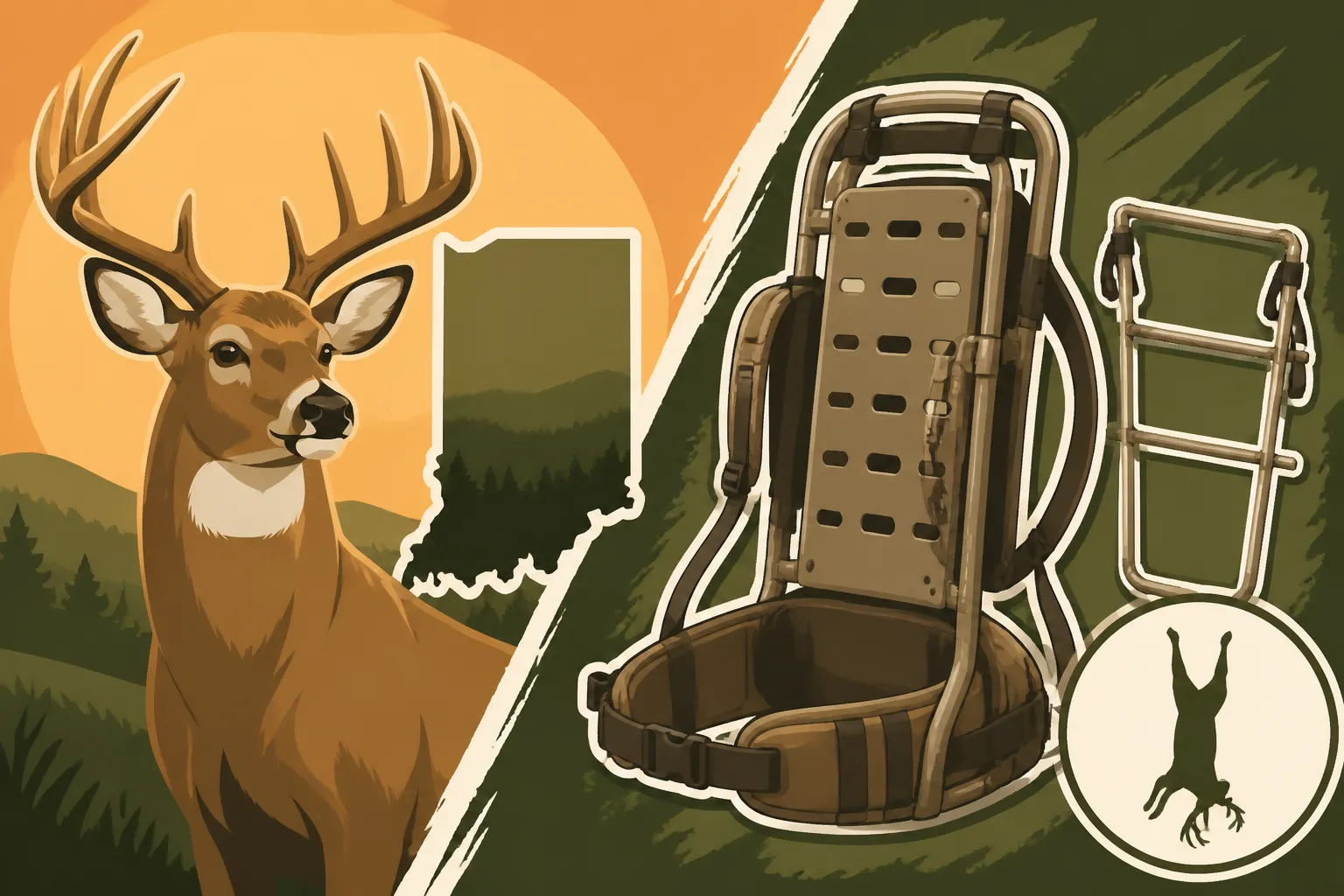
External Frame: This is the backbone of the system, literally. Modern external frames are typically constructed from lightweight yet incredibly strong materials like aluminum or carbon fiber. Unlike internal frames, this rigid structure sits outside the main pack bag. This design allows for superior weight distribution, transferring the bulk of the load directly to your hips via a substantial hip belt. A well-designed external frame pack will have a suspension system that allows for ventilation between your back and the frame, reducing sweat buildup. The stiffness of the frame prevents the load from sagging or shifting, providing excellent stability even when you're traversing steep hills or negotiating tricky obstacles, much like you might encounter when Reading a Ridge for Hoosier Forest Deer. This robust design is essential for securing and stabilizing dense, heavy loads of meat, ensuring it doesn't move independently of your body.
-
Meat Shelf/Hauling System: This component is arguably the most critical feature distinguishing a game-hauling frame pack from a regular backpacking frame. The meat shelf is essentially a platform or heavy-duty compression system that sits between the external frame and the main pack bag (or sometimes, it's integrated directly into the frame). Its purpose is to create a dedicated space for the boned-out meat, keeping it separate from your other gear. This prevents blood from soaking into your clothing, optics, or tent, and allows you to compress the meat securely against the frame. Many modern designs allow you to use just the frame and meat shelf for a dedicated "heavy haul" trip, leaving the main pack bag at camp. This separation is key for hygiene and load integrity, particularly when you're focused on proper Meat Care Gear for Indiana Hunters. You'll often find strong, adjustable compression straps that cinch the meat tightly to the frame, preventing any shifting that could throw you off balance. Some systems even feature a load shelf that can be tucked away when not in use.
-
Bag System: While the frame and meat shelf do the heavy lifting, the bag system provides the organizational capacity for your daily hunting essentials and often works in conjunction with the meat shelf. Many frame packs feature removable or expandable main bags. This modularity is a huge advantage:
- Removable Bags: You can use the frame with a smaller bag for day hunting, then detach the bag, load the meat onto the shelf, and reattach the bag on top of the meat for the pack out. Or, as mentioned, you can leave the main bag at camp and just take the frame and meat shelf for the final retrieval trip.
- Expandable Capacity: Some bags have roll-top closures or external compression straps that allow them to expand significantly when needed, accommodating both your gear and the meat.
- Attachment: The bags securely attach to the frame using robust buckles, zippers, or compression straps. This ensures the bag and its contents move as one unit with the frame, maintaining stability. When you're packing out that heavy set of antlers and skull after Shed Hunting on Indiana Public Land far from the truck, having a versatile bag system that can also handle a boned-out deer is incredibly useful. Reputable brands like GoHunt offer a variety of frame packs with sophisticated bag systems that cater to serious hunters.
Ergonomics and Fit for Indiana's Varied Hunter Builds
Just like a good rifle fits your shoulder, a good frame pack needs to fit your body. The ergonomics and fit are absolutely paramount, especially when you're planning to carry 80-100+ pounds of meat over uneven Indiana terrain. A poorly fitting pack can turn an already strenuous task into a painful ordeal, leading to chafing, numbness, and severe muscle fatigue.
- Adjustable Torso Length: This is perhaps the most critical fitting component. The torso length determines where the hip belt sits relative to your iliac crest (the top of your hip bones). For proper weight transfer, the hip belt needs to ride firmly on your hips, not your waist. A pack with an adjustable torso allows you to customize this fit, ensuring the load is carried on your skeletal structure, not your shoulders. Many hunters, especially if they are new to specialized gear, underestimate the importance of this feature.
- Hip Belt: A well-padded, wide, and stiff hip belt is essential. It should wrap comfortably around your hips, distributing the load across a wide area. Look for belts that are adjustable and conform to your body shape. The lumbar pad, which sits against your lower back, should provide firm support without being overly rigid or creating pressure points.
- Shoulder Straps: While the hip belt carries the majority of the weight, the shoulder straps are crucial for stabilizing the load and providing comfort. They should be well-padded and contoured to prevent digging into your shoulders. Load lifter straps, which connect the top of the shoulder straps to the frame, allow you to pull the top of the pack closer to your body, adjusting the center of gravity and preventing the pack from pulling backward.
- Testing the Fit: The best way to test a frame pack is to load it with actual weight (at least 40-50 pounds, preferably more) and walk around. Pay attention to any pressure points, discomfort, or instability. Does the hip belt stay put? Do the shoulder straps feel comfortable? Does the pack sway when you move? Remember, a pack that feels okay empty will feel entirely different with a heavy load. It's a significant investment, so take your time and find one that truly matches your build. When you're working your way through thick timber to set up your Treestand Setups in Hoosier National Forest, a comfortable pack makes all the difference in your energy levels for the hunt, let alone the pack out.
Practical Considerations When Choosing and Using a Frame Pack in Indiana
Beyond the core components and fit, there are several practical factors to consider when selecting and utilizing a frame pack for deer hunting in Indiana. These elements contribute to the pack's longevity, your comfort, and the overall success of your recovery operation.
Material Durability and Weather Resistance
Indiana weather can be incredibly fickle. A sunny, crisp morning can quickly turn into a cold, driving rain or even snow by the afternoon. When you're deep in the woods, potentially several miles from your vehicle, your gear needs to stand up to the elements and the rigors of the environment.
- Rugged Fabrics: Look for packs made from heavy-duty, abrasion-resistant fabrics like Cordura nylon, Ripstop nylon, or similar high-denier materials. These fabrics are designed to withstand snagging on briars, rubbing against tree bark, and general rough handling that comes with backcountry hunting. A flimsy pack won't last long when you're pushing through thickets in a Hunting Indiana River Bottom Funnels or traversing rocky slopes. The last thing you want is a torn bag spilling your valuable venison onto the forest floor.
- Weather Resistance: While few packs are truly 100% waterproof without an additional cover, a good frame pack will have a degree of water resistance. Look for fabrics with a durable water repellent (DWR) coating and taped seams where possible. Many quality packs also include an integrated rain cover that can be quickly deployed when the skies open up. For extreme wet conditions, you might consider lining the main compartment with a heavy-duty trash bag or using dry bags for critical items like extra clothing or optics. Keeping your gear, and more importantly your meat, dry is paramount, especially if you find yourself tracking a deer for an extended period, perhaps even having to Blood Trailing After Dark in Indiana in damp conditions.
Packing Techniques for Boned-Out Meat
Knowing how to properly debone a deer and load your frame pack is as important as having the right gear. It's an acquired skill that significantly impacts your efficiency and the quality of your venison.
- Field Deboning Methods: There are two main approaches. The "gutless method" is popular for its speed and minimal mess, allowing you to remove the four quarters, backstraps, and tenderloins without gutting the animal. This is excellent for keeping things clean. Alternatively, you can fully debone all the muscle groups after gutting. Regardless of the method, precision is key. Learn to separate the meat cleanly from the bone and connective tissue. Practice beforehand on less valuable cuts of meat or watch detailed tutorials. A sharp, durable Field Dressing Knives Worth Carrying is essential.
- Using Game Bags: These are not optional. Game bags (typically made of breathable, tough mesh or synthetic cloth) are crucial for keeping your boned-out meat clean, protecting it from dirt, leaves, and insects, and allowing it to cool properly. Never put warm meat directly into plastic bags, as this traps heat and moisture, promoting bacterial growth. Label your bags (e.g., "front left shoulder," "backstrap") to make processing easier later. Brands like GoHunt often feature recommendations for durable, breathable game bags suitable for various conditions.
- Loading the Frame Pack:
- Meat Shelf First: If your pack has a dedicated meat shelf, this is where the bulk of the boned-out meat goes. Place the heaviest, densest cuts (like the hindquarters) directly on the shelf and secure them tightly with the compression straps. The goal is to get the weight as close to your back and as low on the frame as possible for optimal balance and weight transfer.
- Even Distribution: Try to distribute the meat evenly side-to-side to prevent the pack from leaning. If you have multiple trips, prioritize the heaviest sections first.
- Secure and Compress: Cinch all compression straps down tightly. The meat should be practically molded to the frame, with no wiggle room. Any shifting will throw you off balance and cause discomfort.
- Gear Bag on Top: Once the meat is secured, your main pack bag (if removable) can be attached on top of the meat, or your remaining gear can be packed into the main compartment. This keeps your essential items accessible and prevents them from being crushed by the heavy meat load.
- Test Walk: Before committing to the full hike out, take a few steps. Adjust straps, bounce slightly, and ensure everything feels secure and balanced. It's better to fix an unstable load now than miles into your hike.
Legalities and Logistics for Public Land Meat Hauls
Hunting on public land in Indiana means adhering to specific rules and regulations, not just for the harvest itself, but also for transporting your game. A frame pack aids in complying with these rules discreetly and efficiently.
- Proof of Harvest and Tagging: Indiana requires hunters to record their harvest and typically tag the deer immediately after it's down. While specific rules can change, ensuring you have the necessary documentation (like your license and a valid tag) and that your deer is properly tagged before you begin boning and packing is critical. A frame pack doesn't negate these requirements; it simply helps you transport the legal components.
- Carcass Disposal: Be mindful of ethical and legal requirements for disposing of non-meat portions. Bones, hide, and gut piles should be left well away from trails, roads, and water sources, returning them to the natural environment where they can decompose. This is especially true on busy public land.
- Discretion and Cleanliness: Transporting boned-out meat in game bags within a frame pack is often more discreet and hygienic than hauling a whole, bloody carcass. This can be particularly appreciated when walking out through parking lots or past other hunters. It also keeps your vehicle much cleaner, which is a small but mighty victory after a successful hunt. If you're wondering about managing a deer in a specific area like the Hoosier National Forest Hunting, proper packing practices can help you blend in and be respectful of other users. For up-to-date regulations, many hunters find resources like those offered by GoHunt invaluable for staying informed about local rules and ethical practices.
| Feature | Description | Benefit for Hunter |
|---|---|---|
| External Frame | Rigid metal or carbon fiber structure outside the main bag. | Superior weight distribution to hips, preventing sag and enhancing stability for heavy loads. |
| Meat Shelf/Sling | Dedicated platform or compression system for securing boned-out meat. | Keeps meat separate from gear, allows for secure, heavy loads close to the body, improves hygiene. |
| Modular Bag System | Main bag can be removed, expanded, or used with just the frame. | Versatility for day hunting vs. heavy hauling, adaptable capacity for different loads. |
| Adjustable Torso | Suspension system allows customization of back panel length. | Ensures proper fit for individual hunter's body, crucial for transferring weight to hips, prevents shoulder strain. |
| Padded Hip Belt | Wide, stiff, and well-padded belt that rides on the hips. | Carries the majority of the load, significantly reducing fatigue and discomfort. |
| Durable Fabric | High-denier nylon or Cordura with DWR coating. | Withstands abrasion from brush and rocks, offers weather resistance for unpredictable Indiana conditions. |
In the end, investing in a quality frame pack and learning the art of boning out a deer isn't just about making the recovery easier; it's about elevating your entire hunting experience. It grants you the freedom to hunt deeper, in more remote and challenging terrain, without the dread of an impossible drag. It ensures your hard-earned venison is handled ethically and efficiently, preserving its quality for your table. For the dedicated Indiana deer hunter, especially those who venture into places like the Hoosier National Forest or the sprawling river bottoms, a frame pack isn't just gear—it's an essential tool that ensures your successful hunt truly culminates in success, not just exhaustion.
Disclaimer
This article is for general informational purposes only and does not constitute professional advice. Laws, prices and regulations vary by location and change over time. Consult a qualified professional for guidance on your specific situation.