National Forest Camping Near Your Stand
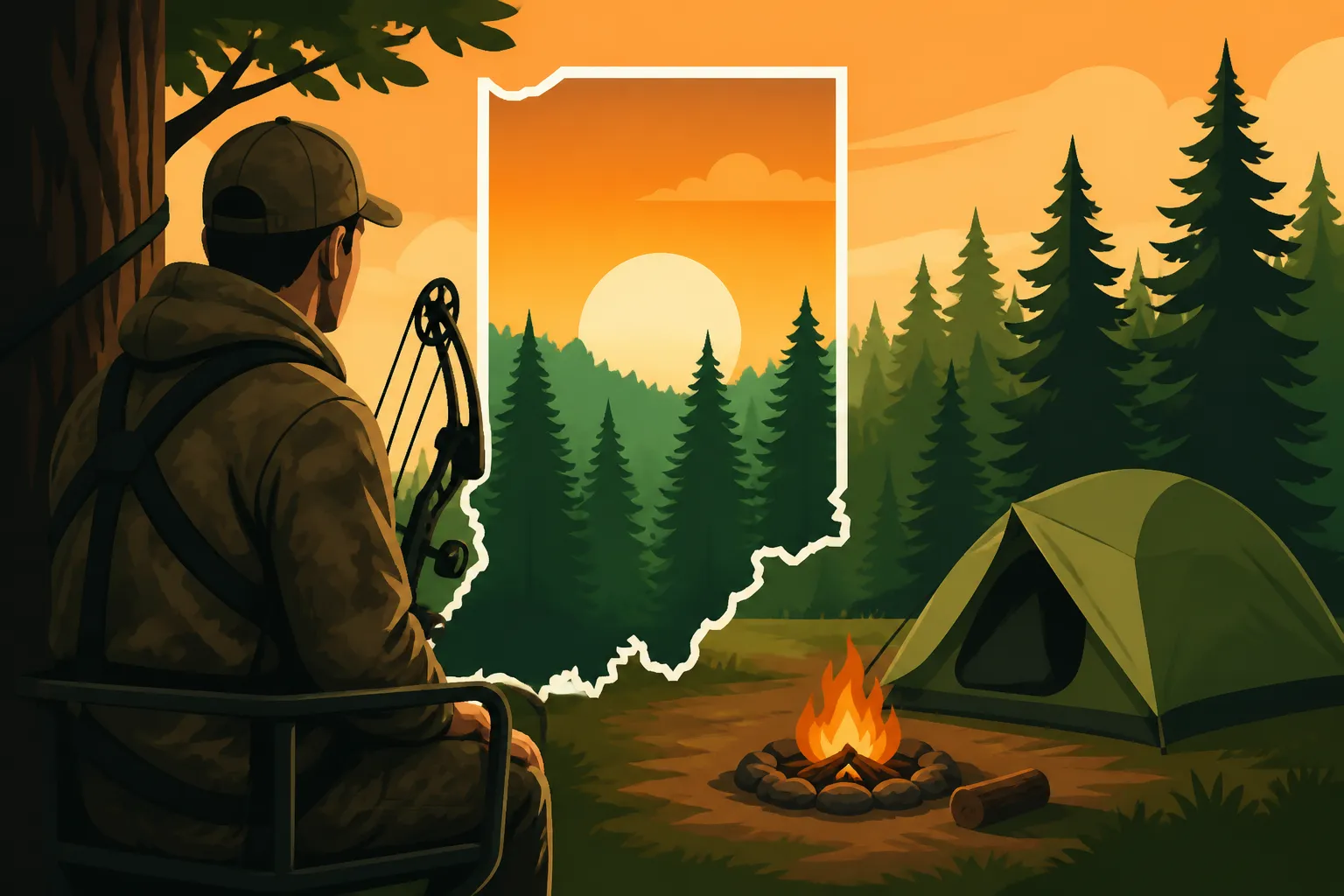
There’s nothing quite like the crack of dawn in the Indiana woods, but for many of us, getting to that perfect stand location before first light means an agonizingly early alarm and a long, noisy trek in the dark. That struggle of long walks, bumping into trees, and maybe even spooking game before you're settled is real. This guide is all about embracing the convenience and strategic advantage of national forest camping right near your hunting stand, specifically within the sprawling beauty of Hoosier National Forest. We'll dive into how to make this work, from scouting to gear, so you can wake up truly in the woods, ready to hunt.
The Allure of Camping Close to Your Hunting Stand
Let's face it, we've all been there: the alarm goes off at 3:30 AM, you stumble out of bed, grab a stale pop-tart, and then drive an hour just to get to the trailhead. Then, it's another 30-minute hike with all your gear, trying to be quiet in the predawn gloom, often feeling rushed and anything but "in tune" with the forest. Camping close to your stand completely transforms this experience, allowing you to immerse yourself fully in the hunt and the environment from the moment you wake up. It's about more than just convenience; it's a strategic shift that can drastically improve your chances and overall enjoyment.
Why Proximity Matters
The benefits of camping close to your stand are numerous, and they all boil down to giving you an edge. Firstly, imagine waking up to the sounds of the forest, already in your hunting clothes, with only a short, silent walk to your stand. This dramatically saves time and cuts down on the physical exertion required for long, pre-dawn hikes, meaning you arrive at your stand feeling refreshed and focused, not winded and stressed. You're simply less likely to make noise, sweat excessively, or leave a heavy scent trail over a long distance.
Secondly, scent control becomes much more manageable. When you're camping right there, your footprint in the hunting area is concentrated. You can set up your camp downwind of your primary hunting area and minimize travel paths, keeping human odor away from crucial deer or turkey travel routes. If you're cooking, it's a quick, controlled burst of smell that disperses, rather than a lingering trail from your vehicle. This immediate proximity also allows you to capitalize on those golden first and last minutes of legal shooting light, when game is often most active, without worrying about a lengthy walk back to your truck in the dark.
Understanding Hoosier National Forest's Camping Rules
Navigating the rules for camping, especially within a federal property like Hoosier National Forest, is crucial to ensuring you have a legal and enjoyable experience. Unlike state forests or some private lands, national forests often have specific guidelines regarding dispersed camping versus developed campgrounds. The Hoosier National Forest generally permits dispersed camping throughout much of its acreage, meaning you can pitch a tent almost anywhere, provided you're adhering to certain principles and distances. This is fantastic news for hunters, as it opens up vast areas for strategic camp placement.
However, "anywhere" doesn't mean anywhere. You typically need to be a certain distance from roads, developed recreation areas, private property lines, and water sources to minimize impact and ensure safety. These distances can vary, so always check the latest Hoosier National Forest guidelines or contact a ranger station directly. It's about respecting the land, other users, and the wildlife. For example, setting up your camp right on an active game trail might seem convenient, but it's disruptive and could compromise your hunt. Being knowledgeable about these regulations is key to successfully integrating camping into your hunting strategy in the Hoosier National Forest Hunting areas.
Planning Your National Forest Campout for Hunting Success
A successful hunt that involves camping near your stand isn't just about throwing a tent in your pack. It requires careful planning and a strategic mindset, much like planning your actual hunt. You're essentially merging your campsite selection with your hunting strategy, making decisions that impact both comfort and effectiveness. This means dedicating time to scouting not just for game sign, but also for suitable camp locations that complement your hunting goals.
Scouting for the Perfect Campsite
Just as you'd scout for prime deer bedding areas or turkey roosts, you need to scout for your camp. When you're out there Scouting Indiana Public Land Before Season, use tools like onX Hunt to overlay maps with topography, property lines, and potential water sources. Look for areas with natural cover that offer concealment for your camp from other hunters, while still being a manageable distance from your chosen stand location. Ideally, you want to be close enough for convenience but far enough not to spook game. Consider prevailing wind directions, especially if you plan to have a small fire or cook, ensuring your scent isn't blowing directly into your hunting zone.
Water sources are another critical factor. While you should always pack in plenty of water, having access to a filterable stream or spring nearby can be a lifesaver, especially for longer stays. Terrain plays a huge role; nobody wants to pitch a tent on a steep slope or in a low-lying area that might collect water during a rain shower. Look for flat, well-drained spots under mature timber that offer some protection from wind and weather. Remember, a good campsite enhances your hunting experience, it doesn't detract from it.
Essential Gear for a Stand-Adjacent Camp
Packing for a hunt-and-camp trip in the Hoosier National Forest means striking a balance between comfort, utility, and portability. Since you're likely to be packing everything in on your back, every ounce counts. Your shelter is paramount; a lightweight, compact tent or hammock setup is usually ideal. Consider the season: a three-season tent might be fine for early archery, but a four-season tent or extra insulation will be necessary for late-season hunts when temperatures drop. Don't forget a sleeping bag rated for the expected low temperatures and an insulated sleeping pad to prevent heat loss to the ground.
For cooking, a small, efficient backpacking stove is far better than a campfire for stealth and convenience. It boils water quickly for coffee or freeze-dried meals, and the smell dissipates faster. Proper hygiene items, like a small towel, biodegradable soap, and a toothbrush, are also vital. Headlamps (with extra batteries!) are non-negotiable for navigating between your camp and stand in the dark, and a good first-aid kit is always a smart addition. Think about your Packs for a Hoosier Forest Day Hunt and how you might modify its contents for an overnight stay, adding essentials without overpacking.
| Category | Dispersed Camping (HNF) | Developed Campgrounds (HNF) |
|---|---|---|
| Proximity to Stand | Excellent (can be very close) | Limited (requires drive/longer hike from campground) |
| Privacy/Seclusion | High (choose your own spot) | Low (shared sites, often busy) |
| Amenities | None (no water, toilets, tables, fire rings) | Varies (vault toilets, potable water, fire rings, picnic tables) |
| Cost | Free | Fee required |
| Regulations | Strict Leave No Trace, distance requirements from roads/water | Specific site rules, quieter hours, reservation systems |
| Vehicle Access | Limited (must park on approved roads, hike in) | Drive-in access to site |
| Impact | Potentially low if LNT followed, high if neglected | Concentrated, managed impact |
| Experience | Wild, rugged, self-sufficient | Social, convenient, less "wilderness" feel |
Minimizing Impact and Maximizing Stealth
The beauty of camping in a national forest, especially for hunting, is the opportunity to be truly immersed in nature. However, with that privilege comes the responsibility to minimize your footprint and maximize your stealth. You don't want your camp to be a beacon for other hunters or a disturbance for wildlife. Thoughtful choices about how you operate in camp can make a world of difference, not just for the environment but for your hunting success.
Scent Control at Camp
Maintaining scent control starts long before you ever step foot in your stand, and it extends directly to your campsite. Think of your camp as an extension of your hunting strategy. All your dirty clothes, food wrappers, and cooking smells are potential alerts to game. Store all food and scented items in airtight containers, ideally in a bear bag hung away from your tent if you're in an area with large predators, but even squirrels and raccoons can cause issues. Avoid cooking strong-smelling foods like bacon or heavily spiced dishes right before a hunt. Instead, opt for odorless, pre-packaged meals or cook well before dark so smells dissipate.
Change into your hunting clothes after you've walked to your stand site, or if you're sleeping in them, ensure they're stored in scent-proof bags when not in use. Even seemingly innocuous things like toothpaste or bug spray can carry strong odors. Consider biodegradable, scent-free toiletries. When you're dealing with wind and thermals on a Wind and Thermals on a Southern Indiana Ridge, remember that your camp's location needs to be downwind of your primary hunting area whenever possible, so any residual scent blows away from, not into, where you expect game to travel.
Leave No Trace Principles in a Hunting Context
"Leave No Trace" isn't just a catchy phrase; it's a set of ethical guidelines that are particularly pertinent when you're combining camping with hunting on public land. It means leaving the wilderness as you found it, or even better. This includes packing out everything you pack in, including all trash, food scraps, and even human waste if you're in a sensitive area or cannot properly bury it (which usually means digging a cat hole at least 6-8 inches deep and 200 feet from water sources, camp, and trails).
Fires are another area where Leave No Trace is critical. While a small, contained fire can be comforting, use a stove for cooking if possible to reduce impact and scent. If you do have a fire, ensure it's small, uses only dead and downed wood, and is completely out and cold to the touch before you leave or go to your stand. Choosing your campsite wisely, on durable surfaces away from sensitive vegetation, prevents lasting damage. When you use mapping tools like GoHunt or onX Hunt to scope out your terrain, also be mindful of your proposed campsite's ecological sensitivity. You want to leave no trace that you were there, ensuring Public Hunting Land in Indiana remains pristine for future generations and doesn't alert game to your prolonged presence.
Practical Considerations and Safety Tips
Camping near your stand in Hoosier National Forest adds an extra layer of adventure to your hunt, but it also means being prepared for anything Mother Nature or the wilderness might throw your way. From sudden weather shifts to unexpected encounters, a little foresight and preparedness go a long way in ensuring a safe and successful experience. Remember, you're out there because you love the challenge, but part of that challenge is being self-reliant and wise.
Weather Preparedness for Indiana's Forests
Indiana weather is notoriously fickle, and the deep woods of the Hoosier National Forest can feel even more isolated from changing conditions. A warm, sunny morning can quickly turn into a cold, driving rain by afternoon, or even an early-season snow flurry in the deeper parts of Hunting Southern Indiana Hill Country. Always check the forecast thoroughly before you head out, but be prepared for the unexpected. Pack layers of clothing that can be added or removed as temperatures fluctuate; wool or synthetic materials are far superior to cotton, which loses its insulating properties when wet.
A waterproof outer shell is non-negotiable, not just for rain, but also for cutting wind, which can be brutal on exposed ridge tops. Ensure your tent is truly waterproof and pitched in a spot where water will drain away, not collect underneath. Consider a tarp as an extra layer of protection for your gear or as a quick shelter in an emergency. A good sleeping bag rated for temperatures lower than you expect is a wise investment. Don't let a sudden drop in temperature or an unexpected downpour send you packing prematurely, or worse, put you in a dangerous situation.
Wildlife Encounters and Personal Safety
While Indiana doesn't have large dangerous predators like grizzlies, being in the Hoosier National Forest means sharing the woods with coyotes, bobcats, and plenty of smaller critters. It's important to be "bear aware" even though black bear sightings are rare; proper food storage is always a good idea to prevent attracting any unwanted visitors, from a hungry raccoon to an opportunistic coyote. If you do encounter wildlife, give them space and never approach them. Most animals want nothing to do with humans.
Perhaps a greater "danger" in public land hunting, especially when camping, is encountering other hunters. While the vastness of the national forest often means you can find solitude, especially if you're good at Finding Ground Others Walk Past, it's vital to prioritize safety. Always wear adequate Blaze Orange Requirements during firearms seasons, even when walking to and from your stand or camp. Make your camp distinct but discreet, and avoid setting up directly on well-used trails or in obvious spots. Carry a whistle or signaling device for emergencies, and always let someone know your general hunting and camping plan, including your expected return time. A GPS device or a reliable app like onX Hunt on your phone, coupled with the knowledge of how to use it, can be a lifesaver for navigating in the dark or if you get disoriented. Don't forget your Headlamps for Walking Out After Dark for those crucial twilight hours.
Disclaimer
This article is for general informational purposes only and does not constitute professional advice. Laws, prices and regulations vary by location and change over time. Consult a qualified professional for guidance on your specific situation.