Hunting a Brushy Fence Row at Dusk
Brushy fence rows in Indiana serve as secure travel corridors and evening feeding areas that concentrate whitetail deer movement.

Brushy fence rows in Indiana serve as secure travel corridors and evening feeding areas that concentrate whitetail deer movement.

Indiana cedar thickets provide deer with thermal cover, protection from winter weather, and security cover in open landscapes.

Strategies for hunting deer in standing milo fields help locate and harvest whitetails across Indiana farms during winter.

Indiana deer hunters learn how to scout natural funnels and water sources for consistent dawn whitetail encounters near creek crossings.

Indiana woodlots adjacent to grain elevators attract deer with spilled food, creating predictable nighttime movement patterns and transition zones.

Indiana deer hunting tactics explain how heavy rain alters slough water levels and drives whitetail movement in floodplains.
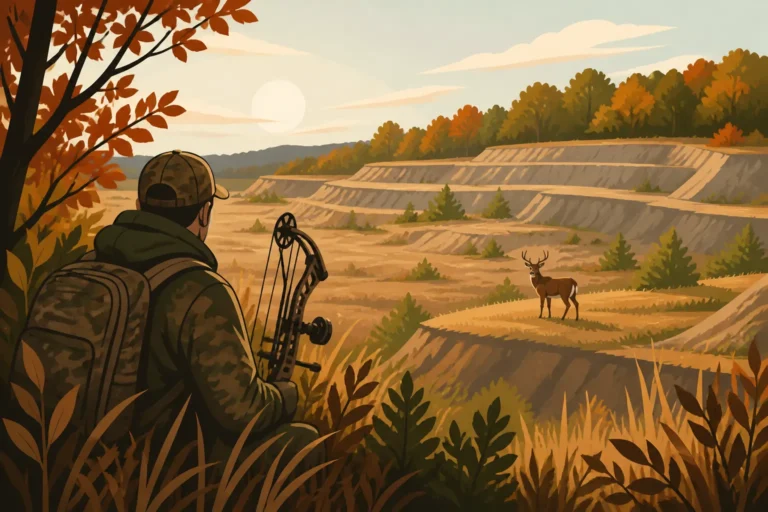
Indiana reclaimed strip mine benches provide secluded deer sanctuaries with dense vegetation, providing hunters unique opportunities for success.
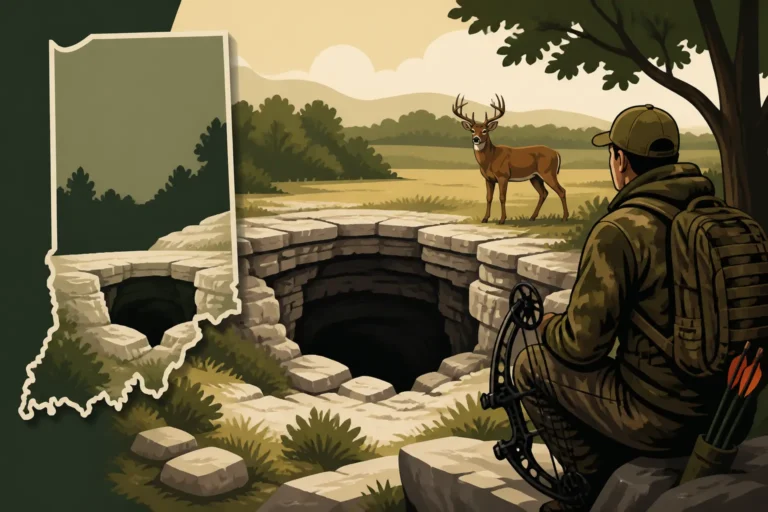
Limestone sinkholes in southern Indiana shape whitetail deer movement, bedding habits, and travel corridors for hunters.

Indiana white-tailed deer hunting strategies explain how bucks and does use clover plots during early morning feeding patterns.

Timbered fence lines serve Indiana deer as secure travel corridors that connect woodlots, bedding thickets, and agricultural fields.