Reporting a Poacher in Indiana
It’s a gut-wrenching feeling, isn't it? You’re out enjoying the peace and beauty of Indiana’s woods or fields, maybe scouting for the next season, or just appreciating nature, and you stumble across something that just doesn’t feel right. An untagged deer, a dead animal left to waste, or a suspicious vehicle leaving a spot you know shouldn't have active hunting. That sinking sensation tells you something illegal, unethical, and frankly, infuriating, has happened. This guide is here to walk you through exactly how to report a poacher in Indiana, ensuring our wildlife resources are protected for everyone.
Why Reporting Poaching is Crucial for Indiana's Wildlife
When you see illegal hunting activity, it’s not just an isolated incident; it’s a direct threat to the very fabric of our outdoor heritage here in the Hoosier State. Poaching undermines all the hard work that goes into wildlife management, conservation, and ensuring healthy game populations. It’s a theft, plain and simple, from every law-abiding hunter, angler, and nature enthusiast.
The Ripple Effect of Illegal Activity
Think about it: every deer taken out of season, every turkey harvested over the limit, every fish caught with illegal methods, directly impacts the sustainability of those populations. Our Indiana DNR biologists work tirelessly to set season dates, bag limits, and regulations based on scientific data, all designed to maintain healthy numbers of game animals. When poachers ignore these rules, they're disrupting that balance. They're taking opportunities away from ethical hunters who play by the rules, and they're potentially putting stress on local populations, especially in areas where deer or turkey numbers might already be on the edge. It's a selfish act that harms the entire ecosystem and the community that cares for it.
Furthermore, poaching can have serious economic consequences. Hunting and fishing contribute significantly to Indiana's economy through license sales, gear purchases, and related travel and tourism. These funds often directly support conservation efforts. When poaching occurs, it devalues legal hunting and reduces the incentive for responsible participation, effectively stealing from the very programs designed to protect our natural resources.
Protecting Our Shared Resources and Heritage
Indiana's wildlife is a public trust, belonging to all citizens, not just a select few who choose to break the law. Every deer that roams the Hoosier National Forest, every gobbler strutting through a field edge, is part of a shared natural heritage that we all have a responsibility to protect. When we report poaching, we're not just being a "tattletale"; we're actively participating in the stewardship of these resources. We're upholding the integrity of hunting, which is a vital conservation tool, and ensuring that future generations will have the same opportunities to experience Indiana's abundant wildlife. It's about preserving a way of life, an ethical code, and the wild places that make Indiana special. Understanding the gravity of these actions is the first step towards taking effective action against them, and knowing about Indiana Wildlife Violation Penalties might further motivate you to act.
How to Report Poaching in Indiana: Step-by-Step
Seeing something suspicious is one thing; knowing what to do about it is another. Luckily, Indiana has a well-established system in place to make reporting poaching straightforward and, crucially, anonymous. The key is to act quickly and provide as much detail as possible.
The Indiana Turn In a Poacher TIP Program
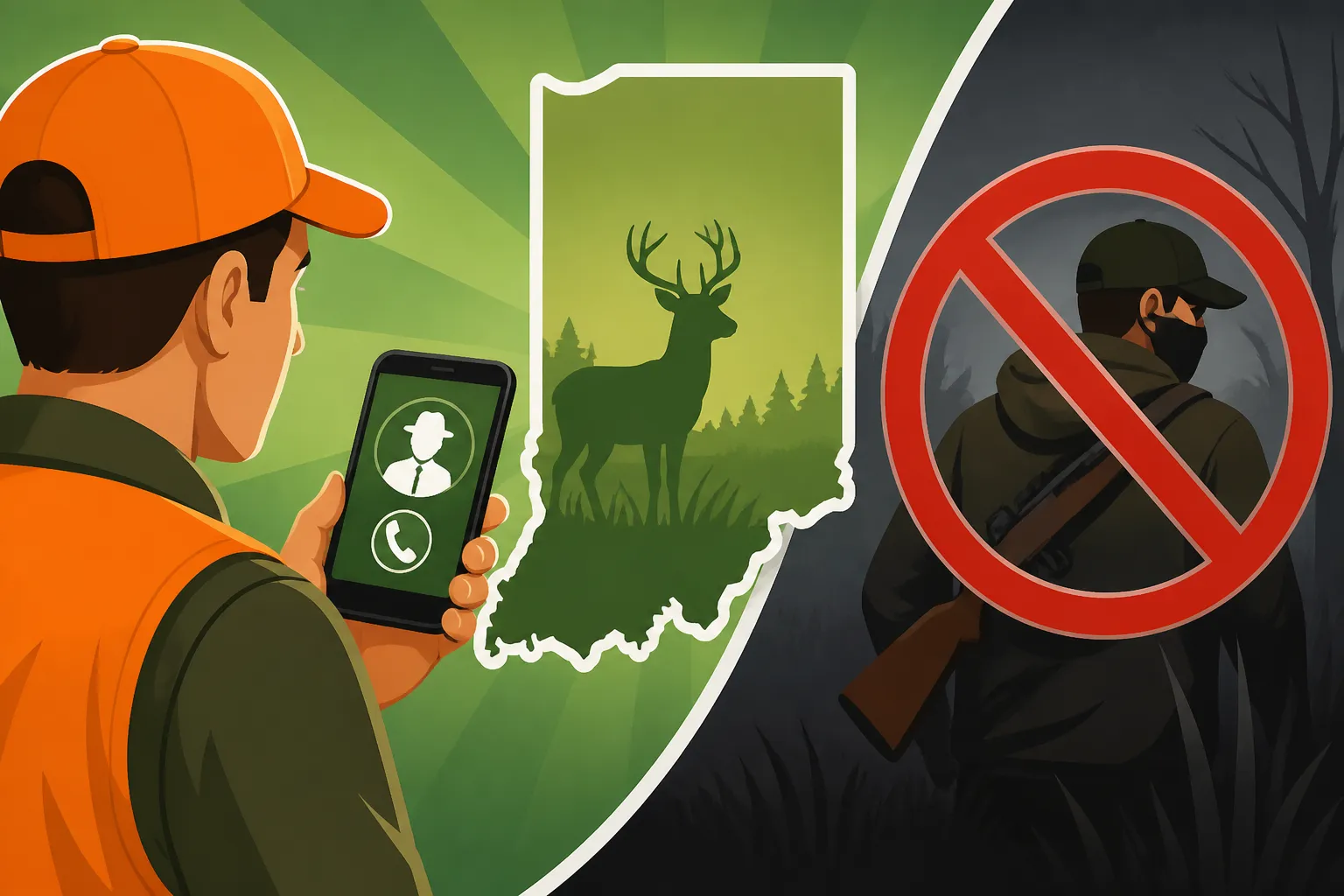
The most effective way to report poaching in Indiana is through the Turn In a Poacher, Inc. (TIP) program. This is a non-profit organization that works hand-in-hand with the Indiana Department of Natural Resources (DNR) Law Enforcement to receive and act on anonymous tips. You might be hesitant to get involved, worried about retaliation or having your name out there, but the TIP program is specifically designed to protect your identity. You can call their dedicated toll-free hotline, which operates 24/7, or submit a report online. The hotline number for the Indiana Turn In a Poacher (TIP) program is 1-800-TIP-IDNR (1-800-847-4367). This direct line ensures your report goes straight to the authorities who can investigate. Remember, even if you feel uncertain, it's always better to make the call and let the professionals assess the situation.
What Information to Gather Before You Call
The more information you can provide, the better chance DNR law enforcement has of apprehending the suspect and taking appropriate action. Think like an investigator for a moment. What details would you need to solve a case? Before you pick up the phone, try to gather the following:
- Location: This is paramount. Be as specific as possible. GPS coordinates from your phone, landmarks, road names, nearest intersections, even a general area on a property you know. Mention if it’s public land, like a state forest or a Fish and Wildlife Area, or private land. Using resources like the DNR map tools or even apps like GoHunt can help you pinpoint locations accurately.
- Date and Time: When did you observe the incident? Was it ongoing, or did you find evidence after the fact? Even an approximate time frame can be helpful.
- Description of Suspect(s): If you saw people, note their physical appearance, clothing, approximate age, and any distinguishing features. Did they have a particular accent? Were they alone or with others?
- Vehicle Description: Make, model, color, license plate number (this is GOLD), distinguishing features like dents, stickers, or unique modifications. Where was the vehicle parked?
- Nature of the Violation: What exactly did you see? Was it someone shooting out of a vehicle? Hunting after legal hours? Exceeding bag limits? Targeting protected species? Harvesting an untagged deer? All these details paint a clearer picture.
- Evidence: Did you see a specific animal, like a deer carcass, left behind? Are there spent shell casings? Did you capture photos or video (safely and without putting yourself in danger, of course)? This evidence can be crucial, and knowing about how Trail Camera Rules on Indiana Public Land might provide context on what evidence is permissible.
- Direction of Travel: If the suspects left, which way did they go?
Even if you don't have all these details, don't hesitate to call. Any piece of information can be helpful.
Understanding Anonymity and Follow-Up
The TIP program takes anonymity seriously. When you call, you won't be asked for your name or contact information unless you explicitly volunteer it. You'll be given a confidential code number. If the information you provide leads to an arrest and conviction, you may be eligible for a reward, which you can claim using that code number, still without revealing your identity.
It’s important to understand that DNR officers receive many tips, and not all of them lead to immediate action. They have to prioritize based on the severity and credibility of the information. You might not see a marked DNR truck pull up immediately after your call, but rest assured, your information is processed and investigated. Sometimes, your report might be just one piece of a larger puzzle they’re already working on, or it might be the critical tip that initiates a new investigation. Patience is key, and trusting the process is important. The objective is to ensure that those who break the law are held accountable, protecting the wildlife that we all cherish.
Common Poaching Scenarios and What to Look For
Poaching isn't always a dramatic, movie-style chase. Often, it's subtle, or it's simply a hunter taking advantage where they shouldn't. Being aware of the common types of illegal activity can help you identify a situation worth reporting. Our Indiana Deer Season Structure Explained and Indiana Spring Turkey Season Rules are excellent resources to keep handy so you know exactly what is and isn't legal at any given time.
Out-of-Season or Illegally Taken Game
This is probably the most straightforward type of poaching to identify. If it’s deer season, but someone is shooting a hen turkey, or vice-versa, that’s a clear violation. More commonly, it involves deer. Indiana has very specific seasons: archery, firearms, and muzzleloader. If you see someone hunting deer outside of these windows, or with an illegal weapon for that specific season (though this has changed with the new statewide rifle rules), that's a problem. For example, if you observe someone actively deer hunting with a firearm in mid-September, long before Indiana Firearms Season Opening Day, that’s a definite red flag.
Another common scenario is finding evidence of an animal taken illegally. Perhaps you find a deer carcass that has only the antlers removed, with the rest of the meat left to rot. This is often referred to as "trophy poaching" and is a serious offense, constituting wanton waste. Or you might see someone driving around with an untagged deer in the back of their truck. Remember that Indiana Deer Reporting Requirements mandate that all legally harvested deer must be reported within 48 hours and checked in via the online system or app. An untagged deer indicates a potential violation of bag limits or other rules.
Suspicious Activity on Private or Public Land
Poaching isn't always about the animal; it can also be about the location or method. Here are a few things that should raise an eyebrow:
- Hunting on Posted Private Land Without Permission: This is straight-up trespassing, which is often tied to poaching. If you know a property is strictly private and posted, but you see someone actively hunting there, it's worth reporting. Remember that Indiana Property Access Permit Requirement means hunters usually need explicit permission.
- Hunting at Night with Artificial Lights: "Spotlighting" deer at night is illegal in Indiana. If you see vehicles slowly cruising rural roads with powerful spotlights sweeping fields, especially during deer season, it’s highly suspicious. This often involves shining deer and then shooting them, which is not only illegal but incredibly dangerous.
- Shooting from a Roadway or Vehicle: It is illegal to shoot from, across, or into a public road or highway right-of-way. If you witness someone shooting from their vehicle, that’s a clear violation. It's not only illegal but incredibly unsafe.
- Discharging a Firearm Near Buildings: There are specific setback rules for discharging firearms near occupied dwellings. If someone is shooting dangerously close to homes, that's a public safety issue and a violation.
- Hunting in Closed Areas: Some areas, like certain state parks or wildlife refuges, may have restrictions or be entirely closed to hunting. Knowing the general lay of the land, perhaps by consulting your GoHunt maps or the Indiana DNR website, can help you identify if someone is hunting where they shouldn't be.
Over-Bagging and Untagged Kills
Bag limits are in place for a reason: to manage wildlife populations responsibly. When a hunter takes more animals than legally allowed, they are over-bagging. This can be hard to prove unless you see it firsthand, but sometimes clues emerge. For instance, if you consistently see the same individual with multiple deer in a short period, and it seems excessive for the available tags, it might be worth noting. While Indiana allows hunters to purchase bonus antlerless tags, there are still limits.
As mentioned earlier, untagged kills are a major sign of a problem. Every legally harvested deer in Indiana must have a valid tag attached immediately after the kill, and then be registered with the DNR. If you find a fresh kill with no tag, or see someone transporting an untagged animal, it could indicate an illegal harvest, either out of season, over the limit, or taken without a valid license. This is particularly relevant when considering Indiana Carcass Movement Restrictions which are in place for disease management, adding another layer of regulatory compliance that poachers ignore.
| Indiana TIP Program Contact Information & Key Details |
|---|
| Phone Number |
| Online Report |
| Anonymity |
| Reward Eligibility |
| Information to Gather |
| Why Report |
The Role of Technology in Catching Poachers
In today's connected world, technology offers powerful tools that ethical hunters and concerned citizens can use to help law enforcement catch poachers. From mapping apps to discreet cameras, leveraging these resources can provide invaluable evidence. This is especially true when it comes to gathering verifiable location and time data.
Trail Cameras and Digital Evidence
Trail cameras have become ubiquitous in the hunting world, primarily used for scouting deer movement and patterns. However, they can also be incredibly effective at catching poachers in the act. If you have a trail camera on your private property, or even on public land where rules permit, and it captures illegal activity, that footage is powerful evidence. The timestamp and date stamp on the image or video provide undeniable proof of when and where the incident occurred.
When placing cameras, especially in areas prone to illegal activity, consider strategic placement that minimizes visibility to potential poachers while still capturing clear images. If your camera captures images or video of individuals engaged in poaching, or even just suspicious activity that helps identify a vehicle or person, make sure to save that data. When you report to TIP, mention that you have digital evidence. DNR law enforcement will guide you on how to properly submit this evidence without compromising its integrity. Remember, always prioritize your safety; never confront a suspected poacher directly, just gather information discreetly.
GPS and Mapping Apps for Location Data
Gone are the days of relying solely on paper maps and vague directions. Modern GPS devices and smartphone mapping applications like onX Hunt or even Google Maps are indispensable for providing precise location data. If you witness poaching, immediately mark your current location on your GPS or mapping app. These apps will provide exact latitude and longitude coordinates, which are incredibly valuable for law enforcement. Even if you're not at the exact spot of the incident, marking where you were when you saw the activity allows officers to triangulate and investigate the area effectively.
Beyond just marking a spot, many apps allow you to add notes or photos to your saved waypoints. You can quickly snap a photo of a suspicious vehicle or scene (again, safely and discreetly) and attach it to a waypoint with a description. This creates a detailed digital record that can be quickly shared with authorities. Being familiar with Using the Indiana OnX and DNR Map Tools can give you a significant advantage in documenting and reporting any wildlife violations you encounter. The better you can describe and pinpoint a location, the quicker and more effectively DNR law enforcement can respond and investigate.
Disclaimer
The information provided in this guide is for general informational purposes only and does not constitute legal advice. While efforts have been made to ensure accuracy, hunting laws and regulations can change. Always consult the most current Indiana Department of Natural Resources (DNR) hunting and trapping guide or contact DNR Law Enforcement directly for official and up-to-date information.