Indiana Air Rifle Hunting Rules
It can be incredibly confusing trying to keep up with all the changes and nuances of hunting regulations in Indiana, especially when it comes to newer technologies or less common methods. Many of us grew up thinking of air rifles as simple backyard plinkers, hardly suitable for serious hunting, but modern airgun technology has transformed dramatically. This guide is here to cut through the confusion surrounding Indiana air rifle hunting rules, offering a clear, comprehensive breakdown of what's legal, what's not, and practical advice to help you consider adding one to your hunting toolkit.
The Evolution of Air Rifles and Hunter Confusion
For many seasoned Hoosier hunters, the very idea of hunting big game with an "air rifle" conjures images of Red Ryder BB guns and tin cans. This deeply ingrained perception often leads to a lot of head-scratching and misinformation when the topic of modern airgun hunting comes up. The reality, however, is that the air rifle world has undergone a quiet revolution, making these once-humble devices incredibly powerful and precise tools.
Defining Modern Air Rifles Versus Traditional BB Guns
Let's clear the air right away: the air rifles we're talking about for hunting aren't your grandpa's spring-piston BB gun, although those certainly still exist for small pest control and target shooting. Modern hunting air rifles, particularly those capable of taking larger game, are predominantly Pre-Charged Pneumatic (PCP) systems. These sophisticated machines use a separate air tank, often filled to high pressure with a hand pump, scuba tank, or compressor, to power their shots. This design allows for incredible consistency, high power, and multiple shots without the recoil or cocking effort of a traditional spring gun.
Think of the difference between a simple slingshot and a compound bow. Both launch projectiles, but their capabilities are worlds apart. A modern PCP air rifle, especially in larger calibers, can propel heavy lead slugs at velocities that deliver substantial kinetic energy. We’re talking about calibers ranging from .22 and .25 for small game all the way up to .30, .35, .45, and even .50 caliber for deer and other medium-sized animals. These aren't toys; they are serious hunting implements designed for precision and power, a far cry from the classic lever-action BB guns that shaped our childhood perception of airguns.
Historical Context of Hunting with Air Guns
While modern air rifles might feel like a new phenomenon to some, the concept of hunting with compressed air weapons actually has a rich, albeit often overlooked, history. Even as far back as the late 18th century, sophisticated air rifles were used for hunting and even military applications. The famous Girandoni air rifle, for instance, accompanied the Lewis and Clark expedition and was reportedly used for hunting large game due to its rapid-fire capability for the era and its relatively quiet operation compared to contemporary firearms.
However, the widespread availability of inexpensive, high-powered firearms in the 19th and 20th centuries pushed airguns largely into the realm of youth shooting and plinking. For decades, they were synonymous with recreational backyard fun, not serious hunting pursuits. This historical shift is precisely why there's so much confusion today. Hunters and regulators alike often operate under outdated assumptions about airgun capabilities, making it a challenge to integrate these advanced tools into established hunting frameworks. The re-emergence of high-power PCPs has finally brought air rifles back into the conversation for ethical and effective hunting.
Unpacking Indiana's Air Rifle Hunting Regulations
Alright, let’s get down to the brass tacks: what exactly are the rules if you want to hunt with an air rifle here in Indiana? The good news is that Indiana has actually been progressive in recognizing the capabilities of modern air rifles, allowing their use for a surprising range of game. However, like all hunting, there are very specific requirements you need to meet to stay legal and ethical.
Legal Game Species for Air Rifles in Indiana
Indiana's Department of Natural Resources (DNR) has made it clear: air rifles are a legal method for taking white-tailed deer, wild turkeys, and most small game species and furbearers. This is a significant expansion from what many might assume. What this means for you, the hunter, is that your powerful PCP air rifle isn't just for squirrels anymore; it can be a legitimate tool during specific big game seasons.
When it comes to small game, this includes common species like squirrels and rabbits, which are a blast to hunt with a quiet air rifle. It also extends to various furbearers such as foxes, coyotes, skunks, opossums, and raccoons during their respective open seasons. The versatility is certainly there. However, it's critically important to note one major exclusion: migratory birds, including doves and waterfowl, cannot be hunted with air rifles in Indiana. This is generally a federal regulation, and it's a rule that air rifle hunters must always keep in mind to avoid violations.
Minimum Caliber and Energy Requirements for Different Game
This is where the specifics really matter, especially for big game. Indiana doesn't just say "air rifles are legal"; they set clear, measurable standards to ensure humane harvesting.
For deer and wild turkey, the rules state that your air rifle must be a .40 caliber or larger, and it must produce at least 200 foot-pounds of energy (FPE) at the muzzle. This energy requirement is crucial. It means not just any .40 caliber air rifle will do; it needs to be powerful enough to deliver a quick, ethical kill. Many modern big-bore air rifles from manufacturers like Benjamin, Hatsan, or Western Airguns are designed to meet or exceed these power levels. It's on you, the hunter, to verify your specific rifle's capabilities, often by checking manufacturer specifications or even using a chronograph to measure actual muzzle velocity and calculate energy with your chosen projectile.
For small game and furbearers, the requirements are less stringent but still present. Your air rifle must be a .177 caliber or larger. There isn't a specific minimum energy requirement listed for small game, but the implicit understanding is that it must be powerful enough to humanely harvest the animal. This means that while a .177 might be fine for squirrels, you might opt for a .22 or .25 caliber for larger small game like raccoons or coyotes to ensure a cleaner kill. Always prioritize ethical take over minimum legal requirements.
Here's a quick summary table of Indiana's air rifle requirements:
| Game Species | Minimum Caliber (inches) | Minimum Muzzle Energy (Foot-Pounds) | Legal Seasons |
|---|---|---|---|
| Deer | .40 | 200 | During authorized firearm deer seasons |
| Wild Turkey | .40 | 200 | During authorized firearm turkey seasons |
| Small Game (e.g., Squirrel, Rabbit) | .177 | Adequate for humane harvest (no specific FPE) | Respective open seasons for small game |
| Furbearers (e.g., Fox, Coyote, Raccoon) | .177 | Adequate for humane harvest (no specific FPE) | Respective open seasons for furbearers |
Specific Seasons, Methods, and General Restrictions
Air rifles are generally permitted during the respective firearms seasons for deer and wild turkey. This means if you're hunting deer with an air rifle, you'll be following the same season dates, bag limits, and general rules as those hunting with traditional firearms, not the archery season, even though air rifles often have a similar effective range to a bow or crossbow. For small game and furbearers, you can use an air rifle throughout their designated open seasons, which often span several months. For more details on these season structures, you can check out resources like Indiana Deer Season Structure Explained or Indiana Small Game Season Rules.
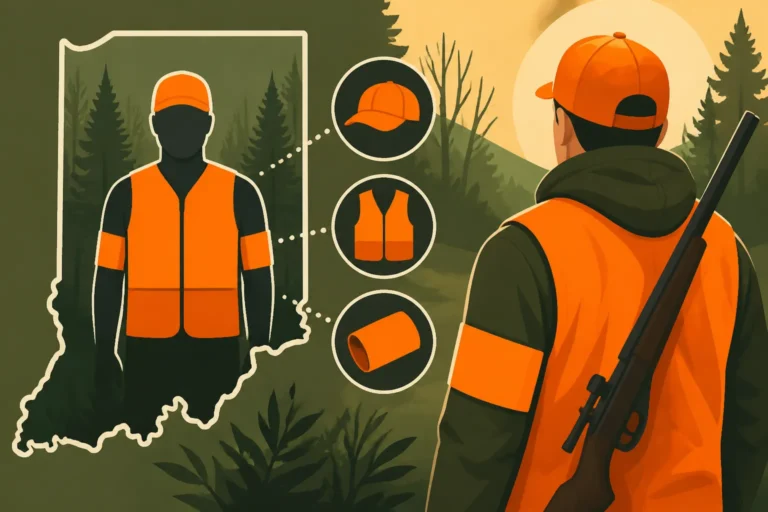
Beyond the weapon itself, all other general hunting regulations apply. You'll still need the appropriate Indiana Hunting Licenses and What They Cost, wear proper blaze orange when required (especially for deer and turkey seasons), and adhere to legal hunting hours. If you were born after December 31, 1986, you'll need to have completed your Indiana Hunter Education Requirements. Whether you're hunting on private land or exploring the vast opportunities of public lands, all access rules and regulations remain in effect. Always double-check current regulations using the Indiana DNR website or the Go Outdoors Indiana app, as rules can sometimes change from year to year. You can even use the GoHunt platform to help stay informed about these potential regulatory shifts and to plan your hunts more effectively.
Practical Considerations for Air Rifle Hunters in the Hoosier State
So, you've decided to dive into the world of air rifle hunting in Indiana. That's fantastic! But knowing the legalities is only the first step. To be truly successful and, more importantly, ethical, you need to understand the practical aspects of hunting with these unique tools in the diverse landscapes of Indiana.
Choosing the Right Air Rifle and Ammunition for Indiana Hunting
When it comes to air rifles for hunting in Indiana, especially for big game, a Pre-Charged Pneumatic (PCP) air rifle is almost universally the best choice. These systems offer the power, accuracy, and shot-to-shot consistency necessary for humane kills. Spring-piston or CO2 rifles, while capable for very small game, typically lack the punch for deer or turkey. Brands like Benjamin, Hatsan, FX Airguns, and Western Airguns offer excellent hunting-specific models that meet Indiana's .40 caliber and 200 FPE requirements for larger game. Think about the overall weight and portability of the rifle, especially if you plan on covering significant ground on public land in areas like the Hoosier National Forest.
Ammunition choice is equally vital. For small game, traditional diabolo pellets work well, offering good accuracy. However, for deer and turkey, you'll want to opt for heavy, solid lead slugs rather than pellets. These slugs retain energy better, penetrate deeper, and expand more reliably, which is crucial for ethical harvest. Make sure your chosen ammunition performs well with your rifle by testing it extensively at various ranges. Knowing your rifle's maximum effective range for a clean kill is paramount – this is often much shorter than with a centerfire rifle, perhaps 50-75 yards for big game, depending on your setup. Much like you would for any Rifle Setups for Indiana Deer Hunting, practice is key.
Ethical Hunting Practices and Shot Placement
The core of all hunting is ethics, and this becomes even more pronounced with air rifles due to their unique characteristics. While powerful, air rifles for big game typically operate at shorter effective ranges than centerfire rifles. This means your shot placement needs to be absolutely impeccable. For deer and turkey, a precise shot into the vital lung-heart area is essential, just as it would be with a bow. Head or neck shots, while effective on small game, are generally not advised for big game due to the smaller target area and higher risk of wounding.
You simply cannot afford to take marginal shots with an air rifle. Know your rifle's capabilities, practice extensively at the range from various positions, and stick to shots you are 100% confident in. If you're hunting deer, for instance, understand that the goal isn't just to hit the deer, but to deliver a shot that ensures a rapid, humane harvest. If you're interested in refining your skills, many of the same principles of shot placement and ethical take discussed in general hunting guides, like those focused on Hunting Indiana's Long Archery Season, apply directly to air rifle hunting. Always be prepared to track, even if your shot feels perfect.
Scouting and Stalking with Air Rifles in Indiana
Given the typically shorter effective range of air rifles compared to traditional firearms, scouting and stalking skills become absolutely critical. This isn't long-range precision shooting; it's about getting close, often within 50-70 yards, for an ethical shot. This means you need to become intimately familiar with your hunting area. Whether you're targeting deer in the dense timber of southern Indiana or squirrels in a local woodlot, understanding animal movement patterns, bedding areas, and feeding zones is non-negotiable.
Utilize tools like the Using the Indiana DNR App or other mapping software from companies like GoHunt to analyze aerial photos, identify natural funnels, and pinpoint prime locations. Spend time in the woods before the season to Scouting Indiana Public Land Before Season. The quiet nature of air rifles can be a significant advantage, allowing for quieter follow-up shots if necessary or less disturbance to other animals in the area compared to a loud centerfire rifle. Consider using static ambush positions like a treestand, as described in Treestand Setups in Hoosier National Forest, or a well-brushed-in ground blind, similar to tactics for Using a Ground Blind on Indiana Public Land, to help minimize your movement and allow game to approach closer.
Staying Ahead: Future Outlook and Resources
The world of hunting is constantly evolving, and air rifle hunting is a prime example of new technology pushing the boundaries of traditional methods. As airgun technology continues to advance and its popularity grows, we can expect the conversation around regulations and hunting practices to continue. Staying informed is crucial for every responsible hunter.
Potential Regulatory Changes and the Expanding Landscape
Hunting regulations are dynamic, reflecting changes in technology, conservation needs, and public opinion. The relatively recent expansion of air rifle legality for big game in Indiana is a testament to this evolving landscape. As more hunters adopt powerful PCPs and demonstrate their ethical use, it's possible we could see further refinements or even expansions in air rifle hunting opportunities. Conversely, negative incidents or public outcry could lead to more restrictions.
It's vital for air rifle enthusiasts to remain engaged with the Indiana Department of Natural Resources and support hunter advocacy groups that work to ensure responsible and accessible hunting opportunities. These organizations often play a crucial role in shaping future policies and educating both hunters and the non-hunting public about the capabilities and ethical considerations of new hunting methods. Keeping an eye on proposed legislative changes is part of being a proactive hunter.
Essential Resources for Indiana Air Rifle Hunters
For the most accurate and up-to-date information, your first stop should always be the Indiana Department of Natural Resources (DNR) website. They publish the official hunting and trapping guides annually, which are the definitive source for all regulations, season dates, and specific weapon requirements. You can often find PDFs of these guides online or pick up a physical copy wherever hunting licenses are sold.
Beyond the official channels, there are numerous online forums and communities dedicated to air rifle hunting. These can be incredible resources for sharing experiences, asking questions, and getting advice on specific gear or tactics from other experienced airgunners. Just be sure to cross-reference any advice with the official DNR regulations. Platforms like GoHunt can also be invaluable for tracking regulatory updates, finding public land access, and planning your hunts with confidence. And, of course, ensure you have your proper Indiana Resident License Options or nonresident equivalent before heading afield.
Disclaimer
Please remember that hunting regulations can change. Always consult the official Indiana Department of Natural Resources (DNR) website and their current hunting and trapping guide before engaging in any hunting activity. This article provides general information and should not be considered a substitute for official legal guidance.